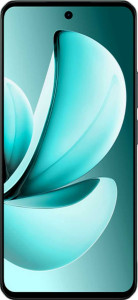
Realme C71
Tecno Spark Go 2

Realme C71 Tecno Spark Go 2

Overview

Welcome to our in-depth comparison of the Realme C71 and the Tecno Spark Go 2, two budget-friendly Android smartphones vying for attention in an increasingly competitive market. While both devices share the same chipset, display size, and operating system, they diverge in meaningful ways across battery capacity, camera hardware, water resistance, and connectivity features. Read on to discover which of these two phones best suits your needs.

Common Features

  • Neither the Realme C71 nor the Tecno Spark Go 2 has a rugged build.
  • Neither product can be folded.
  • Both phones feature an LCD IPS display type.
  • Both devices have a screen size of 6.67″.
  • Both displays support a 120Hz refresh rate.
  • Neither phone has branded damage-resistant glass.
  • HDR10 support is not available on either product.
  • HDR10+ support is not available on either product.
  • Always-On Display is not available on either product.
  • Dolby Vision support is not available on either product.
  • Both phones are powered by the Unisoc T7250 chipset.
  • Both devices use the Mali G57 GPU.
  • Both phones have a CPU speed of 2 x 1.8 and 6 x 1.6 GHz.
  • Both devices achieved a Geekbench 6 multi-core score of 1461.
  • Both devices achieved a Geekbench 6 single-core score of 437.
  • The main camera on both phones has an aperture of 1.8f.
  • Neither phone has a multi-lens main camera setup.
  • Neither device has built-in optical image stabilization.
  • Both phones record video at 1080p 30fps on the main camera.
  • Both phones run Android 15.
  • Both devices include clipboard warnings.
  • Location privacy options are available on both phones.
  • Camera and microphone privacy options are present on both devices.
  • Mail Privacy Protection is not available on either product.
  • Theme customization is supported on both phones.
  • App tracking can be blocked on both devices.
  • Cross-site tracking blocking is not available on either phone.
  • Neither phone supports wireless charging.
  • Both devices support fast charging.
  • Both phones come with a charger included.
  • Neither device has a removable battery.
  • A 3.5mm audio jack is present on both phones.
  • Stereo speakers are not available on either device.
  • Neither phone supports aptX, LDAC, aptX HD, aptX Adaptive, aptX Lossless.
  • Neither phone supports 5G.
  • Both devices support dual SIM cards.
  • Both phones have an external memory slot.
  • Both phones feature a USB Type-C port.
  • Both devices have a maximum download speed of 300 MBits/s.
  • Both devices have a maximum upload speed of 150 MBits/s.
  • A fingerprint scanner is present on both phones.
  • Emergency SOS via satellite is not available on either device.
  • Neither phone has sapphire glass on its display.
  • Neither device has a curved display.
  • Neither phone uses an e-paper display.
  • Both devices include a video light.

Main Differences

  • Water resistance is rated as Waterproof on the Realme C71 and Water resistant on the Tecno Spark Go 2.
  • The IP rating is IP68 on the Realme C71 and IP64 on the Tecno Spark Go 2.
  • Thickness is 7.8 mm on the Realme C71 and 8.3 mm on the Tecno Spark Go 2.
  • Width is 75.9 mm on the Realme C71 and 77 mm on the Tecno Spark Go 2.
  • Height is 165.8 mm on the Realme C71 and 165.6 mm on the Tecno Spark Go 2.
  • Volume is 98.156916 cm³ on the Realme C71 and 105.83496 cm³ on the Tecno Spark Go 2.
  • Pixel density is 264 ppi on the Realme C71 and 263 ppi on the Tecno Spark Go 2.
  • Resolution is 720 x 1604 px on the Realme C71 and 720 x 1600 px on the Tecno Spark Go 2.
  • Internal storage is 128GB on the Realme C71 and 256GB on the Tecno Spark Go 2.
  • RAM is 6GB on the Realme C71 and 4GB on the Tecno Spark Go 2.
  • Main camera resolution is 50 MP on the Realme C71 and 13 MP on the Tecno Spark Go 2.
  • Front camera resolution is 5MP on the Realme C71 and 8MP on the Tecno Spark Go 2.
  • The number of flash LEDs is 1 on the Realme C71 and 2 on the Tecno Spark Go 2.
  • Battery capacity is 6300 mAh on the Realme C71 and 5000 mAh on the Tecno Spark Go 2.
  • Charging speed is 45W on the Realme C71 and 15W on the Tecno Spark Go 2.
  • FM radio support is present on the Tecno Spark Go 2 but not available on the Realme C71.
  • Wi-Fi versions supported are Wi-Fi 4 and Wi-Fi 5 on the Realme C71, while only Wi-Fi 4 is supported on the Tecno Spark Go 2.
  • NFC is available on the Realme C71 but not present on the Tecno Spark Go 2.
Specs Comparison
Realme C71

Realme C71

Tecno Spark Go 2

Tecno Spark Go 2

Design:
water resistance Waterproof Water resistant
thickness 7.8 mm 8.3 mm
width 75.9 mm 77 mm
height 165.8 mm 165.6 mm
volume 98.156916 cm³ 105.83496 cm³
Ingress Protection (IP) rating IP68 IP64
has a rugged build
can be folded

The most consequential difference in this design group is water protection. The Realme C71 carries an IP68 rating, meaning it can withstand full submersion in water — typically up to 1.5 meters for 30 minutes. The Tecno Spark Go 2, by contrast, is rated IP64, which only guarantees protection against dust and water splashes from any direction. In practical terms, the C71 can survive an accidental drop in a sink or puddle, while the Spark Go 2 can handle rain or brief splashes but should never be submerged.

On physical dimensions, the C71 is the more compact device. Its 7.8 mm thickness versus the Spark Go 2's 8.3 mm makes it measurably slimmer, and its smaller volume (98.2 cm³ vs 105.8 cm³) means it occupies noticeably less space in a pocket or hand. The heights are virtually identical, so the difference in feel comes primarily from that extra width and depth on the Spark Go 2.

Overall, the Realme C71 holds a clear advantage in this group. Neither phone has a rugged build or foldable form factor, so those specs are a wash — but the C71 wins on both waterproofing depth (IP68 is a significantly higher standard than IP64) and physical compactness, making it the better-designed option for users who prioritize durability and a slimmer profile.

Display:
Display type LCD, IPS LCD, IPS
screen size 6.67" 6.67"
pixel density 264 ppi 263 ppi
resolution 720 x 1604 px 720 x 1600 px
refresh rate 120Hz 120Hz
has branded damage-resistant glass
supports HDR10
supports HDR10+
Always-On Display
supports Dolby Vision
Has a secondary screen
has a touch screen

Both phones share an essentially identical display setup: a 6.67″ LCD IPS panel running at 120Hz with pixel densities of 264 ppi (Realme C71) and 263 ppi (Tecno Spark Go 2). That one-pixel-per-inch difference is completely imperceptible to the human eye, and the 4-pixel gap in vertical resolution (1604 vs 1600 lines) is equally irrelevant in daily use. For all practical purposes, these two screens are the same.

The 120Hz refresh rate is worth highlighting as a genuine benefit at this price tier — scrolling and animations will feel noticeably smoother compared to the standard 60Hz displays common on budget phones. However, neither device supports HDR10, HDR10+, or Dolby Vision, so streaming video will not benefit from enhanced dynamic range, and there is no Always-On Display functionality on either model.

This group is a dead heat. With matching panel technology, screen size, refresh rate, and the absence of any premium display features on both sides, the display spec cannot and should not be a deciding factor between these two phones.

Performance:
internal storage 128GB 256GB
RAM 6GB 4GB
Chipset (SoC) name Unisoc T7250 Unisoc T7250
GPU name Mali G57 Mali G57
CPU speed 2 x 1.8 & 6 x 1.6 GHz 2 x 1.8 & 6 x 1.6 GHz
Geekbench 6 result (multi) 1461 1461
Geekbench 6 result (single) 437 437
Geekbench 5 result (multi) 1350 1350
Geekbench 5 result (single) 357 357
GPU clock speed 850 MHz 850 MHz
Has integrated LTE
RAM speed 1866 MHz 1866 MHz
semiconductor size 12 nm 12 nm
Supports 64-bit
Has integrated graphics
OpenGL version 3.2 3.2
OpenGL ES version 3.2 3.2
Uses big.LITTLE technology
CPU threads 8 threads 8 threads
Has TrustZone
OpenCL version 2 2
eMMC version 5.1 5.1
maximum memory amount 12GB 12GB
uses multithreading
GPU execution units 2 2
Thermal Design Power (TDP) 10W 10W
DDR memory version 4 4
shading units 64 64
L3 cache 1 MB 1 MB

Under the hood, these two phones are powered by the identical Unisoc T7250 chipset — same CPU configuration, same Mali G57 GPU, same 12nm fabrication process, and unsurprisingly, identical benchmark scores across both Geekbench 5 and 6. There is simply no performance gap to speak of at the processor level.

Where they diverge is in the RAM and storage trade-off. The Realme C71 opts for 6GB of RAM paired with 128GB of storage, while the Tecno Spark Go 2 flips that balance with 4GB of RAM but doubles the storage to 256GB. In real-world use, the extra 2GB of RAM on the C71 translates to more apps staying active in the background, smoother multitasking, and less frequent reloading when switching between apps — a tangible everyday benefit. The Spark Go 2's storage advantage, meanwhile, matters primarily for users who store large amounts of media locally and prefer not to rely on cloud services or external cards.

On balance, the Realme C71 has the edge for most users. Raw processing power being equal, RAM is the more impactful variable for day-to-day fluidity, and 128GB of base storage remains sufficient for the majority of use cases at this price tier. The Spark Go 2's 256GB is a genuine perk for heavy local storage needs, but it comes at the cost of a noticeably less capable multitasking experience.

Cameras:
megapixels (main camera) 50 MP 13 MP
wide aperture (main camera) 1.8f 1.8f
Has a dual-lens (or multi-lens) main camera
megapixels (front camera) 5MP 8MP
has built-in optical image stabilization
video recording (main camera) 1080 x 30 fps 1080 x 30 fps
Has a dual-tone LED flash
number of flash LEDs 1 2
has a BSI sensor
has a CMOS sensor
has continuous autofocus when recording movies
Has phase-detection autofocus for photos
supports slow-motion video recording
has a built-in HDR mode
has manual exposure
has a flash
optical zoom 0x 0x
has manual ISO
has a serial shot mode
has manual focus
has a front camera
Has laser autofocus
Shoots 360° panorama
has manual white balance
shoots raw
has touch autofocus
has manual shutter speed
can create panoramas in-camera
Has timelapse function
Has a front-facing LED flash
has a dual-lens (or multi-lens) front camera
supports HDR10 recording
supports Dolby Vision recording
has a front-facing camera under the display
Has a RGB LED flash
has 3D photo/video recording capabilities

The headline story in this group is the main camera resolution gap. The Realme C71 packs a 50MP rear sensor versus a 13MP sensor on the Tecno Spark Go 2 — a nearly 4x difference in pixel count. More megapixels allow for greater detail retention when cropping shots and can improve the effectiveness of computational photography modes. Both cameras share the same f/1.8 aperture and cap video at 1080p at 30fps, so the resolution advantage is the C71's primary differentiator on the rear.

The front camera flips the script slightly. The Spark Go 2 counters with an 8MP selfie shooter against the C71's 5MP, giving it a modest edge for video calls and self-portraits. The Spark Go 2 also edges ahead with 2 flash LEDs on the rear versus the C71's single LED, which can mean more even, brighter illumination in low-light shots. Beyond these points, the feature sets are remarkably alike — both support phase-detection autofocus, HDR mode, slow-motion, timelapse, manual controls, and panorama.

Weighing the trade-offs, the Realme C71 holds the stronger overall camera position. A 50MP main sensor is a substantially more capable imaging tool than 13MP for the majority of photography use cases, and that advantage outweighs the Spark Go 2's modest gains in front-camera resolution and dual-LED flash.

Operating system:
Android version Android 15 Android 15
has clipboard warnings
has location privacy options
has camera/microphone privacy options
has Mail Privacy Protection
has theme customization
can block app tracking
blocks cross-site tracking
has on-device machine learning
has notification permissions
has media picker
Can play games while they download
has dark mode
has Wi-Fi password sharing
has battery health check
has an extra dim mode
has focus modes
has dynamic theming
can offload apps
Has customizable notifications
has Live Text
has full-page screenshots
supports split screen
gets direct OS updates
has PiP
Can be used as a PC
Has sharing intents
has a child lock
Supports widgets
Is free and open source
Has offline voice recognition
has voice commands
Tracks the current position of a mobile device
is a multi-user system
has Quick Start

Rarely does a spec group produce such a clean result: every single operating system attribute listed is identical between the two phones. Both run Android 15 and share the exact same feature set — from privacy controls like location and camera/microphone permissions, to usability features like split-screen, Picture-in-Picture, dynamic theming, and offline voice recognition.

A few shared limitations are worth noting for prospective buyers. Neither device receives direct OS updates — meaning updates are filtered through the respective manufacturer's software layer, which can introduce delays compared to phones with guaranteed Android update commitments. Cross-site tracking blocking is also absent on both, a minor privacy gap that affects browsing behavior.

This group is an absolute tie. With no divergence across any of the listed specs, the operating system experience offers zero basis for choosing one phone over the other. Buyers should look to the other spec groups — particularly Design, Performance, and Cameras — to drive their decision.

Battery:
battery power 6300 mAh 5000 mAh
has wireless charging
Supports fast charging
charging speed 45W 15W
comes with a charger
has a removable battery
has a battery level indicator
has a rechargeable battery

Battery is where the Realme C71 pulls ahead most decisively across this entire comparison. Its 6300 mAh cell is 26% larger than the 5000 mAh unit in the Tecno Spark Go 2 — a meaningful real-world gap that translates to significantly more screen-on time, longer intervals between charges, and greater confidence during heavy-use days or travel without access to a power outlet.

The charging speed difference compounds that advantage further. The C71 supports 45W fast charging versus the Spark Go 2's 15W — a 3x difference. Despite having a larger battery to refill, the C71 will reach a full charge considerably faster. For users who do need to top up quickly, that gap is highly practical. Both phones come bundled with a charger and share the same non-removable, non-wireless setup, so those points cancel out.

The Realme C71 wins this group outright, and it is not close. A bigger battery combined with substantially faster charging gives it a commanding advantage in endurance and convenience — two factors that rank among the most important for everyday smartphone use.

Audio:
has a socket for a 3.5 mm audio jack
has stereo speakers
has aptX
has LDAC
has aptX HD
has aptX Adaptive
has aptX Lossless
Has a radio

Audio is a lean spec group for both phones, with a shared foundation of a 3.5mm headphone jack and a mono speaker setup. The retention of a headphone jack is genuinely useful at this price tier, where wireless audio accessories are less of a given — users can plug in wired earphones without needing an adapter. Neither device supports premium Bluetooth codecs like aptX or LDAC, so wireless audio quality will be limited to standard transmission regardless of the headphones used.

The only differentiator here is the built-in FM radio on the Tecno Spark Go 2, which the Realme C71 lacks. For users in markets where FM radio remains a primary source of news, music, or emergency broadcasts — and who prefer not to consume data for audio streaming — this is a practical, if niche, advantage.

Given the near-identical feature sets, the Tecno Spark Go 2 holds a slim edge in this group solely due to its FM radio inclusion. For most users this will be a minor consideration, but for those who value it, it is the only audio differentiator between the two phones.

Connectivity & Features:
release date June 2025 June 2025
has 5G support
Wi-Fi version Wi-Fi 4 (802.11n), Wi-Fi 5 (802.11ac) Wi-Fi 4 (802.11n)
SIM cards 2 SIM 2 SIM
has an external memory slot
Has USB Type-C
has NFC
download speed 300 MBits/s 300 MBits/s
upload speed 150 MBits/s 150 MBits/s
Has a fingerprint scanner
has emergency SOS via satellite
has crash detection
is DLNA-certified
supports ANT+
Has a heart rate monitor
has GPS
supports Wi-Fi
Has an infrared sensor
has an accelerometer
has a cellular module
Has a barometer
has an HDMI output
Uses 3D facial recognition
Has an iris scanner
Stylus included
supports Galileo
Has motion tracking
Has optical tracking
Has a built-in projector

Two differences stand out in this group. First, the Realme C71 supports NFC while the Tecno Spark Go 2 does not. NFC enables contactless payments, quick device pairing, and tap-to-transfer interactions — features that are increasingly mainstream and notably uncommon at this price point, making the C71's inclusion genuinely noteworthy. Second, the C71 also supports Wi-Fi 5 (802.11ac) in addition to Wi-Fi 4, whereas the Spark Go 2 is limited to Wi-Fi 4 (802.11n) only. Wi-Fi 5 delivers faster throughput and better performance on congested networks, which matters in homes or offices with multiple connected devices.

Beyond those two gaps, the connectivity feature sets align closely. Both phones offer dual SIM, USB Type-C, a microSD card slot, fingerprint scanner, GPS with Galileo support, and identical cellular download and upload speeds. Neither has 5G, which is expected at this tier, nor do they include more niche features like an infrared sensor or barometer.

The Realme C71 clearly wins this group. NFC alone would be sufficient to tip the balance, but pairing it with a superior Wi-Fi standard makes the C71 the more capable and future-ready device on connectivity — two advantages the Spark Go 2 has no equivalent to counter.

Miscellaneous:
has a video light
Has sapphire glass display
Has a curved display
Has an e-paper display

The Miscellaneous group offers no differentiating information whatsoever. Every attribute listed — video light presence, absence of sapphire glass, flat display, and no e-paper panel — is identical across the Realme C71 and the Tecno Spark Go 2.

This group is a complete tie and carries no weight in the broader comparison. Buyers should base their decision entirely on the more substantive spec groups covered elsewhere.

Comparison Summary & Verdict

After examining the full spec sheets, both phones offer a solid foundation for everyday use, sharing the same processor, 120Hz LCD display, and Android 15. However, their strengths point to different audiences. The Realme C71 stands out with its superior IP68 waterproof rating, a larger 6300 mAh battery with faster 45W charging, a higher-resolution 50MP main camera, more RAM at 6GB, NFC support, and dual-band Wi-Fi. Meanwhile, the Tecno Spark Go 2 appeals to users who value more internal storage at 256GB, a sharper 8MP front camera, a dual-LED flash, FM radio, and a slightly more compact on-paper footprint. Neither phone is a clear-cut winner overall; the right choice comes down squarely to your personal priorities.

Realme C71
Buy Realme C71 if...

Buy the Realme C71 if you prioritize stronger water protection with an IP68 rating, longer battery life with faster 45W charging, a higher-resolution main camera, NFC, and wider Wi-Fi support.

Tecno Spark Go 2
Buy Tecno Spark Go 2 if...

Buy the Tecno Spark Go 2 if you need more internal storage at 256GB, a better front camera for selfies, a dual-LED flash, or FM radio support.