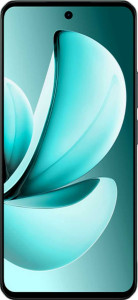
Realme C71
ZTE Blade A36

Realme C71 ZTE Blade A36

Overview

Welcome to our in-depth comparison between the Realme C71 and the ZTE Blade A36 — two budget-friendly Android 15 smartphones that share more than a few similarities under the hood, yet diverge in some meaningful ways. From their battery capacity and charging speeds to camera setups and display refresh rates, these two devices cater to similar audiences but make notably different trade-offs. Read on to see exactly how they stack up across every major specification category.

Common Features

  • Both phones use an LCD IPS display type.
  • Neither phone has branded damage-resistant glass.
  • Neither phone supports HDR10.
  • Neither phone supports HDR10+.
  • Neither phone has an Always-On Display.
  • Neither phone supports Dolby Vision.
  • Both phones have a touchscreen.
  • Both phones have integrated LTE.
  • Both phones use a 12 nm semiconductor size.
  • Both phones support 64-bit processing.
  • Both phones use big.LITTLE technology with 8 CPU threads.
  • Both phones run Android 15.
  • Both phones offer location privacy options and camera/microphone privacy options.
  • Both phones support fast charging.
  • Neither phone has wireless charging.
  • Neither phone has a removable battery.
  • Both phones have a 3.5 mm audio jack.
  • Neither phone has stereo speakers.
  • Both phones support Wi-Fi 4 and Wi-Fi 5, Bluetooth 5.2, dual SIM, NFC, USB Type-C with USB 2.0, and an external memory slot.
  • Neither phone supports 5G.

Main Differences

  • Water resistance is Waterproof on Realme C71 and not present on ZTE Blade A36.
  • Thickness is 7.8 mm on Realme C71 and 8.3 mm on ZTE Blade A36.
  • Width is 75.9 mm on Realme C71 and 77.4 mm on ZTE Blade A36.
  • Height is 165.8 mm on Realme C71 and 167.6 mm on ZTE Blade A36.
  • Screen size is 6.67″ on Realme C71 and 6.75″ on ZTE Blade A36.
  • Refresh rate is 120Hz on Realme C71 and 90Hz on ZTE Blade A36.
  • Internal storage is 128GB on Realme C71 and 64GB on ZTE Blade A36.
  • RAM is 6GB on Realme C71 and 4GB on ZTE Blade A36.
  • Chipset is Unisoc T7250 on Realme C71 and Unisoc T7200 on ZTE Blade A36.
  • CPU speed is 2 x 1.8 & 6 x 1.6 GHz on Realme C71 and 2 x 1.6 & 6 x 1.6 GHz on ZTE Blade A36.
  • GPU clock speed is 850 MHz on Realme C71 and 650 MHz on ZTE Blade A36.
  • Main camera resolution is 50 MP on Realme C71 and 13 MP on ZTE Blade A36.
  • Front camera resolution is 5 MP on Realme C71 and 13 MP on ZTE Blade A36.
  • A CMOS sensor is present on Realme C71 but not on ZTE Blade A36.
  • Battery capacity is 6300 mAh on Realme C71 and 5000 mAh on ZTE Blade A36.
  • Charging speed is 45W on Realme C71 and 10W on ZTE Blade A36.
  • FM radio is available on ZTE Blade A36 but not on Realme C71.
  • Upload speed is 150 Mbits/s on Realme C71 and 100 Mbits/s on ZTE Blade A36.
Specs Comparison
Realme C71

Realme C71

ZTE Blade A36

ZTE Blade A36

Design:
water resistance Waterproof None
thickness 7.8 mm 8.3 mm
width 75.9 mm 77.4 mm
height 165.8 mm 167.6 mm
volume 98.156916 cm³ 107.669592 cm³
has a rugged build
can be folded

The most significant differentiator in this group is water resistance. The Realme C71 is rated as waterproof, while the ZTE Blade A36 offers no water resistance at all. In practical terms, this means the C71 can withstand splashes, rain, or accidental spills without risk of damage — a meaningful real-world advantage for users who are active outdoors or simply prone to accidents. The Blade A36 offers no such protection, making it more vulnerable in everyday wet conditions.

On physical dimensions, the C71 is the more compact device across every measurement — 7.8 mm thick versus 8.3 mm, narrower at 75.9 mm versus 77.4 mm, and shorter at 165.8 mm versus 167.6 mm. This compounds into a noticeably smaller total volume: 98.2 cm³ versus 107.7 cm³, roughly an 9% difference. In-hand, the C71 will feel slimmer and easier to grip or pocket, which matters during extended use.

Both phones share the same structural profile in other respects — neither has a rugged build nor a foldable form factor. Overall, the Realme C71 holds a clear design advantage: it is both the more compact device and the only one with water resistance, two attributes that directly improve durability and day-to-day comfort.

Display:
Display type LCD, IPS LCD, IPS
screen size 6.67" 6.75"
pixel density 264 ppi 260 ppi
resolution 720 x 1604 px 720 x 1600 px
refresh rate 120Hz 90Hz
has branded damage-resistant glass
supports HDR10
supports HDR10+
Always-On Display
supports Dolby Vision
Has a secondary screen
has a touch screen

Both phones use an LCD IPS panel, so color reproduction and viewing angle characteristics are essentially on par. The screen sizes are nearly identical — 6.67″ on the Realme C71 versus 6.75″ on the ZTE Blade A36 — a difference too small to notice during everyday use. Pixel density is similarly close at 264 ppi versus 260 ppi, meaning sharpness is virtually indistinguishable to the naked eye at normal viewing distances.

Where the two displays meaningfully diverge is refresh rate. The C71 runs at 120Hz compared to the Blade A36's 90Hz. In practice, a higher refresh rate translates to noticeably smoother scrolling, more fluid animations, and a more responsive feel during gaming or fast-paced content — all without requiring any deliberate action from the user. This is a tangible, everyday advantage rather than a paper spec.

Neither device offers premium display features such as HDR support, Always-On Display, or damage-resistant glass, so those categories are a wash. On balance, the Realme C71 holds a clear edge in this group purely on the strength of its 120Hz refresh rate — the single differentiator that will be felt most consistently during daily use.

Performance:
internal storage 128GB 64GB
RAM 6GB 4GB
Chipset (SoC) name Unisoc T7250 Unisoc T7200
GPU name Mali G57 Mali G57 MP1
CPU speed 2 x 1.8 & 6 x 1.6 GHz 2 x 1.6 & 6 x 1.6 GHz
Geekbench 6 result (multi) 1461 1391
Geekbench 6 result (single) 437 371
Geekbench 5 result (multi) 1350 1175
Geekbench 5 result (single) 357 313
GPU clock speed 850 MHz 650 MHz
Has integrated LTE
RAM speed 1866 MHz 1600 MHz
semiconductor size 12 nm 12 nm
Supports 64-bit
Has integrated graphics
OpenGL ES version 3.2 3.2
Uses big.LITTLE technology
CPU threads 8 threads 8 threads
Has TrustZone
OpenCL version 2 2
eMMC version 5.1 5.1
maximum memory amount 12GB 14GB
GPU execution units 2 1
Thermal Design Power (TDP) 10W 10W
DDR memory version 4 4
shading units 64 64
L3 cache 1 MB 1 MB

Both phones are built on Unisoc silicon at the same 12 nm process node, but the C71's Unisoc T7250 outpaces the Blade A36's Unisoc T7200 across every measured performance dimension. Geekbench 6 single-core scores of 437 vs 371 and multi-core scores of 1461 vs 1391 confirm a consistent CPU lead for the C71 — and single-core performance is especially relevant for everyday responsiveness, since most common tasks like launching apps, typing, or browsing run primarily on one core. The C71 also benefits from faster RAM: 6 GB at 1866 MHz versus 4 GB at 1600 MHz on the Blade A36. More RAM reduces the frequency of background app reloads, while higher memory bandwidth helps sustain performance under multitasking pressure.

Graphics tell a similar story. The C71's GPU runs at 850 MHz compared to 650 MHz on the Blade A36 — a 30% clock speed advantage — and it doubles the Blade A36's GPU execution units with 2 units versus 1. In real-world terms, the C71 will handle graphically demanding games and UI rendering more smoothly, and will be less likely to throttle under sustained load. Storage is another gap worth noting: 128 GB on the C71 versus just 64 GB on the Blade A36, meaning the C71 can accommodate significantly more apps, photos, and media without requiring management.

The shared specs — process node, TDP, eMMC version, and architectural features like big.LITTLE and 64-bit support — confirm these two chips belong to the same product family and tier. But across CPU speed, GPU performance, RAM capacity, memory bandwidth, and storage, the Realme C71 holds a clear and consistent performance advantage in this group.

Cameras:
megapixels (main camera) 50 MP 13 MP
Has a dual-lens (or multi-lens) main camera
megapixels (front camera) 5MP 13MP
has built-in optical image stabilization
Has a dual-tone LED flash
number of flash LEDs 1 1
has a BSI sensor
has a CMOS sensor
has continuous autofocus when recording movies
Has phase-detection autofocus for photos
supports slow-motion video recording
has a built-in HDR mode
has manual exposure
has a flash
optical zoom 0x 0x
has manual ISO
has a serial shot mode
has manual focus
has a front camera
Has laser autofocus
Shoots 360° panorama
has manual white balance
shoots raw
has touch autofocus
has manual shutter speed
can create panoramas in-camera
Has a front-facing LED flash
has a dual-lens (or multi-lens) front camera
supports HDR10 recording
supports Dolby Vision recording
has a front-facing camera under the display
Has a RGB LED flash
has 3D photo/video recording capabilities

The camera comparison here is defined by a direct trade-off rather than one product dominating the other. On the rear, the Realme C71's 50 MP main sensor dwarfs the ZTE Blade A36's 13 MP — a fourfold difference in resolution that translates to sharper detail in daylight shots, more flexibility to crop without losing quality, and generally more data for the image processor to work with. The C71 also features a CMOS sensor, while the Blade A36 does not specify one, which is a further point in the C71's favor for rear camera hardware quality.

The front camera tells the opposite story. The Blade A36 flips the advantage with a 13 MP selfie camera against the C71's 5 MP — making it the stronger choice for users who prioritize video calls, selfies, or social content. A 13 MP front sensor captures considerably more detail and handles cropping and digital zoom far better than a 5 MP unit, which is a real consideration for anyone who shoots themselves as frequently as their surroundings.

Beyond resolution and sensor type, both phones are functionally identical in camera features — phase-detection autofocus, continuous autofocus during video, HDR mode, slow-motion, panorama, and a full suite of manual controls are all present on both. There is no outright winner here: the Realme C71 is the stronger choice for rear photography, while the ZTE Blade A36 holds a clear selfie camera advantage. The right pick depends entirely on which camera the user reaches for most.

Operating system:
Android version Android 15 Android 15
has clipboard warnings
has location privacy options
has camera/microphone privacy options
has Mail Privacy Protection
has theme customization
can block app tracking
blocks cross-site tracking
has on-device machine learning
has notification permissions
has media picker
Can play games while they download
has dark mode
has Wi-Fi password sharing
has battery health check
has an extra dim mode
has focus modes
has dynamic theming
can offload apps
Has customizable notifications
has Live Text
has full-page screenshots
supports split screen
gets direct OS updates
has PiP
Can be used as a PC
Has sharing intents
has a child lock
Supports widgets
Is free and open source
Has offline voice recognition
has voice commands
Tracks the current position of a mobile device
is a multi-user system
has Quick Start

Rarely does a spec group produce such a definitive result: every single operating system attribute listed for the Realme C71 and the ZTE Blade A36 is identical. Both ship with Android 15 and share the exact same feature set across privacy controls, customization options, productivity tools, and system capabilities.

That shared foundation is worth acknowledging. Android 15 brings a modern, well-rounded experience to both devices — including granular privacy controls like per-app camera and microphone access, location options, and app tracking blockers. Productivity features such as split-screen multitasking, picture-in-picture, dynamic theming, offline voice recognition, and on-device machine learning are all present on both. Neither phone receives direct OS updates, which is equally a limitation for both.

This group is an unambiguous tie. With no differences whatsoever across the provided specs, the operating system experience will be functionally indistinguishable between the two phones. Any purchasing decision should rest entirely on the differentiators found in other spec groups.

Battery:
battery power 6300 mAh 5000 mAh
has wireless charging
Supports fast charging
charging speed 45W 10W
has a removable battery
has a battery level indicator
has a rechargeable battery

Battery is one of the most decisive spec groups in this comparison, and the Realme C71 dominates on both fronts. Its 6300 mAh cell is 26% larger than the 5000 mAh unit in the ZTE Blade A36 — a gap significant enough to translate into real, felt differences in daily endurance. For users who stream video, game, or simply go long stretches without access to a charger, that extra capacity meaningfully reduces how often the phone needs to be topped up.

Charging speed compounds the advantage further. The C71 supports 45W fast charging versus just 10W on the Blade A36 — a 4.5x difference. In practical terms, the C71 can recover a large portion of its battery in the time it takes the Blade A36 to barely move the needle. Ironically, the C71 starts with more charge to restore and still refills it dramatically faster, making the Blade A36's slower charging feel especially limiting by comparison.

Both phones share the same basic battery traits — non-removable, rechargeable, with no wireless charging — so those factors cancel out. The Realme C71 holds a commanding advantage in this group: it offers both greater battery capacity for longer life between charges and significantly faster replenishment when it does run low.

Audio:
has a socket for a 3.5 mm audio jack
has stereo speakers
has aptX
has LDAC
has aptX HD
has aptX Adaptive
has aptX Lossless
Has a radio

Audio is a narrow category for both phones, and the two are largely identical in what they offer. Both include a 3.5 mm headphone jack — a practical inclusion that is increasingly absent from smartphones — and neither supports advanced wireless audio codecs like aptX, LDAC, or their variants. For wired listening, the experience will be equivalent on both devices.

The sole differentiator is that the ZTE Blade A36 includes a built-in FM radio, while the Realme C71 does not. This is a niche but genuinely useful feature for users in regions with strong FM broadcast coverage, or for anyone who wants a passive, data-free way to access local stations without relying on streaming apps. It requires no internet connection and typically consumes very little battery.

Neither phone has stereo speakers, so speaker output will be mono on both — a shared limitation. Given the single distinction in this group, the ZTE Blade A36 has a narrow edge thanks to its FM radio. Whether that matters depends entirely on the user's listening habits; for those who never use FM radio, this category is effectively a tie.

Connectivity & Features:
release date June 2025 June 2025
has 5G support
Wi-Fi version Wi-Fi 4 (802.11n), Wi-Fi 5 (802.11ac) Wi-Fi 4 (802.11n), Wi-Fi 5 (802.11ac)
SIM cards 2 SIM 2 SIM
Bluetooth version 5.2 5.2
has an external memory slot
Has USB Type-C
USB version 2 2
has NFC
download speed 300 MBits/s 300 MBits/s
upload speed 150 MBits/s 100 MBits/s
Has a fingerprint scanner
has emergency SOS via satellite
has crash detection
is DLNA-certified
has a gyroscope
supports ANT+
Has a heart rate monitor
has GPS
has a compass
supports Wi-Fi
Has an infrared sensor
has an accelerometer
has a cellular module
Has a barometer
has an HDMI output
Uses 3D facial recognition
Has an iris scanner
Stylus included
supports Galileo
Has motion tracking
Has optical tracking
Has a built-in projector

Connectivity is strikingly well-matched across these two phones. Both support the same Wi-Fi 4 and Wi-Fi 5 standards, Bluetooth 5.2, NFC, USB Type-C, dual SIM, and expandable storage via a memory card slot. For most users, this means the day-to-day wireless experience — pairing devices, tapping to pay, connecting to networks — will feel identical. The inclusion of NFC on both is worth highlighting as a genuine convenience feature at this price tier, enabling contactless payments and quick device pairing.

The only measurable difference in this group is upload speed: the Realme C71 supports up to 150 Mbits/s versus 100 Mbits/s on the ZTE Blade A36. In practice, this gap matters most for users who frequently upload large files, back up photos over cellular, or make video calls on mobile data. For lighter usage patterns, both phones will feel equally capable on an everyday connection.

Sensor sets, navigation support, and security features — including fingerprint scanners, GPS, compass, accelerometer, and Galileo satellite support — are identical across the board. Given that the only distinction is upload speed, the Realme C71 holds a slim edge in this group, but for the vast majority of users the two phones are effectively tied on connectivity.

Miscellaneous:
has a video light
Has sapphire glass display
Has a curved display
Has an e-paper display

This is a compact spec group, and it produces an unambiguous result: the Realme C71 and ZTE Blade A36 are identical across every listed attribute. Both have a video light, and neither features a sapphire glass display, curved screen, or e-paper panel.

This group is a complete tie. With no differentiating factors present in the provided data, neither phone holds any advantage here. Any decision between these two devices should be based on the more substantive distinctions found in other specification groups.

Comparison Summary & Verdict

After a thorough review of the specs, both phones serve the budget segment well, but each has a distinct edge. The Realme C71 stands out with its larger 6300 mAh battery, significantly faster 45W charging, a higher-resolution 50 MP main camera, a smoother 120Hz display, and waterproofing — making it the stronger all-round package for users who prioritize endurance, imaging, and build quality. The ZTE Blade A36, on the other hand, offers a higher-resolution 13 MP front camera for selfie enthusiasts, a built-in FM radio, and a slightly larger screen, which may appeal to users with simpler needs and a tighter budget. Both run Android 15, support NFC, and share the same Wi-Fi and Bluetooth standards, so everyday connectivity is equally covered on either device.

Realme C71
Buy Realme C71 if...

Buy the Realme C71 if you want a larger battery with much faster 45W charging, a superior 50 MP main camera, a smoother 120Hz display, and the added peace of mind of waterproofing.

ZTE Blade A36
Buy ZTE Blade A36 if...

Buy the ZTE Blade A36 if you prioritize a higher-resolution front camera for selfies and want a device with a built-in FM radio at a potentially lower price point.