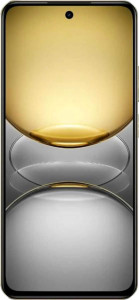
Realme C75 5G
Realme Narzo 80 Lite

Realme C75 5G Realme Narzo 80 Lite

Overview

Welcome to our in-depth comparison of the Realme C75 5G and the Realme Narzo 80 Lite. Both phones share a similar design philosophy and run Android 15, but they diverge significantly when it comes to performance, connectivity, and charging speeds. Whether you care most about a snappier display refresh rate, next-generation network support, or raw camera versatility, this head-to-head breakdown will help you navigate the key battlegrounds between these two budget-friendly contenders.

Common Features

  • Both phones are water resistant.
  • Both phones have a thickness of 7.9 mm.
  • Neither phone has a rugged build.
  • Neither phone can be folded.
  • Both phones use an LCD IPS display type.
  • HDR10 support is not available on either phone.
  • HDR10+ support is not available on either phone.
  • Always-On Display is not available on either phone.
  • Dolby Vision support is not available on either phone.
  • Both phones have a touchscreen.
  • Neither phone has a secondary screen.
  • Both phones have 128GB of internal storage.
  • Both phones support LTE.
  • Both phones support 64-bit processing.
  • Both phones use big.LITTLE technology with 8 CPU threads.
  • Both phones support a maximum of 12GB of RAM.
  • Both phones use multithreading.
  • Neither phone has built-in optical image stabilization.
  • Both phones record main camera video at 1080p 30fps.
  • Both phones have a CMOS sensor and phase-detection autofocus for photos.
  • Both phones run Android 15.
  • Both phones support fast charging but do not have wireless charging.
  • Neither phone has a removable battery.
  • Both phones have a 3.5mm audio jack but lack stereo speakers.
  • Both phones support Wi-Fi 4 and Wi-Fi 5, dual SIM, external memory slot, USB Type-C 2.0, and a fingerprint scanner.
  • Neither phone supports emergency SOS via satellite or crash detection.

Main Differences

  • Weight is 190 g on Realme C75 5G and 201 g on Realme Narzo 80 Lite.
  • Width is 76.2 mm on Realme C75 5G and 76.6 mm on Realme Narzo 80 Lite.
  • Height is 165.7 mm on Realme C75 5G and 167.2 mm on Realme Narzo 80 Lite.
  • Volume is 99.748086 cm³ on Realme C75 5G and 101.179408 cm³ on Realme Narzo 80 Lite.
  • IP rating is IP64 on Realme C75 5G and IP54 on Realme Narzo 80 Lite.
  • Screen size is 6.67″ on Realme C75 5G and 6.74″ on Realme Narzo 80 Lite.
  • Pixel density is 264 ppi on Realme C75 5G and 260 ppi on Realme Narzo 80 Lite.
  • Resolution is 720 x 1604 px on Realme C75 5G and 720 x 1600 px on Realme Narzo 80 Lite.
  • Refresh rate is 120Hz on Realme C75 5G and 90Hz on Realme Narzo 80 Lite.
  • Damage-resistant glass is present on Realme Narzo 80 Lite but not on Realme C75 5G.
  • RAM is 8GB on Realme C75 5G and 6GB on Realme Narzo 80 Lite.
  • The chipset is MediaTek Dimensity 6300 on Realme C75 5G and Unisoc T7250 on Realme Narzo 80 Lite.
  • CPU speed is 2 x 2.4 & 6 x 2 GHz on Realme C75 5G and 2 x 1.8 & 6 x 1.6 GHz on Realme Narzo 80 Lite.
  • Geekbench 6 multi-core score is 2012 on Realme C75 5G and 1461 on Realme Narzo 80 Lite.
  • Geekbench 6 single-core score is 782 on Realme C75 5G and 437 on Realme Narzo 80 Lite.
  • Semiconductor size is 6 nm on Realme C75 5G and 12 nm on Realme Narzo 80 Lite.
  • Main camera resolution is 32 MP on Realme C75 5G and 50 & 13 MP on Realme Narzo 80 Lite.
  • A dual-lens main camera is present on Realme Narzo 80 Lite but not on Realme C75 5G.
  • Front camera resolution is 8MP on Realme C75 5G and 5MP on Realme Narzo 80 Lite.
  • Battery capacity is 6000 mAh on Realme C75 5G and 6300 mAh on Realme Narzo 80 Lite.
  • Charging speed is 45W on Realme C75 5G and 15W on Realme Narzo 80 Lite.
  • 5G support is available on Realme C75 5G but not on Realme Narzo 80 Lite.
  • Bluetooth version is 5.3 on Realme C75 5G and 5.2 on Realme Narzo 80 Lite.
  • NFC is available on Realme C75 5G but not on Realme Narzo 80 Lite.
  • Download speed is 3300 Mbits/s on Realme C75 5G and 300 Mbits/s on Realme Narzo 80 Lite.
Specs Comparison
Realme C75 5G

Realme C75 5G

Realme Narzo 80 Lite

Realme Narzo 80 Lite

Design:
water resistance Water resistant Water resistant
weight 190 g 201 g
thickness 7.9 mm 7.9 mm
width 76.2 mm 76.6 mm
height 165.7 mm 167.2 mm
volume 99.748086 cm³ 101.179408 cm³
Ingress Protection (IP) rating IP64 IP54
has a rugged build
can be folded

Both phones share an identical 7.9 mm thickness and the same broad water-resistant designation, but a closer look at the specs reveals meaningful differences. The Realme C75 5G carries an IP64 rating, while the Narzo 80 Lite is rated IP54. The first digit is the critical one here: IP6x means the C75 5G is fully dust-tight, whereas IP5x on the Narzo 80 Lite only guarantees protection against dust ingress sufficient to prevent harmful deposits — not complete exclusion. In dusty or outdoor environments, this is a practical advantage for the C75 5G.

On weight and size, the C75 5G is noticeably lighter at 190 g versus the Narzo 80 Lite's 201 g — an 11 g difference that translates to a measurably more comfortable one-handed experience over extended use. The Narzo 80 Lite is also fractionally taller and wider, resulting in a slightly larger overall volume (101.18 cm³ vs 99.75 cm³). Neither device is foldable or ruggedized, so those dimensions are straightforward comparisons.

In this group, the Realme C75 5G holds a clear edge: it is lighter, more compact, and offers superior dust protection thanks to its IP64 rating. For users who prioritize everyday handling comfort and better environmental resilience, the C75 5G is the stronger choice based purely on these design specs.

Display:
Display type LCD, IPS LCD, IPS
screen size 6.67" 6.74"
pixel density 264 ppi 260 ppi
resolution 720 x 1604 px 720 x 1600 px
refresh rate 120Hz 90Hz
has branded damage-resistant glass
supports HDR10
supports HDR10+
Always-On Display
supports Dolby Vision
Has a secondary screen
has a touch screen

Both phones use an LCD IPS panel, so neither offers the deeper blacks or superior contrast of AMOLED technology — that is a shared limitation worth acknowledging upfront. Screen sizes are nearly identical (6.67″ vs 6.74″), and the resolution difference is negligible, resulting in pixel densities of 264 ppi and 260 ppi respectively — virtually indistinguishable to the naked eye in everyday use.

Where these two panels diverge meaningfully is refresh rate. The C75 5G runs at 120Hz, compared to the Narzo 80 Lite's 90Hz. At this price tier, that gap is genuinely noticeable: scrolling through feeds, navigating menus, and playing games will feel perceptibly smoother on the C75 5G. The Narzo 80 Lite counters with one tangible advantage of its own — it features branded damage-resistant glass, which the C75 5G lacks entirely. Scratch and crack resistance matters for long-term durability, especially for users who forgo a screen protector.

This group ends in a trade-off rather than a clean sweep. The C75 5G is the better choice for users who prioritize display fluidity, while the Narzo 80 Lite offers greater screen durability out of the box. On balance, the 120Hz refresh rate of the C75 5G is likely to have broader daily impact than glass protection for most users, giving it a slight edge — but those prone to drops may weigh that differently.

Performance:
internal storage 128GB 128GB
RAM 8GB 6GB
Chipset (SoC) name MediaTek Dimensity 6300 Unisoc T7250
GPU name Arm Mali-G57 MC2 Mali G57
CPU speed 2 x 2.4 & 6 x 2 GHz 2 x 1.8 & 6 x 1.6 GHz
Geekbench 6 result (multi) 2012 1461
Geekbench 6 result (single) 782 437
GPU clock speed 950 MHz 850 MHz
Has integrated LTE
RAM speed 2133 MHz 1866 MHz
semiconductor size 6 nm 12 nm
Supports 64-bit
Has integrated graphics
Uses big.LITTLE technology
CPU threads 8 threads 8 threads
maximum memory amount 12GB 12GB
uses multithreading
DDR memory version 4 4
L3 cache 2 MB 1 MB

The silicon gap between these two devices is substantial. The C75 5G is powered by the MediaTek Dimensity 6300, built on a modern 6 nm process node, while the Narzo 80 Lite runs the Unisoc T7250 on a much older 12 nm node. A smaller process node generally means greater power efficiency and more headroom for performance — and the benchmark results confirm exactly that. The C75 5G scores 2012 multi-core and 782 single-core on Geekbench 6, compared to just 1461 and 437 on the Narzo 80 Lite. The single-core gap is especially telling, as it directly reflects the responsiveness felt when launching apps, typing, or performing any task that relies on one core at a time.

RAM and memory speed further reinforce this gap. The C75 5G ships with 8 GB of RAM at 2133 MHz, versus 6 GB at 1866 MHz on the Narzo 80 Lite. More RAM means more apps can stay active in the background without being reloaded, and the faster memory bus keeps data moving to the CPU more efficiently. The C75 5G also doubles the Narzo 80 Lite's L3 cache at 2 MB vs 1 MB, which helps reduce latency on repeated tasks. Both devices top out at 12 GB maximum memory, suggesting both support RAM expansion features in software.

Across every meaningful performance dimension — CPU speed, benchmark scores, RAM capacity, memory bandwidth, cache size, and process efficiency — the Realme C75 5G holds a clear and decisive advantage. For users who care about sustained app performance, gaming, or simply a snappier day-to-day experience, the C75 5G is the stronger performer by a wide margin in this group.

Cameras:
megapixels (main camera) 32 MP 50 & 13 MP
Has a dual-lens (or multi-lens) main camera
megapixels (front camera) 8MP 5MP
has built-in optical image stabilization
video recording (main camera) 1080 x 30 fps 1080 x 30 fps
Has a dual-tone LED flash
number of flash LEDs 1 1
has a BSI sensor
has a CMOS sensor
has continuous autofocus when recording movies
Has phase-detection autofocus for photos
supports slow-motion video recording
has a built-in HDR mode
has manual exposure
has a flash
optical zoom 0x 0x
has manual ISO
has a serial shot mode
has manual focus
has a front camera
Has laser autofocus
Shoots 360° panorama
has manual white balance
shoots raw
has touch autofocus
has manual shutter speed
can create panoramas in-camera
Has timelapse function
Has a front-facing LED flash
has a dual-lens (or multi-lens) front camera
supports HDR10 recording
supports Dolby Vision recording
has a front-facing camera under the display
Has a RGB LED flash
has 3D photo/video recording capabilities

The rear camera setup is where these two phones take clearly different approaches. The Narzo 80 Lite sports a dual-lens system with a 50 MP main sensor and a 13 MP secondary lens, while the C75 5G relies on a single 32 MP shooter. The higher megapixel count on the Narzo 80 Lite's primary sensor captures more detail in good light, and the second lens — at 13 MP — adds versatility unavailable on the C75 5G, whether for depth sensing, wide-angle shots, or macro use. A single-lens rear camera is a meaningful constraint for users who want compositional flexibility.

The selfie camera flips the advantage. The C75 5G offers an 8 MP front camera versus the Narzo 80 Lite's 5 MP, which matters for users who prioritize video calls, social content, or self-portraits. Beyond these hardware differences, the feature sets are effectively identical: both record video at 1080p 30fps, support phase-detection autofocus, slow-motion, HDR mode, and a full suite of manual controls including ISO, focus, exposure, and white balance. Neither shoots RAW or offers optical zoom.

This group is a genuine trade-off split by use case. The Narzo 80 Lite holds the advantage for rear photography thanks to its dual-lens system and higher main sensor resolution. The C75 5G counters with a stronger front camera for selfie-focused users. For most users who primarily shoot with the rear camera, the Narzo 80 Lite's multi-lens setup represents the more versatile and capable system overall.

Operating system:
Android version Android 15 Android 15
has clipboard warnings
has location privacy options
has camera/microphone privacy options
has Mail Privacy Protection
has theme customization
can block app tracking
blocks cross-site tracking
has on-device machine learning
has notification permissions
has media picker
Can play games while they download
has dark mode
has Wi-Fi password sharing
has battery health check
has an extra dim mode
has focus modes
has dynamic theming
can offload apps
Has customizable notifications
has Live Text
has full-page screenshots
supports split screen
gets direct OS updates
has PiP
Can be used as a PC
Has sharing intents
has a child lock
Supports widgets
Is free and open source
Has offline voice recognition
has voice commands
Tracks the current position of a mobile device
is a multi-user system
has Quick Start

Rarely does a spec group end in a perfect draw, but that is exactly the case here. Both the C75 5G and the Narzo 80 Lite run Android 15 and share an identical feature set across every single data point provided — from privacy controls like location and camera/microphone permissions, to productivity features like split-screen, picture-in-picture, and full-page screenshots. Neither device receives direct OS updates, and neither supports Wi-Fi password sharing or focus modes.

The software experience these specs describe is genuinely capable for the price tier. Highlights shared by both include on-device machine learning, dynamic theming, offline voice recognition, and a battery health check tool — features that were considered mid-range or premium not long ago. Privacy-conscious users will find both phones equally equipped, with app tracking controls, clipboard warnings, and granular notification permissions all present on each device.

This group is an unambiguous tie. There is not a single differentiating data point between the two phones in this category. A buyer's operating system experience will be effectively identical on either device, and this group should carry no weight in the final purchase decision.

Battery:
battery power 6000 mAh 6300 mAh
has wireless charging
Supports fast charging
charging speed 45W 15W
has a removable battery
has a battery level indicator
has a rechargeable battery

This group presents the most compelling trade-off of the entire comparison. The Narzo 80 Lite edges ahead on raw capacity with a 6300 mAh battery versus the C75 5G's 6000 mAh — a 300 mAh difference that, in practice, amounts to a marginal extension of screen-on time rather than a dramatic endurance lead. Both cells are large enough to comfortably handle a full day of mixed use for most people.

Charging speed, however, is where the gap becomes impossible to ignore. The C75 5G supports 45W fast charging, while the Narzo 80 Lite is limited to just 15W. At 45W, the C75 5G can recover a significant portion of its battery in the time it takes the Narzo 80 Lite to make a comparatively modest dent. For users who rely on short top-up charges throughout the day — during a commute, over lunch, or between meetings — this threefold difference in charging speed is a substantial practical advantage that outweighs the Narzo 80 Lite's slight capacity lead.

Neither phone offers wireless charging or a removable battery, so those are shared constraints. On balance, the Realme C75 5G wins this group. The Narzo 80 Lite's marginally larger battery is unlikely to translate into a meaningful real-world endurance difference, whereas the C75 5G's 45W charging delivers a faster, more flexible refueling experience that most users will appreciate daily.

Audio:
has a socket for a 3.5 mm audio jack
has stereo speakers
has aptX
has LDAC
has aptX HD
has aptX Adaptive
has aptX Lossless

Audio is another category where these two devices are completely identical. Both retain the increasingly rare 3.5 mm headphone jack — a genuine convenience for users with wired headphones or earbuds, and one less dongle to carry. At this price tier, that inclusion is welcomed rather than taken for granted.

The shared limitations are equally notable. Neither phone offers stereo speakers, meaning media consumption through the built-in speaker will produce mono sound — adequate for calls and occasional video, but not immersive for music or movies. On the wireless audio side, neither device supports any high-resolution Bluetooth codec — no aptX, no LDAC, no aptX HD or Adaptive. Users pairing Bluetooth headphones will be limited to standard audio quality, which is typical for this segment but worth knowing for audiophiles considering either device.

This group is a clean tie. The audio feature set is identical across both phones — same strengths, same constraints. Neither product offers any advantage over the other here, and audio quality should not factor into the decision between them.

Connectivity & Features:
release date May 2025 July 2025
has 5G support
Wi-Fi version Wi-Fi 4 (802.11n), Wi-Fi 5 (802.11ac) Wi-Fi 4 (802.11n), Wi-Fi 5 (802.11ac)
SIM cards 2 SIM 2 SIM
Bluetooth version 5.3 5.2
has an external memory slot
Has USB Type-C
USB version 2 2
has NFC
download speed 3300 MBits/s 300 MBits/s
Has a fingerprint scanner
has emergency SOS via satellite
has crash detection
is DLNA-certified
has a gyroscope
supports ANT+
Has a heart rate monitor
has GPS
has a compass
supports Wi-Fi
Has an infrared sensor
has an accelerometer
has a cellular module
Has a barometer
has an HDMI output
Uses 3D facial recognition
Has an iris scanner
Stylus included
supports Galileo
Has motion tracking
Has optical tracking
Has a built-in projector

Connectivity is where the gap between these two devices becomes most definitive. The C75 5G, as its name signals, supports 5G — the Narzo 80 Lite does not, topping out at 4G LTE. The real-world consequence shows up starkly in the download speed figures: 3300 Mbits/s versus just 300 Mbits/s. That is an eleven-fold difference on paper, and while peak speeds depend heavily on network availability, the C75 5G is simply future-proofed for next-generation mobile infrastructure in a way the Narzo 80 Lite is not.

Beyond cellular, two more differentiators favor the C75 5G. It includes NFC, enabling contactless payments and quick device pairing — a feature entirely absent on the Narzo 80 Lite. It also runs Bluetooth 5.3 versus the Narzo 80 Lite's 5.2, a minor but measurable improvement in connection stability and efficiency. On the shared features side, both phones offer dual SIM slots, expandable storage, USB Type-C (USB 2.0), Wi-Fi 5, GPS with Galileo support, an accelerometer, compass, and a fingerprint scanner — a solid and comparable baseline.

The Realme C75 5G wins this group convincingly. The combination of 5G connectivity, NFC, and faster Bluetooth gives it a meaningful edge in both current usability and long-term relevance. For anyone in or moving toward a 5G coverage area, or who uses tap-to-pay regularly, the Narzo 80 Lite's connectivity shortcomings are difficult to overlook.

Miscellaneous:
has a video light
Has sapphire glass display
Has a curved display
Has an e-paper display

The Miscellaneous group offers no differentiating information between these two devices. Both share an identical set of attributes across every data point provided: each includes a video light, and neither features a sapphire glass display, curved screen, or e-paper panel. There is simply nothing here that separates them.

This group is an unambiguous tie, and like the Operating System category, it should carry no weight in the purchase decision. Buyers should focus their attention on the groups where meaningful differences exist — performance, connectivity, battery, and cameras — to determine which device better suits their priorities.

Comparison Summary & Verdict

After examining every spec, a clear picture emerges for each buyer. The Realme C75 5G stands out with its superior MediaTek Dimensity 6300 chipset, higher RAM, a faster 120Hz display, 5G and NFC support, and a significantly quicker 45W fast charging speed — making it the stronger all-round performer for users who want future-proof connectivity and snappier day-to-day use. The Realme Narzo 80 Lite, on the other hand, counters with a larger 6300 mAh battery, a versatile dual-lens rear camera with a 50 MP main shooter, damage-resistant glass for added durability, and a slightly bigger screen — appealing to users who prioritize longevity, photography flexibility, and screen protection over raw speed and connectivity.

Realme C75 5G
Buy Realme C75 5G if...

Buy the Realme C75 5G if you want faster performance, 5G and NFC connectivity, a smoother 120Hz display, and significantly quicker 45W charging.

Realme Narzo 80 Lite
Buy Realme Narzo 80 Lite if...

Buy the Realme Narzo 80 Lite if you prioritize a larger battery, a dual-lens camera system with a higher-resolution main sensor, and damage-resistant glass for extra durability.