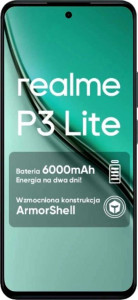
Much of the connectivity spec sheet is shared between these two phones — dual SIM, NFC, USB-C, expandable storage, GPS with Galileo support, and a fingerprint scanner all feature on both. The divergences, while not dramatic, are meaningful. The Realme P3 Lite 4G supports Wi-Fi 6 (802.11ax) in addition to Wi-Fi 4 and 5, whereas the C85 Pro tops out at Wi-Fi 5. Wi-Fi 6 brings better performance on congested networks — relevant in apartments, offices, or public spaces with many connected devices — and delivers improved efficiency. The P3 Lite also edges ahead on Bluetooth 5.2 versus the C85 Pro's Bluetooth 5.0, offering marginally better connection stability and audio synchronization with compatible peripherals.
The C85 Pro counters with a higher peak download speed of 390 Mbits/s compared to the P3 Lite's 300 Mbits/s, a difference that matters on fast LTE networks where throughput actually reaches those levels. The C85 Pro also lacks a gyroscope, which the P3 Lite includes — a sensor used in augmented reality apps, immersive games, and certain navigation features. Its absence on the C85 Pro is a quiet but real limitation for users who engage with gyroscope-dependent applications.
This category ends in a narrow but clear edge for the Realme P3 Lite 4G. Its advantages — Wi-Fi 6, newer Bluetooth, and a gyroscope — are more broadly useful in everyday scenarios than the C85 Pro's faster cellular download ceiling. Neither phone supports 5G, which keeps both on an equal footing for future network access.