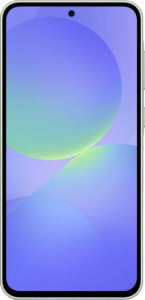
The display category is where the gap between these two phones becomes most pronounced. The Samsung Galaxy A36 5G uses an OLED/AMOLED panel, while the Realme C85 relies on an LCD IPS screen — a fundamental technology difference that affects contrast, color vibrancy, and black levels. OLED panels produce true blacks by turning off individual pixels, resulting in an effectively infinite contrast ratio that LCD simply cannot match. For media consumption, dark-mode interfaces, or any content with rich visuals, the A36's screen will appear considerably more immersive.
Sharpness compounds that advantage further. The A36 renders at 1080 x 2340 px at 385 ppi, compared to the C85's 720 x 1570 px at just 254 ppi. That 131 ppi gap is visible to the naked eye — text, icons, and fine image details will appear noticeably crisper on the Samsung. The C85 partially compensates with a higher 144Hz refresh rate versus the A36's 120Hz, which gives it marginally smoother scrolling on paper, but the resolution and panel quality deficit is a far more impactful real-world tradeoff. The A36 also adds HDR10 and HDR10+ support for compatible streaming content, an Always-On Display, and branded damage-resistant glass — none of which the C85 offers.
The verdict here is unambiguous: the Galaxy A36 5G holds a decisive advantage in display quality. Unless the slightly higher refresh rate of the C85 is a hard requirement, the A36's superior panel technology, resolution, and feature set make it the stronger choice for anyone who spends significant time looking at their screen.