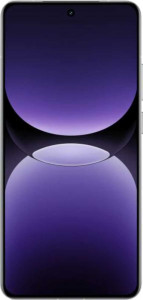
Realme GT 7 Pro Racing
ZTE Nubia Z70S Ultra

Realme GT 7 Pro Racing ZTE Nubia Z70S Ultra

Overview

Welcome to our in-depth spec comparison between the Realme GT 7 Pro Racing and the ZTE Nubia Z70S Ultra — two powerful Android flagships sharing the same Snapdragon 8 Elite core yet taking distinctly different paths. From camera system design and display capabilities to battery charging speeds and audio codec support, these devices each make compelling trade-offs that could sway buyers in opposite directions. Read on to see how every spec stacks up before making your decision.

Common Features

  • Both phones are waterproof with no rugged build and cannot be folded.
  • Both phones share a thickness of 8.6 mm.
  • Both phones feature an OLED/AMOLED display with touch screen support.
  • HDR10 support is available on both products.
  • Neither phone has a secondary screen.
  • Both phones are powered by the Qualcomm Snapdragon 8 Elite chipset with an Adreno 830 GPU.
  • Both phones share the same CPU speed of 2 x 4.32 & 6 x 3.53 GHz.
  • Both phones achieve the same Geekbench 6 multi-core score of 10059 and single-core score of 3234.
  • Both phones have a GPU clock speed of 1100 MHz and RAM speed of 5300 MHz.
  • Both phones include integrated LTE support.
  • Both phones feature a multi-lens main camera with built-in optical image stabilization.
  • Both phones have a 16MP front camera.
  • Both phones include a dual-tone LED flash and a CMOS sensor with phase-detection autofocus.
  • Continuous autofocus during video recording is available on both phones.
  • Both phones run Android 15 with theme customization and app tracking blocking.
  • Both phones support fast charging, come with a charger, and have a non-removable rechargeable battery.
  • Neither phone supports wireless charging.
  • Both phones have stereo speakers but no 3.5 mm audio jack, no LDAC, and no radio.
  • Both phones support 5G, dual SIM, NFC, USB Type-C, Bluetooth 5.4, and Wi-Fi 7.
  • Both phones share download and upload speeds of 10000 Mbits/s and 3500 Mbits/s respectively.

Main Differences

  • Weight is 218 g on Realme GT 7 Pro Racing and 228 g on ZTE Nubia Z70S Ultra.
  • Width is 76.9 mm on Realme GT 7 Pro Racing and 77.1 mm on ZTE Nubia Z70S Ultra.
  • Height is 162.5 mm on Realme GT 7 Pro Racing and 164.3 mm on ZTE Nubia Z70S Ultra.
  • Volume is 107.47 cm³ on Realme GT 7 Pro Racing and 108.94 cm³ on ZTE Nubia Z70S Ultra.
  • The IP rating is IP69 on Realme GT 7 Pro Racing and IP68 on ZTE Nubia Z70S Ultra.
  • Screen size is 6.78″ on Realme GT 7 Pro Racing and 6.85″ on ZTE Nubia Z70S Ultra.
  • Pixel density is 450 ppi on Realme GT 7 Pro Racing and 431 ppi on ZTE Nubia Z70S Ultra.
  • Resolution is 1264 x 2780 px on Realme GT 7 Pro Racing and 1216 x 2688 px on ZTE Nubia Z70S Ultra.
  • Refresh rate is 120Hz on Realme GT 7 Pro Racing and 144Hz on ZTE Nubia Z70S Ultra.
  • Damage-resistant glass branding is present on ZTE Nubia Z70S Ultra but not on Realme GT 7 Pro Racing.
  • HDR10+ support is present on Realme GT 7 Pro Racing but not available on ZTE Nubia Z70S Ultra.
  • Always-On Display is available on ZTE Nubia Z70S Ultra but not on Realme GT 7 Pro Racing.
  • Dolby Vision support is present on Realme GT 7 Pro Racing but not available on ZTE Nubia Z70S Ultra.
  • Internal storage is 512GB on Realme GT 7 Pro Racing and 1024GB on ZTE Nubia Z70S Ultra.
  • RAM is 16GB on Realme GT 7 Pro Racing and 24GB on ZTE Nubia Z70S Ultra.
  • AnTuTu benchmark score is 2,739,727 on Realme GT 7 Pro Racing and 2,710,000 on ZTE Nubia Z70S Ultra.
  • The main camera is 50 & 8 MP on Realme GT 7 Pro Racing and 64 & 50 & 50 MP on ZTE Nubia Z70S Ultra.
  • Maximum video recording resolution is 2160p at 60fps on Realme GT 7 Pro Racing and 4320p at 30fps on ZTE Nubia Z70S Ultra.
  • Optical zoom is 3x on Realme GT 7 Pro Racing and 2.7x on ZTE Nubia Z70S Ultra.
  • Laser autofocus is present on ZTE Nubia Z70S Ultra but not on Realme GT 7 Pro Racing.
  • HDR10 and Dolby Vision video recording are supported on ZTE Nubia Z70S Ultra but not on Realme GT 7 Pro Racing.
  • Battery capacity is 6500 mAh on Realme GT 7 Pro Racing and 6600 mAh on ZTE Nubia Z70S Ultra.
  • Charging speed is 120W on Realme GT 7 Pro Racing and 80W on ZTE Nubia Z70S Ultra.
  • aptX, aptX HD, aptX Adaptive, and aptX Lossless audio codecs are supported on ZTE Nubia Z70S Ultra but not on Realme GT 7 Pro Racing.
  • Wi-Fi 6E (802.11ax) support is present on ZTE Nubia Z70S Ultra but not on Realme GT 7 Pro Racing.
  • An infrared sensor is present on ZTE Nubia Z70S Ultra but not on Realme GT 7 Pro Racing.
Specs Comparison
Realme GT 7 Pro Racing

Realme GT 7 Pro Racing

ZTE Nubia Z70S Ultra

ZTE Nubia Z70S Ultra

Design:
water resistance Waterproof Waterproof
weight 218 g 228 g
thickness 8.6 mm 8.6 mm
width 76.9 mm 77.1 mm
height 162.5 mm 164.3 mm
volume 107.46775 cm³ 108.940758 cm³
Ingress Protection (IP) rating IP69 IP68
has a rugged build
can be folded

In terms of form factor, these two phones are remarkably close. Both share an identical 8.6 mm thickness, and their width and height differ by only fractions of a millimeter. In day-to-day handling, this near-identical footprint means neither phone will feel meaningfully larger or more unwieldy than the other — they occupy virtually the same pocket real estate.

Where a genuine distinction emerges is in weight and water resistance. The Realme GT 7 Pro Racing comes in at 218 g versus the Nubia Z70S Ultra's 228 g — a 10-gram difference that, while modest on paper, translates to a slightly less fatiguing grip during extended one-handed use. More significantly, the GT 7 Pro Racing carries an IP69 rating compared to the Z70S Ultra's IP68. IP68 covers prolonged submersion in water, while IP69 additionally certifies protection against high-pressure, high-temperature water jets — a meaningfully higher standard of durability for real-world accidents and cleaning scenarios.

Overall, the Realme GT 7 Pro Racing holds a clear edge in this category: it is lighter and achieves a superior ingress protection rating, despite both devices sharing the same thickness profile. For users who prioritize a slightly more comfortable hold and greater confidence against water exposure, the GT 7 Pro Racing is the stronger choice here.

Display:
Display type OLED/AMOLED OLED/AMOLED
screen size 6.78" 6.85"
pixel density 450 ppi 431 ppi
resolution 1264 x 2780 px 1216 x 2688 px
refresh rate 120Hz 144Hz
has branded damage-resistant glass
supports HDR10
supports HDR10+
Always-On Display
supports Dolby Vision
Has a secondary screen
has a touch screen

Both phones use OLED/AMOLED panels and support the full suite of major HDR standards — though with one split: the GT 7 Pro Racing supports HDR10+ and Dolby Vision, while the Z70S Ultra supports only HDR10. For streaming content on certified platforms, this gives the GT 7 Pro Racing a richer color grading experience, as both HDR10+ and Dolby Vision offer dynamic metadata that adjusts brightness and contrast scene-by-scene rather than applying a single static profile.

Sharpness favors the GT 7 Pro Racing as well — its 450 ppi pixel density edges out the Z70S Ultra's 431 ppi on a slightly smaller 6.78-inch screen. The difference is subtle and unlikely to be perceptible in isolation, but it is measurable. The Z70S Ultra counters with a higher 144Hz refresh rate versus 120Hz on the GT 7 Pro Racing, which produces marginally smoother scrolling and animation — a perk most noticeable in gaming or fast UI interactions. It also adds Always-On Display and branded damage-resistant glass, two practical durability and convenience features the GT 7 Pro Racing lacks entirely.

This category is genuinely split depending on priorities. The Realme GT 7 Pro Racing wins on content quality — sharper image and broader HDR support — while the ZTE Nubia Z70S Ultra wins on fluidity, screen protection, and ambient usability. Users who watch a lot of HDR video will prefer the GT 7 Pro Racing; those who game heavily or value a more durable, always-on panel will lean toward the Z70S Ultra.

Performance:
internal storage 512GB 1024GB
RAM 16GB 24GB
AnTuTu benchmark score 2739727 2710000
Chipset (SoC) name Qualcomm Snapdragon 8 Elite Qualcomm Snapdragon 8 Elite
GPU name Adreno 830 Adreno 830
CPU speed 2 x 4.32 & 6 x 3.53 GHz 2 x 4.32 & 6 x 3.53 GHz
Geekbench 6 result (multi) 10059 10059
Geekbench 6 result (single) 3234 3234
GPU clock speed 1100 MHz 1100 MHz
Has integrated LTE
RAM speed 5300 MHz 5300 MHz
semiconductor size 3 nm 3 nm
Supports 64-bit
DirectX version DirectX 12 DirectX 12
Has integrated graphics
OpenGL version 3.2 3.2
OpenGL ES version 3.2 3.2
Uses big.LITTLE technology
CPU threads 8 threads 8 threads
Uses HMP
Has TrustZone
maximum memory bandwidth 85.1 GB/s 85.1 GB/s
OpenCL version 3 3
memory channels 2 2
L2 cache 12 MB 12 MB
Supports ECC memory
L1 cache 192 KB 192 KB
maximum memory amount 24GB 24GB
uses multithreading
GPU turbo 1100 MHz 1100 MHz
Thermal Design Power (TDP) 8.2W 8.2W
DDR memory version 5 5
shading units 1536 1536
supported displays 2 2
L3 cache 8 MB 8 MB

At their core, these two phones are performance twins. Both run on the Qualcomm Snapdragon 8 Elite chipset built on a 3 nm process, paired with the same Adreno 830 GPU, identical CPU clock configurations, and matching benchmark results — 10,059 multi-core and 3,234 single-core on Geekbench 6. In practical terms, users of either device will encounter the same raw processing headroom for gaming, multitasking, and AI workloads.

The differentiators are confined to memory and storage. The Z70S Ultra ships with 24 GB of RAM and 1 TB of internal storage, compared to 16 GB RAM and 512 GB on the GT 7 Pro Racing. The extra RAM on the Z70S Ultra means more apps can remain resident in the background simultaneously without being killed — a tangible benefit for heavy multitaskers who switch frequently between large applications. The doubled storage is equally meaningful for users who accumulate large media libraries or install many high-size games without relying on cloud offloading.

The ZTE Nubia Z70S Ultra holds a clear advantage in this category, not because it computes faster — the silicon is identical — but because it offers substantially more memory headroom and storage capacity. The GT 7 Pro Racing's AnTuTu score is marginally higher at 2,739,727 versus 2,710,000, but the gap is negligible and well within run-to-run variance. For users who push their devices hard in terms of multitasking or local storage demands, the Z70S Ultra is the more future-proof configuration.

Cameras:
megapixels (main camera) 50 & 8 MP 64 & 50 & 50 MP
wide aperture (main camera) 2.2 & 1.8f 2.5 & 1.7 & 2f
Has a dual-lens (or multi-lens) main camera
megapixels (front camera) 16MP 16MP
has built-in optical image stabilization
video recording (main camera) 2160 x 60 fps 4320 x 30 fps
Has a dual-tone LED flash
has a BSI sensor
has a CMOS sensor
has continuous autofocus when recording movies
Has phase-detection autofocus for photos
supports slow-motion video recording
has a built-in HDR mode
has manual exposure
has a flash
optical zoom 3x 2.7x
has manual ISO
has a serial shot mode
has manual focus
has a front camera
Has laser autofocus
Shoots 360° panorama
has manual white balance
shoots raw
has touch autofocus
has manual shutter speed
can create panoramas in-camera
wide aperture (front camera) 2.5f 2.5f
Has timelapse function
Has a front-facing LED flash
has a dual-lens (or multi-lens) front camera
supports HDR10 recording
supports Dolby Vision recording
has a front-facing camera under the display
Has a RGB LED flash
has 3D photo/video recording capabilities

The camera systems diverge significantly in hardware ambition. The GT 7 Pro Racing fields a dual-lens rear setup at 50 & 8 MP, while the Z70S Ultra deploys a triple-lens array at 64 & 50 & 50 MP — a substantially more versatile configuration. Having three high-resolution sensors means the Z70S Ultra can dedicate each lens to a distinct focal role without the resolution compromises that come from using a low-megapixel secondary shooter. The GT 7 Pro Racing's 8 MP secondary lens is a notable limitation by comparison. On optical zoom, the GT 7 Pro Racing offers a slight edge at 3x versus the Z70S Ultra's 2.7x, but this is a marginal gap that will rarely matter in practice.

Video capability is where the gap widens most sharply. The Z70S Ultra records at up to 4320p (8K) at 30 fps, and crucially supports both HDR10 and Dolby Vision recording — meaning its footage retains wide dynamic range metadata compatible with premium playback ecosystems. The GT 7 Pro Racing caps out at 4K at 60 fps with no HDR recording formats supported. For videographers or content creators, this is a meaningful distinction. The Z70S Ultra also adds laser autofocus, which improves locking speed in low-light conditions — an advantage the GT 7 Pro Racing lacks.

The ZTE Nubia Z70S Ultra holds a clear overall advantage in this category. Its triple-camera system, 8K video support, HDR video recording, and laser autofocus collectively represent a more capable and flexible imaging platform. The GT 7 Pro Racing's slightly higher optical zoom is the one area where it pulls ahead, but it is not enough to offset the Z70S Ultra's broader strengths across resolution, versatility, and video quality.

Operating system:
Android version Android 15 Android 15
has clipboard warnings
has location privacy options
has camera/microphone privacy options
has Mail Privacy Protection
has theme customization
can block app tracking
blocks cross-site tracking
has on-device machine learning
has notification permissions
has media picker
Can play games while they download
has dark mode
has Wi-Fi password sharing
has battery health check
has an extra dim mode
has focus modes
has dynamic theming
can offload apps
Has customizable notifications
has Live Text
has full-page screenshots
supports split screen
gets direct OS updates
has PiP
Can be used as a PC
Has sharing intents
has a child lock
Supports widgets
Is free and open source
Has offline voice recognition
has voice commands
Tracks the current position of a mobile device
is a multi-user system
has Quick Start

This is a rare case of a true dead heat. Every single spec in this group is identical across both devices — both run Android 15, share the same privacy feature set, and offer the same suite of usability tools including dark mode, dynamic theming, split-screen, Picture-in-Picture, on-device machine learning, and offline voice recognition. Neither receives direct OS updates, and neither supports features like Wi-Fi password sharing, focus modes, or PC mode.

This category is a complete tie. Prospective buyers should not factor the operating system into their decision between these two devices, as the software experience — at least as defined by these specs — is functionally indistinguishable.

Battery:
battery power 6500 mAh 6600 mAh
has wireless charging
Supports fast charging
charging speed 120W 80W
comes with a charger
has a removable battery
has a battery level indicator
has a rechargeable battery

Capacity-wise, these phones are nearly indistinguishable. The Z70S Ultra holds a 6600 mAh battery against the GT 7 Pro Racing's 6500 mAh — a 100 mAh difference that is entirely inconsequential in day-to-day endurance terms. Both sit firmly in large-battery territory, and real-world battery life will be determined far more by software efficiency and screen-on usage than by this negligible gap.

Where the two genuinely diverge is charging speed. The GT 7 Pro Racing supports 120W fast charging, compared to 80W on the Z70S Ultra. At 120W, a depleted battery can realistically reach a full charge in roughly 30 minutes or less, while 80W — though still fast by most standards — will take noticeably longer. For users who charge opportunistically in short windows, this 50% speed advantage is a meaningful practical benefit. Neither device supports wireless charging, so wired speed is the only charging consideration here.

The Realme GT 7 Pro Racing edges ahead in this category. Its marginally smaller battery is irrelevant given the scale difference, and its significantly faster 120W charging makes it the more convenient device to live with day-to-day — particularly for anyone with an unpredictable or fast-paced schedule.

Audio:
has a socket for a 3.5 mm audio jack
has stereo speakers
has aptX
has LDAC
has aptX HD
has aptX Adaptive
has aptX Lossless
Has a radio

For wired and speaker audio, the two phones are on equal footing — both drop the 3.5mm headphone jack and both feature stereo speakers. The meaningful separation emerges entirely in Bluetooth audio codec support, which determines the quality ceiling when using wireless headphones.

The GT 7 Pro Racing supports none of the major high-quality Bluetooth codecs, leaving users dependent on the baseline SBC standard. The Z70S Ultra, by contrast, supports aptX, aptX HD, aptX Adaptive, and aptX Lossless — a comprehensive stack. aptX HD delivers hi-res wireless audio, aptX Adaptive adjusts bitrate dynamically for low-latency performance, and aptX Lossless enables CD-quality audio transmission over Bluetooth when paired with compatible headphones. For anyone who invests in quality wireless audio gear, the Z70S Ultra unlocks substantially higher fidelity that the GT 7 Pro Racing simply cannot match.

The ZTE Nubia Z70S Ultra wins this category decisively. Its broad aptX codec support is a genuine differentiator for audiophiles and wireless headphone users, while the GT 7 Pro Racing offers no equivalent capability — making it the notably weaker choice for anyone who prioritizes wireless audio quality.

Connectivity & Features:
release date February 2025 April 2025
has 5G support
Wi-Fi version Wi-Fi 4 (802.11n), Wi-Fi 6 (802.11ax), Wi-Fi 5 (802.11ac), Wi-Fi 7 (802.11be) Wi-Fi 4 (802.11n), Wi-Fi 6 (802.11ax), Wi-Fi 5 (802.11ac), Wi-Fi 7 (802.11be), Wi-Fi 6E (802.11ax)
SIM cards 2 SIM 2 SIM
Bluetooth version 5.4 5.4
has an external memory slot
Has USB Type-C
has NFC
download speed 10000 MBits/s 10000 MBits/s
upload speed 3500 MBits/s 3500 MBits/s
Has a fingerprint scanner
has emergency SOS via satellite
has crash detection
is DLNA-certified
has a gyroscope
supports ANT+
Has a heart rate monitor
has GPS
has a compass
supports Wi-Fi
Has an infrared sensor
has an accelerometer
has a cellular module
Has a barometer
has an HDMI output
Uses 3D facial recognition
Has an iris scanner
Stylus included
supports Galileo
Has motion tracking
Has optical tracking
Has a built-in projector

Across the core connectivity stack, these two phones are nearly identical. Both support 5G, Bluetooth 5.4, NFC, dual SIM, USB Type-C, and matching cellular speeds of 10,000 Mbps down and 3,500 Mbps up. Their sensor arrays are also closely aligned, covering GPS, Galileo, gyroscope, accelerometer, and compass on both devices.

Two differences stand out. First, the Z70S Ultra's Wi-Fi support extends to Wi-Fi 6E (802.11ax) in addition to the shared Wi-Fi 4, 5, 6, and 7 standards. Wi-Fi 6E opens access to the 6 GHz band, which offers less congestion and lower latency in dense environments — a useful bonus, though one that requires a compatible Wi-Fi 6E router to realize. Second, the Z70S Ultra includes an infrared sensor, which allows the phone to function as a universal remote for TVs and home appliances — a niche but genuinely practical feature the GT 7 Pro Racing omits entirely.

The ZTE Nubia Z70S Ultra holds a modest edge here. Neither difference is transformative, but the addition of Wi-Fi 6E and an infrared blaster represents a broader feature set with no corresponding advantage on the GT 7 Pro Racing's side in this category.

Miscellaneous:
has a video light
Has sapphire glass display
Has a curved display
Has an e-paper display

Every spec in this group is shared equally between the two devices — both have a video light, neither features sapphire glass, a curved display, or an e-paper display. There is nothing here to separate them. This category is a complete tie, and should carry no weight in a buying decision between the two.

Comparison Summary & Verdict

After examining all the evidence, both phones are strong contenders built on the same Snapdragon 8 Elite foundation, but they cater to different priorities. The Realme GT 7 Pro Racing stands out with its superior 120W fast charging, higher pixel density display with HDR10+ and Dolby Vision support, a stronger IP69 rating, and a lighter 218 g body — making it ideal for users who value speed, display quality, and durability. The ZTE Nubia Z70S Ultra, on the other hand, wins for power users who want a more versatile triple-camera system with 8K video recording, a larger 24 GB of RAM with 1 TB storage, a 144Hz Always-On Display, full aptX audio codec support, and extras like an infrared sensor and Wi-Fi 6E. Choose the Realme for everyday performance and charging convenience; choose the ZTE Nubia for multimedia, storage, and camera versatility.

Realme GT 7 Pro Racing
Buy Realme GT 7 Pro Racing if...

Buy the Realme GT 7 Pro Racing if you prioritize faster 120W charging, a lighter build with a higher IP69 rating, and a sharper display with HDR10+ and Dolby Vision support.

ZTE Nubia Z70S Ultra
Buy ZTE Nubia Z70S Ultra if...

Buy the ZTE Nubia Z70S Ultra if you want a versatile triple-camera setup with 8K video, more RAM and storage, full aptX audio codec support, and extras like an infrared sensor and Wi-Fi 6E.