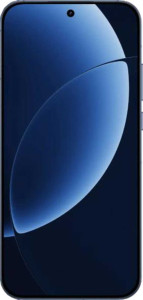
Realme GT8 (China)
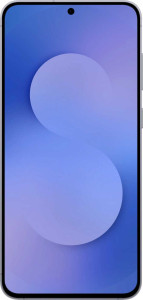
Samsung Galaxy S25 FE

Realme GT8 (China) Samsung Galaxy S25 FE

Overview

Welcome to our in-depth specification face-off between the Realme GT8 (China) and the Samsung Galaxy S25 FE. These two Android smartphones share a surprising amount of common ground — both run Android 16, feature OLED displays, and support 5G — yet they take very different paths when it comes to raw performance and battery capacity, camera versatility, and everyday usability. Read on to discover how these devices stack up across every key category.

Common Features

  • Both phones are waterproof and neither has a rugged build or foldable form factor.
  • Both devices feature an OLED/AMOLED display.
  • HDR10 support is available on both products.
  • HDR10+ support is available on both products.
  • Always-On Display is available on both products.
  • Dolby Vision support is not available on either product.
  • Neither device has a secondary screen, and both have touch screens.
  • Both phones have integrated LTE and support 64-bit processing.
  • Both devices use big.LITTLE technology and HMP scheduling.
  • Both phones support DirectX 12 and have integrated graphics.
  • The maximum memory amount supported is 24GB on both devices.
  • Both phones feature a dual-lens or multi-lens main camera capable of 4K 30fps video recording.
  • Both cameras include a dual-tone LED flash, a CMOS sensor, continuous autofocus, phase-detection autofocus, slow-motion video, and a built-in HDR mode.
  • Both devices run Android 16 and include clipboard warnings, location privacy options, and camera/microphone privacy options.
  • Theme customization and the ability to block app tracking are available on both devices.
  • Cross-site tracking blocking is not available on either device.
  • Fast charging is supported on both phones, neither has a removable battery, and both have a rechargeable battery with a level indicator.
  • Neither phone has a 3.5mm audio jack, but both feature stereo speakers.
  • Neither device supports aptX or aptX Adaptive, and neither has a built-in radio.
  • Both phones support 5G, NFC, USB Type-C, have a fingerprint scanner, a gyroscope, no external memory slot, no emergency SOS via satellite, and no crash detection.

Main Differences

  • Weight is 209 g on Realme GT8 (China) and 190 g on Samsung Galaxy S25 FE.
  • Thickness is 8.2 mm on Realme GT8 (China) and 7.4 mm on Samsung Galaxy S25 FE.
  • Volume is 102.03 cm³ on Realme GT8 (China) and 91.43 cm³ on Samsung Galaxy S25 FE.
  • Ingress Protection rating is IP69 on Realme GT8 (China) and IP68 on Samsung Galaxy S25 FE.
  • Screen size is 6.79″ on Realme GT8 (China) and 6.7″ on Samsung Galaxy S25 FE.
  • Pixel density is 508 ppi on Realme GT8 (China) and 385 ppi on Samsung Galaxy S25 FE.
  • Resolution is 1440 x 3136 px on Realme GT8 (China) and 1080 x 2340 px on Samsung Galaxy S25 FE.
  • Refresh rate is 144Hz on Realme GT8 (China) and 120Hz on Samsung Galaxy S25 FE.
  • Typical brightness is 1000 nits on Realme GT8 (China) and 1200 nits on Samsung Galaxy S25 FE.
  • Damage-resistant glass branding is present on Samsung Galaxy S25 FE but not available on Realme GT8 (China).
  • The chipset is Qualcomm Snapdragon 8 Elite on Realme GT8 (China) and Samsung Exynos 2400 on Samsung Galaxy S25 FE.
  • Geekbench 6 multi-core score is 10059 on Realme GT8 (China) and 7000 on Samsung Galaxy S25 FE.
  • Geekbench 6 single-core score is 3234 on Realme GT8 (China) and 2198 on Samsung Galaxy S25 FE.
  • Internal storage is 1024GB on Realme GT8 (China) and 256GB on Samsung Galaxy S25 FE.
  • RAM is 16GB on Realme GT8 (China) and 8GB on Samsung Galaxy S25 FE.
  • Battery capacity is 7000 mAh on Realme GT8 (China) and 4900 mAh on Samsung Galaxy S25 FE.
  • Wired charging speed is 100W on Realme GT8 (China) and 45W on Samsung Galaxy S25 FE.
  • Wireless charging is available on Samsung Galaxy S25 FE but not on Realme GT8 (China).
  • Reverse wireless charging is available on Samsung Galaxy S25 FE but not on Realme GT8 (China).
  • A charger is included in the box with Realme GT8 (China) but not with Samsung Galaxy S25 FE.
  • Optical image stabilization is present on Samsung Galaxy S25 FE but not available on Realme GT8 (China).
  • Optical zoom is 3.5x on Realme GT8 (China) and 3x on Samsung Galaxy S25 FE.
  • The ability to be used as a PC is available on Samsung Galaxy S25 FE but not on Realme GT8 (China).
  • aptX HD support is available on Realme GT8 (China) but not on Samsung Galaxy S25 FE.
  • An infrared sensor is present on Realme GT8 (China) but not on Samsung Galaxy S25 FE.
  • A barometer is present on Samsung Galaxy S25 FE but not on Realme GT8 (China).
  • Wi-Fi 7 (802.11be) support is available on Realme GT8 (China) but not on Samsung Galaxy S25 FE.
  • Bluetooth version is 6 on Realme GT8 (China) and 5.4 on Samsung Galaxy S25 FE.
  • SIM configuration is dual physical SIM on Realme GT8 (China) and one physical SIM plus one eSIM on Samsung Galaxy S25 FE.
Specs Comparison
Realme GT8 (China)

Realme GT8 (China)

Samsung Galaxy S25 FE

Samsung Galaxy S25 FE

Design:
water resistance Waterproof Waterproof
weight 209 g 190 g
thickness 8.2 mm 7.4 mm
width 76.9 mm 76.6 mm
height 161.8 mm 161.3 mm
volume 102.027844 cm³ 91.431292 cm³
Ingress Protection (IP) rating IP69 IP68
has a rugged build
can be folded

In terms of overall footprint, these two phones are remarkably close siblings — nearly identical in height (161.8 mm vs 161.3 mm) and width (76.9 mm vs 76.6 mm). For everyday handling, this means they will feel essentially the same in one hand and fit identically in a pocket. The real divergence shows up in thickness and weight: the Samsung Galaxy S25 FE is noticeably slimmer at 7.4 mm versus 8.2 mm, and meaningfully lighter at 190 g compared to 209 g. That 19-gram difference may seem small on paper, but over a full day of use it translates into a less fatiguing, more premium-feeling device — the S25 FE's lower volume of 91.4 cm³ versus 102 cm³ confirms it is the more compact and refined build overall.

On water resistance, both phones are rated Waterproof, but the Realme GT8 holds an IP69 certification while the S25 FE carries the more standard IP68. The practical difference is significant: IP69 adds protection against high-pressure, high-temperature water jets — a scenario IP68 does not cover. For the vast majority of users this distinction will never matter (neither rain nor accidental submersion triggers IP69's extra coverage), but it does represent a genuine engineering edge for the GT8 in rugged or industrial-adjacent situations.

Overall, the design category is split: the S25 FE has a clear advantage in everyday ergonomics — it is lighter, thinner, and more compact. The GT8 counters with a superior IP69 rating, which is the stronger protection standard on paper. Neither phone has a rugged build or foldable form factor, so the choice here comes down to whether you prioritize a sleeker, lighter feel (S25 FE) or maximum water-resistance certification (GT8).

Display:
Display type OLED/AMOLED OLED/AMOLED
screen size 6.79" 6.7"
pixel density 508 ppi 385 ppi
resolution 1440 x 3136 px 1080 x 2340 px
refresh rate 144Hz 120Hz
brightness (typical) 1000 nits 1200 nits
has branded damage-resistant glass
supports HDR10
supports HDR10+
Always-On Display
supports Dolby Vision
Has a secondary screen
has a touch screen

The sharpest dividing line between these two displays is resolution. The Realme GT8 packs a 1440 x 3136 px panel at 508 ppi, while the S25 FE operates at a more conventional 1080 x 2340 px and 385 ppi. At typical viewing distances that gap is genuinely visible — text renders with noticeably crisper edges on the GT8, and fine detail in photos or video is more faithfully reproduced. Paired with a 144Hz refresh rate versus the S25 FE's 120Hz, scrolling and animations on the GT8 also carry a marginally smoother feel, though both are well above the threshold most users consciously notice.

The S25 FE punches back on two fronts. Its 1200 nits typical brightness versus the GT8's 1000 nits means better legibility under direct sunlight — a practical, everyday advantage. More importantly, the S25 FE ships with branded damage-resistant glass, a protection the GT8 lacks entirely. For a device carried in pockets and placed on hard surfaces daily, that glass coating is a meaningful safeguard against scratches and minor drops that no spec on the GT8's side directly offsets.

Both screens share the same OLED/AMOLED technology, HDR10+ support, and Always-On Display, so the core viewing experience is competitive. The winner, however, depends on use case: the GT8 holds a clear display quality edge with its far superior sharpness and faster refresh rate, making it the stronger choice for media consumption and gaming. The S25 FE counters with better outdoor brightness and physical screen protection — advantages that matter more in day-to-day durability and usability outside.

Performance:
internal storage 1024GB 256GB
RAM 16GB 8GB
Chipset (SoC) name Qualcomm Snapdragon 8 Elite Samsung Exynos 2400
GPU name Adreno 830 Xclipse 940
CPU speed 2 x 4.32 & 6 x 3.53 GHz 2 x 2.9 & 3 x 2.6 & 4 x 2 & 1 x 3.2 GHz
Geekbench 6 result (multi) 10059 7000
Geekbench 6 result (single) 3234 2198
GPU clock speed 1100 MHz 1009 MHz
Has integrated LTE
RAM speed 5300 MHz 4200 MHz
semiconductor size 3 nm 4 nm
Supports 64-bit
DirectX version DirectX 12 DirectX 12
Has integrated graphics
Uses big.LITTLE technology
CPU threads 8 threads 10 threads
Uses HMP
Has TrustZone
maximum memory bandwidth 85.1 GB/s 64 GB/s
maximum memory amount 24GB 24GB
uses multithreading
Thermal Design Power (TDP) 8.2W 6W
DDR memory version 5 5

The chipset gap here is substantial. The Realme GT8 runs on the Qualcomm Snapdragon 8 Elite, built on a 3 nm process, while the S25 FE uses Samsung's Exynos 2400 on a 4 nm node. That one-generation process advantage translates directly into measured performance: the GT8 scores 10,059 on Geekbench 6 multi-core versus the S25 FE's 7,000 — a roughly 44% lead — and its single-core score of 3,234 dwarfs the S25 FE's 2,198. In practice, this means the GT8 handles intensive workloads — sustained gaming, AI processing, heavy multitasking — with markedly more headroom. The GT8's 85.1 GB/s memory bandwidth versus 64 GB/s on the S25 FE further reinforces this, as faster data throughput between the CPU and RAM reduces bottlenecks in demanding applications.

The memory configuration widens the gap further. The GT8 ships with 16 GB of RAM at 5300 MHz and up to 1 TB of internal storage, against the S25 FE's 8 GB at 4200 MHz and just 256 GB. Double the RAM means significantly more apps can remain active in the background without being purged, which matters for users who multitask heavily or keep media-rich apps open. The storage difference is equally stark — the GT8 offers four times the capacity, making it a far more future-proof device for users who store large libraries of photos, videos, or games locally.

The S25 FE's lone counterpoint in this category is its lower 6W TDP versus the GT8's 8.2W, suggesting it runs cooler and draws less power under load — potentially beneficial for sustained thermal management. However, this efficiency advantage does not offset the GT8's commanding leads across every performance metric. The Realme GT8 holds a decisive advantage in this category, outpacing the S25 FE in raw CPU performance, GPU throughput, RAM capacity, and storage — making it the stronger choice for any performance-sensitive use case.
Cameras:
megapixels (main camera) 50 & 50 & 8 MP 50 & 12 & 8 MP
wide aperture (main camera) 1.8 & 2.8 & 2.2f 1.8 & 2.2 & 2.4f
Has a dual-lens (or multi-lens) main camera
megapixels (front camera) 16MP 12MP
has built-in optical image stabilization
video recording (main camera) 4320 x 30 fps 4320 x 30 fps
Has a dual-tone LED flash
number of flash LEDs 2 1
has a BSI sensor
has a CMOS sensor
has continuous autofocus when recording movies
Has phase-detection autofocus for photos
supports slow-motion video recording
has a built-in HDR mode
has manual exposure
has a flash
optical zoom 3.5x 3x
has manual ISO
has a serial shot mode
has manual focus
has a front camera
Has laser autofocus
Shoots 360° panorama
has manual white balance
shoots raw
has touch autofocus
has manual shutter speed
can create panoramas in-camera
wide aperture (front camera) 2.4f 2.2f
Has timelapse function
Has a front-facing LED flash
has a dual-lens (or multi-lens) front camera
supports HDR10 recording
Has a RGB LED flash

Both phones field a triple-camera system topped by a 50 MP primary sensor with an f/1.8 aperture, and both cap video at 4K@30fps with an identical feature set covering RAW capture, phase-detection autofocus, and slow-motion. The most meaningful hardware split is on the secondary lens: the Realme GT8 pairs its main sensor with a second 50 MP ultrawide, while the S25 FE uses a 12 MP ultrawide. On paper the GT8 resolves more ultrawide detail, but resolution alone does not tell the full story.

Two specifications cut significantly in the S25 FE's favor. First, it includes optical image stabilization (OIS) — a feature the GT8 entirely lacks. OIS physically compensates for hand movement during both photo and video capture, producing sharper low-light stills and noticeably smoother handheld footage; no software trick fully replicates it. Second, the S25 FE uses a BSI (back-side illuminated) sensor, which captures more light per pixel than the GT8's conventional CMOS arrangement — a direct advantage in dim environments. The S25 FE also gains manual shutter speed control, giving more creative flexibility in pro mode, while the GT8 omits this option. The GT8 does edge out a marginally longer 3.5x optical zoom versus 3x, a modest but real advantage for telephoto reach.

For selfies, the GT8 offers a 16 MP front sensor against the S25 FE's 12 MP, though the S25 FE's slightly wider f/2.2 aperture (versus f/2.4) admits more light. On balance, the S25 FE holds the camera advantage — OIS and the BSI sensor are practical, everyday benefits that directly improve image quality in real shooting conditions, outweighing the GT8's higher ultrawide megapixel count and marginally greater zoom reach.

Operating system:
Android version Android 16 Android 16
has clipboard warnings
has location privacy options
has camera/microphone privacy options
has Mail Privacy Protection
has theme customization
can block app tracking
blocks cross-site tracking
has on-device machine learning
has notification permissions
has media picker
Can play games while they download
has dark mode
has Wi-Fi password sharing
has battery health check
has an extra dim mode
has focus modes
has dynamic theming
can offload apps
Has customizable notifications
has Live Text
has full-page screenshots
supports split screen
gets direct OS updates
has PiP
Can be used as a PC
Has sharing intents
has a child lock
Supports widgets
Is free and open source
Has offline voice recognition
has voice commands
Tracks the current position of a mobile device
is a multi-user system
has Quick Start

Across the full breadth of operating system features, these two phones are essentially mirrors of each other. Both launch on Android 16 and share an identical checklist of privacy controls, productivity tools, and user experience features — dark mode, dynamic theming, split-screen, picture-in-picture, customizable notifications, on-device machine learning, and offline voice recognition are all present on both devices without exception.

Scanning the entire spec set, exactly one functional difference emerges: the Samsung Galaxy S25 FE supports PC mode, allowing the phone to be connected to an external display and used as a desktop-like computing environment. The Realme GT8 does not offer this capability. For users who travel light and occasionally need a larger-screen workspace — whether for document editing, presentations, or general productivity — this is a genuine differentiator. It is, however, a niche use case that most buyers will never invoke.

Given how comprehensively matched these two phones are at the software level, the S25 FE holds a narrow edge in this category solely by virtue of its PC mode support. For the overwhelming majority of users the OS experience will be functionally indistinguishable between the two, making this essentially a tie in day-to-day use.

Battery:
battery power 7000 mAh 4900 mAh
has wireless charging
Supports fast charging
charging speed 100W 45W
has reverse wireless charging
comes with a charger
has a removable battery
has a battery level indicator
has a rechargeable battery

Raw battery capacity is not even close: the Realme GT8 houses a 7000 mAh cell against the S25 FE's 4900 mAh — a 43% larger reservoir. All else being equal, that difference translates directly into significantly more screen-on time between charges, a crucial advantage for heavy users, travellers, or anyone who cannot reliably top up mid-day. The GT8 also bundles a charger in the box and replenishes that larger battery at 100W, which is more than double the S25 FE's 45W ceiling — meaning despite holding substantially more energy, the GT8 can realistically reach a full charge in a fraction of the time.

The S25 FE counters with charging versatility the GT8 cannot match. It supports wireless charging and reverse wireless charging, neither of which the GT8 offers. Wireless charging adds meaningful convenience — dropping the phone on a pad overnight or on a desk eliminates cable wear and daily plugging. Reverse wireless charging allows the S25 FE to top up accessories like earbuds or a smartwatch directly from the phone's own battery, a genuinely useful feature for ecosystem users. It is also worth noting the S25 FE does not include a charger in the box, which partially offsets its flexibility advantage for new buyers.

Taken together, this category splits along clear lines of priority. The GT8 holds a commanding endurance and wired charging speed advantage — it will simply last longer and refill faster. The S25 FE offers superior charging ecosystem flexibility with wireless and reverse wireless support. For users who prioritize longevity and speed, the GT8 wins decisively; for those embedded in a wireless charging lifestyle, the S25 FE's conveniences remain relevant despite its smaller cell.

Audio:
has a socket for a 3.5 mm audio jack
has stereo speakers
has aptX
has aptX HD
has aptX Adaptive
Has a radio

The audio spec sheet for these two phones is nearly identical — both drop the 3.5mm headphone jack, both feature stereo speakers, and neither includes a built-in radio. For wired headphone users, the absence of a jack on both devices means relying on a USB-C adapter or going wireless, so neither phone has an advantage or disadvantage there.

The one differentiator is Bluetooth audio codec support: the Realme GT8 supports aptX HD, while the S25 FE does not. aptX HD enables high-resolution wireless audio transmission — up to 24-bit/48kHz — delivering noticeably higher fidelity over Bluetooth compared to standard codecs, provided the connected headphones or speakers also support aptX HD. For users with compatible wireless audio gear, this is a meaningful quality upgrade; for those using standard Bluetooth headphones, the difference will not be audible.

Given the shared baseline and the GT8's exclusive aptX HD support, the Realme GT8 holds a narrow edge in audio for wireless audiophiles. For casual listeners relying on the built-in stereo speakers or standard Bluetooth headphones, this category is effectively a tie.

Connectivity & Features:
release date October 2025 September 2025
has 5G support
Wi-Fi version Wi-Fi 4 (802.11n), Wi-Fi 5 (802.11ac), Wi-Fi 6 (802.11ax), Wi-Fi 7 (802.11be) Wi-Fi 4 (802.11n), Wi-Fi 6E (802.11ax), Wi-Fi 6 (802.11ax), Wi-Fi 5 (802.11ac)
SIM cards 2 SIM 1 SIM, 1 eSIM
Bluetooth version 6 5.4
has an external memory slot
Has USB Type-C
has NFC
download speed 10000 MBits/s 9640 MBits/s
upload speed 3500 MBits/s 2550 MBits/s
Has a fingerprint scanner
has emergency SOS via satellite
has crash detection
has a gyroscope
Has a heart rate monitor
has GPS
has a compass
supports Wi-Fi
Has an infrared sensor
has an accelerometer
has a cellular module
Has a barometer
Uses 3D facial recognition
Has an iris scanner
Stylus included
supports Galileo

Wireless connectivity is where the Realme GT8 pulls ahead most clearly. It supports Wi-Fi 7 — the latest standard — while the S25 FE tops out at Wi-Fi 6E. Wi-Fi 7 delivers higher theoretical throughput, lower latency, and better performance in congested multi-device environments, a tangible benefit as Wi-Fi 7 routers become more widespread. The GT8 also carries Bluetooth 6 versus the S25 FE's 5.4, bringing improved connection stability, reduced power consumption, and better positioning accuracy for connected accessories. Neither of these gaps is dramatic today, but the GT8 is the more future-proofed device on wireless standards.

SIM flexibility splits differently depending on user preference. The GT8 offers dual physical SIM slots — straightforward for users who carry two active SIM cards, common among frequent travellers or those separating work and personal lines. The S25 FE instead pairs one physical SIM with an eSIM, which allows digital carrier switching without a physical card swap — more convenient for users in regions with strong eSIM carrier support. The GT8 also posts marginally higher cellular upload speeds (3500 Mbps vs 2550 Mbps), though both are effectively unlimited relative to real-world network conditions.

On sensors, each phone holds one unique asset: the GT8 includes an infrared sensor, enabling it to function as a universal remote control for TVs and appliances — a practical convenience the S25 FE lacks. The S25 FE counters with a barometer, useful for altitude tracking and weather-sensitive applications. Both support 5G, NFC, GPS, and Galileo. Overall, the GT8 holds the broader connectivity edge with superior Wi-Fi and Bluetooth generations and a useful IR blaster, while the S25 FE's eSIM support and barometer serve more niche but genuine use cases.

Miscellaneous:
has a video light
Has sapphire glass display
Has a curved display
Has an e-paper display

The miscellaneous spec group for these two phones is a complete tie across every data point provided. Both the Realme GT8 and the Samsung Galaxy S25 FE include a video light, and neither features sapphire glass, a curved display, or an e-paper display. There are no differentiators to analyze here — the two devices are functionally identical on every spec in this category.

Comparison Summary & Verdict

After reviewing every specification, these two phones clearly target different kinds of users. The Realme GT8 (China) dominates on sheer power and endurance: its Snapdragon 8 Elite chipset, 7000 mAh battery with 100W wired charging, higher-resolution 144Hz display, and up to 16GB of RAM make it the stronger choice for performance-hungry users. The Samsung Galaxy S25 FE, on the other hand, is a more refined, well-rounded device — it is lighter, slimmer, and brings meaningful practical advantages including wireless and reverse wireless charging, optical image stabilization, a brighter display, and the ability to function as a PC. Both phones run Android 16 and share strong connectivity credentials, but their priorities diverge sharply. Choose based on whether raw horsepower or everyday versatility and ecosystem polish matters more to you.

Realme GT8 (China)
Buy Realme GT8 (China) if...

Buy the Realme GT8 (China) if you want top-tier performance and the longest possible battery life with blazing-fast 100W wired charging. It is also ideal if you need maximum internal storage and the sharpest, fastest display available.

Samsung Galaxy S25 FE
Buy Samsung Galaxy S25 FE if...

Buy the Samsung Galaxy S25 FE if you value a lighter, more portable design with wireless charging, optical image stabilization, and seamless desktop PC functionality. It is the better pick for users who prioritize a polished, feature-rich everyday experience.