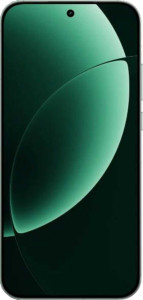
Realme GT8 Pro (China)
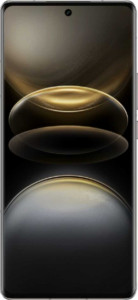
vivo X200 Ultra

Realme GT8 Pro (China) vivo X200 Ultra

Overview

Welcome to our in-depth spec comparison between the Realme GT8 Pro (China) and the vivo X200 Ultra — two flagship Android smartphones that share a surprising amount of common ground while diverging sharply in a few critical areas. From battery capacity and charging speeds to display brightness, camera versatility, and audio codec support, this head-to-head will help you determine which powerhouse better fits your lifestyle and priorities.

Common Features

  • Both phones are waterproof with an IP69 ingress protection rating.
  • Neither phone has a rugged build.
  • Neither phone can be folded.
  • Both phones feature an OLED/AMOLED display type.
  • HDR10 support is available on both products.
  • HDR10+ support is available on both products.
  • Always-On Display is available on both products.
  • Neither phone has a secondary screen.
  • Both phones have a touchscreen.
  • Both phones come with 16GB of RAM and 1024GB of internal storage.
  • Both phones use the Adreno 830 GPU.
  • Both phones achieved the same Geekbench 6 multi-core score of 10059 and single-core score of 3234.
  • Both phones have integrated LTE and RAM running at 5300 MHz on a 3 nm semiconductor.
  • Both phones have a main camera with 200, 50, and 50 MP lenses.
  • Both phones support 4K video recording at 30 fps on the main camera.
  • Both phones support slow-motion video recording and have a built-in HDR mode.
  • Both phones have phase-detection autofocus and continuous autofocus when recording.
  • Both phones have wireless charging, fast charging, and come with a charger included.
  • Neither phone has a removable battery.
  • Both phones lack a 3.5mm audio jack but feature stereo speakers and aptX HD support.
  • Neither phone has a radio.
  • Both phones support 5G, dual SIM, NFC, USB Type-C, and have a fingerprint scanner.
  • Both phones support Wi-Fi 7 (802.11be) among other Wi-Fi standards.
  • Both phones have download speeds of 10000 MBits/s and upload speeds of 3500 MBits/s.
  • Both phones have location privacy options, camera and microphone privacy options, and theme customization.
  • App tracking can be blocked on both phones.
  • Mail Privacy Protection is not available on either phone.
  • Cross-site tracking blocking is not available on either phone.
  • On-device machine learning is available on both phones.
  • Neither phone has a sapphire glass display or an e-paper display.
  • Both phones have a video light.

Main Differences

  • Weight is 218 g on Realme GT8 Pro (China) and 229 g on vivo X200 Ultra.
  • Thickness is 8.2 mm on Realme GT8 Pro (China) and 8.7 mm on vivo X200 Ultra.
  • Height is 161.8 mm on Realme GT8 Pro (China) and 163.1 mm on vivo X200 Ultra.
  • Volume is 102.03 cm³ on Realme GT8 Pro (China) and 108.98 cm³ on vivo X200 Ultra.
  • Screen size is 6.79″ on Realme GT8 Pro (China) and 6.82″ on vivo X200 Ultra.
  • Refresh rate is 144Hz on Realme GT8 Pro (China) and 120Hz on vivo X200 Ultra.
  • Typical brightness is 1000 nits on Realme GT8 Pro (China) and 4500 nits on vivo X200 Ultra.
  • Damage-resistant glass branding is present on vivo X200 Ultra but not on Realme GT8 Pro (China).
  • Dolby Vision support is present on vivo X200 Ultra but not available on Realme GT8 Pro (China).
  • The chipset is Qualcomm Snapdragon 8 Elite Gen 5 on Realme GT8 Pro (China) and Qualcomm Snapdragon 8 Elite on vivo X200 Ultra.
  • CPU speed is 2 x 4.6 & 6 x 3.62 GHz on Realme GT8 Pro (China) and 2 x 4.32 & 6 x 3.53 GHz on vivo X200 Ultra.
  • GPU clock speed is 1200 MHz on Realme GT8 Pro (China) and 1100 MHz on vivo X200 Ultra.
  • Main camera wide aperture is f/2.6, f/1.8, f/2 on Realme GT8 Pro (China) and f/2.3, f/1.7, f/2 on vivo X200 Ultra.
  • Front camera resolution is 32 MP on Realme GT8 Pro (China) and 50 MP on vivo X200 Ultra.
  • Optical image stabilization is present on vivo X200 Ultra but not available on Realme GT8 Pro (China).
  • A BSI sensor is present on vivo X200 Ultra but not on Realme GT8 Pro (China).
  • Optical zoom is 3x on Realme GT8 Pro (China) and 3.7x on vivo X200 Ultra.
  • 360° panorama shooting is available on vivo X200 Ultra but not on Realme GT8 Pro (China).
  • Manual shutter speed is available on vivo X200 Ultra but not on Realme GT8 Pro (China).
  • Dual-tone LED flash is present on Realme GT8 Pro (China) but not on vivo X200 Ultra.
  • Number of flash LEDs is 2 on Realme GT8 Pro (China) and 3 on vivo X200 Ultra.
  • Minimum focal length is 16 mm on Realme GT8 Pro (China) and 35 mm on vivo X200 Ultra.
  • Maximum focal length is 65 mm on Realme GT8 Pro (China) and 135 mm on vivo X200 Ultra.
  • Android version is Android 16 on Realme GT8 Pro (China) and Android 15 on vivo X200 Ultra.
  • Battery capacity is 7000 mAh on Realme GT8 Pro (China) and 6000 mAh on vivo X200 Ultra.
  • Wired charging speed is 120W on Realme GT8 Pro (China) and 90W on vivo X200 Ultra.
  • Wireless charging speed is 50W on Realme GT8 Pro (China) and 40W on vivo X200 Ultra.
  • Reverse wireless charging is available on vivo X200 Ultra but not on Realme GT8 Pro (China).
  • aptX, LDAC, aptX Adaptive, and aptX Lossless audio codec support are present on vivo X200 Ultra but not available on Realme GT8 Pro (China).
  • Bluetooth version is 6 on Realme GT8 Pro (China) and 5.4 on vivo X200 Ultra.
  • Emergency SOS via satellite is available on vivo X200 Ultra but not on Realme GT8 Pro (China).
  • A curved display is present on vivo X200 Ultra but not on Realme GT8 Pro (China).
Specs Comparison
Realme GT8 Pro (China)

Realme GT8 Pro (China)

vivo X200 Ultra

vivo X200 Ultra

Design:
water resistance Waterproof Waterproof
weight 218 g 229 g
thickness 8.2 mm 8.7 mm
width 76.9 mm 76.8 mm
height 161.8 mm 163.1 mm
volume 102.027844 cm³ 108.976896 cm³
Ingress Protection (IP) rating IP69 IP69
has a rugged build
can be folded

Both phones share the same IP69 waterproofing rating, meaning they can withstand high-pressure, high-temperature water jets — a meaningfully robust standard that goes beyond the more common IP68, offering real-world protection against aggressive splashing, rain, and quick rinses. Neither device adopts a rugged or foldable form factor, positioning both as sleek, conventional flagship slabs.

Where they diverge is in physical footprint and weight. The Realme GT8 Pro comes in at 218 g and 8.2 mm thick, while the vivo X200 Ultra is noticeably heavier at 229 g and slightly thicker at 8.7 mm. That 11 g difference is perceptible during one-handed use and extended sessions — the GT8 Pro will feel more nimble and less fatiguing to hold. The 0.5 mm slimness advantage also contributes to a more pocket-friendly profile, reflected in its smaller overall volume of 102 cm³ versus the X200 Ultra's 109 cm³.

For users who prioritize a lighter, slimmer design without sacrificing water resistance, the GT8 Pro holds a clear edge in this category. The X200 Ultra's larger volume likely accommodates a bigger battery or more substantial camera hardware, but strictly from a design standpoint, the GT8 Pro is the more compact and comfortable carry.

Display:
Display type OLED/AMOLED OLED/AMOLED
screen size 6.79" 6.82"
pixel density 508 ppi 510 ppi
resolution 1440 x 3136 px 1440 x 3168 px
refresh rate 144Hz 120Hz
brightness (typical) 1000 nits 4500 nits
has branded damage-resistant glass
supports HDR10
supports HDR10+
Always-On Display
supports Dolby Vision
Has a secondary screen
has a touch screen

At their core, both screens are nearly identical in size and sharpness — 6.79″ vs 6.82″ and 508 ppi vs 510 ppi — differences so marginal they are indistinguishable in daily use. Both panels are OLED/AMOLED with QHD+ resolution, HDR10+, and Always-On Display support, setting a strong baseline for color accuracy and contrast. The GT8 Pro's 144Hz refresh rate does edge out the X200 Ultra's 120Hz, which translates to marginally smoother scrolling and animations — a perk that enthusiasts will notice, particularly in gaming.

The most consequential difference, however, lies in brightness. The vivo X200 Ultra's 4500 nits peak brightness dwarfs the GT8 Pro's 1000 nits — a gap that is not merely numerical. In direct sunlight, a 4500-nit display remains fully legible where a 1000-nit screen can struggle noticeably. The X200 Ultra also adds Dolby Vision support and comes with branded damage-resistant glass, neither of which the GT8 Pro offers — meaning richer HDR tone-mapping for supported content and measurably better scratch and drop protection out of the box.

Despite the GT8 Pro's refresh rate advantage, the vivo X200 Ultra wins this category convincingly. The brightness gulf alone is a decisive real-world differentiator, and the additions of Dolby Vision and protective glass only widen the gap for users who prioritize display resilience and outdoor visibility.

Performance:
internal storage 1024GB 1024GB
RAM 16GB 16GB
Chipset (SoC) name Qualcomm Snapdragon 8 Elite Gen 5 Qualcomm Snapdragon 8 Elite
GPU name Adreno 830 Adreno 830
CPU speed 2 x 4.6 & 6 x 3.62 GHz 2 x 4.32 & 6 x 3.53 GHz
Geekbench 6 result (multi) 10059 10059
Geekbench 6 result (single) 3234 3234
GPU clock speed 1200 MHz 1100 MHz
Has integrated LTE
RAM speed 5300 MHz 5300 MHz
semiconductor size 3 nm 3 nm
Supports 64-bit
DirectX version DirectX 12 DirectX 12
Has integrated graphics
OpenGL version 3.2 3.2
OpenGL ES version 3.2 3.2
Uses big.LITTLE technology
CPU threads 8 threads 8 threads
Uses HMP
Has TrustZone
maximum memory bandwidth 85.1 GB/s 85.1 GB/s
OpenCL version 3 3
memory channels 2 2
L2 cache 12 MB 12 MB
Supports ECC memory
L1 cache 192 KB 192 KB
maximum memory amount 24GB 24GB
uses multithreading
Thermal Design Power (TDP) 8.2W 8.2W
DDR memory version 5 5
shading units 1536 1536
supported displays 2 2
L3 cache 8 MB 8 MB

These two phones are built on virtually the same silicon foundation — both running a Qualcomm Snapdragon 8 Elite platform on a 3 nm process, paired with 16 GB of DDR5 RAM at 5300 MHz and up to 1 TB of storage. The shared Geekbench 6 scores — 3234 single-core and 10059 multi-core — confirm that in everyday tasks, app launches, and general workloads, these two devices are effectively indistinguishable.

The nuances emerge when looking closer at clock speeds. The GT8 Pro's chipset is labeled Snapdragon 8 Elite Gen 5 and runs its performance cores at 4.6 GHz versus the X200 Ultra's 4.32 GHz, and its efficiency cores at 3.62 GHz versus 3.53 GHz. More notably, the GT8 Pro's GPU clocks in at 1200 MHz compared to the X200 Ultra's 1100 MHz — a roughly 9% advantage that could translate to marginally higher sustained frame rates or slightly better headroom in GPU-intensive gaming scenarios, even though both share the same Adreno 830 architecture and identical shading unit count.

In practice, the performance gap is narrow enough that most users will never feel it. Still, based strictly on the provided data, the GT8 Pro holds a slight edge — its higher CPU and GPU clock speeds give it a measurable, if modest, advantage in peak compute and graphics throughput.

Cameras:
megapixels (main camera) 200 & 50 & 50 MP 200 & 50 & 50 MP
wide aperture (main camera) 2.6 & 1.8 & 2f 2.3 & 1.7 & 2f
Has a dual-lens (or multi-lens) main camera
megapixels (front camera) 32MP 50MP
has built-in optical image stabilization
video recording (main camera) 4320 x 30 fps 4320 x 30 fps
Has a dual-tone LED flash
number of flash LEDs 2 3
has a BSI sensor
has a CMOS sensor
has continuous autofocus when recording movies
Has phase-detection autofocus for photos
supports slow-motion video recording
has a built-in HDR mode
has manual exposure
has a flash
optical zoom 3x 3.7x
has manual ISO
has a serial shot mode
has manual focus
has a front camera
Has laser autofocus
Shoots 360° panorama
has manual white balance
shoots raw
has touch autofocus
has manual shutter speed
can create panoramas in-camera
wide aperture (front camera) 2.4f 2.5f
Has timelapse function
minimum focal length 16 mm 35 mm
maximum focal length 65 mm 135 mm
Has a front-facing LED flash
has a dual-lens (or multi-lens) front camera
supports HDR10 recording
supports Dolby Vision recording
has a front-facing camera under the display
Has a RGB LED flash
has 3D photo/video recording capabilities

On paper, the two systems open identically — 200 & 50 & 50 MP triple rear arrays with matching 8K/30fps video capability. But the differences in how those sensors are implemented are significant. The X200 Ultra features optical image stabilization (OIS), which the GT8 Pro entirely lacks — a critical omission that affects sharpness in low light, handheld video smoothness, and telephoto stability. The X200 Ultra also sports a BSI sensor, which is designed to capture more light per pixel, further reinforcing its low-light credentials. The GT8 Pro counters with slightly wider telephoto apertures in places, but the X200 Ultra's main and ultrawide apertures of f/2.3 and f/1.7 are wider than the GT8 Pro's f/2.6 and f/1.8, meaning more light reaches the sensor across the board.

The telephoto reach also tells a different story. The X200 Ultra extends to a 135 mm maximum focal length with 3.7x optical zoom, while the GT8 Pro tops out at 65 mm with 3x zoom — a meaningful gap for portrait compression and distant subject photography. On the video side, the X200 Ultra adds HDR10 recording, 3D video capabilities, manual shutter speed, and 360° panorama — features absent on the GT8 Pro. The selfie camera gap is also notable: 50 MP on the X200 Ultra versus 32 MP on the GT8 Pro, with the GT8 Pro's front aperture of f/2.4 being marginally wider.

The vivo X200 Ultra wins this category decisively. The combination of OIS, wider apertures, a BSI sensor, greater telephoto reach, and a richer feature set for both photo and video gives it a comprehensive and meaningful advantage over the GT8 Pro across virtually every shooting scenario.

Operating system:
Android version Android 16 Android 15
has clipboard warnings
has location privacy options
has camera/microphone privacy options
has Mail Privacy Protection
has theme customization
can block app tracking
blocks cross-site tracking
has on-device machine learning
has notification permissions
has media picker
Can play games while they download
has dark mode
has Wi-Fi password sharing
has battery health check
has an extra dim mode
has focus modes
has dynamic theming
can offload apps
Has customizable notifications
has Live Text
has full-page screenshots
supports split screen
gets direct OS updates
has PiP
Can be used as a PC
Has sharing intents
has a child lock
Supports widgets
Is free and open source
Has offline voice recognition
has voice commands
Tracks the current position of a mobile device
is a multi-user system
has Quick Start

Across the full breadth of software features tracked here — privacy controls, multitasking, customization, and productivity tools — these two phones are identical in every respect but one: the Realme GT8 Pro ships with Android 16, while the vivo X200 Ultra launches on Android 15. Every other capability, from split-screen and Picture-in-Picture to on-device machine learning, dynamic theming, and offline voice recognition, is shared equally between them.

That one-version gap does carry real significance. A newer Android version typically brings security patch improvements, under-the-hood performance refinements, and access to the latest platform APIs — meaning the GT8 Pro arrives more current out of the box. Neither device receives direct OS updates according to the provided data, which means long-term software longevity depends on each manufacturer's own update cadence rather than a guaranteed upgrade path.

The GT8 Pro holds a clear, if narrow, edge in this category purely by virtue of its newer OS version at launch. For users who value having the latest Android baseline from day one, this distinction matters — even if the day-to-day software experience between the two is otherwise functionally equivalent.

Battery:
battery power 7000 mAh 6000 mAh
has wireless charging
Supports fast charging
charging speed 120W 90W
wireless charging speed 50W 40W
has reverse wireless charging
comes with a charger
has a removable battery
has a battery level indicator
has a rechargeable battery

Raw capacity is where the GT8 Pro makes its boldest statement: a 7000 mAh battery against the X200 Ultra's 6000 mAh — a 17% larger cell that, all else being equal, translates directly into more screen-on time between charges. For heavy users or those who frequently go a full day without access to a charger, that extra 1000 mAh is a tangible buffer rather than a marketing footnote.

The charging picture reinforces the GT8 Pro's advantage. Its 120W wired charging outpaces the X200 Ultra's 90W, meaning a larger battery that also refills faster — a combination that minimizes the one downside of carrying a big cell. Wireless charging follows the same pattern: 50W on the GT8 Pro versus 40W on the X200 Ultra. The X200 Ultra does reclaim ground with reverse wireless charging, a feature the GT8 Pro lacks entirely — useful for topping up earbuds or a smartwatch directly from the phone.

Taken together, the GT8 Pro wins this category on the metrics that matter most to the majority of users — endurance and replenishment speed. The X200 Ultra's reverse wireless charging is a convenient bonus, but it does not offset the GT8 Pro's larger capacity and faster charging across both wired and wireless methods.

Audio:
has a socket for a 3.5 mm audio jack
has stereo speakers
has aptX
has LDAC
has aptX HD
has aptX Adaptive
has aptX Lossless
Has a radio

Stereo speakers and no headphone jack — that shared baseline means both phones deliver spatial audio through the device itself but rely entirely on wireless or USB-C audio for headphones. Where they diverge sharply is in Bluetooth audio codec support, which determines the quality ceiling for wireless listening. The GT8 Pro supports only aptX HD, a high-resolution codec that already offers a meaningful step up from standard Bluetooth audio. The X200 Ultra, however, covers the full spectrum: aptX, aptX HD, aptX Adaptive, aptX Lossless, and LDAC.

That breadth matters in practice. LDAC, developed by Sony, transmits up to three times more data than standard Bluetooth and is the codec of choice for high-end wireless headphones from Sony and many other manufacturers. aptX Adaptive offers low-latency, high-resolution streaming that dynamically adjusts to connection conditions — ideal for both audiophile listening and lag-sensitive use cases like gaming or video. aptX Lossless pushes further still, enabling CD-quality lossless audio over Bluetooth when paired with compatible hardware. The GT8 Pro's single codec support means users are locked out of these higher tiers entirely, regardless of how capable their headphones are.

The vivo X200 Ultra wins this category without contest. Its comprehensive codec support means it can extract the full audio quality from virtually any premium wireless headphone on the market, while the GT8 Pro's limited codec roster leaves a significant portion of that potential untapped.

Connectivity & Features:
release date October 2025 April 2025
has 5G support
Wi-Fi version Wi-Fi 4 (802.11n), Wi-Fi 5 (802.11ac), Wi-Fi 6 (802.11ax), Wi-Fi 7 (802.11be) Wi-Fi 4 (802.11n), Wi-Fi 6 (802.11ax), Wi-Fi 5 (802.11ac), Wi-Fi 7 (802.11be)
SIM cards 2 SIM 2 SIM
Bluetooth version 6 5.4
has an external memory slot
Has USB Type-C
has NFC
download speed 10000 MBits/s 10000 MBits/s
upload speed 3500 MBits/s 3500 MBits/s
Has a fingerprint scanner
has emergency SOS via satellite
has crash detection
is DLNA-certified
has a gyroscope
supports ANT+
Has a heart rate monitor
has GPS
has a compass
supports Wi-Fi
Has an infrared sensor
has an accelerometer
has a cellular module
Has a barometer
has an HDMI output
Uses 3D facial recognition
Has an iris scanner
Stylus included
supports Galileo
Has motion tracking
Has optical tracking
Has a built-in projector

Across the core connectivity checklist — 5G, Wi-Fi 7, dual SIM, NFC, USB-C, GPS, infrared, and fingerprint scanner — these two phones are functionally identical, offering a complete flagship-tier feature set. The two meaningful differentiators are found in Bluetooth version and satellite connectivity. The GT8 Pro ships with Bluetooth 6.0, a newer standard compared to the X200 Ultra's Bluetooth 5.4, which generally brings improvements in connection reliability, range, and energy efficiency — benefits that compound when using multiple wireless peripherals simultaneously.

The X200 Ultra counters with emergency SOS via satellite, a capability the GT8 Pro entirely lacks. This feature allows the device to send distress signals even in areas with no cellular coverage — a potentially life-saving tool for users who travel to remote or rural locations. It is a niche feature for everyday urban use, but for those who hike, travel off-grid, or simply want an added safety net, its presence is a genuine differentiator that cannot be replicated by any software update on the GT8 Pro.

This category is effectively a split decision. The GT8 Pro's newer Bluetooth version offers a day-to-day connectivity edge for wireless audio and peripheral users, while the X200 Ultra's satellite SOS addresses a lower-frequency but higher-stakes use case. Which advantage is more valuable depends entirely on the user's lifestyle — frequent outdoor adventurers will favor the X200 Ultra, while those prioritizing wireless peripheral performance lean toward the GT8 Pro.
Miscellaneous:
has a video light
Has sapphire glass display
Has a curved display
Has an e-paper display

This is a sparse spec group with limited data points, and three of the four are shared equally — both phones include a video light, neither uses sapphire glass, and neither has an e-paper display. The sole differentiator is the display curvature: the vivo X200 Ultra features a curved display, while the GT8 Pro's screen is flat.

Curved displays are a matter of personal preference as much as design philosophy. They lend a more premium, sculpted aesthetic and can make edge-to-edge swiping feel more natural, but they also introduce trade-offs — screen protectors are harder to apply, and accidental edge touches can occur during gripped use. A flat display, by contrast, offers easier screen protection and more predictable touch behavior, which some users actively prefer.

Neither choice represents an objective advantage, making this category essentially a tie in functional terms. Users who prize a sleek, curved aesthetic will lean toward the X200 Ultra, while those who value practicality and ease of screen protection may prefer the GT8 Pro's flat panel — but the provided specs offer no basis to declare one meaningfully superior over the other.

Comparison Summary & Verdict

After examining every specification, both phones emerge as serious flagships, but each excels in different areas. The Realme GT8 Pro (China) stands out with its larger 7000 mAh battery, faster 120W wired and 50W wireless charging, a higher 144Hz refresh rate, the newer Snapdragon 8 Elite Gen 5 chipset, and a lighter, slimmer body — making it the stronger pick for power users who demand endurance and raw performance. The vivo X200 Ultra, on the other hand, wins on display quality with its stunning 4500-nit brightness, Dolby Vision, and curved screen, while also offering superior camera versatility through optical image stabilization, a 50 MP front camera, greater optical zoom, and manual controls. Add in its broader audio codec support (LDAC, aptX Adaptive, aptX Lossless), reverse wireless charging, and emergency SOS via satellite, and the vivo becomes the clear choice for multimedia enthusiasts and frequent travelers.

Realme GT8 Pro (China)
Buy Realme GT8 Pro (China) if...

Buy the Realme GT8 Pro (China) if you prioritize a longer-lasting battery, faster wired and wireless charging, a higher refresh rate display, and a lighter, thinner design.

vivo X200 Ultra
Buy vivo X200 Ultra if...

Buy the vivo X200 Ultra if you value a significantly brighter display with Dolby Vision, more versatile cameras with optical stabilization and greater zoom, wider audio codec support, and extras like reverse wireless charging and satellite SOS.