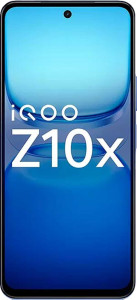
Across most connectivity fundamentals, these two phones are well-matched: both offer 5G, dual SIM, USB-C, identical Wi-Fi standards (Wi-Fi 5), and nearly equivalent download speeds (3300 vs. 3270 Mbps — a difference that is irrelevant in practice). Notably, neither device includes NFC, ruling out contactless payments for both. The Bluetooth version difference (5.3 vs. 5.4) is real but marginal enough that most users will never notice it in day-to-day use.
Two sensor and storage differences are worth paying attention to, however. The Narzo 80 Lite includes a microSD card slot for expandable storage, which the iQOO Z10x entirely lacks — a meaningful consideration if 128GB starts to feel tight and users want a budget-friendly way to add space for photos, videos, or offline media. On the flip side, the Z10x includes a gyroscope while the Narzo does not. A gyroscope is essential for accurate motion sensing, meaning it affects gameplay in many mobile titles, augmented reality applications, and image stabilization algorithms that rely on rotation data. Its absence on the Narzo is a genuine functional gap for certain use cases.
This group ends in a nuanced split. The Narzo 80 Lite wins on storage flexibility with its expandable memory support, while the iQOO Z10x has the edge for gaming and motion-sensitive applications thanks to its gyroscope. Which advantage matters more depends entirely on how the user intends to use the device.