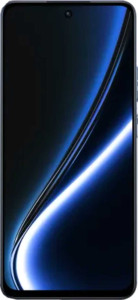
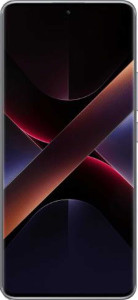
The shared connectivity foundation is solid on both devices: 5G, dual-SIM, Bluetooth 5.4, USB Type-C, and GPS with Galileo support are all present on either phone. However, the Poco X7 consistently extends that foundation in ways that add genuine daily utility. Most notably, it adds Wi-Fi 6 (802.11ax) to its wireless stack — a standard the Narzo 80 Pro omits, topping out at Wi-Fi 5. Wi-Fi 6 delivers higher throughput, lower latency in congested environments (such as offices or apartments with many connected devices), and improved battery efficiency during wireless transfers. For users on a modern router, this is a tangible real-world upgrade.
Two further omissions on the Narzo 80 Pro are worth flagging. It lacks NFC, which rules out contactless payments via Google Pay and similar services — a feature that has become a daily-use staple for many users. It also has no infrared sensor, meaning it cannot double as a universal remote for TVs and appliances, a convenience the Poco X7 supports. Neither of these is a dealbreaker in isolation, but together they represent a meaningful gap in everyday versatility.
Across this group, the Poco X7 holds a clear and consistent advantage. Wi-Fi 6, NFC, and an IR blaster are three distinct practical additions — each useful in its own right — that the Narzo 80 Pro simply does not offer. For users who rely on tap-to-pay, faster wireless networking, or smart home control from their phone, the Poco X7 is the more capable device here.