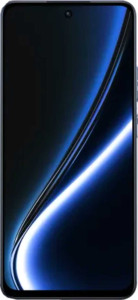
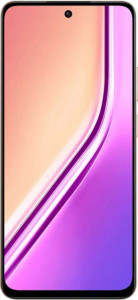
Realme Narzo 80x 5G
Realme P3x 5G

Realme Narzo 80x 5G Realme P3x 5G

Overview

Welcome to our detailed spec comparison between the Realme Narzo 80x 5G and the Realme P3x 5G. These two 5G smartphones share a remarkably similar foundation, yet differ in a few targeted areas that could matter greatly depending on your priorities. From display protection to NFC connectivity, this head-to-head breakdown will help you identify which device is the right fit for your lifestyle and daily needs.

Common Features

  • Both phones have an IP68 rating and are waterproof.
  • Neither phone has a rugged build.
  • Both phones weigh 197 g.
  • Both phones are 7.9 mm thick.
  • Both phones measure 165.7 mm in height and 76.2 mm in width.
  • Both phones feature a 6.72″ IPS LCD display.
  • Both phones have a 1080 x 2400 px resolution.
  • Both phones support a 120Hz refresh rate.
  • HDR10 support is not available on either phone.
  • HDR10+ support is not available on either phone.
  • Always-On Display is not available on either phone.
  • Dolby Vision support is not available on either phone.
  • Both phones are powered by the MediaTek Dimensity 6400 chipset.
  • Both phones come with 8GB of RAM running at 2133 MHz and 128GB of internal storage.
  • Both phones use an Arm Mali-G57 MC2 GPU clocked at 950 MHz.
  • Both phones have a dual-lens main camera with 50 & 2 MP and a maximum video recording of 1080p at 60 fps.
  • Optical image stabilization is not available on either phone.
  • Both phones run Android 15.
  • Both phones support 5G connectivity.
  • Both phones have a 6000 mAh battery with 45W fast charging and no wireless charging support.
  • A 3.5 mm audio jack is not present on either phone.
  • Stereo speakers are not available on either phone.
  • Both phones support Wi-Fi 5 (802.11ac) and Bluetooth 5.3.
  • Both phones have a USB Type-C port with USB 2.0.
  • Both phones support dual SIM and have an external memory slot.

Main Differences

  • Damage-resistant glass is present on the Realme Narzo 80x 5G but not available on the Realme P3x 5G.
  • Pixel density is 392 ppi on the Realme Narzo 80x 5G and 396 ppi on the Realme P3x 5G.
  • NFC support is present on the Realme P3x 5G but not available on the Realme Narzo 80x 5G.
Specs Comparison
Realme Narzo 80x 5G

Realme Narzo 80x 5G

Realme P3x 5G

Realme P3x 5G

Design:
water resistance Waterproof Waterproof
weight 197 g 197 g
thickness 7.9 mm 7.9 mm
width 76.2 mm 76.2 mm
height 165.7 mm 165.7 mm
volume 99.748086 cm³ 99.748086 cm³
Ingress Protection (IP) rating IP68 IP68
has a rugged build
can be folded

In terms of design, the Realme Narzo 80x 5G and the Realme P3x 5G are identical across every measurable dimension. Both share the same 165.7 × 76.2 × 7.9 mm footprint, the same 197 g weight, and an identical calculated volume of 99.75 cm³. In practice, this means users would be unable to tell the two devices apart by feel or size alone — they occupy exactly the same space in hand or pocket.

Both phones carry an IP68 waterproof rating, confirming they can withstand submersion beyond casual splashing. This is a meaningful shared feature, as IP68 protection is typically found on mid-to-upper-range devices and offers genuine peace of mind for everyday use near water. Neither device features a rugged build or a foldable form factor, positioning both squarely as standard candy-bar smartphones.

Given that every design specification is perfectly matched — dimensions, weight, water resistance, and build type — there is no winner in this category. The two phones are, by all provided design metrics, physically indistinguishable. A buyer prioritizing form factor or durability will find no reason to choose one over the other based on design alone.

Display:
Display type LCD, IPS LCD, IPS
screen size 6.72" 6.72"
pixel density 392 ppi 396 ppi
resolution 1080 x 2400 px 1080 x 2400 px
refresh rate 120Hz 120Hz
has branded damage-resistant glass
supports HDR10
supports HDR10+
Always-On Display
supports Dolby Vision
Has a secondary screen
has a touch screen

Both the Realme Narzo 80x 5G and the Realme P3x 5G feature a 6.72″ LCD IPS panel at 1080 × 2400 resolution with a 120Hz refresh rate — meaning everyday visual experience, scrolling smoothness, and color rendering will feel virtually identical on both devices. LCD IPS at this resolution is a solid choice for a mid-range phone, delivering accurate colors and wide viewing angles, though it falls short of the deeper blacks and superior contrast ratios offered by AMOLED alternatives.

The one differentiator in this category is damage-resistant glass: the Narzo 80x 5G ships with branded protection, while the P3x 5G does not. This is a meaningful real-world advantage — scratch and crack resistance directly affects the long-term condition of the screen, especially for users who carry their phone without a case. The pixel density difference (392 ppi vs 396 ppi) is negligible and imperceptible to the human eye at normal viewing distances.

Neither phone supports HDR10, HDR10+, or Dolby Vision, so content from streaming platforms will not benefit from enhanced dynamic range. Overall, the Narzo 80x 5G holds a narrow but practical edge in this category solely due to its branded damage-resistant glass — a durability advantage that matters over the lifespan of the device.

Performance:
internal storage 128GB 128GB
RAM 8GB 8GB
Chipset (SoC) name MediaTek Dimensity 6400 MediaTek Dimensity 6400
GPU name Arm Mali-G57 MC2 Arm Mali-G57 MC2
CPU speed 2 x 2.5 & 6 x 2 GHz 2 x 2.5 & 6 x 2 GHz
GPU clock speed 950 MHz 950 MHz
Has integrated LTE
RAM speed 2133 MHz 2133 MHz
semiconductor size 6 nm 6 nm
Supports 64-bit
DirectX version DirectX 12 DirectX 12
Has integrated graphics
Uses big.LITTLE technology
maximum memory bandwidth 17.1 GB/s 17.1 GB/s
uses multithreading
DDR memory version 4 4
supported displays 1 1

Under the hood, the Realme Narzo 80x 5G and the Realme P3x 5G are carbon copies of each other. Both are powered by the MediaTek Dimensity 6400 chipset, built on a 6 nm process, paired with 8GB of DDR4 RAM and 128GB of internal storage. The 6 nm fabrication node strikes a reasonable balance between power efficiency and thermal management for a mid-range device, and the Dimensity 6400's big.LITTLE CPU configuration — two performance cores at 2.5 GHz and six efficiency cores at 2.0 GHz — means the phones can intelligently shift workloads to preserve battery during lighter tasks.

Graphics are handled by the Arm Mali-G57 MC2 GPU at 950 MHz, supporting DirectX 12. This is a capable but modest GPU — suitable for casual gaming and everyday graphical tasks, though not intended for demanding 3D titles at high settings. The 17.1 GB/s maximum memory bandwidth and 2133 MHz RAM speed are consistent with what this class of chipset typically delivers, ensuring smooth multitasking without bottlenecks in day-to-day use.

Since every single performance specification is identical across both devices, this category is an unambiguous tie. A buyer cannot differentiate the two phones on performance grounds — real-world speed, gaming capability, and multitasking behavior will be indistinguishable between them.

Cameras:
megapixels (main camera) 50 & 2 MP 50 & 2 MP
wide aperture (main camera) 2.4 & 1.8f 2.4 & 1.8f
Has a dual-lens (or multi-lens) main camera
has built-in optical image stabilization
video recording (main camera) 1080 x 60 fps 1080 x 60 fps
Has a dual-tone LED flash
has a BSI sensor
has a CMOS sensor
has continuous autofocus when recording movies
Has phase-detection autofocus for photos
supports slow-motion video recording
has a built-in HDR mode
has manual exposure
has a flash
optical zoom 0x 0x
has manual ISO
has a serial shot mode
has manual focus
has a front camera
Has laser autofocus
Shoots 360° panorama
has manual white balance
shoots raw
has touch autofocus
has manual shutter speed
can create panoramas in-camera
Has timelapse function
Has a front-facing LED flash
has a dual-lens (or multi-lens) front camera
supports HDR10 recording
supports Dolby Vision recording
has a front-facing camera under the display
Has a RGB LED flash
has 3D photo/video recording capabilities

The camera systems on the Realme Narzo 80x 5G and the Realme P3x 5G are identical in every specified detail. Both feature a dual rear camera setup led by a 50 MP primary sensor with an f/1.8 aperture, paired with a 2 MP depth sensor at f/2.4. The wide main aperture is a positive trait for low-light photography, allowing more light to reach the sensor. The 2 MP secondary lens serves primarily as a portrait depth aid rather than a versatile shooter, which is a common configuration at this price tier.

Video capability tops out at 1080p at 60 fps on both devices — a respectable ceiling for mid-range phones, delivering smooth footage for social media and casual recording. Neither phone offers optical image stabilization, which means handheld video may show noticeable shake, particularly in motion. On the feature side, both support phase-detection autofocus, continuous autofocus during recording, slow-motion video, timelapse, HDR mode, and a solid range of manual controls including ISO, exposure, focus, and white balance — giving users meaningful creative flexibility without needing a third-party app.

With no differentiating spec across the entire camera group, this is a complete tie. Both phones will deliver the same photographic and video experience, and neither holds any camera-related advantage over the other.

Operating system:
Android version Android 15 Android 15
has clipboard warnings
has location privacy options
has camera/microphone privacy options
has Mail Privacy Protection
has theme customization
can block app tracking
blocks cross-site tracking
has on-device machine learning
has notification permissions
has media picker
Can play games while they download
has dark mode
has Wi-Fi password sharing
has battery health check
has an extra dim mode
has focus modes
has dynamic theming
can offload apps
Has customizable notifications
has Live Text
has full-page screenshots
supports split screen
gets direct OS updates
has PiP
Can be used as a PC
Has sharing intents
has a child lock
Supports widgets
Is free and open source
Has offline voice recognition
has voice commands
Tracks the current position of a mobile device
is a multi-user system
has Quick Start

Running Android 15 out of the box, both the Realme Narzo 80x 5G and the Realme P3x 5G arrive with the same software foundation. Android 15 brings a mature privacy and customization toolkit that both phones fully share — including granular controls over location, camera, and microphone access, app tracking blocking, and on-device machine learning. These privacy features are increasingly important as users grow more conscious of how apps handle their data, and having them baked into the OS rather than requiring third-party tools is a genuine everyday benefit.

On the usability side, both devices support a strong common feature set: split-screen multitasking, Picture-in-Picture, dynamic theming, customizable notifications, offline voice recognition, and full-page screenshots. Notably, neither phone receives direct OS updates — meaning updates are routed through the manufacturer rather than pushed straight from Google. This can result in delays in receiving security patches and new Android features, which is a shared limitation worth keeping in mind for long-term ownership.

Every operating system specification listed is identical across both devices, making this category a straight tie. A user's software experience — from privacy controls to productivity features — will be indistinguishable between the Narzo 80x 5G and the P3x 5G.

Battery:
battery power 6000 mAh 6000 mAh
has wireless charging
Supports fast charging
charging speed 45W 45W
has a removable battery
has a battery level indicator
has a rechargeable battery

A 6000 mAh battery is a standout capacity for a mid-range device, and both the Realme Narzo 80x 5G and the Realme P3x 5G carry exactly that. At this capacity — paired with the power-efficient Dimensity 6400 chipset — users can realistically expect to stretch comfortably through a full day of heavy use, or even into a second day with moderate usage. This is a genuinely strong battery specification that prioritizes endurance over compactness.

Recharging is equally matched, with both phones supporting 45W fast charging. This speed meaningfully reduces time spent tethered to a wall — a large battery that charges slowly would undermine the endurance advantage, but 45W keeps that concern at bay. Neither device supports wireless charging, which is a common omission at this price segment and unlikely to be a dealbreaker for most buyers in this category.

With a perfectly mirrored battery specification across capacity, charging speed, and all other attributes, this category is an unequivocal tie. Both phones offer the same real-world endurance and the same charging convenience — a buyer will experience no difference in day-to-day battery life between the two.

Audio:
has a socket for a 3.5 mm audio jack
has stereo speakers
has LDAC
has aptX Lossless
Has a radio

Audio is an area where both the Realme Narzo 80x 5G and the Realme P3x 5G share the same set of limitations. Neither device includes a 3.5 mm headphone jack, which means wired audio requires a USB-C adapter — an extra accessory that not all users will have on hand. This is an increasingly common trade-off in modern smartphones, but it remains a genuine inconvenience for those who prefer traditional wired headphones.

Speakers are mono on both phones, with no stereo speaker setup present. For media consumption — whether streaming videos, listening to music, or taking calls on speakerphone — mono output produces a flatter, less immersive soundstage compared to a stereo configuration. Users who prioritize speaker quality for entertainment will likely want to use headphones or an external Bluetooth speaker instead. Neither phone supports LDAC or aptX Lossless, so high-resolution wireless audio over Bluetooth is not an option on either device.

With every audio specification identical — and universally absent of premium features — this category is a tie by default. Neither phone holds any audio advantage, and both present the same trade-offs to a prospective buyer.

Connectivity & Features:
release date April 2025 February 2025
has 5G support
Wi-Fi version Wi-Fi 4 (802.11n), Wi-Fi 5 (802.11ac) Wi-Fi 4 (802.11n), Wi-Fi 5 (802.11ac)
SIM cards 2 SIM 2 SIM
Bluetooth version 5.3 5.3
has an external memory slot
Has USB Type-C
USB version 2 2
has NFC
download speed 3300 MBits/s 3300 MBits/s
Has a fingerprint scanner
has emergency SOS via satellite
has crash detection
is DLNA-certified
has a gyroscope
supports ANT+
Has a heart rate monitor
has GPS
has a compass
supports Wi-Fi
Has an infrared sensor
has an accelerometer
has a cellular module
Has a barometer
has an HDMI output
Uses 3D facial recognition
Has an iris scanner
Stylus included
supports Galileo
Has motion tracking
Has optical tracking
Has a built-in projector

Across most connectivity fundamentals, the Realme Narzo 80x 5G and the Realme P3x 5G are evenly matched. Both support 5G, dual SIM, Wi-Fi 5 (802.11ac), Bluetooth 5.3, expandable storage via a microSD slot, and USB Type-C — a solid and practical connectivity package for a mid-range device. Bluetooth 5.3 is a relatively recent version, offering improved connection stability and slightly better energy efficiency compared to older iterations, which benefits wireless audio and peripheral pairing.

The one meaningful differentiator in this category is NFC: the P3x 5G includes it, the Narzo 80x 5G does not. NFC enables contactless payments, quick device pairing, and tap-to-transfer functionality — features that have become a daily convenience for a growing number of users. For anyone who regularly uses mobile payments or relies on NFC-based workflows, this is a clear and practical advantage for the P3x 5G. Both phones share the same sensor suite — gyroscope, accelerometer, compass, and GPS with Galileo support — and neither offers an infrared sensor or fingerprint-alternative biometrics beyond the standard scanner.

The Realme P3x 5G holds a clear edge in this category purely on the strength of its NFC inclusion. Every other connectivity and feature specification is identical between the two phones, making NFC the single deciding factor for users who value contactless functionality.

Miscellaneous:
has a video light
Has sapphire glass display
Has a curved display
Has an e-paper display

The miscellaneous specs for the Realme Narzo 80x 5G and the Realme P3x 5G are identical across every listed attribute. Both include a video light — essentially a torch that can be used to illuminate subjects during video recording — and neither features a curved display, sapphire glass, or an e-paper display. The absence of sapphire glass is unsurprising at this price tier, as that material is typically reserved for ultra-premium devices; both phones instead rely on their respective screen protection solutions noted in the display category.

The lack of a curved display is a deliberate and practical choice — flat panels are generally easier to apply screen protectors to and less prone to accidental edge touches, making them the preferred option for everyday usability in the mid-range segment. The absence of an e-paper display is equally expected, as that technology remains niche and is found only on specialized devices.

With no differentiating attributes present, this category is a tie. The shared miscellaneous feature set is modest but functional, and neither phone gains any advantage over the other based on the provided data.

Comparison Summary & Verdict

After a thorough comparison, it is clear that the Realme Narzo 80x 5G and Realme P3x 5G are nearly identical in most respects, sharing the same MediaTek Dimensity 6400 chipset, 6000 mAh battery with 45W charging, IP68 waterproofing, and a 6.72″ 120Hz LCD display. The deciding factors come down to two key differences. The Realme Narzo 80x 5G stands out with its damage-resistant glass, offering better screen durability for users prone to drops. On the other hand, the Realme P3x 5G gains the edge with built-in NFC support, making it the better choice for users who rely on contactless payments or data transfers. Choose based on what matters most to you: screen protection or wireless convenience.

Realme Narzo 80x 5G
Buy Realme Narzo 80x 5G if...

Buy the Realme Narzo 80x 5G if screen durability is a priority for you, as it features damage-resistant glass that the P3x 5G lacks.

Realme P3x 5G
Buy Realme P3x 5G if...

Buy the Realme P3x 5G if you rely on contactless payments or NFC-based features, since it includes NFC support that the Narzo 80x 5G does not offer.