Realme P3 Lite 4G
Xiaomi Redmi Note 14 5G (Global) (256GB / 8GB RAM)

Realme P3 Lite 4G Xiaomi Redmi Note 14 5G (Global) (256GB / 8GB RAM)

Overview

Welcome to our in-depth comparison of the Realme P3 Lite 4G and the Xiaomi Redmi Note 14 5G (Global) (256GB / 8GB RAM). Both phones share a 6.67″ OLED display with a 120Hz refresh rate and 45W fast charging, yet they diverge sharply in areas like display quality, processing performance, and water resistance. Read on to discover which device best fits your needs.

Common Features

  • Neither product has a rugged build.
  • Neither product can be folded.
  • Both products feature an OLED/AMOLED display type.
  • Both products have a 6.67″ screen size.
  • Both products support a 120Hz refresh rate.
  • Neither product supports Dolby Vision.
  • Neither product has a secondary screen.
  • Both products have a touchscreen.
  • Both products have integrated LTE.
  • Both products support 64-bit processing.
  • Both products have integrated graphics.
  • Both products use big.LITTLE technology.
  • Both products support OpenCL version 2.
  • Both products use multithreading.
  • Both products record main camera video at 1080 x 30 fps.
  • Neither product has a dual-tone LED flash.
  • Both products have a single LED flash.
  • Neither product has a BSI sensor.
  • Both products have a CMOS sensor.
  • Both products support continuous autofocus when recording movies.
  • Both products support phase-detection autofocus for photos.
  • Both products support slow-motion video recording.
  • Both products display clipboard warnings.
  • Both products have location privacy options.
  • Both products have camera and microphone privacy options.
  • Neither product has Mail Privacy Protection.
  • Both products support theme customization.
  • Both products can block app tracking.
  • Neither product blocks cross-site tracking.
  • Both products have on-device machine learning.
  • Neither product supports wireless charging.
  • Both products support fast charging at 45W.
  • Both products come with a charger.
  • Neither product has a removable battery.
  • Both products have a battery level indicator.
  • Both products have a rechargeable battery.
  • Both products have a 3.5mm audio jack.
  • Both products have stereo speakers.
  • Neither product supports aptX, aptX HD, aptX Adaptive, or aptX Lossless.
  • Both products support dual SIM cards.
  • Both products have an external memory slot.
  • Both products have a USB Type-C port.
  • Both products use USB version 2.
  • Both products have NFC.
  • Both products have a fingerprint scanner.
  • Neither product has emergency SOS via satellite.
  • Neither product has crash detection.
  • Both products have a video light.
  • Neither product has a sapphire glass display.
  • Neither product has a curved display.
  • Neither product has an e-paper display.

Main Differences

  • Water resistance is rated as Waterproof (IP68) on Realme P3 Lite 4G, while the Xiaomi Redmi Note 14 5G (Global) (256GB / 8GB RAM) is Water resistant (IP64).
  • Weight is 196 g on Realme P3 Lite 4G and 190 g on Xiaomi Redmi Note 14 5G (Global) (256GB / 8GB RAM).
  • Thickness is 7.8 mm on Realme P3 Lite 4G and 8 mm on Xiaomi Redmi Note 14 5G (Global) (256GB / 8GB RAM).
  • Width is 75.9 mm on Realme P3 Lite 4G and 75.7 mm on Xiaomi Redmi Note 14 5G (Global) (256GB / 8GB RAM).
  • Height is 165.8 mm on Realme P3 Lite 4G and 162.4 mm on Xiaomi Redmi Note 14 5G (Global) (256GB / 8GB RAM).
  • Pixel density is 264 ppi on Realme P3 Lite 4G and 395 ppi on Xiaomi Redmi Note 14 5G (Global) (256GB / 8GB RAM).
  • Resolution is 720 x 1604 px on Realme P3 Lite 4G and 1080 x 2400 px on Xiaomi Redmi Note 14 5G (Global) (256GB / 8GB RAM).
  • Damage-resistant branded glass is present on Xiaomi Redmi Note 14 5G (Global) (256GB / 8GB RAM) but not available on Realme P3 Lite 4G.
  • HDR10 support is present on Xiaomi Redmi Note 14 5G (Global) (256GB / 8GB RAM) but not available on Realme P3 Lite 4G.
  • HDR10+ support is present on Xiaomi Redmi Note 14 5G (Global) (256GB / 8GB RAM) but not available on Realme P3 Lite 4G.
  • Always-On Display is available on Xiaomi Redmi Note 14 5G (Global) (256GB / 8GB RAM) but not on Realme P3 Lite 4G.
  • Contrast ratio is 1500:1 on Realme P3 Lite 4G and 5000000:1 on Xiaomi Redmi Note 14 5G (Global) (256GB / 8GB RAM).
  • Internal storage is 128GB on Realme P3 Lite 4G and 256GB on Xiaomi Redmi Note 14 5G (Global) (256GB / 8GB RAM).
  • RAM is 6GB on Realme P3 Lite 4G and 8GB on Xiaomi Redmi Note 14 5G (Global) (256GB / 8GB RAM).
  • The chipset is Unisoc T7250 on Realme P3 Lite 4G and MediaTek Dimensity 7025 on Xiaomi Redmi Note 14 5G (Global) (256GB / 8GB RAM).
  • The GPU is Mali G57 on Realme P3 Lite 4G and IMG BXM-8-256 on Xiaomi Redmi Note 14 5G (Global) (256GB / 8GB RAM).
  • CPU speed is 2 x 1.8 & 6 x 1.6 GHz on Realme P3 Lite 4G and 2 x 2.5 & 6 x 2 GHz on Xiaomi Redmi Note 14 5G (Global) (256GB / 8GB RAM).
  • Geekbench 6 multi-core score is 1461 on Realme P3 Lite 4G and 2291 on Xiaomi Redmi Note 14 5G (Global) (256GB / 8GB RAM).
  • Geekbench 6 single-core score is 437 on Realme P3 Lite 4G and 884 on Xiaomi Redmi Note 14 5G (Global) (256GB / 8GB RAM).
  • RAM speed is 1866 MHz on Realme P3 Lite 4G and 2750 MHz on Xiaomi Redmi Note 14 5G (Global) (256GB / 8GB RAM).
  • Semiconductor size is 12 nm on Realme P3 Lite 4G and 6 nm on Xiaomi Redmi Note 14 5G (Global) (256GB / 8GB RAM).
  • The main camera is a single 32 MP lens on Realme P3 Lite 4G, while Xiaomi Redmi Note 14 5G (Global) (256GB / 8GB RAM) has a multi-lens setup of 108, 8, and 2 MP.
  • Optical image stabilization is present on Xiaomi Redmi Note 14 5G (Global) (256GB / 8GB RAM) but not available on Realme P3 Lite 4G.
  • Front camera resolution is 16 MP on Realme P3 Lite 4G and 20 MP on Xiaomi Redmi Note 14 5G (Global) (256GB / 8GB RAM).
  • Android version is Android 15 on Realme P3 Lite 4G and Android 14 on Xiaomi Redmi Note 14 5G (Global) (256GB / 8GB RAM).
  • The ability to offload apps is available on Realme P3 Lite 4G but not on Xiaomi Redmi Note 14 5G (Global) (256GB / 8GB RAM).
  • Battery capacity is 6000 mAh on Realme P3 Lite 4G and 5110 mAh on Xiaomi Redmi Note 14 5G (Global) (256GB / 8GB RAM).
  • LDAC support is present on Xiaomi Redmi Note 14 5G (Global) (256GB / 8GB RAM) but not available on Realme P3 Lite 4G.
  • A built-in radio is available on Xiaomi Redmi Note 14 5G (Global) (256GB / 8GB RAM) but not on Realme P3 Lite 4G.
  • 5G support is available on Xiaomi Redmi Note 14 5G (Global) (256GB / 8GB RAM) but not on Realme P3 Lite 4G.
  • Wi-Fi versions supported are Wi-Fi 4, Wi-Fi 5, and Wi-Fi 6 on Realme P3 Lite 4G, while Xiaomi Redmi Note 14 5G (Global) (256GB / 8GB RAM) supports Wi-Fi 4 and Wi-Fi 5 only.
  • Bluetooth version is 5.2 on Realme P3 Lite 4G and 5.3 on Xiaomi Redmi Note 14 5G (Global) (256GB / 8GB RAM).
  • Download speed is 300 MBits/s on Realme P3 Lite 4G and 2770 MBits/s on Xiaomi Redmi Note 14 5G (Global) (256GB / 8GB RAM).
  • An infrared sensor is present on Xiaomi Redmi Note 14 5G (Global) (256GB / 8GB RAM) but not available on Realme P3 Lite 4G.
Specs Comparison
Realme P3 Lite 4G

Realme P3 Lite 4G

Xiaomi Redmi Note 14 5G (Global) (256GB / 8GB RAM)

Xiaomi Redmi Note 14 5G (Global) (256GB / 8GB RAM)

Design:
water resistance Waterproof Water resistant
weight 196 g 190 g
thickness 7.8 mm 8 mm
width 75.9 mm 75.7 mm
height 165.8 mm 162.4 mm
volume 98.156916 cm³ 98.34944 cm³
Ingress Protection (IP) rating IP68 IP64
has a rugged build
can be folded

Both phones share a broadly similar physical footprint, but a closer look reveals meaningful differences. The Realme P3 Lite 4G is slightly taller (165.8 mm vs 162.4 mm) and marginally thinner (7.8 mm vs 8 mm), while the Redmi Note 14 5G is a touch lighter at 190 g compared to 196 g. In practice, none of these gaps are dramatic enough to feel significant in daily handling — both phones occupy nearly identical volume and will feel similarly sized in the hand.

Where the two genuinely diverge is water protection. The Realme P3 Lite carries an IP68 rating, meaning it is fully waterproof and can withstand submersion in water — a level of protection more commonly found on premium devices. The Redmi Note 14, by contrast, is rated IP64, which covers dust resistance and protection against water splashes, but offers no submersion protection whatsoever. This is not a minor distinction: IP68 provides real peace of mind in rain, near pools, or accidental drops in water, while IP64 only handles incidental splashes.

Neither phone has a rugged build or a foldable form factor, so those are non-factors here. Overall, the Realme P3 Lite 4G holds a clear design-category edge due to its substantially superior water resistance rating — the Redmi Note 14's slight weight advantage does not compensate for that meaningful gap in durability protection.

Display:
Display type OLED/AMOLED OLED/AMOLED
screen size 6.67" 6.67"
pixel density 264 ppi 395 ppi
resolution 720 x 1604 px 1080 x 2400 px
refresh rate 120Hz 120Hz
has branded damage-resistant glass
supports HDR10
supports HDR10+
Always-On Display
supports Dolby Vision
contrast ratio 1500:1 5000000:1
Has a secondary screen
has a touch screen

On the surface, these two screens look identical: same 6.67″ OLED/AMOLED panel, same 120Hz refresh rate. But the similarities end there. The Redmi Note 14 5G packs a 1080 x 2400 px resolution at 395 ppi, versus the Realme P3 Lite's 720 x 1604 px at just 264 ppi. That 130+ ppi gap is clearly visible in everyday use — text appears noticeably crisper, fine details in images are sharper, and UI elements look cleaner on the Redmi. At this screen size, 264 ppi is on the lower end for an OLED panel and may show a degree of pixel structure to attentive eyes.

The contrast ratio gap is even more telling. The Realme P3 Lite lists 1500:1, while the Redmi Note 14 claims 5,000,000:1 — a figure more representative of true OLED deep-black performance. Additionally, the Redmi supports HDR10 and HDR10+, meaning compatible streaming content will display with a wider dynamic range and more vivid highlights. Its Always-On Display adds everyday convenience for glancing at notifications without waking the screen. The Realme supports none of these.

The Redmi Note 14 also benefits from branded damage-resistant glass, offering an added layer of scratch protection the Realme lacks. Across every meaningful display metric — resolution, pixel density, contrast, HDR support, and screen protection — the Redmi Note 14 5G holds a commanding and clear advantage. For anyone who prioritizes display quality, there is no close call here.

Performance:
internal storage 128GB 256GB
RAM 6GB 8GB
Chipset (SoC) name Unisoc T7250 MediaTek Dimensity 7025
GPU name Mali G57 IMG BXM-8-256
CPU speed 2 x 1.8 & 6 x 1.6 GHz 2 x 2.5 & 6 x 2 GHz
Geekbench 6 result (multi) 1461 2291
Geekbench 6 result (single) 437 884
Geekbench 5 result (multi) 1350 1890
Geekbench 5 result (single) 357 690
GPU clock speed 850 MHz 900 MHz
Has integrated LTE
RAM speed 1866 MHz 2750 MHz
semiconductor size 12 nm 6 nm
Supports 64-bit
Has integrated graphics
Uses big.LITTLE technology
OpenCL version 2 2
maximum memory amount 12GB 16GB
uses multithreading
DDR memory version 4 5
shading units 64 18

The Realme P3 Lite 4G and Xiaomi Redmi Note 14 5G differ significantly in their performance specifications. The Realme P3 Lite 4G has 128GB of internal storage and 6GB of RAM, while the Xiaomi Redmi Note 14 5G comes with a larger 256GB of internal storage and 8GB of RAM, providing more space and memory for handling apps and multitasking. The Realme model has a Unisoc T7250 chipset with a CPU clocked at 2 x 1.8 GHz and 6 x 1.6 GHz, while the Xiaomi uses the MediaTek Dimensity 7025, which runs at a higher speed of 2 x 2.5 GHz and 6 x 2 GHz, giving it an overall faster CPU performance.

In terms of benchmarking, the Realme P3 Lite 4G has Geekbench 6 multi-core and single-core scores of 1461 and 437, respectively, while the Xiaomi Redmi Note 14 5G scores 2291 in multi-core and 884 in single-core, indicating a significant performance gap between the two devices. The Realme device's GPU is a Mali G57 with a clock speed of 850 MHz, whereas the Xiaomi’s GPU is an IMG BXM-8-256, which operates at 900 MHz, slightly higher than the Realme's GPU clock speed.

The Realme P3 Lite 4G uses LPDDR4 RAM with a speed of 1866 MHz and a semiconductor size of 12 nm, while the Xiaomi Redmi Note 14 5G has faster LPDDR5 RAM running at 2750 MHz, with a smaller 6 nm semiconductor size, offering potentially better energy efficiency and performance. The Realme device supports up to 12GB of RAM, while the Xiaomi can support up to 16GB. Both devices support 64-bit architecture, have integrated LTE, and use big.LITTLE technology, but the Xiaomi’s performance specs overall suggest it is better equipped for demanding tasks and multitasking.

Cameras:
megapixels (main camera) 32 MP 108 & 8 & 2 MP
wide aperture (main camera) 1.8f 1.7 & 2.2 & 2.4f
Has a dual-lens (or multi-lens) main camera
megapixels (front camera) 16MP 20MP
has built-in optical image stabilization
video recording (main camera) 1080 x 30 fps 1080 x 30 fps
Has a dual-tone LED flash
number of flash LEDs 1 1
has a BSI sensor
has a CMOS sensor
has continuous autofocus when recording movies
Has phase-detection autofocus for photos
supports slow-motion video recording
has a built-in HDR mode
has manual exposure
has a flash
optical zoom 0x 0x
has manual ISO
has a serial shot mode
has manual focus
has a front camera
Has laser autofocus
Shoots 360° panorama
has manual white balance
shoots raw
has touch autofocus
has manual shutter speed
can create panoramas in-camera
wide aperture (front camera) 2.4f 2.2f
Has timelapse function
Has a front-facing LED flash
has a dual-lens (or multi-lens) front camera
supports HDR10 recording
supports Dolby Vision recording
has a front-facing camera under the display
Has a RGB LED flash
has 3D photo/video recording capabilities

The Realme P3 Lite 4G and Xiaomi Redmi Note 14 5G differ greatly in their camera setups. The Realme P3 Lite 4G features a 32 MP main camera with a wide aperture of 1.8f, while the Xiaomi Redmi Note 14 5G has a triple-camera setup with 108 MP, 8 MP, and 2 MP sensors, offering a wider aperture range from 1.7f to 2.4f for various lenses. This multi-lens configuration allows the Xiaomi phone to capture a broader range of images compared to the Realme's single main camera.

Both phones can record video at 1080p at 30 fps, but the Xiaomi has a more advanced setup with its optical image stabilization (OIS), which the Realme lacks. Additionally, both devices feature a flash with a single LED and support various camera functions like phase-detection autofocus, manual focus, and slow-motion recording. The Realme P3 Lite 4G has a 16 MP front camera with a 2.4f aperture, while the Xiaomi's front camera is 20 MP with a slightly wider 2.2f aperture.

Both phones have similar camera functions such as HDR mode, timelapse, and panorama creation, but the Xiaomi model offers the added benefit of OIS for better image stabilization. Neither device supports HDR10 or Dolby Vision recording, and both lack a front-facing LED flash and dual-lens front cameras. Overall, the Xiaomi Redmi Note 14 5G's multi-lens system and higher front camera resolution provide more versatility for photography compared to the Realme P3 Lite 4G's single main camera and front camera setup.

Operating system:
Android version Android 15 Android 14
has clipboard warnings
has location privacy options
has camera/microphone privacy options
has Mail Privacy Protection
has theme customization
can block app tracking
blocks cross-site tracking
has on-device machine learning
has notification permissions
has media picker
Can play games while they download
has dark mode
has Wi-Fi password sharing
has battery health check
has an extra dim mode
has focus modes
has dynamic theming
can offload apps
Has customizable notifications
has Live Text
has full-page screenshots
supports split screen
gets direct OS updates
has PiP
Can be used as a PC
Has sharing intents
has a child lock
Supports widgets
Is free and open source
Has offline voice recognition
has voice commands
Tracks the current position of a mobile device
is a multi-user system
has Quick Start

The Realme P3 Lite 4G and Xiaomi Redmi Note 14 5G both run on Android, but with different versions. The Realme P3 Lite 4G uses Android 15, while the Xiaomi Redmi Note 14 5G operates on Android 14. Both devices offer similar privacy features, including clipboard warnings, location privacy options, camera/microphone privacy options, and blocking app tracking. Neither has Mail Privacy Protection or blocks cross-site tracking.

Both phones also share several useful features, such as theme customization, dark mode, battery health check, PiP (Picture-in-Picture), split-screen support, Live Text, full-page screenshots, customizable notifications, offline voice recognition, and voice commands. They both track the device’s current position, have a multi-user system, and support widgets. However, the Realme P3 Lite 4G offers additional features, like the ability to offload apps, while the Xiaomi lacks this option. The Realme also supports dynamic theming and an extra dim mode.

Despite these similarities, the Realme P3 Lite 4G has a few features not present in the Xiaomi Redmi Note 14 5G, such as the ability to block app tracking, but neither device supports Quick Start or can be used as a PC. Neither gets direct OS updates, and both support sharing intents and have a child lock feature. Overall, while the software experience on both phones is similar, the Realme offers a few extra options for managing apps and themes.

Battery:
battery power 6000 mAh 5110 mAh
has wireless charging
Supports fast charging
charging speed 45W 45W
comes with a charger
has a removable battery
has a battery level indicator
has a rechargeable battery

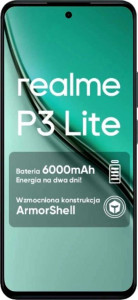
The Realme P3 Lite 4G and Xiaomi Redmi Note 14 5G both feature large batteries, but the Realme P3 Lite 4G offers a higher capacity of 6000 mAh compared to the 5110 mAh battery in the Xiaomi Redmi Note 14 5G. Both phones support fast charging at 45W, and neither supports wireless charging. Both also come with a charger included and feature non-removable rechargeable batteries. Additionally, both devices have a battery level indicator to monitor remaining power.

In terms of battery power, the Realme P3 Lite 4G has an advantage with its larger capacity, potentially providing longer usage between charges. However, both devices offer similar charging speeds and the same charging technology, so the time required to charge them would likely be similar.

Both phones offer the same basic battery features, but the Realme P3 Lite 4G’s larger battery might be better suited for users seeking longer battery life without charging. The Xiaomi's smaller battery may still offer good performance, but it will have a shorter runtime on a single charge compared to the Realme model.

Audio:
has a socket for a 3.5 mm audio jack
has stereo speakers
has aptX
has LDAC
has aptX HD
has aptX Adaptive
has aptX Lossless
Has a radio

Both the Realme P3 Lite 4G and Xiaomi Redmi Note 14 5G offer a 3.5 mm audio jack, allowing users to connect wired headphones. Both devices are equipped with stereo speakers for audio playback. However, when it comes to Bluetooth audio, the Xiaomi Redmi Note 14 5G has an advantage with support for LDAC, a high-quality audio codec, which the Realme P3 Lite 4G lacks. Neither phone supports aptX, aptX HD, aptX Adaptive, or aptX Lossless.

In addition, the Xiaomi device includes a radio feature, which the Realme P3 Lite 4G does not have. This means the Xiaomi offers the option for users to listen to FM radio without the need for an internet connection, while the Realme P3 Lite 4G does not provide this capability.

In terms of audio features, both devices are similar in terms of basic audio hardware like the headphone jack and stereo speakers, but the Xiaomi Redmi Note 14 5G stands out with its support for LDAC and the inclusion of a radio function.

Connectivity & Features:
release date October 2025 January 2025
has 5G support
Wi-Fi version Wi-Fi 4 (802.11n), Wi-Fi 5 (802.11ac), Wi-Fi 6 (802.11ax) Wi-Fi 4 (802.11n), Wi-Fi 5 (802.11ac)
SIM cards 2 SIM 2 SIM
Bluetooth version 5.2 5.3
has an external memory slot
Has USB Type-C
USB version 2 2
has NFC
download speed 300 MBits/s 2770 MBits/s
Has a fingerprint scanner
has emergency SOS via satellite
has crash detection
is DLNA-certified
has a gyroscope
supports ANT+
Has a heart rate monitor
has GPS
has a compass
supports Wi-Fi
Has an infrared sensor
has an accelerometer
has a cellular module
Has a barometer
has an HDMI output
Uses 3D facial recognition
Has an iris scanner
Stylus included
supports Galileo
Has motion tracking
Has optical tracking
Has a built-in projector

The Realme P3 Lite 4G and Xiaomi Redmi Note 14 5G differ significantly in their connectivity and features. The Realme P3 Lite 4G lacks 5G support, while the Xiaomi Redmi Note 14 5G supports 5G, which allows for faster mobile data speeds. Both phones support Wi-Fi 4 (802.11n), Wi-Fi 5 (802.11ac), and Wi-Fi 6 (802.11ax), though the Xiaomi device lacks Wi-Fi 6 support. Bluetooth versions differ as well, with the Realme using Bluetooth 5.2 and the Xiaomi using Bluetooth 5.3, offering slightly better connectivity performance in the latter.

Both phones offer dual SIM support, NFC, USB Type-C, and external memory slots. They also both have a fingerprint scanner for biometric security. The Realme device has a higher download speed of 300 MBits/s, while the Xiaomi is capable of a much faster 2770 MBits/s. Both phones are equipped with a gyroscope, GPS, and a compass, while the Xiaomi also includes an infrared sensor, which is absent on the Realme.

Neither phone features a barometer, HDMI output, 3D facial recognition, iris scanner, or a stylus. Both phones have Galileo support for navigation. The Realme P3 Lite 4G has a slight edge in download speed, while the Xiaomi Redmi Note 14 5G supports 5G, offers Bluetooth 5.3, and includes an infrared sensor. Additionally, both phones lack emergency SOS via satellite, crash detection, and motion/optical tracking features.

Miscellaneous:
has a video light
Has sapphire glass display
Has a curved display
Has an e-paper display

Both the Realme P3 Lite 4G and Xiaomi Redmi Note 14 5G come equipped with a video light, providing additional lighting for video recordings in low-light conditions. Neither device features sapphire glass displays, curved displays, or e-paper displays, indicating that both have standard display types with none of these specialized features.

In terms of unique display features, both phones are quite similar, offering a video light for better video clarity in various lighting conditions, but lacking the extra durability or specialty displays like sapphire glass or e-paper.

Overall, the Realme P3 Lite 4G and Xiaomi Redmi Note 14 5G have identical specs in this category, both featuring a video light but no advanced display technologies like sapphire glass, curved displays, or e-paper screens.

Comparison Summary & Verdict

After examining every specification, these two phones clearly target different types of users. The Realme P3 Lite 4G stands out with its superior IP68 waterproof rating, a larger 6000 mAh battery, Wi-Fi 6 support, and Android 15 out of the box — making it the stronger pick for users who prioritize durability and endurance. The Xiaomi Redmi Note 14 5G, on the other hand, pulls ahead with a significantly sharper 1080p OLED display at 395 ppi, a more powerful MediaTek Dimensity 7025 chipset, a versatile triple-camera system with OIS, 5G connectivity, and a much higher download speed of 2770 MBits/s. If raw performance, display quality, and future-proof connectivity matter most to you, the Xiaomi is the clear choice. If long battery life and top-tier water resistance are your priorities, the Realme delivers exceptional value.

Realme P3 Lite 4G
Buy Realme P3 Lite 4G if...

Buy the Realme P3 Lite 4G if you want a longer-lasting battery, full IP68 waterproofing, and Wi-Fi 6 support at a budget-friendly tier.

Xiaomi Redmi Note 14 5G (Global) (256GB / 8GB RAM)
Buy Xiaomi Redmi Note 14 5G (Global) (256GB / 8GB RAM) if...

Buy the Xiaomi Redmi Note 14 5G (Global) (256GB / 8GB RAM) if you prioritize a sharper Full HD+ display, stronger chipset performance, 5G connectivity, and a versatile triple-camera setup with optical image stabilization.