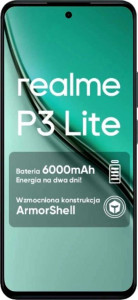
Three meaningful differences emerge from an otherwise closely matched connectivity profile. First, the Realme P3 Lite supports Wi-Fi 6 (802.11ax), while the ZTE Blade A76 tops out at Wi-Fi 5 (802.11ac). On a compatible router, Wi-Fi 6 delivers better throughput, lower latency under congestion, and improved efficiency in environments with many connected devices — a tangible upgrade for dense home networks or busy public Wi-Fi. Second, the P3 Lite includes a microSD card slot for expandable storage, a feature the Blade A76 entirely lacks. For users who shoot a lot of photos or store media locally, this flexibility is genuinely useful and hard to replicate in software.
Bluetooth tells a slightly different story. The Blade A76 carries Bluetooth 5.4 versus the P3 Lite's 5.2 — a newer revision that brings incremental improvements in connection reliability and efficiency. In everyday use the gap is minor, but it is the one connectivity spec where the Blade A76 holds the edge. Additionally, the P3 Lite includes a gyroscope while the Blade A76 does not, which matters for augmented reality apps, immersive gaming, and accurate motion-based navigation.
Cellular speeds, USB Type-C, dual SIM, GPS, and core sensors are shared between both phones, so those points are neutral. On balance, the Realme P3 Lite wins this group: its Wi-Fi 6 support, expandable storage, and gyroscope collectively outweigh the Blade A76's marginal Bluetooth version advantage.