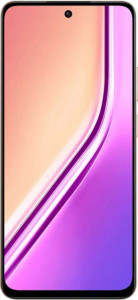
Realme P3x 5G
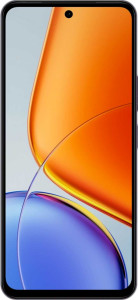
Vivo T4x 5G

Realme P3x 5G Vivo T4x 5G

Overview

Welcome to our in-depth comparison of the Realme P3x 5G and the Vivo T4x 5G — two 5G mid-range contenders that share more than a few similarities on paper. Both phones sport a 6.72″ 120Hz LCD display, 8GB of RAM, and Android 15, yet they diverge sharply when it comes to raw performance, water resistance, and everyday connectivity features. Read on as we break down every specification to help you decide which device truly fits your needs.

Common Features

  • Both phones share the same height of 165.7 mm.
  • Neither phone has a rugged build.
  • Neither phone can be folded.
  • Both phones feature an LCD IPS display type.
  • Both phones have a screen size of 6.72″.
  • Both phones support a 120Hz refresh rate.
  • Neither phone has branded damage-resistant glass.
  • Neither phone supports HDR10.
  • Neither phone supports HDR10+.
  • Neither phone has an Always-On Display.
  • Neither phone supports Dolby Vision.
  • Both phones come with 8GB of RAM.
  • Both phones support 64-bit processing.
  • Both phones use big.LITTLE technology.
  • Both phones have integrated LTE.
  • Both phones support DirectX 12.
  • Both phones have integrated graphics.
  • Both phones support only one external display.
  • Both phones have a dual-lens main camera with 50 and 2 MP sensors.
  • Both phones share the same wide aperture on the main camera of 2.4f and 1.8f.
  • Neither phone has built-in optical image stabilization.
  • Neither phone has a dual-tone LED flash.
  • Neither phone has a BSI sensor.
  • Both phones have a CMOS sensor.
  • Both phones have an 8MP front camera.
  • Both phones run Android 15.
  • Both phones have clipboard warnings.
  • Both phones have location privacy options.
  • Both phones have camera and microphone privacy options.
  • Neither phone has Mail Privacy Protection.
  • Both phones support theme customization.
  • Both phones can block app tracking.
  • Neither phone blocks cross-site tracking.
  • Neither phone supports wireless charging.
  • Both phones support fast charging.
  • Neither phone has a removable battery.
  • Both phones have a battery level indicator.
  • Both phones have a rechargeable battery.
  • Neither phone has a 3.5mm audio jack.
  • Neither phone has LDAC support.
  • Neither phone has aptX Lossless support.
  • Neither phone has a radio.
  • Both phones support 5G connectivity.
  • Both phones have dual SIM card slots.
  • Both phones have a USB Type-C port.
  • Both phones use USB version 2.
  • Both phones have a fingerprint scanner.
  • Neither phone has emergency SOS via satellite.
  • Neither phone has crash detection.
  • Neither phone is DLNA-certified.
  • Both phones have a video light.
  • Neither phone has a sapphire glass display.
  • Neither phone has a curved display.
  • Neither phone has an e-paper display.

Main Differences

  • Water resistance is rated as Waterproof on Realme P3x 5G and Water resistant on Vivo T4x 5G.
  • IP rating is IP68 on Realme P3x 5G and IP64 on Vivo T4x 5G.
  • Weight is 197g on Realme P3x 5G and 204g on Vivo T4x 5G.
  • Thickness is 7.9mm on Realme P3x 5G and 8.1mm on Vivo T4x 5G.
  • Width is 76.2mm on Realme P3x 5G and 76.3mm on Vivo T4x 5G.
  • Volume is 99.75 cm³ on Realme P3x 5G and 102.41 cm³ on Vivo T4x 5G.
  • Pixel density is 396 ppi on Realme P3x 5G and 393 ppi on Vivo T4x 5G.
  • Resolution is 1080 x 2400 px on Realme P3x 5G and 1080 x 2408 px on Vivo T4x 5G.
  • Internal storage is 128GB on Realme P3x 5G and 256GB on Vivo T4x 5G.
  • AnTuTu benchmark score is 450,300 on Realme P3x 5G and 685,000 on Vivo T4x 5G.
  • The chipset is MediaTek Dimensity 6400 on Realme P3x 5G and MediaTek Dimensity 7300 on Vivo T4x 5G.
  • The GPU is Arm Mali-G57 MC2 on Realme P3x 5G and Mali G615 MC2 on Vivo T4x 5G.
  • CPU speed is 2 x 2.5 & 6 x 2 GHz on Realme P3x 5G and 4 x 2.5 & 4 x 2 GHz on Vivo T4x 5G.
  • GPU clock speed is 950 MHz on Realme P3x 5G and 1047 MHz on Vivo T4x 5G.
  • RAM speed is 2133 MHz on Realme P3x 5G and 6400 MHz on Vivo T4x 5G.
  • Semiconductor size is 6nm on Realme P3x 5G and 4nm on Vivo T4x 5G.
  • DDR memory version is DDR4 on Realme P3x 5G and DDR5 on Vivo T4x 5G.
  • Main camera video recording maxes out at 1080p 60fps on Realme P3x 5G and 2160p 30fps on Vivo T4x 5G.
  • Battery capacity is 6000 mAh on Realme P3x 5G and 6500 mAh on Vivo T4x 5G.
  • Charging speed is 45W on Realme P3x 5G and 44W on Vivo T4x 5G.
  • Stereo speakers are present on Vivo T4x 5G but not available on Realme P3x 5G.
  • Wi-Fi versions supported are Wi-Fi 4 and Wi-Fi 5 on Realme P3x 5G, while Vivo T4x 5G additionally supports Wi-Fi 6.
  • Bluetooth version is 5.3 on Realme P3x 5G and 5.4 on Vivo T4x 5G.
  • An external memory slot is present on Realme P3x 5G but not available on Vivo T4x 5G.
  • NFC is present on Realme P3x 5G but not available on Vivo T4x 5G.
  • Download speed is 3300 Mbit/s on Realme P3x 5G and 3270 Mbit/s on Vivo T4x 5G.
  • An infrared sensor is present on Vivo T4x 5G but not available on Realme P3x 5G.
Specs Comparison
Realme P3x 5G

Realme P3x 5G

Vivo T4x 5G

Vivo T4x 5G

Design:
water resistance Waterproof Water resistant
weight 197 g 204 g
thickness 7.9 mm 8.1 mm
width 76.2 mm 76.3 mm
height 165.7 mm 165.7 mm
volume 99.748086 cm³ 102.407571 cm³
Ingress Protection (IP) rating IP68 IP64
has a rugged build
can be folded

In terms of physical form, these two phones are remarkably close. Both share an identical height of 165.7 mm and nearly the same width (~76.2–76.3 mm), meaning they will feel virtually the same in hand. The Realme P3x is marginally slimmer at 7.9 mm versus the Vivo T4x's 8.1 mm, and lighter at 197 g compared to 204 g — a 7 g difference that most users would not notice in daily use. Neither device has a rugged build or a foldable form factor, so both target the same conventional smartphone audience.

The most meaningful distinction in this group is water protection. The Realme P3x carries an IP68 rating, which means it is fully waterproof and can withstand submersion in water up to a defined depth and duration. The Vivo T4x, rated IP64, is only splash- and dust-resistant — it can handle rain or accidental splashes but should not be submerged. In real-world terms, IP68 offers significantly stronger peace of mind: dropping the P3x in a sink or puddle is a recoverable situation, whereas the same accident with the T4x carries a higher risk of damage.

Overall, the Realme P3x 5G holds a clear advantage in this group. Its superior IP68 waterproofing is a tangible, practical benefit that goes well beyond the minor dimensional differences between the two devices. If water resistance is any concern — whether for outdoor use, humid environments, or simple accident-proofing — the P3x is the stronger choice here.

Display:
Display type LCD, IPS LCD, IPS
screen size 6.72" 6.72"
pixel density 396 ppi 393 ppi
resolution 1080 x 2400 px 1080 x 2408 px
refresh rate 120Hz 120Hz
has branded damage-resistant glass
supports HDR10
supports HDR10+
Always-On Display
supports Dolby Vision
Has a secondary screen
has a touch screen

Both the Realme P3x 5G and Vivo T4x 5G use an LCD IPS panel at a 6.72″ screen size with a 120Hz refresh rate — meaning scrolling, animations, and casual gaming will feel equally fluid on either device. At this screen size and refresh rate tier, the day-to-day visual experience will be essentially indistinguishable between the two.

Pixel density tells a similar story: the P3x lands at 396 ppi while the T4x comes in at 393 ppi — a 3 ppi gap that is completely imperceptible to the human eye under any normal viewing condition. The resolution figures (1080×2400 vs. 1080×2408) reflect only a negligible aspect ratio rounding difference, not a meaningful quality gap. Neither phone supports HDR10, HDR10+, or Dolby Vision, and neither features Always-On Display or damage-resistant glass branding, so there are no hidden advantages on either side.

This group is effectively a tie. Every display specification that matters — panel technology, size, sharpness, and refresh rate — is either identical or differs by a margin too small to perceive in real use. Display quality should not be a deciding factor between these two phones.

Performance:
internal storage 128GB 256GB
RAM 8GB 8GB
AnTuTu benchmark score 450300 685000
Chipset (SoC) name MediaTek Dimensity 6400 MediaTek Dimensity 7300
GPU name Arm Mali-G57 MC2 Mali G615 MC2
CPU speed 2 x 2.5 & 6 x 2 GHz 4 x 2.5 & 4 x 2 GHz
GPU clock speed 950 MHz 1047 MHz
Has integrated LTE
RAM speed 2133 MHz 6400 MHz
semiconductor size 6 nm 4 nm
Supports 64-bit
DirectX version DirectX 12 DirectX 12
Has integrated graphics
Uses big.LITTLE technology
DDR memory version 4 5
supported displays 1 1

The chipset gap here is significant. The Vivo T4x 5G runs on the MediaTek Dimensity 7300 built on a 4 nm process, while the Realme P3x 5G uses the MediaTek Dimensity 6400 on a 6 nm node. A smaller semiconductor process generally means greater power efficiency and more transistor density — in practical terms, the T4x's chip can deliver more performance per watt, which benefits both speed and battery endurance under load. The AnTuTu scores make the real-world gap concrete: the T4x scores approximately 685,000 versus the P3x's 450,300 — a roughly 52% advantage that places these two phones in meaningfully different performance tiers.

Memory architecture reinforces the T4x's lead further. Its DDR5 RAM running at 6400 MHz is substantially faster than the P3x's DDR4 at 2133 MHz — faster memory reduces bottlenecks when multitasking or loading large assets in games. The T4x also ships with 256 GB of internal storage versus 128 GB on the P3x, doubling available space for apps, media, and files without any additional cost. The T4x's GPU clock of 1047 MHz versus 950 MHz on the P3x further widens the graphics rendering gap for gaming workloads.

The Vivo T4x 5G holds a clear and decisive advantage in this group. Across every meaningful performance dimension — chipset generation, process node, benchmark score, memory speed, and storage capacity — it outpaces the Realme P3x 5G by a substantial margin. Users who prioritize snappy performance, gaming, or heavy multitasking will find the T4x the stronger choice.

Cameras:
megapixels (main camera) 50 & 2 MP 50 & 2 MP
wide aperture (main camera) 2.4 & 1.8f 2.4 & 1.8f
Has a dual-lens (or multi-lens) main camera
megapixels (front camera) 8MP 8MP
has built-in optical image stabilization
video recording (main camera) 1080 x 60 fps 2160 x 30 fps
Has a dual-tone LED flash
has a BSI sensor
has a CMOS sensor
has continuous autofocus when recording movies
Has phase-detection autofocus for photos
supports slow-motion video recording
has a built-in HDR mode
has manual exposure
has a flash
optical zoom 0x 0x
has manual ISO
has a serial shot mode
has manual focus
has a front camera
Has laser autofocus
Shoots 360° panorama
has manual white balance
shoots raw
has touch autofocus
has manual shutter speed
can create panoramas in-camera
Has timelapse function
Has a front-facing LED flash
has a dual-lens (or multi-lens) front camera
supports HDR10 recording
supports Dolby Vision recording
has a front-facing camera under the display
Has a RGB LED flash
has 3D photo/video recording capabilities

Strip away the spec sheet and these two camera systems are nearly identical at the hardware level. Both feature a 50 MP + 2 MP dual rear setup with matching apertures, an 8 MP front camera, phase-detection autofocus, and the same manual controls — ISO, exposure, focus, and white balance. Neither offers optical image stabilization or optical zoom, so they share the same fundamental constraints when shooting in low light or at distance.

The one meaningful differentiator is video capability. The Vivo T4x 5G tops out at 4K (2160p) at 30 fps, while the Realme P3x 5G is capped at 1080p at 60 fps. For users who shoot video, this is a real distinction: 4K delivers significantly more detail and allows for cropping or reframing footage in post-production without quality loss, making the T4x the stronger tool for video creators. The P3x's 1080p/60fps ceiling, by contrast, limits flexibility for anyone editing or archiving high-resolution clips.

For still photography, this group is a tie — the hardware and feature sets are equivalent. For video, the Vivo T4x 5G has a clear edge thanks to its 4K recording capability, which is a tangible upgrade over the P3x's 1080p limit.

Operating system:
Android version Android 15 Android 15
has clipboard warnings
has location privacy options
has camera/microphone privacy options
has Mail Privacy Protection
has theme customization
can block app tracking
blocks cross-site tracking
has on-device machine learning
has notification permissions
has media picker
Can play games while they download
has dark mode
has Wi-Fi password sharing
has battery health check
has an extra dim mode
has focus modes
has dynamic theming
can offload apps
Has customizable notifications
has Live Text
has full-page screenshots
supports split screen
gets direct OS updates
has PiP
Can be used as a PC
Has sharing intents
has a child lock
Supports widgets
Is free and open source
Has offline voice recognition
has voice commands
Tracks the current position of a mobile device
is a multi-user system
has Quick Start

At the OS level, these two phones are a perfect mirror of each other. Both ship with Android 15 and carry an identical feature set across every tracked specification — from privacy controls like camera/microphone permissions and app tracking blockers, to usability features like split-screen, Picture-in-Picture, dynamic theming, and on-device machine learning. There is not a single differentiating data point in this group.

Notably, neither device receives direct OS updates — meaning software upgrades are routed through the manufacturer rather than pushed straight from Google. This is standard for most Android OEMs and affects update timeliness, but since both phones are in the same position, it does not create an advantage for either. The shared Android 15 baseline does ensure both benefit from the latest privacy architecture and system features at launch.

This group is a complete tie. Operating system capabilities should play no role in choosing between the Realme P3x 5G and Vivo T4x 5G, as every measured feature is identical across both devices.

Battery:
battery power 6000 mAh 6500 mAh
has wireless charging
Supports fast charging
charging speed 45W 44W
has a removable battery
has a battery level indicator
has a rechargeable battery

Both phones pack large batteries well above the mainstream threshold, but the Vivo T4x 5G edges ahead with a 6500 mAh cell versus the Realme P3x 5G's 6000 mAh. That 500 mAh difference — roughly an 8% larger reservoir — translates in practice to a modest but real extension of screen-on time, particularly noticeable during heavy usage days or when access to a charger is limited. For users who prioritize longevity between charges, the T4x has a tangible, if not dramatic, advantage.

Charging speed is essentially a wash. The P3x supports 45W fast charging while the T4x comes in at 44W — a 1W gap that produces no perceptible difference in real-world charging time. Both phones will replenish their batteries at comparable speeds. Neither device offers wireless charging, which is typical at this segment but worth noting for users who rely on charging pads.

The Vivo T4x 5G takes a narrow but genuine win in this group. Its larger 6500 mAh battery provides more endurance without any meaningful trade-off in charging speed, making it the better choice for battery-conscious users.

Audio:
has a socket for a 3.5 mm audio jack
has stereo speakers
has LDAC
has aptX Lossless
Has a radio

The audio spec sheet is sparse for both phones, but one difference stands out clearly. The Vivo T4x 5G features stereo speakers, while the Realme P3x 5G makes do with a single speaker. For media consumption — streaming videos, gaming, or listening to music without headphones — stereo output creates a noticeably wider and more immersive soundstage. A single speaker, by comparison, delivers mono audio that feels flat and directional, particularly when the phone is held in landscape orientation.

Everything else in this group is shared common ground. Neither phone includes a 3.5 mm headphone jack, meaning wired audio requires a USB-C adapter or a move to Bluetooth. Neither supports high-fidelity wireless codecs like LDAC or aptX Lossless, so audiophiles using wireless headphones will hit the same ceiling on both devices. There is no radio on either phone either.

The Vivo T4x 5G holds the clear advantage here. In an otherwise identical audio feature set, stereo speakers is a meaningful real-world upgrade that directly improves the loudspeaker experience for any user who watches content or plays games without headphones.

Connectivity & Features:
release date February 2025 March 2025
has 5G support
Wi-Fi version Wi-Fi 4 (802.11n), Wi-Fi 5 (802.11ac) Wi-Fi 4 (802.11n), Wi-Fi 6 (802.11ax), Wi-Fi 5 (802.11ac)
SIM cards 2 SIM 2 SIM
Bluetooth version 5.3 5.4
has an external memory slot
Has USB Type-C
USB version 2 2
has NFC
download speed 3300 MBits/s 3270 MBits/s
Has a fingerprint scanner
has emergency SOS via satellite
has crash detection
is DLNA-certified
has a gyroscope
supports ANT+
Has a heart rate monitor
has GPS
has a compass
supports Wi-Fi
Has an infrared sensor
has an accelerometer
has a cellular module
Has a barometer
has an HDMI output
Uses 3D facial recognition
Has an iris scanner
Stylus included
supports Galileo
Has motion tracking
Has optical tracking
Has a built-in projector

This group produces a genuine split, with each phone holding meaningful advantages in different areas. The Realme P3x 5G includes NFC and an external memory slot — two features absent on the Vivo T4x 5G. NFC enables contactless payments and quick device pairing, which for many users is a daily convenience. Expandable storage is equally practical: it lets users add capacity cheaply via a microSD card, compensating for a smaller internal storage ceiling without replacing the device.

The T4x counters with Wi-Fi 6 (802.11ax) support, whereas the P3x tops out at Wi-Fi 5. Wi-Fi 6 delivers better throughput, lower latency, and more efficient performance in congested network environments — a tangible benefit for users on modern routers or in busy households. The T4x also adds an infrared sensor, which allows the phone to function as a universal remote for TVs and other IR-controlled appliances — a niche but genuinely useful feature for some users. Bluetooth versions (5.3 vs 5.4) and cellular download speeds (3300 vs 3270 Mbps) differ negligibly and carry no real-world significance.

There is no single winner here — the right call depends on user priorities. The Realme P3x 5G is the better fit for users who rely on NFC payments or want expandable storage flexibility, while the Vivo T4x 5G has the edge for those with modern Wi-Fi 6 setups or who value the convenience of an infrared remote.

Miscellaneous:
has a video light
Has sapphire glass display
Has a curved display
Has an e-paper display

The miscellaneous spec group offers nothing to separate these two phones. Every tracked attribute — from the presence of a video light to the absence of sapphire glass, a curved display, or an e-paper screen — is identical across both the Realme P3x 5G and Vivo T4x 5G. There are no hidden differentiators here on either side.

This group is a complete tie and carries no weight in the decision between these two devices.

Comparison Summary & Verdict

After a thorough look at every specification, it is clear that both phones serve different kinds of buyers. The Realme P3x 5G stands out with its superior IP68 waterproofing, lighter 197g build, NFC support, and expandable storage — making it the stronger choice for users who value durability and everyday payment convenience. On the other hand, the Vivo T4x 5G pulls ahead decisively in raw performance thanks to its Dimensity 7300 chipset, DDR5 RAM, and a 685,000 AnTuTu score, while also offering 4K video recording, a larger 6500 mAh battery, stereo speakers, and Wi-Fi 6 support. If performance, media, and battery longevity are your top priorities, the Vivo T4x 5G is the clear pick; if protection, portability, and connectivity features matter most, the Realme P3x 5G earns its place.

Realme P3x 5G
Buy Realme P3x 5G if...

Buy the Realme P3x 5G if you prioritize superior IP68 waterproofing, a lighter and slimmer design, NFC for contactless payments, and the flexibility of expandable storage.

Vivo T4x 5G
Buy Vivo T4x 5G if...

Buy the Vivo T4x 5G if you want significantly stronger performance, a larger battery, 4K video recording, stereo speakers, and Wi-Fi 6 support for a richer multimedia experience.