Realme P4 Pro 5G
Xiaomi Redmi Note 14 Pro 4G (Global)

Realme P4 Pro 5G Xiaomi Redmi Note 14 Pro 4G (Global)

Overview

When comparing the Realme P4 Pro 5G and the Xiaomi Redmi Note 14 Pro 4G (Global), two mid-range contenders emerge with surprisingly different priorities. While both share a vibrant AMOLED display, stereo speakers, and fast charging, they diverge sharply on performance chipsets, battery capacity, and camera configurations. Whether raw power and endurance or versatile imaging and familiar extras matter most to you, this head-to-head breakdown will help you decide which phone fits your needs.

Common Features

  • Both phones are water resistant.
  • Neither phone has a rugged build.
  • Neither phone can be folded.
  • Both phones feature an OLED/AMOLED display.
  • Both phones have a typical brightness of 1800 nits.
  • Both phones have branded damage-resistant glass.
  • HDR10 support is available on both phones.
  • HDR10+ support is available on both phones.
  • Always-On Display is available on both phones.
  • Both phones share a contrast ratio of 5000000:1.
  • Neither phone has a secondary screen.
  • Both phones come with 12GB of RAM and 512GB of internal storage.
  • Both phones have integrated LTE and support 64-bit processing.
  • Both phones use big.LITTLE CPU technology.
  • Both phones have OpenGL ES version 3.2.
  • Both phones have a GPU clock speed of 1000 MHz.
  • Both phones feature a multi-lens main camera.
  • Both phones have a CMOS sensor.
  • Both phones support continuous autofocus when recording movies.
  • Both phones support phase-detection autofocus for photos.
  • Both phones support slow-motion video recording.
  • Both phones run on Android with clipboard warnings and location privacy options.
  • Both phones have camera and microphone privacy options.
  • Neither phone has Mail Privacy Protection.
  • Both phones support theme customization and can block app tracking.
  • Neither phone blocks cross-site tracking.
  • Both phones have on-device machine learning.
  • Wireless charging is not available on either phone.
  • Both phones support fast charging and come with a charger in the box.
  • Neither phone has a removable battery.
  • Both phones have a rechargeable battery with a battery level indicator.
  • Both phones feature stereo speakers.
  • Both phones support aptX and LDAC audio codecs.
  • Neither phone supports aptX HD, aptX Adaptive, or aptX Lossless.
  • Both phones support dual SIM cards.
  • Neither phone has an external memory slot.
  • Both phones feature USB Type-C at USB version 2.
  • Both phones have NFC and a fingerprint scanner.
  • Emergency SOS via satellite is not available on either phone.
  • Crash detection is not available on either phone.
  • Both phones have a video light.
  • Neither phone has a sapphire glass display or an e-paper display.

Main Differences

  • Weight is 189 g on Realme P4 Pro 5G and 180 g on Xiaomi Redmi Note 14 Pro 4G (Global).
  • Thickness is 7.7 mm on Realme P4 Pro 5G and 8.2 mm on Xiaomi Redmi Note 14 Pro 4G (Global).
  • Width is 76.2 mm on Realme P4 Pro 5G and 74.9 mm on Xiaomi Redmi Note 14 Pro 4G (Global).
  • Volume is 95.23 cm³ on Realme P4 Pro 5G and 99.62 cm³ on Xiaomi Redmi Note 14 Pro 4G (Global).
  • IP rating is IP66 on Realme P4 Pro 5G and IP64 on Xiaomi Redmi Note 14 Pro 4G (Global).
  • Screen size is 6.8″ on Realme P4 Pro 5G and 6.67″ on Xiaomi Redmi Note 14 Pro 4G (Global).
  • Pixel density is 453 ppi on Realme P4 Pro 5G and 395 ppi on Xiaomi Redmi Note 14 Pro 4G (Global).
  • Resolution is 1280 x 2800 px on Realme P4 Pro 5G and 1080 x 2400 px on Xiaomi Redmi Note 14 Pro 4G (Global).
  • Refresh rate is 144Hz on Realme P4 Pro 5G and 120Hz on Xiaomi Redmi Note 14 Pro 4G (Global).
  • Gorilla Glass version is 7i on Realme P4 Pro 5G and Victus 2 on Xiaomi Redmi Note 14 Pro 4G (Global).
  • Dolby Vision support is present on Xiaomi Redmi Note 14 Pro 4G (Global) but not available on Realme P4 Pro 5G.
  • The chipset is Qualcomm Snapdragon 7 Gen 4 on Realme P4 Pro 5G and MediaTek Helio G100 on Xiaomi Redmi Note 14 Pro 4G (Global).
  • Semiconductor size is 4 nm on Realme P4 Pro 5G and 6 nm on Xiaomi Redmi Note 14 Pro 4G (Global).
  • Maximum memory bandwidth is 33.6 GB/s on Realme P4 Pro 5G and 17.1 GB/s on Xiaomi Redmi Note 14 Pro 4G (Global).
  • DDR memory version is DDR5 on Realme P4 Pro 5G and DDR4 on Xiaomi Redmi Note 14 Pro 4G (Global).
  • DirectX version is 12 on Realme P4 Pro 5G and 11 on Xiaomi Redmi Note 14 Pro 4G (Global).
  • Main camera resolution is 50 & 2 MP on Realme P4 Pro 5G and 200 & 8 & 2 MP on Xiaomi Redmi Note 14 Pro 4G (Global).
  • Front camera resolution is 50 MP on Realme P4 Pro 5G and 32 MP on Xiaomi Redmi Note 14 Pro 4G (Global).
  • Optical image stabilization is present on Realme P4 Pro 5G but not available on Xiaomi Redmi Note 14 Pro 4G (Global).
  • Maximum video recording frame rate is 2160p at 60 fps on Realme P4 Pro 5G and 2160p at 30 fps on Xiaomi Redmi Note 14 Pro 4G (Global).
  • Android version is Android 15 on Realme P4 Pro 5G and Android 14 on Xiaomi Redmi Note 14 Pro 4G (Global).
  • App offloading is supported on Realme P4 Pro 5G but not available on Xiaomi Redmi Note 14 Pro 4G (Global).
  • Battery capacity is 7000 mAh on Realme P4 Pro 5G and 5500 mAh on Xiaomi Redmi Note 14 Pro 4G (Global).
  • Charging speed is 80W on Realme P4 Pro 5G and 45W on Xiaomi Redmi Note 14 Pro 4G (Global).
  • A 3.5 mm audio jack is present on Xiaomi Redmi Note 14 Pro 4G (Global) but not available on Realme P4 Pro 5G.
  • 5G support is present on Realme P4 Pro 5G but not available on Xiaomi Redmi Note 14 Pro 4G (Global).
  • Bluetooth version is 5.4 on Realme P4 Pro 5G and 5.3 on Xiaomi Redmi Note 14 Pro 4G (Global).
  • An infrared sensor is present on Xiaomi Redmi Note 14 Pro 4G (Global) but not available on Realme P4 Pro 5G.
  • A curved display is featured on Xiaomi Redmi Note 14 Pro 4G (Global) but not on Realme P4 Pro 5G.
Specs Comparison
Realme P4 Pro 5G

Realme P4 Pro 5G

Xiaomi Redmi Note 14 Pro 4G (Global)

Xiaomi Redmi Note 14 Pro 4G (Global)

Design:
water resistance Water resistant Water resistant
weight 189 g 180 g
thickness 7.7 mm 8.2 mm
width 76.2 mm 74.9 mm
height 162.3 mm 162.2 mm
volume 95.227902 cm³ 99.619996 cm³
Ingress Protection (IP) rating IP66 IP64
has a rugged build
can be folded

Both phones share the same overall footprint in terms of height — essentially identical at around 162 mm — and neither features a rugged or foldable build. However, the two diverge meaningfully in how that space is distributed. The Realme P4 Pro 5G is notably slimmer at 7.7 mm thick compared to the Redmi Note 14 Pro 4G's 8.2 mm, and its total displaced volume is smaller (95.2 cm³ vs 99.6 cm³). In practice, this makes the Realme feel more pocket-friendly and premium in hand. The trade-off is that the Redmi is both lighter at 180 g versus 189 g, and narrower at 74.9 mm versus 76.2 mm — making it easier to grip one-handed for users with smaller hands.

The most functionally significant difference in this category is the IP rating. The Realme carries an IP66 certification, while the Redmi is rated IP64. Both are dust-tight (the ″6″ first digit), but the second digit tells a different story: IP66 means the Realme can withstand powerful water jets from any direction, while IP64 means the Redmi is only protected against water splashes. For everyday use this may rarely matter, but for outdoor activities, rain exposure, or accidental sink splashes, the Realme's rating offers a meaningfully higher safety margin.

Overall, the Realme P4 Pro 5G holds a clear edge in this group. Its superior IP66 water resistance is a tangible real-world advantage, and its slimmer profile adds to its appeal. The Redmi counters with a lighter weight and narrower width, which some users will prefer for comfort — but on balance, the Realme wins on design durability.

Display:
Display type OLED/AMOLED OLED/AMOLED
screen size 6.8" 6.67"
pixel density 453 ppi 395 ppi
resolution 1280 x 2800 px 1080 x 2400 px
refresh rate 144Hz 120Hz
brightness (typical) 1800 nits 1800 nits
has branded damage-resistant glass
Gorilla Glass version Gorilla Glass 7i Gorilla Glass Victus 2
supports HDR10
supports HDR10+
Always-On Display
supports Dolby Vision
contrast ratio 5000000:1 5000000:1
Has a secondary screen
has a touch screen

Both phones use OLED/AMOLED panels and share an identical typical brightness of 1800 nits and a contrast ratio of 5,000,000:1, meaning neither has an edge in raw luminance or black-level performance. Where they diverge sharply is screen size and sharpness: the Realme P4 Pro 5G offers a larger 6.8″ display at 453 ppi, versus the Redmi Note 14 Pro 4G's 6.67″ panel at 395 ppi. That 58 ppi gap is perceptible — text, fine UI elements, and images will appear noticeably crisper on the Realme, particularly for users who read extensively or view detailed content.

The Realme also edges ahead on motion fluidity with a 144Hz refresh rate compared to the Redmi's 120Hz. While the difference between these two rates is subtle in daily scrolling, it becomes more apparent in fast-paced gaming and high-frame-rate video. Countering this, the Redmi holds a meaningful advantage in glass protection: Gorilla Glass Victus 2 is a newer and more drop-resistant generation than the Realme's Gorilla Glass 7i, which is engineered primarily for scratch resistance on mid-range devices. For users prone to drops, this is a real-world durability consideration.

The Redmi's exclusive support for Dolby Vision — on top of the HDR10 and HDR10+ that both phones share — adds compatibility with a broader range of premium streaming content on platforms like Netflix and Apple TV+. Taken together, the Realme wins on display size, pixel density, and refresh rate, while the Redmi counters with superior glass protection and Dolby Vision. Content consumers on streaming platforms may lean toward the Redmi, but for overall display quality, the Realme P4 Pro 5G holds a narrow overall edge.

Performance:
internal storage 512GB 512GB
RAM 12GB 12GB
Chipset (SoC) name Qualcomm Snapdragon 7 Gen 4 MediaTek Helio G100
CPU speed 1 x 2.8 & 4 x 2.4 & 3 x 1.8 GHz 2 x 2.2 & 6 x 2 GHz
GPU clock speed 1000 MHz 1000 MHz
Has integrated LTE
RAM speed 4200 MHz 4266 MHz
semiconductor size 4 nm 6 nm
Supports 64-bit
DirectX version DirectX 12 DirectX 11
Has integrated graphics
OpenGL ES version 3.2 3.2
Uses big.LITTLE technology
Has TrustZone
maximum memory bandwidth 33.6 GB/s 17.1 GB/s
OpenCL version 2 2
Thermal Design Power (TDP) 6W 5W
DDR memory version 5 4

The silicon gap between these two phones is substantial. The Realme P4 Pro 5G runs on the Qualcomm Snapdragon 7 Gen 4, built on a modern 4 nm process, while the Redmi Note 14 Pro 4G uses the MediaTek Helio G100, manufactured on an older 6 nm node. A smaller process node generally translates to better energy efficiency and higher peak performance — meaning the Snapdragon 7 Gen 4 can do more work while generating less heat. Both phones match on 12 GB RAM and 512 GB storage, so raw capacity is a non-issue for either.

The memory bandwidth figures tell a particularly clear story: the Realme delivers up to 33.6 GB/s versus the Redmi's 17.1 GB/s — nearly double. Higher memory bandwidth directly accelerates tasks that move large amounts of data quickly, such as loading complex game assets, processing images, or multitasking between heavy apps. The Realme also uses DDR5 memory versus the Redmi's DDR4, which aligns with that bandwidth advantage. On the graphics API front, the Realme supports DirectX 12 while the Redmi is capped at DirectX 11 — a difference that matters for gaming, as newer titles increasingly leverage DX12-level features for more sophisticated rendering.

The Redmi's 5W TDP versus the Realme's 6W suggests it runs cooler under load, but this modest thermal advantage does not offset the Realme's leads elsewhere. Across process node, memory architecture, bandwidth, and graphics API support, the Realme P4 Pro 5G holds a clear and decisive performance advantage in this category.

Cameras:
megapixels (main camera) 50 & 2 MP 200 & 8 & 2 MP
wide aperture (main camera) 2.2 & 1.8f 1.7 & 2.2 & 2.4f
Has a dual-lens (or multi-lens) main camera
megapixels (front camera) 50MP 32MP
has built-in optical image stabilization
video recording (main camera) 2160 x 60 fps 2160 x 30 fps
Has a dual-tone LED flash
number of flash LEDs 1 1
has a BSI sensor
has a CMOS sensor
has continuous autofocus when recording movies
Has phase-detection autofocus for photos
supports slow-motion video recording
has a built-in HDR mode
has manual exposure
has a flash
optical zoom 0x 0x
has manual ISO
has a serial shot mode
has manual focus
has a front camera
Has laser autofocus
Shoots 360° panorama
has manual white balance
shoots raw
has touch autofocus
has manual shutter speed
can create panoramas in-camera
wide aperture (front camera) 2.4f 2.2f
Has timelapse function
Has a front-facing LED flash
has a dual-lens (or multi-lens) front camera
supports HDR10 recording
supports Dolby Vision recording
has a front-facing camera under the display
Has a RGB LED flash
has 3D photo/video recording capabilities

The Realme P4 Pro 5G features a dual-lens main camera setup with 50 MP and 2 MP lenses, and a wide aperture of f/2.2 and f/1.8, respectively. In comparison, the Xiaomi Redmi Note 14 Pro 4G (Global) has a more complex triple-lens main camera with 200 MP, 8 MP, and 2 MP lenses, with a wider aperture of f/1.7, f/2.2, and f/2.4. The Realme captures video at 2160 x 60 fps, while the Xiaomi records at a slightly lower frame rate of 2160 x 30 fps. Both devices support features like slow-motion video, continuous autofocus during video recording, and manual exposure control, but the Realme offers a higher video frame rate for smoother footage.

For front cameras, the Realme P4 Pro 5G comes with a 50 MP front camera and a wide aperture of f/2.4, while the Xiaomi features a 32 MP front camera with a slightly narrower aperture of f/2.2. Both devices support HDR, have manual white balance, and allow users to capture panoramas in-camera. Neither device features a front-facing LED flash, but both include a regular flash for the main camera. Neither phone supports HDR10 or Dolby Vision recording, nor do they offer 360° photo or video capabilities.

Both devices have a CMOS sensor for both main and front cameras, phase-detection autofocus for photos, and touch autofocus. Neither has laser autofocus, BSI sensors, or the ability to shoot in raw format. Both cameras also support timelapse functionality and serial shot mode, but the Realme P4 Pro 5G offers built-in optical image stabilization, which the Xiaomi does not. Both phones have no dual-lens front camera or a front-facing camera under the display.

Operating system:
Android version Android 15 Android 14
has clipboard warnings
has location privacy options
has camera/microphone privacy options
has Mail Privacy Protection
has theme customization
can block app tracking
blocks cross-site tracking
has on-device machine learning
has notification permissions
has media picker
Can play games while they download
has dark mode
has Wi-Fi password sharing
has battery health check
has an extra dim mode
has focus modes
has dynamic theming
can offload apps
Has customizable notifications
has Live Text
has full-page screenshots
supports split screen
gets direct OS updates
has PiP
Can be used as a PC
Has sharing intents
has a child lock
Supports widgets
Is free and open source
Has offline voice recognition
has voice commands
Tracks the current position of a mobile device
is a multi-user system
has Quick Start

The Realme P4 Pro 5G runs on Android 15, while the Xiaomi Redmi Note 14 Pro 4G (Global) uses Android 14. Both devices feature a similar set of privacy and security options, such as clipboard warnings, location privacy options, camera/microphone privacy options, and the ability to block app tracking. Neither device includes Mail Privacy Protection, but both offer theme customization, dark mode, and dynamic theming, giving users flexibility in how their devices look and feel. Both phones also support features like notification permissions, media picker, and the ability to play games while they download.

There are a few key differences in features: the Realme device has the ability to offload apps, while the Xiaomi lacks this feature. The Realme also supports a range of other options, such as PiP (Picture-in-Picture), Live Text, full-page screenshots, split screen, customizable notifications, and offline voice recognition. Both phones support widgets and share intents, and both have a child lock. However, the Realme has an extra dim mode, while the Xiaomi includes a similar extra dim mode but lacks the offload apps functionality. Both devices support multi-user systems and voice commands, as well as tracking the current position of the mobile device.

Neither device can be used as a PC, and both have no Quick Start functionality. Both devices have similar privacy and security settings, including manual exposure control, focus modes, and battery health checks. Both also support basic user customization options like manual ISO control and have manual white balance. Overall, while both devices share a lot of the same features, the Realme P4 Pro 5G stands out with additional functionalities like app offloading and extra dim mode.

Battery:
battery power 7000 mAh 5500 mAh
has wireless charging
Supports fast charging
charging speed 80W 45W
comes with a charger
has a removable battery
has a battery level indicator
has a rechargeable battery

The Realme P4 Pro 5G is equipped with a larger 7000 mAh battery, compared to the Xiaomi Redmi Note 14 Pro 4G (Global) with a 5500 mAh battery. Both devices support fast charging, but the Realme offers a much higher charging speed of 80W, while the Xiaomi supports 45W fast charging. Both phones come with a charger in the box, and neither device supports wireless charging. Additionally, neither device has a removable battery, but both have a rechargeable battery and a battery level indicator to keep track of power levels.

In terms of features, both devices offer the same basic battery capabilities, including a battery level indicator and a rechargeable battery. However, the Realme’s significantly larger battery and faster charging speed give it an advantage in terms of charging efficiency, though the Xiaomi’s battery capacity is still substantial for daily use.

Overall, while both devices are comparable in terms of charging features, the Realme P4 Pro 5G stands out with its larger battery and faster charging speed, making it a more capable option for users looking for quicker recharges and longer-lasting battery life.

Audio:
has a socket for a 3.5 mm audio jack
has stereo speakers
has aptX
has LDAC
has aptX HD
has aptX Adaptive
has aptX Lossless

The Realme P4 Pro 5G does not include a 3.5 mm audio jack, while the Xiaomi Redmi Note 14 Pro 4G (Global) has a 3.5 mm audio jack for wired headphones. Both devices feature stereo speakers, ensuring a richer audio experience for media playback. In terms of Bluetooth audio, both phones support aptX and LDAC, which means they are capable of high-quality wireless audio streaming. However, the Realme P4 Pro 5G does not support aptX HD, aptX Adaptive, or aptX Lossless, whereas the Xiaomi Redmi Note 14 Pro 4G (Global) also does not support aptX HD, aptX Adaptive, or aptX Lossless, making their audio codec support nearly identical in this regard.

In summary, the primary difference between the two in the audio category is the presence of a 3.5 mm audio jack on the Xiaomi model, while both devices offer stereo speakers and similar Bluetooth audio support.

Both devices are well-equipped for audio, but users looking for a wired audio connection will prefer the Xiaomi Redmi Note 14 Pro 4G (Global), while those who rely on wireless audio can enjoy nearly identical features on both models.

Connectivity & Features:
release date August 2025 January 2025
has 5G support
Wi-Fi version Wi-Fi 4 (802.11n), Wi-Fi 5 (802.11ac), Wi-Fi 6 (802.11ax) Wi-Fi 4 (802.11n), Wi-Fi 6 (802.11ax), Wi-Fi 5 (802.11ac)
SIM cards 2 SIM 2 SIM
Bluetooth version 5.4 5.3
has an external memory slot
Has USB Type-C
USB version 2 2
has NFC
Has a fingerprint scanner
has emergency SOS via satellite
has crash detection
is DLNA-certified
has a gyroscope
supports ANT+
Has a heart rate monitor
has GPS
has a compass
supports Wi-Fi
Has an infrared sensor
has an accelerometer
has a cellular module
Has a barometer
has an HDMI output
Uses 3D facial recognition
Has an iris scanner
Stylus included
supports Galileo
Has motion tracking
Has optical tracking
Has a built-in projector

The Realme P4 Pro 5G supports 5G connectivity, while the Xiaomi Redmi Note 14 Pro 4G (Global) is limited to 4G support. Both devices offer dual SIM card slots, ensuring flexibility for users who need multiple numbers. In terms of wireless connectivity, both phones support Wi-Fi 4, Wi-Fi 5, and Wi-Fi 6, with similar capabilities in this area. The Realme device is equipped with Bluetooth 5.4, whereas the Xiaomi features Bluetooth 5.3. Both phones come with USB Type-C ports, with USB version 2, and support NFC, which is useful for mobile payments and other features. Both also have a fingerprint scanner for security.

When it comes to sensors, both devices have a gyroscope, accelerometer, GPS, and compass, which provide support for navigation and motion-related features. The Realme P4 Pro 5G also supports Galileo, while the Xiaomi Redmi Note 14 Pro 4G (Global) provides the same feature. The Xiaomi additionally includes an infrared sensor, which the Realme lacks. Neither device supports ANT+ or has a heart rate monitor, barometer, or an HDMI output. Neither phone includes a stylus, 3D facial recognition, iris scanner, or a built-in projector.

Overall, while the Realme P4 Pro 5G stands out with its 5G support, both phones share many similar features in terms of connectivity, sensors, and security. The Xiaomi model offers an infrared sensor, which the Realme lacks, but otherwise, their connectivity and feature sets are quite comparable, with only minor differences in Bluetooth and the presence of the infrared sensor on the Xiaomi.

Miscellaneous:
has a video light
Has sapphire glass display
Has a curved display
Has an e-paper display

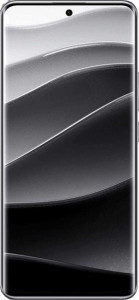
Both the Realme P4 Pro 5G and the Xiaomi Redmi Note 14 Pro 4G (Global) feature a video light, which can enhance video recording in low-light environments. However, there are some differences in display design: the Realme P4 Pro 5G has a standard flat display, while the Xiaomi includes a curved display. Neither device includes sapphire glass for added display protection, and neither offers an e-paper display.

In summary, both phones are equipped with a video light, but the Xiaomi model stands out with its curved display, while the Realme keeps to a flat design. Neither device offers sapphire glass or an e-paper display.

Comparison Summary & Verdict

After examining every specification, both phones serve distinct audiences. The Realme P4 Pro 5G is the stronger all-round performer: its Snapdragon 7 Gen 4 on a 4 nm process, a massive 7000 mAh battery with 80W fast charging, a sharper 144Hz display, and 5G connectivity make it the better choice for users who demand speed, endurance, and future-proof networking. The Xiaomi Redmi Note 14 Pro 4G (Global), on the other hand, appeals to a different kind of user — one who values a 200 MP triple camera system, the convenience of a 3.5 mm audio jack, a curved display with Dolby Vision, and an infrared sensor for device control. Neither phone is a clear universal winner; your ideal pick depends entirely on whether you prioritize performance and battery life or camera versatility and legacy features.

Realme P4 Pro 5G
Buy Realme P4 Pro 5G if...

Buy the Realme P4 Pro 5G if you want a more powerful chipset, a longer-lasting 7000 mAh battery with faster 80W charging, a higher-resolution 144Hz display, and 5G connectivity.

Xiaomi Redmi Note 14 Pro 4G (Global)
Buy Xiaomi Redmi Note 14 Pro 4G (Global) if...

Buy the Xiaomi Redmi Note 14 Pro 4G (Global) if you prioritize a versatile 200 MP triple camera, a 3.5 mm headphone jack, Dolby Vision support, and a curved display with an infrared sensor.