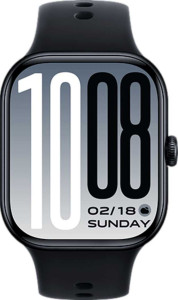
Redmi Watch 5
Vivo Watch GT 2

Redmi Watch 5 Vivo Watch GT 2

Overview

Welcome to our in-depth specification comparison between the Redmi Watch 5 and the Vivo Watch GT 2. Both smartwatches share a striking amount of common ground, including an identical OLED display, built-in GPS, and cross-platform compatibility, yet they diverge in meaningful ways across battery endurance, water protection, and activity tracking capabilities. Read on to discover which watch best suits your lifestyle and priorities.

Common Features

  • Both watches feature a 2.07″ screen size.
  • Both use an OLED/AMOLED display type.
  • Both have a pixel density of 324 ppi.
  • Both share a resolution of 432 x 514 px.
  • The watch band is replaceable on both products.
  • Neither watch has branded damage-resistant glass.
  • Both have a height of 47.5 mm.
  • Blood oxygenation level monitoring is available on both watches.
  • A heart rate monitor is present on both watches.
  • GPS is available on both watches.
  • An accelerometer is included in both watches.
  • A compass is present on both watches.
  • A gyroscope is included in both watches.
  • Sleep tracking is available on both watches.
  • Both watches track steps taken and distance.
  • Neither watch has a cellular module.
  • Both watches are compatible with iOS and Android.
  • Wireless charging is not available on either watch.
  • Both watches support answering calls and have call control.
  • HRV tracking and resting heart rate measurement are available on both watches.

Main Differences

  • Water resistance is rated as waterproof on Vivo Watch GT 2 but only water resistant on Redmi Watch 5.
  • Always-On Display is available on Redmi Watch 5 but not on Vivo Watch GT 2.
  • Thickness is 11.3 mm on Redmi Watch 5 and 11 mm on Vivo Watch GT 2.
  • Weight is 33.5 g on Redmi Watch 5 and 35.8 g on Vivo Watch GT 2.
  • Width is 41.1 mm on Redmi Watch 5 and 40.2 mm on Vivo Watch GT 2.
  • Volume is 22.060425 cm³ on Redmi Watch 5 and 21.0045 cm³ on Vivo Watch GT 2.
  • Elevation tracking is available on Redmi Watch 5 but not on Vivo Watch GT 2.
  • Multi-sport mode is supported on Redmi Watch 5 but not on Vivo Watch GT 2.
  • A stroke counter for swimming is present on Redmi Watch 5 but not on Vivo Watch GT 2.
  • Bluetooth version is 5.3 on Redmi Watch 5 and 5.4 on Vivo Watch GT 2.
  • NFC is present on Vivo Watch GT 2 but not available on Redmi Watch 5.
  • Battery life is 24 days on Redmi Watch 5 and 17 days on Vivo Watch GT 2.
  • Battery power is 550 mAh on Redmi Watch 5 and 595 mAh on Vivo Watch GT 2.
  • Redmi Watch 5 has 2 microphones while Vivo Watch GT 2 has 1 microphone.
  • Coaching is available on Redmi Watch 5 but not on Vivo Watch GT 2.
  • Music playback is supported on Redmi Watch 5 but not on Vivo Watch GT 2.
  • Compatibility with external heart rate monitors is present on Redmi Watch 5 but not on Vivo Watch GT 2.
Specs Comparison
Redmi Watch 5

Redmi Watch 5

Vivo Watch GT 2

Vivo Watch GT 2

Design:
screen size 2.07" 2.07"
Display type OLED/AMOLED OLED/AMOLED
water resistance Water resistant Waterproof
Always-On Display
pixel density 324 ppi 324 ppi
resolution 432 x 514 px 432 x 514 px
Watch band is replaceable
has branded damage-resistant glass
thickness 11.3 mm 11 mm
weight 33.5 g 35.8 g
height 47.5 mm 47.5 mm
width 41.1 mm 40.2 mm
Has a display
has a touch screen
Has sapphire glass display
volume 22.060425 cm³ 21.0045 cm³
is designed for kids

Both the Redmi Watch 5 and the Vivo Watch GT 2 share an identical display foundation: a 2.07″ OLED/AMOLED panel at 432 x 514 px and 324 ppi. In practice, this means users of either watch will enjoy the same vivid colors, deep blacks, and sharp text that AMOLED technology is known for. The shared height of 47.5 mm also means the two watches occupy nearly the same footprint on the wrist at a glance.

The real differentiators emerge in the finer physical details. The Redmi Watch 5 supports an Always-On Display, which the Vivo Watch GT 2 lacks — a meaningful usability advantage for users who want to check the time or glance at notifications without raising their wrist or tapping the screen. On the other hand, the Vivo Watch GT 2 is rated Waterproof versus the Redmi's Water resistant designation, implying a higher level of submersion protection that matters for swimmers or those frequently exposed to water. The Vivo is also marginally slimmer at 11 mm versus 11.3 mm, and its smaller volume (21.0 cm³ vs 22.1 cm³) gives it a slightly more compact, refined feel despite being fractionally heavier at 35.8 g compared to the Redmi's 33.5 g.

Overall, neither watch holds a sweeping design advantage, but the choice hinges on priorities: the Redmi Watch 5 edges ahead for everyday convenience thanks to its Always-On Display and lighter weight, while the Vivo Watch GT 2 has the upper hand for durability-focused users due to its superior water protection and slightly slimmer profile.

Sensors:
Monitors blood oxygenation levels
Has a heart rate monitor
has GPS
has an accelerometer
Has a temperature sensor
has a compass
Has a barometer
has a gyroscope
Has a cadence sensor
Monitors perspiration

Across every sensor listed, the Redmi Watch 5 and Vivo Watch GT 2 are a perfect match. Both pack GPS, a heart rate monitor, blood oxygen (SpO2) tracking, an accelerometer, a gyroscope, and a compass — a solid suite that covers the core needs of fitness tracking, navigation, and health monitoring.

The combination of GPS with accelerometer and gyroscope is particularly valuable for outdoor athletes, enabling accurate pace, distance, and movement data without relying on a paired phone. SpO2 and heart rate monitoring together support both workout intensity tracking and passive wellness checks, making both watches reasonably capable health companions for everyday users.

Neither watch gains any ground here: there is no temperature sensor, barometer, cadence sensor, or perspiration monitor on either device. The absence of a barometer is the most notable shared omission for serious hikers or climbers who rely on altitude and weather-pressure data. This category is a dead tie — the sensor packages are identical in both capability and limitation.

Activity tracking:
Tracks your sleep
Tracks distance
Tracks steps taken
Measures pace
Provides sleep reports
Detects activities automatically
Has a route tracker
Tracks elevation
Has multi-sport mode
Has exercise tagging
Has a stroke counter for swimming
Tracks calorie intake
Designed for diving
Designed for golf

A strong shared foundation exists between the two watches: sleep tracking with reports, step counting, distance, pace, route tracking, automatic activity detection, calorie intake tracking, and exercise tagging are all present on both. For a casual fitness user, this common ground covers the vast majority of daily and workout tracking needs without any compromise on either side.

Where the Redmi Watch 5 pulls decisively ahead is in breadth of athletic coverage. It adds elevation tracking, which is valuable for hikers and cyclists who want vertical gain data; a multi-sport mode, allowing seamless switching between different workout types in a single session; and a stroke counter for swimming, a niche but meaningful feature for pool swimmers monitoring technique and volume. The Vivo Watch GT 2 supports none of these three capabilities, which meaningfully narrows its appeal for users with varied or outdoor-focused fitness routines.

The verdict here is clear: the Redmi Watch 5 holds a tangible advantage in activity tracking. Unless a user's needs are strictly limited to the basics — steps, sleep, and general workouts — the Redmi's additional sport-specific features make it the more versatile companion for active lifestyles.

Connectivity:
has a cellular module
Is compatible with iOS
Is compatible with Android
Bluetooth version 5.3 5.4
supports Wi-Fi
has NFC
supports Galileo

On the fundamentals, both watches are evenly matched: neither supports cellular or Wi-Fi, both are compatible with Android and iOS, and both include Galileo satellite support for improved GPS positioning accuracy. For most users, the absence of Wi-Fi and cellular is expected at this product tier and has no practical impact on day-to-day use.

Two differences stand out. The Vivo Watch GT 2 runs on Bluetooth 5.4 versus the Redmi's Bluetooth 5.3 — a marginal generational step that, in theory, offers slightly improved connection efficiency and stability, though in real-world smartwatch use the gap between these two versions is unlikely to be perceptible. More meaningfully, the Vivo Watch GT 2 includes NFC, which the Redmi Watch 5 lacks entirely. NFC enables contactless payments and, depending on regional support, transit card functionality — a genuinely practical feature for users who want to leave their wallet or phone behind during workouts or commutes.

The Vivo Watch GT 2 takes a clear edge in connectivity. The NFC advantage is tangible and use-case relevant in a way that the minor Bluetooth version difference is not, making the Vivo the stronger choice for users who value on-wrist payment convenience.

Battery:
battery life 24 days 17 days
battery power 550 mAh 595 mAh
has wireless charging
has a rechargeable battery
Has a solar power battery
has a removable battery

An interesting paradox defines this category: the Vivo Watch GT 2 carries a larger battery at 595 mAh versus the Redmi's 550 mAh, yet the Redmi Watch 5 delivers significantly longer rated battery life at 24 days compared to the Vivo's 17 days. This suggests the Redmi achieves considerably better power efficiency — likely a result of its software optimization, processor management, or the trade-off from lacking Always-On Display in certain usage modes. Raw capacity alone does not determine endurance.

The real-world implication of a 7-day gap is substantial. At 24 days, the Redmi Watch 5 can comfortably go through most of a month on a single charge, meaning users might charge it just once or twice a month. The Vivo Watch GT 2, at 17 days, still offers respectable longevity well above many competing smartwatches, but it will require noticeably more frequent charging cycles over the same period. Neither watch supports wireless charging, so both rely on their proprietary wired solutions.

The Redmi Watch 5 wins this category decisively. Despite holding less raw battery capacity, its superior rated endurance makes it the clear choice for users who prioritize minimal charging interruptions — a practical advantage that compounds over weeks of continuous use.

Features:
release date January 2025 October 2025
has HRV tracking
measures resting heart rate
Can be used to answer calls
Locates your phone
Has call control
Has notifications
has irregular heart rate warnings
Has ECG technology
Has silent alarm
Has vibrating alerts
has fall detection
Has a stopwatch
Has smart alarm
has voice commands
Has a built-in camera remote control function
warranty period 1 years 1 years
number of microphones 2 1

Feature parity is remarkably high between these two watches. Both support on-wrist call answering and call control, notifications, HRV and resting heart rate tracking, voice commands, silent and vibrating alerts, a stopwatch, and even a camera remote — a utility feature that lets users trigger their phone's shutter from the wrist. Neither watch offers ECG, fall detection, or a smart alarm, so users with those requirements will need to look elsewhere regardless of which device they choose.

The sole hardware distinction in this category is the number of microphones: the Redmi Watch 5 includes 2 microphones while the Vivo Watch GT 2 has just 1. For a watch that supports on-wrist calls, this is a meaningful difference. A dual-microphone setup enables better noise cancellation and clearer voice pickup in real-world environments — conversations in busy streets or windy conditions are where a second mic earns its place, helping isolate the speaker's voice from background noise more effectively.

Given how closely matched the feature sets are, the Redmi Watch 5 takes a narrow but practical edge in this group. The dual-microphone advantage is specifically relevant to call quality — one of the most-used interactive features on both watches — making it a differentiator that everyday users are likely to notice.

App & Software:
Provides activity reports
Has inactivity alerts
Counts how many calories you've burned
Has goal setting
Has achievements
Free app
Has exercise diary
Has coaching
Has temperature tracking
Has period notifications
Syncs with existing calendars
Has music playback
Exports to email
Displays fertile window notifications
Predicts ovulation
Predicts start date
Supports widgets
Can be personalised
Has barcode scanner on app
Tracks water intake
Has weight tracking

The software ecosystems of both watches share a broad and well-rounded foundation: activity reports, inactivity alerts, calorie burn tracking, goal setting, achievements, an exercise diary, water intake and weight tracking, full women's health features (period notifications, fertile window, ovulation and start date predictions), widgets, personalization, and a free companion app. For the majority of health and wellness use cases, users of either watch will find the app experience functionally equivalent.

Two features break the tie. The Redmi Watch 5 supports music playback control — a quality-of-life addition for users who want to manage tracks during workouts without reaching for their phone. More substantively, it also includes coaching, which implies guided or structured workout assistance through the app. The Vivo Watch GT 2 offers neither, leaving it as a more passive data recorder by comparison when it comes to in-app engagement and workout guidance.

The Redmi Watch 5 takes a clear lead in this category. Coaching, in particular, adds active value beyond mere tracking — it is the kind of feature that distinguishes a watch aimed at users who want to improve performance, not just monitor it. Combined with music playback, the Redmi's app experience is meaningfully richer for fitness-focused users.

Miscellaneous:
has a battery level indicator
Has passcode
Compatible with external heart rate monitors
Is compatible with Windows
has an external memory slot
Is compatible with Mac OS X
has a socket for a 3.5 mm audio jack

Most of the miscellaneous specs in this category are shared equally — both watches display battery level, lack a passcode, offer no external memory slot, and are incompatible with Windows or macOS as standalone devices. None of these shared absences are surprising for consumer smartwatches in this class, and they carry no practical disadvantage for typical smartphone-paired use.

The single differentiator here is compatibility with external heart rate monitors: the Redmi Watch 5 supports pairing with external chest strap or optical HR sensors, while the Vivo Watch GT 2 does not. For most casual users this will go unnoticed, but for athletes — particularly cyclists, runners, or those doing high-intensity interval training — external chest straps are widely regarded as more accurate than wrist-based optical sensors during intense movement. The ability to pair with one gives the Redmi an edge in training precision for that audience.

This is a lean category with limited scope, but the Redmi Watch 5 claims the only meaningful advantage: external heart rate monitor support. It is a niche benefit, but one that holds genuine value for performance-focused users who already own or plan to use dedicated HR accessories.

Comparison Summary & Verdict

After examining every specification, both watches prove to be capable companions, but they cater to distinctly different users. The Redmi Watch 5 stands out with its impressive 24-day battery life, Always-On Display, multi-sport mode, elevation tracking, swimming stroke counter, built-in coaching, and music playback, making it the stronger choice for fitness enthusiasts who want a feature-rich, long-lasting wearable. The Vivo Watch GT 2, on the other hand, counters with a full waterproof rating, NFC support, and a slightly newer Bluetooth 5.4 chip, appealing to users who prioritize contactless payments and a more streamlined, everyday smartwatch experience. Neither is objectively superior; your ideal pick depends entirely on whether raw sports functionality or daily convenience features matter more to you.

Redmi Watch 5
Buy Redmi Watch 5 if...

Buy the Redmi Watch 5 if you want a long-lasting battery, comprehensive fitness tracking with multi-sport mode and elevation monitoring, plus extras like music playback and built-in coaching.

Vivo Watch GT 2
Buy Vivo Watch GT 2 if...

Buy the Vivo Watch GT 2 if you need a fully waterproof watch with NFC for contactless payments and a modern Bluetooth 5.4 connection for seamless everyday use.