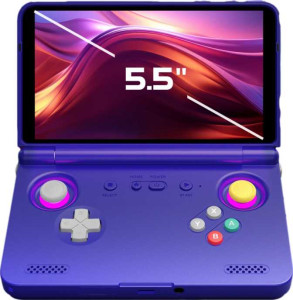
Retroid Pocket Flip 2 D1100 8GB RAM / 128GB
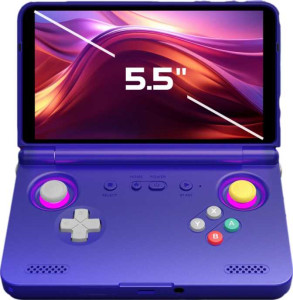
Retroid Pocket Flip 2 SD865 8GB RAM / 128GB

Retroid Pocket Flip 2 D1100 8GB RAM / 128GB Retroid Pocket Flip 2 SD865 8GB RAM / 128GB

Overview

Welcome to our head-to-head spec comparison between the Retroid Pocket Flip 2 D1100 8GB RAM / 128GB and the Retroid Pocket Flip 2 SD865 8GB RAM / 128GB. These two retro handheld consoles share an impressive list of features, yet differ in a key area that performance-focused gamers will want to examine closely: their CPU clock speeds. Read on to see how these two devices stack up across performance, connectivity, display, and controller specs.

Common Features

  • Both products have 8GB of RAM.
  • Ray tracing is not supported on either product.
  • Neither product uses an NVMe SSD.
  • Neither product can connect to an external drive.
  • Multithreading is supported on both products.
  • Both products use DDR4 memory.
  • Both products are of the Handheld, Retro type.
  • Both products have a 1080p (Full HD) display resolution.
  • The hard drive is replaceable on both products.
  • Both products have an internal power supply.
  • Both products feature an OLED/AMOLED display.
  • Both products have 128GB of internal storage.
  • Both products have a 5000 mAh battery.
  • Both products are region free.
  • A 3.5mm audio jack is available on both products.
  • Wi-Fi is supported on both products, including Wi-Fi 6 (802.11ax), Wi-Fi 5 (802.11ac), and Wi-Fi 4 (802.11n).
  • Neither product is DLNA-certified.
  • Both products have 1 USB port.
  • Neither product has an HDMI output.
  • Both products have Bluetooth version 5.1.
  • An external memory slot is available on both products.
  • Voice commands are not supported on either product.
  • Both products can play games while they download.
  • Quick resume is supported on both products.
  • Discord voice chat is not supported on either product.
  • 3D audio support is not available on either product.
  • Dolby Vision is not supported on either product.
  • VR support is not available on either product.
  • Neither product has a 4K Blu-ray drive.
  • Both products come with 1 controller.
  • Adaptive triggers are not available on either product.
  • Neither product is compatible with a motion-sensing controller.
  • Neither product includes a wireless controller.
  • Both products have 2 analog sticks.
  • Neither product has an integrated touchpad.
  • Dual force feedback is not available on either product.
  • Both products have 14 buttons.

Main Differences

  • CPU speed is 8 x 2.6 GHz on the Retroid Pocket Flip 2 D1100 8GB RAM / 128GB and 8 x 2.8 GHz on the Retroid Pocket Flip 2 SD865 8GB RAM / 128GB.
Specs Comparison
Retroid Pocket Flip 2 D1100 8GB RAM / 128GB

Retroid Pocket Flip 2 D1100 8GB RAM / 128GB

Retroid Pocket Flip 2 SD865 8GB RAM / 128GB

Retroid Pocket Flip 2 SD865 8GB RAM / 128GB

Performance:
CPU speed 8 x 2.6 GHz 8 x 2.8 GHz
RAM 8GB 8GB
supports ray tracing
Is an NVMe SSD
Can connect to an external drive
uses multithreading
DDR memory version 4 4

Both devices share a very similar performance profile, with identical 8GB of DDR4 RAM, multithreading support, and the same storage architecture — none of which differentiates them. The single meaningful hardware distinction in this group is clock speed: the D1100 model runs its 8-core CPU at 2.6 GHz, while the SD865 variant clocks in at 2.8 GHz — a 200 MHz advantage per core.

In practice, that ~7.7% clock speed difference is unlikely to be transformative for most emulation workloads, where architectural efficiency and per-core IPC matter as much as raw frequency. However, for demanding targets — think PS2, GameCube, or early Switch titles — that extra headroom on the SD865 could translate into marginally better frame pacing and fewer dropped frames in edge-case scenarios.

Based strictly on the provided specs, the SD865 model holds a narrow but real performance edge due to its higher CPU frequency, with all other performance-relevant specs being equal. If peak CPU throughput is a priority, it is the stronger choice in this category.

General info:
Type Handheld, Retro Handheld, Retro
display resolution 1080p (Full HD) 1080p (Full HD)
release date March 2025 March 2025
Hard drive is replaceable
Has an internal power supply
Display type OLED/AMOLED OLED/AMOLED
internal storage 128GB 128GB
battery power 5000 mAh 5000 mAh
Is region free
thickness 24 mm 24 mm
width 140 mm 140 mm
height 89 mm 89 mm
volume 299.04 cm³ 299.04 cm³
Has an optical disc drive
weight 306 g 306 g
brightness (typical) 500 nits 500 nits

Across every general specification in this group, the two devices are completely identical — same OLED/AMOLED display at 1080p Full HD, same 500 nits of typical brightness, same 128GB of replaceable internal storage, and a shared 5000 mAh battery. Physically, they are indistinguishable: same dimensions, same 306 g weight, and the same overall volume of 299.04 cm³.

Those shared specs are worth contextualizing. A 5000 mAh battery in a 306 g handheld is a reasonable balance for a device of this class — portable enough for extended sessions without feeling unwieldy. The OLED panel with 500 nits brightness means vibrant colors and solid contrast in typical indoor conditions, though outdoor visibility could be a limiting factor at that ceiling. The replaceable storage is a meaningful practical feature, shared equally by both.

This group results in a complete tie. There is no differentiating factor here whatsoever — buyers choosing between these two variants will find zero distinction in design, display quality, battery capacity, or form factor. The decision must rest entirely on other specification groups.

Connectivity:
has a socket for a 3.5 mm audio jack
supports Wi-Fi
Wi-Fi version Wi-Fi 6 (802.11ax), Wi-Fi 5 (802.11ac), Wi-Fi 4 (802.11n) Wi-Fi 6 (802.11ax), Wi-Fi 5 (802.11ac), Wi-Fi 4 (802.11n)
is DLNA-certified
USB ports 1 1
has an HDMI output
Bluetooth version 5.1 5.1
has an external memory slot
Supports connectivity between home and portable devices
Has USB Type-C
has a cellular module
has NFC
RJ45 ports 0 0

Connectivity is another area where these two variants are spec-for-spec identical. Both support Wi-Fi 6 (802.11ax) — the most relevant detail here — which brings lower latency and better performance in congested wireless environments compared to older standards, a genuine benefit for online multiplayer or local streaming use cases. Paired with Bluetooth 5.1, wireless controller and audio accessory support is on solid footing for a handheld of this class.

On the physical side, both offer a single USB Type-C port and a 3.5 mm audio jack, along with an external memory slot for storage expansion. The absence of HDMI output is worth noting — users hoping to connect directly to a TV will need to rely on the USB-C port and a compatible adapter or dock, a common workaround in this device category. Neither unit has NFC or a cellular module, keeping them firmly in the Wi-Fi-only handheld space.

Just as with General Info, this group is a complete tie. Every connectivity feature is shared equally between the D1100 and SD865 variants, so this category offers no grounds for preferring one over the other.

Features:
has voice commands
Can play games while they download
supports quick resume
supports Discord voice chat
Supports 3D audio
supports Dolby Vision
supports VR
Has a 4K Blu-ray drive
screen size 5.5" 5.5"
number of channels of sound output 2 2
has a touch screen
Has optical tracking
Has an autostereoscopic display
Has a secondary screen
Can play Blu-ray Discs
has two sensors
Access high scores and achievements
has stereo speakers
Supports 3D
has a front camera
Uses flash storage
has a child lock

Feature-wise, the D1100 and SD865 variants are once again identical in every measurable way. The highlights worth contextualizing: both support quick resume and the ability to play games while downloading, which meaningfully reduce friction in day-to-day use — particularly valuable on a handheld where session flexibility matters. Both also offer stereo speakers with two-channel audio output, a reasonable expectation for a 5.5″ screen device aimed at retro gaming.

A few notable absences are shared equally. Neither device has a touch screen, which sets them apart from some competing handhelds and limits navigation options in certain emulator front-ends. The lack of a front camera and voice commands is unsurprising at this product tier and use case. For the target audience — dedicated retro gaming enthusiasts — these omissions are unlikely to be dealbreakers.

This group is a complete tie in every respect. The feature set is consistent across both models, meaning prospective buyers gain or lose nothing here based on which variant they choose. As with previous groups, differentiation must be found elsewhere.

Controllers:
number of controllers 1 1
has adaptive triggers
Compatible with a motion-sensing controller(s)
Has a wireless controller
number of analog sticks 2 2
has an integrated touchpad
Has dual force feedback
number of buttons 14 14

The controller configuration is the same across both variants: a single integrated controller with 2 analog sticks and 14 buttons. For a retro-focused handheld, that button count comfortably covers the input requirements of most emulated platforms — from SNES and GBA all the way through PS1 and N64 — without any compromises.

Neither device offers adaptive triggers, dual force feedback, or motion-sensing support. While those omissions keep the input experience relatively straightforward compared to more feature-rich gaming handhelds, they are standard trade-offs in this product category and will rarely matter for the retro library these devices are designed to run. The absence of a wireless controller option is also consistent with the integrated handheld form factor.

This group is a complete tie. The controller specifications are identical in every detail, and neither the D1100 nor the SD865 variant offers any input advantage over the other.

Comparison Summary & Verdict

After a thorough comparison, it is clear that the Retroid Pocket Flip 2 D1100 and the Retroid Pocket Flip 2 SD865 are nearly identical devices, sharing the same 8GB RAM, 128GB internal storage, OLED/AMOLED 1080p display, 5000 mAh battery, Wi-Fi 6 support, and identical controller layout. The sole distinguishing factor is CPU clock speed: the SD865 variant runs at 8 x 2.8 GHz versus the D1100 variant at 8 x 2.6 GHz. For most casual retro gamers, this difference will be imperceptible. However, users who demand maximum processing headroom for more demanding emulation tasks may lean toward the SD865 model. If budget or availability tips the scales, the D1100 remains an equally capable and feature-rich handheld.

Retroid Pocket Flip 2 D1100 8GB RAM / 128GB
Buy Retroid Pocket Flip 2 D1100 8GB RAM / 128GB if...

Buy the Retroid Pocket Flip 2 D1100 8GB RAM / 128GB if you are satisfied with a slightly lower CPU clock speed of 8 x 2.6 GHz and want an otherwise identical experience to the SD865 model.

Retroid Pocket Flip 2 SD865 8GB RAM / 128GB
Buy Retroid Pocket Flip 2 SD865 8GB RAM / 128GB if...

Buy the Retroid Pocket Flip 2 SD865 8GB RAM / 128GB if you want the edge of a higher CPU clock speed at 8 x 2.8 GHz for more demanding emulation workloads.