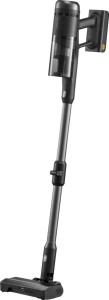
Roborock H60 Pro
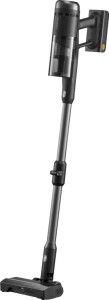
Roborock H60 Ultra

Roborock H60 Pro Roborock H60 Ultra

Overview

Welcome to our detailed spec comparison between the Roborock H60 Pro and the Roborock H60 Ultra. Both are cordless, bagless stick vacuums sharing a strong foundation of features, including HEPA filtration and a removable battery. Yet beneath their similarities lie meaningful differences in suction power and battery performance that could influence your buying decision. Read on to see exactly how these two models stack up against each other.

Common Features

  • Both products are stick and handheld type vacuums.
  • Both products are cordless.
  • Both products are bagless.
  • Both products include a HEPA filter.
  • Both products include an allergy filter.
  • Both products come with washable filters included.
  • Both products have a dustbin capacity of 0.5 l.
  • Neither product has on-board tool storage.
  • Both products offer 3 cleaning modes.
  • Neither product has a swivel nozzle.
  • Both products have a rechargeable battery.
  • Both products have a battery level indicator.
  • Both products have a removable battery.

Main Differences

  • Air watts output is 170W on the Roborock H60 Pro and 210W on the Roborock H60 Ultra.
  • Runtime is 80 minutes on the Roborock H60 Pro and 90 minutes on the Roborock H60 Ultra.
  • Charge time is 3 hours on the Roborock H60 Pro and 3.5 hours on the Roborock H60 Ultra.
Specs Comparison
Roborock H60 Pro

Roborock H60 Pro

Roborock H60 Ultra

Roborock H60 Ultra

General info:
type Stick, Handheld Stick, Handheld
cord type Cordless Cordless
bag type Bagless Bagless
has HEPA filter
has an allergy filter
release date August 2025 August 2025

At the foundational level, the Roborock H60 Pro and Roborock H60 Ultra are built on an identical structural platform: both are cordless stick/handheld vacuums with a bagless dustbin design. This means users of either model benefit from the same core convenience — no cords to manage, no replacement bags to purchase, and a straightforward emptying process.

On the filtration front, both units are equally equipped, featuring a HEPA filter alongside a dedicated allergy filter. In practice, this dual-layer filtration setup is a meaningful real-world advantage for allergy sufferers and pet owners, as it captures fine particulates and allergens that cheaper single-filter designs let escape back into the air.

Based strictly on the general specs provided, these two models are in a complete tie — there is no differentiator here that favors one over the other. Buyers should look to other specification groups, such as suction power, battery capacity, or included accessories, to identify meaningful distinctions between the H60 Pro and H60 Ultra.

Design:
has included washable filters
dustbin capacity 0.5 l 0.5 l
Has on-board tool storage

Both the H60 Pro and H60 Ultra share a 0.5-liter dustbin capacity, which sits in the mid-range for cordless stick vacuums. This is adequate for quick daily cleanups and light-to-medium sessions, though users tackling larger homes or heavy debris loads may find themselves emptying the bin more frequently than with bulkier competitors.

A practical upside shared by both models is the inclusion of washable filters, which eliminates the recurring cost and hassle of buying replacement filters. Over the lifetime of the vacuum, this is a genuine convenience and cost advantage worth noting. Neither model offers on-board tool storage, meaning attachments will need to be kept separately — a minor but real ergonomic trade-off for users who frequently switch between accessories.

Across every design spec provided, the H60 Pro and H60 Ultra are a complete tie. There is no design-level differentiator between them in this group, so prospective buyers will need to weigh performance or feature specs from other categories to determine which model better fits their needs.

Cleaning power:
cleaning modes 3 3
Has a swivel nozzle

Cleaning flexibility is matched evenly here, with both the H60 Pro and H60 Ultra offering 3 cleaning modes. Having multiple modes is a practical asset in everyday use — it allows the user to dial down power for delicate surfaces or quieter operation, and ramp up for stubborn debris or deep-clean sessions, helping to preserve battery life when maximum suction isn't needed.

Neither model includes a swivel nozzle, which is worth flagging for anyone who prioritizes maneuverability around furniture legs and tight corners. Swivel-head designs have become increasingly common in premium cordless vacuums, so the absence of this feature on both units is a shared limitation rather than a differentiator — but it does mean users should expect somewhat more deliberate, less agile steering during floor cleaning.

With identical mode counts and the same nozzle design on both sides, this category ends in a tie. Neither the H60 Pro nor the H60 Ultra holds a cleaning-power advantage based on the available specs, and buyers should focus on other specification groups — such as suction output or battery performance — to find meaningful separation between the two.

Power:
air watts 170W 210W
runtime 80 min 90 min
has a rechargeable battery
has a battery level indicator
charge time 3 hours 3.5 hours
has a removable battery

This is the first specification group where a clear gap emerges between the two models. The H60 Ultra pulls ahead with 210 air watts of suction versus the H60 Pro's 170 air watts — a roughly 24% increase that translates directly into more forceful dirt and debris pickup, particularly on carpets, upholstery, and embedded pet hair where raw suction power matters most.

The runtime advantage also belongs to the Ultra, at 90 minutes compared to the Pro's 80 minutes. That extra 10 minutes may seem modest on paper, but for users cleaning larger homes or running multiple passes, it reduces the likelihood of mid-session interruptions. The trade-off is a marginally longer charge time — 3.5 hours for the Ultra versus 3 hours for the Pro — though both models soften this inconvenience significantly by featuring a removable battery, meaning a spare pack can be swapped in to extend cleaning sessions without waiting for a full recharge.

The H60 Ultra holds a clear edge in this category. It delivers more suction power and longer runtime, accepting only a small penalty in charge time. For users who prioritize cleaning performance and coverage over the fastest turnaround between charges, the Ultra is the stronger choice based on these specs.

Comparison Summary & Verdict

Both the Roborock H60 Pro and the Roborock H60 Ultra share a compelling core: cordless convenience, bagless design, washable filters, a 0.5-litre dustbin, and a removable battery with an indicator. Where they diverge is in raw performance. The Roborock H60 Ultra pulls ahead with 210W of suction power and a longer 90-minute runtime, making it the stronger choice for larger homes or more demanding cleaning sessions. The Roborock H60 Pro, with its 170W output and faster 3-hour charge time, is a practical pick for users who value quicker turnaround between uses and do not require maximum suction. Choose the H60 Pro for efficiency and faster recharging; opt for the H60 Ultra if extended runtime and greater power are your top priorities.

Roborock H60 Pro
Buy Roborock H60 Pro if...

Buy the Roborock H60 Pro if you prefer a faster charging time and do not need maximum suction power for your cleaning routine.

Roborock H60 Ultra
Buy Roborock H60 Ultra if...

Buy the Roborock H60 Ultra if you need stronger suction power and a longer battery runtime to handle bigger or more demanding cleaning tasks.