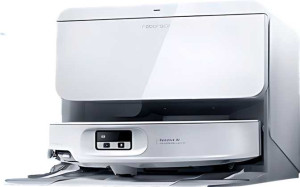
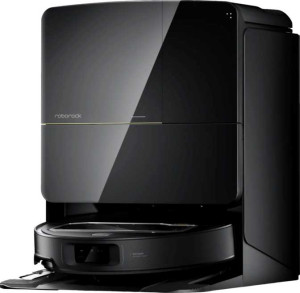
Roborock P20 Ultra Plus
Roborock Saros Z70

Roborock P20 Ultra Plus Roborock Saros Z70

Overview

Welcome to our in-depth specification comparison between the Roborock P20 Ultra Plus and the Roborock Saros Z70. Both robots share a strong feature foundation — including self-emptying docks, obstacle sensors, and mopping capabilities — yet they diverge in meaningful ways across suction power, battery runtime, and cleaning versatility. Read on to see which model best matches your home and lifestyle.

Common Features

  • Both products include a HEPA filter.
  • Both products include an allergy filter.
  • Both products are compatible with Google Assistant.
  • Both products work with Alexa.
  • Both products share the same width of 353 mm.
  • Both products share the same height of 79.8 mm.
  • Both products share the same thickness of 350 mm.
  • Both products have mapping capability.
  • Both products support no-go zones.
  • Both products support remote smartphone control.
  • Both products have an obstacle sensor.
  • Both products support problem area cleaning.
  • Both products are self-emptying.
  • Both products have carpet detection.
  • Neither product has twin side brushes.
  • Both products include washable filters.
  • Both products automatically adjust their height.
  • Both products indicate when the dustbin is full.
  • Both products use bags.
  • Both products clean all floor types.
  • Both products are capable of mopping.
  • Neither product has UV light.
  • Both products have a charge time of 2.5 hours.
  • Neither product has a removable battery.

Main Differences

  • Audible noise is 64.5 dB on Roborock P20 Ultra Plus and 68 dB on Roborock Saros Z70.
  • Weight is 3800 g on Roborock P20 Ultra Plus and 5000 g on Roborock Saros Z70.
  • Estimated empty time is 56 days on Roborock P20 Ultra Plus and 49 days on Roborock Saros Z70.
  • Docking station size is 84581.2 cm³ on Roborock P20 Ultra Plus and 88315.8 cm³ on Roborock Saros Z70.
  • Dustbin capacity is 0.77 l on Roborock P20 Ultra Plus and 0.4 l on Roborock Saros Z70.
  • A display is present on Roborock Saros Z70 but not available on Roborock P20 Ultra Plus.
  • Suction power is 25000 Pa on Roborock P20 Ultra Plus and 22000 Pa on Roborock Saros Z70.
  • Number of cleaning modes is 4 on Roborock P20 Ultra Plus and 10 on Roborock Saros Z70.
  • A dirt sensor is present on Roborock Saros Z70 but not available on Roborock P20 Ultra Plus.
  • Battery power is 5200 mAh on Roborock P20 Ultra Plus and 6400 mAh on Roborock Saros Z70.
  • Runtime is 180 minutes on Roborock P20 Ultra Plus and 290 minutes on Roborock Saros Z70.
  • Operating power consumption is 50W on Roborock P20 Ultra Plus and 60W on Roborock Saros Z70.
Specs Comparison
Roborock P20 Ultra Plus

Roborock P20 Ultra Plus

Roborock Saros Z70

Roborock Saros Z70

General info:
has HEPA filter
audible noise 64.5 dB 68 dB
has an allergy filter
compatible with Google Assistant
works with Alexa
release date August 2025 January 2025
weight 3800 g 5000 g
width 353 mm 353 mm
height 79.8 mm 79.8 mm
thickness 350 mm 350 mm
volume 9859.29 cm³ 9859.29 cm³
warranty period 1 years 1 years
estimated empty time 56 days 49 days
docking station size 84581.2 cm³ 88315.8 cm³

Both the Roborock P20 Ultra Plus and the Roborock Saros Z70 share an identical footprint — 353 × 350 mm with a 79.8 mm height — meaning neither will struggle more than the other to navigate under furniture. They also match on smart home integration (Google Assistant and Alexa), filtration quality (HEPA and allergy filters), and a 1-year warranty. For users prioritizing these factors, both robots are effectively tied.

The most meaningful differentiators in this group are weight and noise. The Saros Z70 weighs 5000 g versus the P20 Ultra Plus at 3800 g — a 1.2 kg difference that matters when manually lifting or relocating the robot, and may also reflect heavier internal hardware (such as a robotic arm mechanism). On noise, the P20 Ultra Plus operates at 64.5 dB compared to 68 dB for the Saros Z70. That 3.5 dB gap is perceptible to the human ear and translates to a noticeably quieter cleaning cycle in practice — relevant for households that run the robot during work-from-home hours or light sleep.

The P20 Ultra Plus also edges out on bin empty frequency at an estimated 56 days versus 49 days, meaning less maintenance intervention over time. Its docking station is also slightly more compact (84,581 cm³ vs 88,316 cm³). Taken together, in this general-info category the P20 Ultra Plus holds a clear practical advantage: it is lighter, quieter, empties less often, and takes up less floor space with its dock.

Features:
has mapping
supports no-go zones
supports a remote smartphone
has an obstacle sensor
has problem area cleaning
is self-emptying
has carpet detection
doesn't get stuck
supports virtual barriers
has route mapping
Has voice prompts
auto docking
has anti-fall sensor
can be scheduled
has a remote control
has water level adjustment
supports Wi-Fi
has mop cleaning
has mop raising
has mop drying

Across every feature listed in this group, the Roborock P20 Ultra Plus and the Roborock Saros Z70 are in complete lockstep — a full 20-for-20 match with no deviations whatsoever. Both robots cover the full spectrum of modern autonomous cleaning capabilities: multi-room mapping, no-go zones, virtual barriers, route mapping, and problem-area cleaning collectively form a navigation suite that handles complex home layouts without manual intervention.

On the maintenance side, both units are self-emptying and auto-dock, which — combined with scheduling support and smartphone remote control — means day-to-day operation is almost entirely hands-off. The inclusion of mop cleaning, mop raising, mop drying, and water level adjustment on both models signals a fully integrated wet-and-dry cleaning system, not a basic mopping add-on. Mop raising in particular is critical: it prevents wet pads from dragging across carpeted areas when the robot transitions between floor types, and both robots handle this automatically.

With zero differentiators in this category, the features group is a complete tie. Buyers choosing between these two models cannot use feature availability as a deciding factor — the decision must rest entirely on other spec groups such as performance, cleaning hardware, or the general characteristics analyzed previously.

Design:
dustbin capacity 0.77 l 0.4 l
Has a display
has twin side brushes
has included washable filters
automatically adjusts its height
Indicates when full
uses bags

The most practical differentiator here is dustbin capacity. The P20 Ultra Plus carries a 0.77 l onboard bin versus just 0.4 l on the Saros Z70 — nearly double the volume. Since both robots are self-emptying, this gap matters most in edge cases: if the robot fills up mid-cycle before returning to its dock, a larger bin reduces the chance of interrupted cleaning sessions in heavily soiled or high-debris environments. For average households, the difference is unlikely to be felt daily, but in homes with pets or high foot traffic, the P20 Ultra Plus has a meaningful buffer.

On the other side, the Saros Z70 is the only one of the two equipped with an onboard display. This allows users to read status information, error codes, or operational feedback directly on the robot without reaching for a smartphone — a convenience that matters during setup or when troubleshooting in a room without a phone nearby. The P20 Ultra Plus omits this entirely, relying solely on the app and voice prompts for feedback.

Both robots share height auto-adjustment, full-bin indication, washable filters, and bag-based collection — so the design fundamentals are well-matched. The P20 Ultra Plus has the edge on dustbin capacity, which has a more direct impact on cleaning continuity, while the Saros Z70 counters with its display. Which advantage matters more depends on the user: those prioritizing low-maintenance operation will favor the P20 Ultra Plus, while those who value at-a-glance robot status will lean toward the Saros Z70.

Cleaning power:
suction power 25000 Pa 22000 Pa
cleans all floor types
cleaning modes 4 10
mops
has a dirt sensor
has UV light

Suction power is where the Roborock P20 Ultra Plus pulls ahead most directly: at 25,000 Pa versus the Saros Z70's 22,000 Pa, it delivers roughly 14% more raw suction. In practical terms, this gap is most noticeable on thick-pile carpets and in corners where embedded debris resists pickup — higher Pascal ratings translate to stronger airflow that can dislodge and lift particles that lower-powered motors leave behind.

The Roborock Saros Z70 counters with a significantly richer set of cleaning modes — 10 compared to just 4 on the P20 Ultra Plus. More modes mean finer control over how the robot tackles different surfaces and scenarios, from gentle passes on delicate rugs to intensive spot-cleaning cycles. The Saros Z70 also adds a dirt sensor, which the P20 Ultra Plus lacks entirely. This sensor detects areas of concentrated debris and prompts the robot to make additional passes automatically — a meaningful quality-of-life feature that reduces the need for manual scheduling of problem-area cleans.

This group presents a genuine trade-off rather than a clear overall winner. The P20 Ultra Plus has the edge in raw suction, which matters most for deep carpet cleaning and heavy debris. The Saros Z70 is more intelligent and adaptable in how it cleans, thanks to its dirt sensor and broader mode selection. Users with predominantly hard floors or mixed surfaces who value responsive, context-aware cleaning will find the Saros Z70's approach more compelling; those with heavy carpeting or straightforward high-power needs will lean toward the P20 Ultra Plus.

Power:
battery power 5200 mAh 6400 mAh
runtime 180 min 290 min
charge time 2.5 hours 2.5 hours
operating power consumption 50W 60W
has a removable battery

Battery endurance is where the Roborock Saros Z70 establishes its clearest lead in this comparison so far. Its 6400 mAh pack versus the P20 Ultra Plus's 5200 mAh — a 23% larger capacity — directly powers its standout runtime of 290 minutes, compared to 180 minutes on the P20 Ultra Plus. That 110-minute gap is substantial: it means the Saros Z70 can cover significantly larger floor areas in a single uninterrupted pass, reducing or eliminating mid-cycle recharge-and-resume events that fragment cleaning sessions in bigger homes.

Despite drawing more power at 60W operating consumption versus the P20 Ultra Plus's 50W, the Saros Z70 still achieves that dramatically longer runtime — a reflection of how much the larger battery offsets the higher draw. Notably, both robots reach a full charge in an identical 2.5 hours, so the Saros Z70's capacity advantage comes at no cost in recharge waiting time. Neither unit offers a removable battery, which is standard for this class of robot vacuum.

The Saros Z70 wins this category decisively. For large homes — typically anything above 150–200 square meters — the runtime difference is operationally significant and could be the deciding factor on its own. The P20 Ultra Plus's more modest battery is adequate for smaller apartments or homes where a mid-cycle dock is acceptable, but for users who prioritize uninterrupted, whole-home cleaning on a single charge, the Saros Z70 holds a clear and meaningful advantage here.

Comparison Summary & Verdict

After examining all the evidence, both robots prove to be capable, full-featured cleaners, but they serve different priorities. The Roborock P20 Ultra Plus stands out with its stronger 25000 Pa suction power, larger 0.77 l dustbin, and a lighter 3800 g build, making it a compelling choice for users who prioritize raw cleaning strength and a longer estimated empty cycle of 56 days. The Roborock Saros Z70, on the other hand, wins on endurance and intelligence, offering a remarkable 290-minute runtime, a larger 6400 mAh battery, 10 cleaning modes, a built-in dirt sensor, and an onboard display — features that appeal to users who want maximum flexibility and smarter cleaning across larger or more complex floor plans.

Roborock P20 Ultra Plus
Buy Roborock P20 Ultra Plus if...

Buy the Roborock P20 Ultra Plus if you want stronger suction power, a larger dustbin capacity, and a lighter robot that goes longer between dock empties.

Roborock Saros Z70
Buy Roborock Saros Z70 if...

Buy the Roborock Saros Z70 if you need a longer runtime, more cleaning modes, and smarter features like a dirt sensor and onboard display for larger or more complex homes.