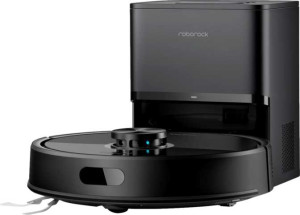
Roborock Q7T Plus
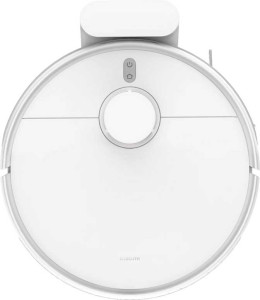
Xiaomi Robot Vacuum S40C

Roborock Q7T Plus Xiaomi Robot Vacuum S40C

Common Features

  • Both products are compatible with Google Assistant.
  • Both products work with Alexa.
  • Both products support mapping.
  • Both products support no-go zones.
  • Both products support a remote smartphone.
  • Both products have an obstacle sensor.
  • Both products have problem area cleaning.
  • Both products do not get stuck.
  • Both products support virtual barriers.
  • Both products have route mapping.
  • Both products can clean all floor types.
  • Both products have 4 cleaning modes.
  • Both products have mopping functionality.
  • Both products have a charge time of 4 hours.

Main Differences

  • Roborock Q7T Plus does not have a HEPA filter, while Xiaomi Robot Vacuum S40C has a HEPA filter.
  • Audible noise is 67 dB on Roborock Q7T Plus and 62 dB on Xiaomi Robot Vacuum S40C.
  • Roborock Q7T Plus weighs 3300 g, while Xiaomi Robot Vacuum S40C weighs 3440 g.
  • The width of Roborock Q7T Plus is 325 mm, while Xiaomi Robot Vacuum S40C has a width of 340 mm.
  • The height of Roborock Q7T Plus is 99 mm, while Xiaomi Robot Vacuum S40C has a height of 97 mm.
  • Roborock Q7T Plus has a thickness of 325 mm, while Xiaomi Robot Vacuum S40C has a thickness of 340 mm.
  • The volume of Roborock Q7T Plus is 10456.875 cm³, while Xiaomi Robot Vacuum S40C has a volume of 11213.2 cm³.
  • Roborock Q7T Plus has no warranty, while Xiaomi Robot Vacuum S40C comes with a 2-year warranty.
  • Roborock Q7T Plus is self-emptying, while Xiaomi Robot Vacuum S40C is not self-emptying.
  • Roborock Q7T Plus has carpet detection, while Xiaomi Robot Vacuum S40C does not have carpet detection.
  • Roborock Q7T Plus has voice prompts, while Xiaomi Robot Vacuum S40C does not have voice prompts.
  • Roborock Q7T Plus does not include a remote control, while Xiaomi Robot Vacuum S40C includes a remote control.
  • Roborock Q7T Plus supports Wi-Fi 4 (802.11n), while Xiaomi Robot Vacuum S40C supports Wi-Fi 5 (802.11ac).
  • Roborock Q7T Plus has mop raising functionality, while Xiaomi Robot Vacuum S40C does not have mop raising functionality.
  • The dustbin capacity of Roborock Q7T Plus is 0.4 l, while Xiaomi Robot Vacuum S40C has a dustbin capacity of 0.52 l.
  • Roborock Q7T Plus includes washable filters, while Xiaomi Robot Vacuum S40C does not include washable filters.
  • Suction power is 10000 Pa on Roborock Q7T Plus and 5000 Pa on Xiaomi Robot Vacuum S40C.
  • Roborock Q7T Plus does not have a dirt sensor, while Xiaomi Robot Vacuum S40C has a dirt sensor.
  • Battery power is 3200 mAh on Roborock Q7T Plus and 2400 mAh on Xiaomi Robot Vacuum S40C.
  • Runtime is 180 min on Roborock Q7T Plus and 110 min on Xiaomi Robot Vacuum S40C.
  • Operating power consumption is 60W on Roborock Q7T Plus and 55W on Xiaomi Robot Vacuum S40C.
Specs Comparison
Roborock Q7T Plus

Roborock Q7T Plus

Xiaomi Robot Vacuum S40C

Xiaomi Robot Vacuum S40C

General info:
has HEPA filter
audible noise 67 dB 62 dB
compatible with Google Assistant
works with Alexa
release date April 2025 June 2025
weight 3300 g 3440 g
width 325 mm 340 mm
height 99 mm 97 mm
thickness 325 mm 340 mm
volume 10456.875 cm³ 11213.2 cm³
warranty period 0 years 2 years

The Roborock Q7T Plus and Xiaomi Robot Vacuum S40C both offer Google Assistant and Alexa compatibility, so they can easily integrate into smart home setups. However, the Xiaomi vacuum includes a 2-year warranty, while the Roborock has no warranty period listed.

In terms of noise levels, the Xiaomi S40C is quieter at 62 dB compared to the Roborock Q7T Plus, which produces 67 dB of sound during operation. The Xiaomi model also features a HEPA filter, which the Roborock does not have.

When it comes to size and weight, the Roborock Q7T Plus weighs 3300 g, while the Xiaomi S40C is slightly heavier at 3440 g. The Xiaomi vacuum is also slightly larger in width (340 mm vs 325 mm), thickness (340 mm vs 325 mm), and volume (11213.2 cm³ vs 10456.875 cm³), though the difference in dimensions is relatively small. The height of both products is similar, with the Xiaomi S40C measuring 97 mm and the Roborock Q7T Plus at 99 mm.

Features:
has mapping
supports no-go zones
supports a remote smartphone
has an obstacle sensor
has problem area cleaning
is self-emptying
has carpet detection
doesn't get stuck
supports virtual barriers
has route mapping
Has voice prompts
auto docking
has anti-fall sensor
can be scheduled
has a remote control
supports Wi-Fi
Wi-Fi version Wi-Fi 4 (802.11n) Wi-Fi 5 (802.11ac)
has mop cleaning
has mop raising
has mop drying

The Roborock Q7T Plus and Xiaomi Robot Vacuum S40C both offer a range of features, but there are some key differences. Both models include mapping, support for no-go zones, obstacle sensors, and virtual barriers. The Roborock Q7T Plus has a few additional features, such as voice prompts, mop raising, and a self-emptying function. In contrast, the Xiaomi S40C lacks voice prompts and does not feature mop raising or self-emptying capabilities.

Regarding carpet detection, the Roborock Q7T Plus is equipped with this feature, while the Xiaomi S40C does not support it. Both vacuums include route mapping, auto docking, anti-fall sensors, and scheduling capabilities, so they can operate autonomously within a set schedule.

Another notable difference is Wi-Fi support: the Roborock Q7T Plus uses Wi-Fi 4 (802.11n), whereas the Xiaomi S40C supports the newer Wi-Fi 5 (802.11ac). Additionally, the Roborock Q7T Plus is missing a remote control, while the Xiaomi S40C does include one. Lastly, both models lack mop cleaning and mop drying features.

Design:
dustbin capacity 0.4 l 0.52 l
has twin side brushes
has included washable filters
automatically adjusts its height

The Roborock Q7T Plus and Xiaomi Robot Vacuum S40C differ slightly in terms of dustbin capacity and features. The Roborock Q7T Plus has a dustbin capacity of 0.4 l, while the Xiaomi S40C has a larger capacity of 0.52 l. Both vacuums lack twin side brushes, but the Roborock model includes washable filters, whereas the Xiaomi S40C does not.

Both models have the ability to automatically adjust their height, allowing them to adapt to different floor types without manual intervention.

Cleaning power:
suction power 10000 Pa 5000 Pa
cleans all floor types
cleaning modes 4 4
mops
has a dirt sensor

The Roborock Q7T Plus and Xiaomi Robot Vacuum S40C both support cleaning all floor types, but they differ in their suction power. The Roborock Q7T Plus has a stronger suction power of 10000 Pa, while the Xiaomi S40C offers 5000 Pa of suction power.

Both vacuums offer four cleaning modes and feature mop capabilities. However, the Xiaomi S40C includes a dirt sensor, which the Roborock Q7T Plus lacks.

Power:
battery power 3200 mAh 2400 mAh
runtime 180 min 110 min
charge time 4 hours 4 hours
operating power consumption 60W 55W

The Roborock Q7T Plus and Xiaomi Robot Vacuum S40C both have a 4-hour charge time, but they differ in their battery power, runtime, and operating power consumption. The Roborock Q7T Plus is equipped with a 3200 mAh battery, offering a longer runtime of 180 minutes, compared to the Xiaomi S40C's 2400 mAh battery and 110 minutes of runtime.

In terms of power consumption, the Roborock Q7T Plus uses 60W, while the Xiaomi S40C operates at 55W.

Comparison Summary

This is a specification comparison between Roborock Q7T Plus and Xiaomi Robot Vacuum S40C. Both products are compatible with Google Assistant and Alexa, support mapping, no-go zones, and problem area cleaning. The Roborock Q7T Plus is self-emptying and features higher suction power (10000 Pa) compared to the Xiaomi Robot Vacuum S40C (5000 Pa). The Xiaomi model includes a HEPA filter, while the Roborock does not. The Roborock offers a longer runtime of 180 minutes, while the Xiaomi runs for 110 minutes. Additionally, the Roborock Q7T Plus has a larger dustbin capacity (0.4 l) compared to the Xiaomi's 0.52 l.