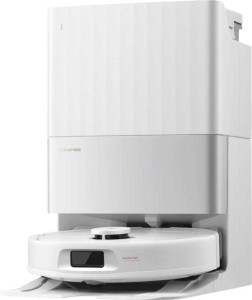
Roborock Qrevo C
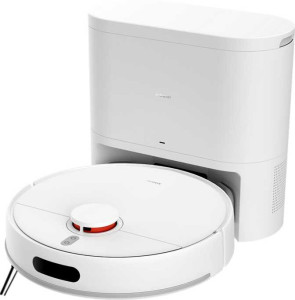
Xiaomi Robot Vacuum H40

Roborock Qrevo C Xiaomi Robot Vacuum H40

Overview

When choosing between the Roborock Qrevo C and the Xiaomi Robot Vacuum H40, shoppers face a genuinely close contest between two capable robot vacuums that share a surprising amount of common ground. Both handle mapping, no-go zones, self-emptying, and smart-home integration with ease — yet they diverge sharply on mopping capabilities, battery and charging performance, and a handful of design choices that could make all the difference depending on your home and habits.

Common Features

  • Both products have a HEPA filter.
  • Both products have an allergy filter.
  • Both products are compatible with Google Assistant.
  • Both products work with Alexa.
  • Both products have mapping capability.
  • Both products support no-go zones.
  • Both products support remote smartphone control.
  • Both products have an obstacle sensor.
  • Both products have problem area cleaning.
  • Both products are self-emptying.
  • Both products have carpet detection.
  • Neither product gets stuck during cleaning.
  • Twin side brushes are not present on either product.
  • Both products include washable filters.
  • Both products automatically adjust their height.
  • Both products indicate when the dustbin is full.
  • Both products use bags.
  • Both products clean all floor types.
  • Both products mop.
  • Both products have a runtime of 180 minutes.
  • Neither product has a removable battery.

Main Differences

  • Audible noise is 45 dB on Roborock Qrevo C and 50 dB on Xiaomi Robot Vacuum H40.
  • Weight is 3900 g on Roborock Qrevo C and 3640 g on Xiaomi Robot Vacuum H40.
  • Width is 353 mm on Roborock Qrevo C and 340 mm on Xiaomi Robot Vacuum H40.
  • Height is 96.5 mm on Roborock Qrevo C and 97 mm on Xiaomi Robot Vacuum H40.
  • Thickness is 350 mm on Roborock Qrevo C and 340 mm on Xiaomi Robot Vacuum H40.
  • Volume is 11922.575 cm³ on Roborock Qrevo C and 11213.2 cm³ on Xiaomi Robot Vacuum H40.
  • Warranty period is 1 year on Roborock Qrevo C and 2 years on Xiaomi Robot Vacuum H40.
  • Estimated empty time is 49 days on Roborock Qrevo C and 90 days on Xiaomi Robot Vacuum H40.
  • Docking station size is 85936.02 cm³ on Roborock Qrevo C and 17734.4 cm³ on Xiaomi Robot Vacuum H40.
  • Voice prompts are available on Roborock Qrevo C but not on Xiaomi Robot Vacuum H40.
  • A remote control is included with Xiaomi Robot Vacuum H40 but not with Roborock Qrevo C.
  • Mop cleaning is present on Roborock Qrevo C but not on Xiaomi Robot Vacuum H40.
  • Mop raising is supported on Roborock Qrevo C but not on Xiaomi Robot Vacuum H40.
  • Mop drying is available on Roborock Qrevo C but not on Xiaomi Robot Vacuum H40.
  • Dustbin capacity is 0.27 l on Roborock Qrevo C and 0.35 l on Xiaomi Robot Vacuum H40.
  • A display is present on Roborock Qrevo C but not on Xiaomi Robot Vacuum H40.
  • Suction power is 12000 Pa on Roborock Qrevo C and 10000 Pa on Xiaomi Robot Vacuum H40.
  • A dirt sensor is present on Roborock Qrevo C but not on Xiaomi Robot Vacuum H40.
  • Battery power is 6400 mAh on Roborock Qrevo C and 5200 mAh on Xiaomi Robot Vacuum H40.
  • Charge time is 2.5 hours on Roborock Qrevo C and 4 hours on Xiaomi Robot Vacuum H40.
  • Operating power consumption is 60W on Roborock Qrevo C and 70W on Xiaomi Robot Vacuum H40.
Specs Comparison
Roborock Qrevo C

Roborock Qrevo C

Xiaomi Robot Vacuum H40

Xiaomi Robot Vacuum H40

General info:
has HEPA filter
audible noise 45 dB 50 dB
has an allergy filter
compatible with Google Assistant
works with Alexa
release date April 2025 July 2025
weight 3900 g 3640 g
width 353 mm 340 mm
height 96.5 mm 97 mm
thickness 350 mm 340 mm
volume 11922.575 cm³ 11213.2 cm³
warranty period 1 years 2 years
estimated empty time 49 days 90 days
docking station size 85936.02 cm³ 17734.4 cm³

Both the Roborock Qrevo C and the Xiaomi Robot Vacuum H40 share a strong foundation of shared features: HEPA and allergy filtration, plus full compatibility with both Google Assistant and Alexa. For most users, these similarities mean either robot fits seamlessly into a smart home setup and handles allergen-sensitive households equally well on paper.

The real differences emerge in the practical details. The Qrevo C runs noticeably quieter at 45 dB versus the H40's 50 dB — a 5 dB gap that is perceptible to the human ear and meaningful if you run the robot while working or sleeping. The H40, however, has a significantly smaller footprint at 340×340 mm compared to the Qrevo C's 353×350 mm, and it is lighter at 3,640 g versus 3,900 g, making it slightly easier to handle manually. More strikingly, the H40's docking station is roughly five times smaller in volume (17,734 cm³ vs. 85,936 cm³), which is a major practical advantage in tighter living spaces.

Looking at long-term ownership, the H40 holds a clear edge: its dustbin needs emptying only every 90 days on average versus 49 days for the Qrevo C, and it comes with a 2-year warranty compared to just 1 year. Overall, the H40 wins this category — its far more compact dock, longer auto-empty interval, and better warranty represent meaningful real-world advantages, while the Qrevo C's only notable counter is its quieter operation.

Features:
has mapping
supports no-go zones
supports a remote smartphone
has an obstacle sensor
has problem area cleaning
is self-emptying
has carpet detection
doesn't get stuck
supports virtual barriers
has route mapping
Has voice prompts
auto docking
has anti-fall sensor
can be scheduled
has a remote control
has water level adjustment
supports Wi-Fi
Wi-Fi version Wi-Fi 4 (802.11n) Wi-Fi 4 (802.11n)
has mop cleaning
has mop raising
has mop drying

The feature sets of these two robots overlap heavily — both offer mapping, no-go zones, virtual barriers, obstacle and anti-fall sensors, carpet detection, self-emptying, scheduling, and route mapping. For everyday navigation and smart-home integration, they are functionally equivalent, and the shared Wi-Fi 4 standard means neither has a connectivity advantage over the other.

Where they diverge is significant. The Qrevo C includes a full mopping system — wet mopping, mop raising over carpets, and mop drying back at the dock — none of which the H40 offers. This is not a minor omission; it means the H40 is strictly a vacuum, while the Qrevo C handles both vacuuming and floor washing in a single pass. Conversely, the H40 includes a physical remote control, whereas the Qrevo C relies solely on the smartphone app and voice prompts — a small but real convenience if a phone is not always at hand. The Qrevo C also adds voice prompts for on-device feedback, which the H40 lacks.

The verdict for this group is clear: the Roborock Qrevo C holds a decisive advantage. The addition of a complete mopping suite — including auto mop-drying — elevates it into a fundamentally different product category. Unless the user specifically has no need for wet floor cleaning, the Qrevo C's feature set is substantially broader.

Design:
dustbin capacity 0.27 l 0.35 l
Has a display
has twin side brushes
has included washable filters
automatically adjusts its height
Indicates when full
uses bags

On the design front, these two robots share most of their core construction choices: both use bags, include washable filters, automatically adjust their height for different floor surfaces, and signal when the dustbin is full. For day-to-day maintenance, the experience is largely the same.

The two meaningful differentiators are dustbin capacity and the presence of a display. The H40 carries a 0.35 L onboard dustbin versus the Qrevo C's 0.27 L — a roughly 30% larger capacity that matters most during a single cleaning run before the debris is transferred to the dock. The Qrevo C counters with an onboard display, which the H40 lacks; this allows at-a-glance status checks without opening an app, a convenience that is easy to undervalue until it is absent.

This group is closely contested. The H40's larger dustbin is a tangible practical advantage during operation, while the Qrevo C's display adds everyday usability. Neither difference is dramatic enough to be decisive on its own, so this category is best considered a near tie — the right call depends on whether the user prioritizes mid-run debris capacity or on-device visibility.

Cleaning power:
suction power 12000 Pa 10000 Pa
cleans all floor types
mops
has a dirt sensor

Suction power is one of the most telling specs for real-world cleaning performance, and here the Qrevo C holds a clear lead at 12,000 Pa versus the H40's 10,000 Pa. A 20% higher suction figure translates to a measurable difference when tackling embedded debris in carpets, pet hair, or fine dust in grout lines — situations where the H40 may require a second pass that the Qrevo C handles in one.

The other key differentiator is the Qrevo C's dirt sensor, which the H40 lacks entirely. This sensor allows the robot to detect concentrated soiling and automatically increase suction or slow down over dirtier areas, rather than cleaning every zone with uniform effort. In practice, it means more thorough results in high-traffic spots without manual intervention. The H40 cleans at a consistent rate regardless of what it encounters, which is less adaptive by comparison.

Both robots cover all floor types and — per the spec data — both mop, though the real-world mopping capability gap was already established in the Features group. Within cleaning power specifically, the Roborock Qrevo C has a clear edge: stronger suction combined with intelligent dirt detection gives it a more capable and responsive cleaning profile than the H40.

Power:
battery power 6400 mAh 5200 mAh
runtime 180 min 180 min
charge time 2.5 hours 4 hours
operating power consumption 60W 70W
has a removable battery

Despite their different battery capacities — 6,400 mAh in the Qrevo C versus 5,200 mAh in the H40 — both robots deliver an identical 180-minute runtime. This tells an interesting story: the Qrevo C's larger battery is working harder to sustain the same endurance, likely due to powering its mopping system and higher-suction motor alongside the vacuum. For the user, the end result is a wash on runtime alone.

Where the difference becomes practical is charge time. The Qrevo C refills its larger battery in just 2.5 hours, while the H40 takes 4 hours to charge its smaller one — a 60% longer wait. For homes that require multiple cleaning sessions per day, or where the robot needs to resume quickly after a mid-clean dock, the Qrevo C's faster turnaround is a genuine operational advantage. The H40 also draws slightly more power during operation at 70W versus 60W, meaning it consumes more electricity while delivering the same runtime, which is a minor but real efficiency gap over time.

Neither robot offers a removable battery, so long-term battery health is an equal concern for both. Overall, the Roborock Qrevo C takes this category: its significantly faster charge time and lower operating power consumption make it the more efficient and responsive choice, even though runtime is identical.

Comparison Summary & Verdict

After a thorough look at the specs, both robots prove to be well-rounded, but they serve different priorities. The Roborock Qrevo C is the stronger all-rounder for households that want deep cleaning power: its 12000 Pa suction, full mopping suite with mop raising and drying, dirt sensor, faster 2.5-hour charge time, and larger battery make it a compelling pick for mixed hard-floor and carpet homes. The Xiaomi Robot Vacuum H40, on the other hand, appeals to buyers who value a longer 2-year warranty, a significantly more compact docking station, a quieter-but-still-capable 10000 Pa motor, and a 90-day estimated empty cycle that dramatically reduces bin-maintenance chores. If mopping and raw suction are your top concerns, the Roborock Qrevo C wins out; if long-term ownership peace of mind and a tidier dock footprint matter more, the Xiaomi Robot Vacuum H40 is the smarter investment.

Roborock Qrevo C
Buy Roborock Qrevo C if...

Buy the Roborock Qrevo C if you want advanced mopping with mop raising and drying, higher 12000 Pa suction, a dirt sensor, and a faster 2.5-hour charge time.

Xiaomi Robot Vacuum H40
Buy Xiaomi Robot Vacuum H40 if...

Buy the Xiaomi Robot Vacuum H40 if you prefer a longer 2-year warranty, a much more compact docking station, and a generous 90-day estimated empty interval that minimizes upkeep.