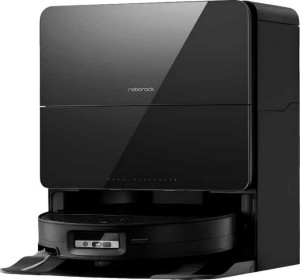
Roborock Saros 10
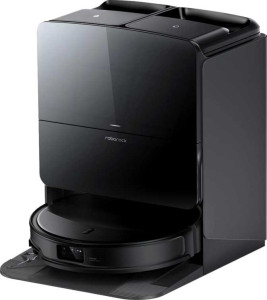
Roborock Saros 10R

Roborock Saros 10 Roborock Saros 10R

Overview

Welcome to our in-depth spec comparison between the Roborock Saros 10 and the Roborock Saros 10R. These two flagship robot vacuums share a remarkably similar foundation, yet differ in ways that could matter depending on your priorities. In this comparison, we put their suction power and docking station footprint under the microscope to help you decide which model is the right fit for your home.

Common Features

  • Both products include a HEPA filter.
  • Both products include an allergy filter.
  • Both products are compatible with Google Assistant.
  • Both products work with Alexa.
  • Both products produce an audible noise level of 68 dB.
  • Both products weigh 5000 g.
  • Both products have a width of 353 mm.
  • Both products have a height of 79.8 mm.
  • Both products support mapping.
  • Both products support no-go zones.
  • Both products support remote smartphone control.
  • Both products include an obstacle sensor.
  • Both products support problem area cleaning.
  • Both products are self-emptying.
  • Both products feature carpet detection.
  • Both products are designed to avoid getting stuck.
  • Both products have a dustbin capacity of 0.27 l.
  • Both products feature a display.
  • Twin side brushes are not present on either product.
  • Both products include washable filters.
  • Both products automatically adjust their height.
  • Both products indicate when the dustbin is full.
  • Both products use bags.
  • Both products clean all floor types.
  • Both products are capable of mopping.
  • Both products include a dirt sensor.
  • UV light is not present on either product.
  • Both products have a battery capacity of 6400 mAh.
  • Both products offer a runtime of 220 minutes.
  • Both products have a charge time of 2.5 hours.
  • Both products have an operating power consumption of 60W.
  • The battery is not removable on either product.

Main Differences

  • Docking station size is 84581.2 cm³ on the Roborock Saros 10 and 88315.8 cm³ on the Roborock Saros 10R.
  • Suction power is 22000 Pa on the Roborock Saros 10 and 19000 Pa on the Roborock Saros 10R.
Specs Comparison
Roborock Saros 10

Roborock Saros 10

Roborock Saros 10R

Roborock Saros 10R

General info:
has HEPA filter
audible noise 68 dB 68 dB
has an allergy filter
compatible with Google Assistant
works with Alexa
release date February 2025 February 2025
weight 5000 g 5000 g
width 353 mm 353 mm
height 79.8 mm 79.8 mm
thickness 350 mm 350 mm
volume 9859.29 cm³ 9859.29 cm³
warranty period 1 years 1 years
estimated empty time 49 days 49 days
docking station size 84581.2 cm³ 88315.8 cm³

In terms of general characteristics, the Roborock Saros 10 and Roborock Saros 10R are virtually identical twins. Both share the same physical footprint — 353 mm wide, 79.8 mm tall, and 350 mm thick — resulting in the exact same unit volume of 9859.29 cm³. They weigh the same at 5000 g, operate at the same audible noise level of 68 dB, and both carry a HEPA/allergy filter, making them equally suited for households with allergy sufferers. Smart home integration is also a wash, with both units supporting Google Assistant and Amazon Alexa. Even the warranty period and estimated dustbin empty cycle of 49 days are identical.

The one measurable difference in this group lies in the docking station size: the Saros 10R's dock occupies 88315.8 cm³ compared to the Saros 10's 84581.2 cm³ — roughly a 4.4% larger footprint. In practical terms, this means the Saros 10R's base station demands slightly more floor or counter space, which could matter in compact apartments or tight utility areas where placement options are limited.

Overall, this group reveals an essentially tied comparison between the two models. The Saros 10 holds a marginal, real-world edge here solely due to its smaller docking station, which is easier to accommodate in constrained spaces. For users with ample room, this distinction is negligible and should not be a deciding factor on its own.

Features:
has mapping
supports no-go zones
supports a remote smartphone
has an obstacle sensor
has problem area cleaning
is self-emptying
has carpet detection
doesn't get stuck
supports virtual barriers
has route mapping
Has voice prompts
auto docking
has anti-fall sensor
can be scheduled
has a remote control
has water level adjustment
supports Wi-Fi
Wi-Fi version Wi-Fi 4 (802.11n) Wi-Fi 4 (802.11n)
has mop cleaning
has mop raising
has mop drying

Across the full features spectrum, the Roborock Saros 10 and Roborock Saros 10R are a perfect match — every single capability listed is shared identically by both models. The headline autonomy features are all present: self-emptying, auto docking, scheduled cleaning, and anti-fall sensors ensure both robots can operate with minimal human intervention for extended periods.

On the navigation and intelligence side, both units offer mapping, route mapping, no-go zones, virtual barriers, and obstacle sensing — a comprehensive suite that enables precise, adaptable cleaning across complex floor plans. Equally important for mixed-surface homes, both robots support carpet detection, mop raising (to avoid soaking carpets), mop cleaning, and mop drying, covering the full wet-dry cleaning workflow without user intervention. Connectivity is handled via Wi-Fi 4 (802.11n) on both, which is adequate for reliable robot-to-app communication, though neither steps up to Wi-Fi 5 or 6. Neither model includes a physical remote control, with smartphone control serving as the sole remote interface — a common trade-off at this tier.

This group is a complete tie. There is no feature advantage on either side; buyers choosing between the Saros 10 and Saros 10R will find zero differentiation here and should focus their decision entirely on other specification groups.

Design:
dustbin capacity 0.27 l 0.27 l
Has a display
has twin side brushes
has included washable filters
automatically adjusts its height
Indicates when full
uses bags

From a design standpoint, the Roborock Saros 10 and Roborock Saros 10R are once again identical. Both robots share a 0.27 l dustbin capacity — a relatively compact onboard bin, though this is by design since both units are self-emptying and rely on bag-based collection at the dock rather than frequent manual emptying. The use of bags rather than bagless bins is a meaningful design choice: bags contain allergens more effectively during disposal and reduce the mess associated with emptying.

Both models also feature automatic height adjustment, allowing the robot to adapt its clearance dynamically across different floor surfaces — a practical advantage in homes that mix thick rugs with hard floors. The presence of a display on each unit adds a layer of at-a-glance usability without requiring a phone, while the full-bin indicator and included washable filters reduce long-term consumable costs. Neither robot uses twin side brushes, opting instead for a single-brush edge cleaning approach.

With every design spec mirrored exactly, this group is an unambiguous tie. No design-related factor distinguishes the Saros 10 from the Saros 10R, and prospective buyers should look to other specification groups to find meaningful differences between the two.

Cleaning power:
suction power 22000 Pa 19000 Pa
cleans all floor types
mops
has a dirt sensor
has UV light

Cleaning power is where the first real performance gap between these two robots emerges. The Roborock Saros 10 delivers 22000 Pa of suction, while the Saros 10R comes in at 19000 Pa — a difference of 3000 Pa, or roughly 16% more suction on the Saros 10's side. In practical terms, higher Pascal ratings translate to more forceful debris extraction from deep carpet pile, better pickup of heavier particles like sand or cat litter, and stronger performance in corners and along edges where resistance is greatest.

Beyond suction, both robots are evenly matched: each cleans all floor types, includes a dirt sensor for adaptive cleaning intensity, and supports mopping. Neither unit features UV light sanitization, so hygienic differentiation relies entirely on physical cleaning performance rather than any supplementary disinfection capability.

The Saros 10 holds a clear edge in this group. While 19000 Pa is already a high-performance figure capable of handling most household cleaning scenarios competently, the Saros 10's additional suction headroom makes a meaningful difference on thick carpets or in high-traffic areas with embedded dirt. Users who prioritize maximum vacuuming performance — particularly in carpet-heavy homes — will find the Saros 10 the stronger choice here.

Power:
battery power 6400 mAh 6400 mAh
runtime 220 min 220 min
charge time 2.5 hours 2.5 hours
operating power consumption 60W 60W
has a removable battery

Battery and power specs tell a story of complete parity between the Roborock Saros 10 and Saros 10R. Both are equipped with a 6400 mAh battery delivering up to 220 minutes of runtime — a substantial figure that comfortably covers large homes in a single pass without requiring a mid-clean recharge and resume cycle. Paired with a 2.5-hour charge time, the turnaround between sessions is reasonable for a robot at this capacity level.

Operating power consumption sits at 60W on both units, reflecting the energy demands of high-suction motors combined with active mopping and self-maintenance systems. Neither robot offers a removable battery, which is standard practice at this tier — longevity instead depends on overall battery management and charge cycle durability over time.

This group is a definitive tie. Every power-related metric is shared exactly between the two models, meaning runtime, charging speed, and energy consumption offer no basis for differentiation. Buyers for whom battery life or charging convenience is a priority can treat both robots as equivalent and focus their comparison elsewhere.

Comparison Summary & Verdict

After examining every available specification, the Roborock Saros 10 and Saros 10R are virtually identical in build, battery, runtime, and smart features. The meaningful distinctions come down to just two points. The Roborock Saros 10 delivers a stronger 22000 Pa of suction, making it the better pick for homes with heavy debris, thick carpets, or demanding cleaning needs. The Roborock Saros 10R, with its 19000 Pa suction, still performs at a high level and may suit lighter everyday use. On the other hand, the Saros 10R comes with a slightly larger docking station at 88315.8 cm³ versus 84581.2 cm³, which may be a minor consideration for tighter spaces. If raw cleaning power is your top priority, the Saros 10 has the edge. If the suction difference is less critical to your routine, the Saros 10R remains a highly capable alternative from the same premium lineup.

Roborock Saros 10
Buy Roborock Saros 10 if...

Buy the Roborock Saros 10 if you want maximum suction power at 22000 Pa and prefer a more compact docking station footprint.

Roborock Saros 10R
Buy Roborock Saros 10R if...

Buy the Roborock Saros 10R if 19000 Pa of suction is sufficient for your cleaning needs and the difference in docking station size is not a concern.