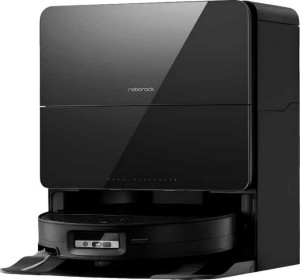
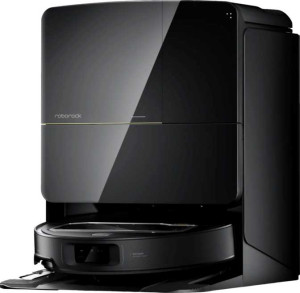
Roborock Saros 10
Roborock Saros Z70

Roborock Saros 10 Roborock Saros Z70

Overview

When choosing between the Roborock Saros 10 and the Roborock Saros Z70, two of Roborock's most capable robot vacuums, the decision comes down to a handful of carefully considered details. Both models share a remarkably strong common foundation, making this a nuanced comparison. This page takes a focused look at where these two robots diverge, particularly around dustbin capacity and battery runtime, to help you find the best match for your home.

Common Features

  • Both products include a HEPA filter.
  • Both products include an allergy filter.
  • Both products are compatible with Google Assistant.
  • Both products work with Alexa.
  • Both products weigh 5000 g.
  • Both products have a width of 353 mm.
  • Both products have a height of 79.8 mm.
  • Both products produce 68 dB of audible noise.
  • Both products support mapping.
  • Both products support no-go zones.
  • Both products support remote smartphone control.
  • Both products include an obstacle sensor.
  • Both products support problem area cleaning.
  • Both products are self-emptying.
  • Both products feature carpet detection.
  • Both products are designed to avoid getting stuck.
  • Both products have a display.
  • Twin side brushes are not present on either product.
  • Both products include washable filters.
  • Both products automatically adjust their height.
  • Both products indicate when the dustbin is full.
  • Both products use bags.
  • Both products deliver 22000 Pa of suction power.
  • Both products clean all floor types.
  • Both products are capable of mopping.
  • Both products include a dirt sensor.
  • UV light is not available on either product.
  • Both products have a battery capacity of 6400 mAh.
  • Both products have a charge time of 2.5 hours.
  • Both products have an operating power consumption of 60W.
  • The battery is not removable on either product.

Main Differences

  • Docking station size is 84581.2 cm³ on the Roborock Saros 10 and 88315.8 cm³ on the Roborock Saros Z70.
  • Dustbin capacity is 0.27 l on the Roborock Saros 10 and 0.4 l on the Roborock Saros Z70.
  • Runtime is 220 min on the Roborock Saros 10 and 290 min on the Roborock Saros Z70.
Specs Comparison
Roborock Saros 10

Roborock Saros 10

Roborock Saros Z70

Roborock Saros Z70

General info:
has HEPA filter
audible noise 68 dB 68 dB
has an allergy filter
compatible with Google Assistant
works with Alexa
release date February 2025 January 2025
weight 5000 g 5000 g
width 353 mm 353 mm
height 79.8 mm 79.8 mm
thickness 350 mm 350 mm
volume 9859.29 cm³ 9859.29 cm³
warranty period 1 years 1 years
estimated empty time 49 days 49 days
docking station size 84581.2 cm³ 88315.8 cm³

Across the core general specifications, the Roborock Saros 10 and Roborock Saros Z70 are remarkably close siblings. Both share identical physical dimensions (353 × 350 × 79.8 mm), the same 5000 g weight, and identical 68 dB operating noise — a level comparable to a normal conversation, which is moderate but not exceptional for a premium robot vacuum. Their smart home compatibility is also a perfect match, with both supporting Google Assistant and Alexa out of the box.

On the filtration and allergy front, both units are equally equipped, featuring a HEPA-grade allergy filter — a meaningful shared strength for households with pets or allergy sufferers. The 1-year warranty and an estimated empty time of 49 days are also identical, meaning neither product offers a longer self-sufficiency window or better post-purchase coverage than the other.

The only measurable difference in this group lies in the docking station footprint: the Saros Z70's base occupies 88,315.8 cm³ versus the Saros 10's 84,581.2 cm³ — roughly a 4.4% larger dock. In practical terms, the Z70's station demands slightly more floor space, which could matter in tighter rooms or closets. For users where space is a constraint, the Saros 10 holds a marginal edge here; otherwise, this group is effectively a tie.

Features:
has mapping
supports no-go zones
supports a remote smartphone
has an obstacle sensor
has problem area cleaning
is self-emptying
has carpet detection
doesn't get stuck
supports virtual barriers
has route mapping
Has voice prompts
auto docking
has anti-fall sensor
can be scheduled
has a remote control
has water level adjustment
supports Wi-Fi
has mop cleaning
has mop raising
has mop drying

When it comes to features, the Roborock Saros 10 and Saros Z70 are a perfect mirror of each other — every single capability in this group is shared identically. Both deliver a comprehensive premium feature set: multi-room mapping with route optimization, no-go zones and virtual barriers for precise area control, and advanced obstacle sensing combined with anti-fall protection to keep the robot safe and on track.

The mopping system is equally matched, with both units offering mop cleaning, raising, and drying — a full wet-cleaning lifecycle that prevents mildew buildup on the mop pad and avoids rewetting carpets. Paired with carpet detection, water level adjustment, and self-emptying capability, both robots are genuinely hands-off devices capable of handling mixed-floor homes with minimal user intervention. Scheduling, auto docking, and smartphone remote control round out a feature package that leaves very little to be desired in daily use.

Neither model includes a dedicated remote control, but given that both support full Wi-Fi smartphone control and voice assistant integration, this omission is inconsequential for most users. With zero differentiators across all 20 feature specs, this group is an unambiguous tie — a buyer choosing between these two models will find no feature-based reason to prefer one over the other.

Design:
dustbin capacity 0.27 l 0.4 l
Has a display
has twin side brushes
has included washable filters
automatically adjusts its height
Indicates when full
uses bags

The design specs for these two models are nearly identical, but there is one meaningful hardware difference worth examining: the Roborock Saros Z70 ships with a noticeably larger onboard dustbin at 0.4 L, compared to the Saros 10's 0.27 L — a roughly 48% greater capacity. Since both robots are self-emptying, the bin rarely fills up under normal conditions, but in high-debris scenarios — post-renovation cleanup, homes with heavy shedding pets, or large open-plan floors tackled in a single run — the Z70's larger bin reduces the risk of mid-clean interruptions before the robot returns to dock.

Everything else in this group is shared equally. Both feature washable included filters, a status display, automatic height adjustment for navigating different floor surfaces, and a full-indicator alert. The use of dust bags rather than bagless collection is also common to both — a design choice that significantly reduces dust exposure during emptying cycles, which is a practical advantage for allergy-sensitive households.

On balance, the Saros Z70 holds a narrow edge in this group purely on the strength of its larger dustbin. For most users relying on the self-empty dock, this difference will rarely be felt day-to-day, but in demanding cleaning conditions it provides a tangible buffer that the Saros 10 cannot match.

Cleaning power:
suction power 22000 Pa 22000 Pa
cleans all floor types
mops
has a dirt sensor
has UV light

Cleaning power is another category where the Roborock Saros 10 and Saros Z70 stand on completely equal footing. Both deliver 22,000 Pa of suction — a figure that sits firmly at the high end of the consumer robot vacuum market. In practical terms, this level of suction handles everything from fine dust on hardwood to embedded debris in thick-pile carpet without meaningful compromise.

Complementing raw suction, both robots include a dirt sensor that dynamically intensifies cleaning effort when concentrated debris is detected. This smart feedback loop means neither machine wastes time or battery on already-clean areas, while ensuring genuinely dirty spots receive focused attention. Combined with full mopping capability and support for all floor types, both units are equipped to handle mixed-surface homes comprehensively.

Neither model includes UV light sanitization, so users seeking germ-reduction beyond mechanical cleaning will need to look elsewhere — but this is a shared limitation, not a differentiator. With every cleaning power spec matching precisely, this group is a definitive tie. A buyer prioritizing raw cleaning performance has no basis to favor one model over the other.

Power:
battery power 6400 mAh 6400 mAh
runtime 220 min 290 min
charge time 2.5 hours 2.5 hours
operating power consumption 60W 60W
has a removable battery

Despite drawing from the same 6400 mAh battery and operating at an identical 60W power consumption, the Roborock Saros 10 and Saros Z70 deliver notably different runtimes — 220 minutes and 290 minutes respectively. That 70-minute gap is substantial: it suggests the Z70 operates more efficiently under real-world conditions, likely due to differences in how each model manages motor load, navigation behavior, or auxiliary systems. For larger homes exceeding roughly 150–200 m², this difference could determine whether a full clean completes in a single charge cycle or requires a recharge mid-run.

Charge time is identical at 2.5 hours for both models, so the Z70's longer runtime translates directly into greater coverage per session without any penalty on refill speed. Neither unit has a removable battery, meaning long-term battery degradation will eventually affect both equally — but that is a shared constraint rather than a differentiator.

The Saros Z70 holds a clear edge in this group. With the same battery capacity and power draw, squeezing out 32% more runtime is a meaningful real-world advantage, particularly for users with larger floor plans or those who prefer less frequent docking interruptions during cleaning sessions.

Comparison Summary & Verdict

After a thorough side-by-side analysis, the Roborock Saros 10 and the Roborock Saros Z70 prove to be nearly identical in most respects, sharing the same 22000 Pa suction power, 6400 mAh battery, self-emptying system, and a comprehensive suite of smart features. The meaningful distinctions lie in three areas. The Saros Z70 offers a notably larger dustbin capacity of 0.4 l versus 0.27 l, and a significantly longer runtime of 290 minutes compared to 220 minutes on the Saros 10, making it better suited for larger homes or longer cleaning sessions. The Saros 10, in turn, has a more compact docking station, which may appeal to users with tighter floor space. Both robots deliver outstanding, well-rounded cleaning performance, so the right choice ultimately depends on your home size and space constraints.

Roborock Saros 10
Buy Roborock Saros 10 if...

Buy the Roborock Saros 10 if you have limited space for a docking station and a smaller home where a 220-minute runtime is more than sufficient.

Roborock Saros Z70
Buy Roborock Saros Z70 if...

Buy the Roborock Saros Z70 if you need a longer runtime of 290 minutes and a larger dustbin capacity of 0.4 l to handle bigger spaces with fewer interruptions.