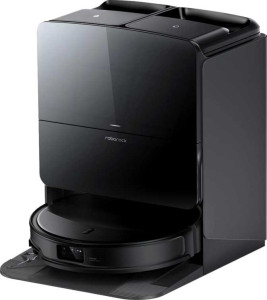
Roborock Saros 10R
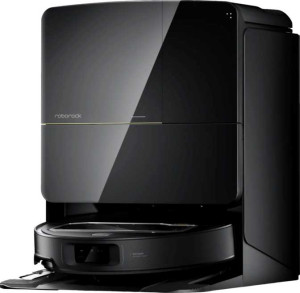
Roborock Saros Z70

Roborock Saros 10R Roborock Saros Z70

Overview

Welcome to our in-depth specification comparison between the Roborock Saros 10R and the Roborock Saros Z70, two advanced robot vacuums from Roborock’s premium Saros lineup. Both models share an impressive foundation of shared features, yet key differences in suction power, battery runtime, and dustbin capacity set them apart. Read on to discover which model best suits your home cleaning needs.

Common Features

  • Both products include a HEPA filter.
  • Both products include an allergy filter.
  • Audible noise level is 68 dB on both products.
  • Both products are compatible with Google Assistant.
  • Both products work with Alexa.
  • Weight is 5000 g on both products.
  • Width is 353 mm on both products.
  • Height is 79.8 mm on both products.
  • Mapping is supported on both products.
  • No-go zones are supported on both products.
  • Remote smartphone control is supported on both products.
  • An obstacle sensor is present on both products.
  • Problem area cleaning is available on both products.
  • Both products are self-emptying.
  • Carpet detection is available on both products.
  • Neither product is prone to getting stuck.
  • A display is present on both products.
  • Twin side brushes are not included on either product.
  • Washable filters are included with both products.
  • Both products automatically adjust their height.
  • Both products indicate when the dustbin is full.
  • Both products use bags.
  • Both products clean all floor types.
  • Both products are capable of mopping.
  • A dirt sensor is present on both products.
  • UV light is not available on either product.
  • Battery power is 6400 mAh on both products.
  • Charge time is 2.5 hours on both products.
  • Operating power consumption is 60W on both products.
  • The battery is not removable on either product.

Main Differences

  • Dustbin capacity is 0.27 l on the Roborock Saros 10R and 0.4 l on the Roborock Saros Z70.
  • Suction power is 19000 Pa on the Roborock Saros 10R and 22000 Pa on the Roborock Saros Z70.
  • Runtime is 220 min on the Roborock Saros 10R and 290 min on the Roborock Saros Z70.
Specs Comparison
Roborock Saros 10R

Roborock Saros 10R

Roborock Saros Z70

Roborock Saros Z70

General info:
has HEPA filter
audible noise 68 dB 68 dB
has an allergy filter
compatible with Google Assistant
works with Alexa
release date February 2025 January 2025
weight 5000 g 5000 g
width 353 mm 353 mm
height 79.8 mm 79.8 mm
thickness 350 mm 350 mm
volume 9859.29 cm³ 9859.29 cm³
warranty period 1 years 1 years
estimated empty time 49 days 49 days
docking station size 88315.8 cm³ 88315.8 cm³

When comparing the Roborock Saros 10R and the Roborock Saros Z70 on general specifications, the two robots are, remarkably, identical across every measured dimension in this group. Both share the same 353 × 350 × 79.8 mm footprint and 5000 g weight, meaning neither has a handling or clearance advantage over the other. Their 79.8 mm height is notably low, allowing both units to navigate under most standard furniture without issue.

On the usability and ecosystem front, both units offer HEPA and allergy filtration, making either a viable choice for allergy-sensitive households. Smart home integration is also a wash — both support Google Assistant and Amazon Alexa, so your existing voice-control setup will work with either model. Operationally, the 68 dB noise level and 49-day estimated empty time for the dust bin are shared, meaning neither will demand more frequent maintenance or disturb a quieter home environment more than the other.

Based strictly on this spec group, the two products are in a complete tie — every single metric is identical. No advantage can be assigned to either the Saros 10R or the Saros Z70 from these general specs alone. Buyers should look to other specification groups — such as navigation, cleaning performance, or unique hardware features — to find the real differentiators between these two models.

Features:
has mapping
supports no-go zones
supports a remote smartphone
has an obstacle sensor
has problem area cleaning
is self-emptying
has carpet detection
doesn't get stuck
supports virtual barriers
has route mapping
Has voice prompts
auto docking
has anti-fall sensor
can be scheduled
has a remote control
has water level adjustment
supports Wi-Fi
has mop cleaning
has mop raising
has mop drying

Across the features category, the Saros 10R and Saros Z70 are once again perfectly matched — every single capability listed is shared by both models. At the premium end of the robot vacuum market, this breadth of features is itself noteworthy: both units cover the full automation stack, from intelligent mapping and route planning to no-go zones and virtual barriers, giving users precise control over where and how each robot operates.

The mopping suite deserves particular attention, as it represents some of the most practically valuable functionality here. Both robots support mop cleaning, mop raising, and mop drying — a combination that matters significantly in mixed-floor homes. Mop raising ensures carpets are not dragged across with a wet pad, while mop drying reduces the bacterial buildup and odor that plagues cheaper systems. Pair that with carpet detection, water level adjustment, and self-emptying, and both models offer a genuinely hands-off cleaning experience that rivals far more complex setups.

The verdict for this group is another complete tie. Neither the Saros 10R nor the Saros Z70 holds any feature advantage over the other based on this data. The absence of a physical remote control on both is a minor shared omission, but given full smartphone and voice-assistant control, it is unlikely to matter for most users. Differentiating factors must be sought elsewhere — likely in cleaning performance metrics or hardware-specific capabilities.

Design:
dustbin capacity 0.27 l 0.4 l
Has a display
has twin side brushes
has included washable filters
automatically adjusts its height
Indicates when full
uses bags

The design group finally surfaces a concrete difference between these two models. The Saros Z70 carries a notably larger onboard dustbin at 0.4 l, compared to the 0.27 l bin found in the Saros 10R — a difference of nearly 50%. While both robots are self-emptying, a larger onboard bin matters in practice: it reduces the frequency of mid-clean interruptions on larger floor plans or in high-debris environments like homes with pets, and provides a meaningful buffer if the docking station bag is slow to be replaced.

Everything else in this group is shared. Both robots use bagged collection — generally preferred over bagless systems for hygiene, as bags contain allergens more effectively during disposal — and both include washable filters, reducing long-term consumable costs. The presence of a display, full-bin indicator, and automatic height adjustment on each model rounds out a well-equipped design package for both.

The Saros Z70 holds a clear edge in this group, solely by virtue of its larger dustbin. For users with bigger homes or higher daily debris loads, that extra capacity is a tangible practical advantage. The Saros 10R is not meaningfully disadvantaged in smaller spaces where self-emptying makes bin size less critical, but the Z70 objectively offers more onboard capacity.

Cleaning power:
suction power 19000 Pa 22000 Pa
cleans all floor types
mops
has a dirt sensor
has UV light

Suction power is where the Saros Z70 pulls ahead in this group. Its 22000 Pa of suction outpaces the Saros 10R's already-strong 19000 Pa — a roughly 16% increase. At these performance levels, both robots are well beyond what is needed for hard floors and low-pile carpets, but the Z70's higher figure gives it a meaningful advantage on thicker rugs, where deep-embedded debris and pet hair require sustained, powerful airflow to extract effectively.

Both models share a strong baseline feature set for cleaning intelligence: each supports all floor types, includes a dirt sensor for adaptive cleaning intensity, and offers full mopping capability. The dirt sensor is particularly valuable in practice — it allows the robot to automatically concentrate effort on heavily soiled areas rather than applying uniform passes, making cleaning more efficient without user intervention. Neither unit includes UV light, so sanitization beyond physical debris removal is not a differentiator here.

The Saros Z70 takes a clear edge in this category on the strength of its higher suction rating. For users with carpeted rooms or households with pets, that additional power is a direct, real-world advantage. The Saros 10R remains highly capable for most scenarios, but when raw cleaning muscle is the deciding factor, the Z70 leads.

Power:
battery power 6400 mAh 6400 mAh
runtime 220 min 290 min
charge time 2.5 hours 2.5 hours
operating power consumption 60W 60W
has a removable battery

Despite drawing from an identical 6400 mAh battery and operating at the same 60W power consumption, the Saros Z70 achieves a significantly longer runtime of 290 minutes versus the Saros 10R's 220 minutes — a 70-minute, or roughly 32%, advantage. This is a notable gap: in practical terms, the Z70 can cover considerably more floor area on a single charge, making it a stronger candidate for larger homes where recharge interruptions disrupt cleaning continuity.

Both models share a 2.5-hour charge time and neither offers a removable battery, so swapping cells for extended runtime is not an option on either unit. The fixed battery design is standard for this product category and poses no real-world disadvantage given auto-docking and resume functionality, but it does mean the runtime difference between the two models is a permanent, unchangeable factor in daily use.

The Saros Z70 holds a meaningful edge in this group. Achieving a longer runtime from the same hardware specifications suggests more efficient energy utilization, and the real-world benefit — more floor covered per session — is directly relevant to anyone with a medium-to-large home. The Saros 10R's 220 minutes is still competitive, but for buyers where uninterrupted, single-pass coverage of larger spaces is a priority, the Z70's advantage here is hard to overlook.

Comparison Summary & Verdict

After examining every specification, both the Roborock Saros 10R and the Roborock Saros Z70 prove to be highly capable robot vacuums that share identical builds, sensors, smart-home compatibility, and battery hardware. However, the Z70 pulls ahead in every measurable performance metric: it delivers 22000 Pa of suction power versus 19000 Pa, offers a notably larger 0.4 L dustbin compared to 0.27 L, and runs for 290 minutes per charge against 220 minutes. The Roborock Saros 10R remains a strong choice for users who want premium features at a likely lower price point and do not need the absolute maximum in suction or endurance. The Roborock Saros Z70 is the better fit for larger homes, high-traffic areas, or anyone who demands longer autonomous operation between charges and more powerful deep cleaning.

Roborock Saros 10R
Buy Roborock Saros 10R if...

Buy the Roborock Saros 10R if you want a premium self-emptying robot vacuum with strong 19000 Pa suction and you prioritize value over maximum runtime or dustbin size.

Roborock Saros Z70
Buy Roborock Saros Z70 if...

Buy the Roborock Saros Z70 if you need longer cleaning sessions with its 290-minute runtime, more powerful 22000 Pa suction, and a larger 0.4 L dustbin for bigger or busier homes.