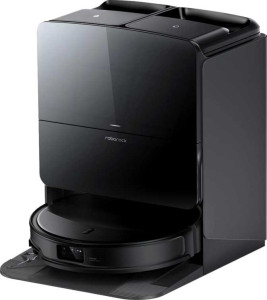
Roborock Saros 10R
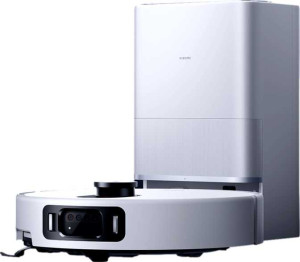
Xiaomi Robot Vacuum 5 Pro

Roborock Saros 10R Xiaomi Robot Vacuum 5 Pro

Overview

Welcome to our in-depth spec comparison between the Roborock Saros 10R and the Xiaomi Robot Vacuum 5 Pro. Both robots share a strong feature foundation — including self-emptying systems, mopping capability, and smart home compatibility — yet they take notably different approaches when it comes to battery performance, noise levels, and everyday usability. Read on to see how these two capable machines stack up across every key specification.

Common Features

  • Both products include a HEPA filter.
  • Both products include an allergy filter.
  • Both products are compatible with Google Assistant.
  • Both products work with Alexa.
  • Both products have a thickness of 350 mm.
  • Both products support mapping.
  • Both products support no-go zones.
  • Both products support remote smartphone control.
  • Both products have an obstacle sensor.
  • Both products have problem area cleaning.
  • Both products are self-emptying.
  • Both products have carpet detection.
  • Neither product gets stuck.
  • Neither product has twin side brushes.
  • Both products include washable filters.
  • Both products automatically adjust their height.
  • Both products indicate when the dustbin is full.
  • Both products use bags.
  • Both products clean all floor types.
  • Both products are capable of mopping.
  • Neither product has a removable battery.

Main Differences

  • Audible noise is 68 dB on Roborock Saros 10R and 50 dB on Xiaomi Robot Vacuum 5 Pro.
  • Weight is 5000 g on Roborock Saros 10R and 3970 g on Xiaomi Robot Vacuum 5 Pro.
  • Width is 353 mm on Roborock Saros 10R and 350 mm on Xiaomi Robot Vacuum 5 Pro.
  • Height is 79.8 mm on Roborock Saros 10R and 88 mm on Xiaomi Robot Vacuum 5 Pro.
  • Volume is 9859.29 cm³ on Roborock Saros 10R and 10780 cm³ on Xiaomi Robot Vacuum 5 Pro.
  • Warranty period is 1 year on Roborock Saros 10R and 2 years on Xiaomi Robot Vacuum 5 Pro.
  • Estimated empty time is 49 days on Roborock Saros 10R and 90 days on Xiaomi Robot Vacuum 5 Pro.
  • Docking station size is 88315.8 cm³ on Roborock Saros 10R and 96782.4 cm³ on Xiaomi Robot Vacuum 5 Pro.
  • Remote control support is present on Xiaomi Robot Vacuum 5 Pro but not available on Roborock Saros 10R.
  • Dustbin capacity is 0.27 l on Roborock Saros 10R and 0.35 l on Xiaomi Robot Vacuum 5 Pro.
  • A display is present on Roborock Saros 10R but not available on Xiaomi Robot Vacuum 5 Pro.
  • Suction power is 19000 Pa on Roborock Saros 10R and 20000 Pa on Xiaomi Robot Vacuum 5 Pro.
  • A dirt sensor is present on Roborock Saros 10R but not available on Xiaomi Robot Vacuum 5 Pro.
  • Battery power is 6400 mAh on Roborock Saros 10R and 5200 mAh on Xiaomi Robot Vacuum 5 Pro.
  • Runtime is 220 minutes on Roborock Saros 10R and 140 minutes on Xiaomi Robot Vacuum 5 Pro.
  • Charge time is 2.5 hours on Roborock Saros 10R and 4 hours on Xiaomi Robot Vacuum 5 Pro.
  • Operating power consumption is 60W on Roborock Saros 10R and 55W on Xiaomi Robot Vacuum 5 Pro.
Specs Comparison
Roborock Saros 10R

Roborock Saros 10R

Xiaomi Robot Vacuum 5 Pro

Xiaomi Robot Vacuum 5 Pro

General info:
has HEPA filter
audible noise 68 dB 50 dB
has an allergy filter
compatible with Google Assistant
works with Alexa
release date February 2025 September 2025
weight 5000 g 3970 g
width 353 mm 350 mm
height 79.8 mm 88 mm
thickness 350 mm 350 mm
volume 9859.29 cm³ 10780 cm³
warranty period 1 years 2 years
estimated empty time 49 days 90 days
docking station size 88315.8 cm³ 96782.4 cm³

Both the Roborock Saros 10R and the Xiaomi Robot Vacuum 5 Pro share a strong filtration foundation, each equipped with a HEPA allergy filter and full compatibility with both Google Assistant and Amazon Alexa — so on smart home integration and air quality, neither product holds an advantage over the other.

Where the differences become meaningful is in the physical and operational specs. The Saros 10R is noticeably heavier at 5000 g versus the Xiaomi's 3970 g, and it operates at a louder 68 dB compared to the Xiaomi's much quieter 50 dB — a difference of 18 dB that is perceptible in everyday use, especially in quiet households or during nighttime cleaning cycles. The Xiaomi is also slimmer in height at 88 mm versus 79.8 mm for the Saros 10R, meaning the Roborock can fit under slightly lower furniture. The Xiaomi's docking station is larger in footprint (96782.4 cm³ vs 88315.8 cm³), which may matter in tighter spaces.

From a long-term ownership perspective, the Xiaomi Robot Vacuum 5 Pro holds a clear practical edge: its 2-year warranty doubles the Saros 10R's 1-year coverage, and its estimated dustbin empty cycle of 90 days significantly outlasts the Saros 10R's 49 days, meaning less frequent maintenance. For users who prioritize quieter operation, lower maintenance frequency, and longer warranty protection, the Xiaomi 5 Pro has a meaningful advantage in this category.

Features:
has mapping
supports no-go zones
supports a remote smartphone
has an obstacle sensor
has problem area cleaning
is self-emptying
has carpet detection
doesn't get stuck
supports virtual barriers
has route mapping
Has voice prompts
auto docking
has anti-fall sensor
can be scheduled
has a remote control
has water level adjustment
supports Wi-Fi
Wi-Fi version Wi-Fi 4 (802.11n) Wi-Fi 4 (802.11n)
has mop cleaning
has mop raising
has mop drying

Across the features category, these two robots are remarkably well-matched. Both offer the full suite of modern autonomous cleaning capabilities — mapping, no-go zones, virtual barriers, route mapping, obstacle sensing, anti-fall protection, carpet detection, scheduling, and auto docking. Critically, both also support advanced wet cleaning with mop cleaning, mop raising, and mop drying, as well as self-emptying dustbins — features that collectively place both units in the premium tier of the robot vacuum market.

The one concrete differentiator in this group is the remote control function: the Xiaomi Robot Vacuum 5 Pro includes it, while the Saros 10R does not. A physical or in-app remote control allows users to manually steer the robot to a specific spot on demand — useful for quickly directing it to a spill or a neglected corner without initiating a full cleaning cycle. It is a convenience feature rather than a core capability, but it is a tangible addition the Saros 10R lacks. Both share identical Wi-Fi 4 (802.11n) connectivity, so neither has a networking edge.

Overall, this group is essentially a near-tie, with the Xiaomi 5 Pro holding a slight edge solely due to its remote control support. For the vast majority of users relying on app-based control and automation, the gap is minimal — but for those who value manual on-the-fly direction, the Xiaomi offers that added flexibility.

Design:
dustbin capacity 0.27 l 0.35 l
Has a display
has twin side brushes
has included washable filters
automatically adjusts its height
Indicates when full
uses bags

On the design front, the two robots share the same structural philosophy: both use bags for dust collection, include washable filters, automatically adjust their height to handle different floor surfaces, and signal when the bin is full. These shared traits mean neither has a maintenance or adaptability edge over the other on those fronts.

The dustbin capacity gap is worth noting — the Xiaomi Robot Vacuum 5 Pro holds 0.35 l versus the Saros 10R's 0.27 l, a roughly 30% larger onboard bin. In practice, since both units are self-emptying, this difference primarily matters during the run itself: a larger bin reduces the chance of the robot needing to return to the dock mid-clean in larger homes or heavy-debris situations. The Saros 10R counters with a built-in display, which the Xiaomi lacks — a small but genuine convenience for checking status or confirming settings without reaching for a phone.

These two design differentiators essentially offset each other depending on user priorities. Those cleaning larger spaces or dealing with more debris will appreciate the Xiaomi's larger dustbin, while users who prefer at-a-glance robot feedback without app dependency will find value in the Saros 10R's display. On balance, this group is a functional tie with a slight practical lean toward the Xiaomi for high-traffic cleaning scenarios.

Cleaning power:
suction power 19000 Pa 20000 Pa
cleans all floor types
mops
has a dirt sensor

Raw suction power is nearly identical here — the Xiaomi Robot Vacuum 5 Pro edges ahead at 20000 Pa versus the Saros 10R's 19000 Pa, a difference of just 5%. At this performance tier, both robots are capable of deep cleaning across all floor types, and the gap is unlikely to be perceptible in everyday use. Mopping is supported by both as well, so neither holds an advantage on versatility.

The more meaningful differentiator is the dirt sensor, which the Roborock Saros 10R has and the Xiaomi does not. A dirt sensor allows the robot to detect concentrated debris in real time and automatically intensify cleaning in those areas — spending more time and suction where it's actually needed rather than applying uniform effort across the whole floor. This kind of adaptive cleaning is particularly valuable in homes with pets, high-traffic entryways, or uneven debris distribution.

Taken together, this group is a nuanced split: the Xiaomi holds a marginal lead on peak suction, but the Saros 10R's dirt sensor gives it a qualitative edge in cleaning intelligence. For users who prioritize raw power, the difference is negligible; for those who want smarter, more targeted cleaning, the Saros 10R has the practical advantage here.

Power:
battery power 6400 mAh 5200 mAh
runtime 220 min 140 min
charge time 2.5 hours 4 hours
operating power consumption 60W 55W
has a removable battery

The power category is where the Roborock Saros 10R pulls ahead most decisively. Its 6400 mAh battery delivers a runtime of 220 minutes — compared to the Xiaomi Robot Vacuum 5 Pro's 5200 mAh and 140 minutes. That 80-minute gap is substantial: it translates directly to the ability to clean larger floor areas in a single uninterrupted pass, reducing how often the robot needs to return to the dock mid-job to recharge before finishing.

Charge time compounds this advantage further. The Saros 10R replenishes fully in 2.5 hours, while the Xiaomi requires 4 hours — 60% longer. In practical terms, a faster charge means the robot is ready for its next run sooner, which matters most in multi-story homes or for users who run cleaning cycles multiple times a day. Operating power draw is marginally higher on the Saros 10R at 60W versus 55W, but this difference is negligible from both a performance and energy-cost standpoint. Neither unit has a removable battery, so long-term battery degradation is an equal consideration for both.

The Roborock Saros 10R holds a clear and meaningful advantage in this group. Longer runtime, a significantly faster charge cycle, and a larger battery capacity make it the stronger performer for larger homes or users who demand fewer interruptions during cleaning sessions.

Comparison Summary & Verdict

After examining every specification, both robots prove to be well-rounded cleaning solutions, but each has a distinct profile. The Roborock Saros 10R stands out with its longer 220-minute runtime, faster 2.5-hour charge time, a built-in display, and a dirt sensor — making it the stronger pick for larger homes that demand endurance and smarter cleaning intelligence. The Xiaomi Robot Vacuum 5 Pro, on the other hand, counters with a higher 20,000 Pa suction power, a quieter 50 dB operation, a larger 0.35 l dustbin, a 2-year warranty, and an estimated empty interval of 90 days — appealing to users who prioritize low-maintenance ownership and a quieter cleaning experience. Neither robot is a clear absolute winner; the right choice ultimately depends on whether you value runtime and smart features or suction strength and long-term convenience.

Roborock Saros 10R
Buy Roborock Saros 10R if...

Buy the Roborock Saros 10R if you need a robot vacuum with a significantly longer runtime, faster charging, a built-in display, and a dirt sensor for more intelligent, thorough cleaning sessions.

Xiaomi Robot Vacuum 5 Pro
Buy Xiaomi Robot Vacuum 5 Pro if...

Buy the Xiaomi Robot Vacuum 5 Pro if you prefer a quieter robot with stronger suction, a larger dustbin, a longer warranty, and a much longer estimated time between empty cycles for minimal upkeep.