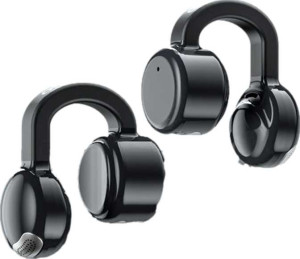
Roseselsa OpenFree
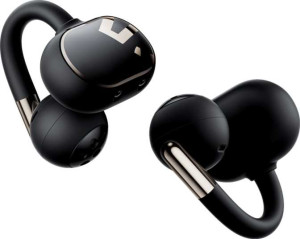
Soundpeats Clip 1

Roseselsa OpenFree Soundpeats Clip 1

Overview

Welcome to this detailed specification face-off between the Roseselsa OpenFree and the Soundpeats Clip 1, two open-ear wireless earbuds that share a surprising amount of common ground. Both adopt a cable-free design and support Bluetooth 5.4, LDAC, and fast charging, but they diverge in areas that may matter most to you: water resistance, battery endurance, driver size, and codec support. Read on to find out which one earns a spot in your ears.

Common Features

  • Both products feature an open-ear fit.
  • Neither product has wires or cables.
  • Neither product is a neckband earbud design.
  • Wingtips are not included with either product.
  • RGB lighting is not present on either product.
  • Both products have stereo speakers.
  • Neither product has a UV light.
  • Neither product has a display.
  • Active noise cancellation (ANC) is not available on either product.
  • Passive noise reduction is not available on either product.
  • Both products share a lowest frequency of 20 Hz.
  • Spatial audio is not supported on either product.
  • Dolby Atmos is not available on either product.
  • Dirac Virtuo is not available on either product.
  • Neither product uses a neodymium magnet.
  • Wireless charging is not available on either product.
  • Neither product has a solar power battery.
  • Both products include a battery level indicator.
  • Both products have a rechargeable battery.
  • Fast pairing is not available on either product.
  • Both products feature a USB Type-C connection.
  • Both products use Bluetooth version 5.4.
  • LDAC is supported on both products.
  • Bluetooth LE Audio is not supported on either product.
  • aptX Adaptive is not supported on either product.
  • aptX Low Latency is not supported on either product.
  • aptX HD is not supported on either product.
  • Ambient sound mode is not available on either product.
  • A find device feature is not available on either product.
  • Fast charging is supported on both products.
  • Both products support multipoint connection for 2 devices simultaneously.
  • Neither product can read notifications.
  • Both products include a mute function.
  • Both products can be used as a headset.
  • Both products have a control panel placed on the device.
  • Both products are equipped with a noise-canceling microphone.

Main Differences

  • The Ingress Protection rating is IPX4 on the Roseselsa OpenFree and IPX5 on the Soundpeats Clip 1.
  • The Roseselsa OpenFree is sweat resistant, while the Soundpeats Clip 1 is water resistant.
  • The driver unit size is 10 mm on the Roseselsa OpenFree and 12 mm on the Soundpeats Clip 1.
  • The highest frequency is 20000 Hz on the Roseselsa OpenFree and 4 Hz on the Soundpeats Clip 1.
  • Battery life is 10 hours on the Roseselsa OpenFree and 8 hours on the Soundpeats Clip 1.
  • The battery life of the charging case is 42 hours on the Roseselsa OpenFree and 32 hours on the Soundpeats Clip 1.
  • Charge time is 2 hours on the Roseselsa OpenFree and 1.5 hours on the Soundpeats Clip 1.
  • LDHC support is present on the Roseselsa OpenFree but not available on the Soundpeats Clip 1.
  • In/on-ear detection is present on the Soundpeats Clip 1 but not available on the Roseselsa OpenFree.
Specs Comparison
Roseselsa OpenFree

Roseselsa OpenFree

Soundpeats Clip 1

Soundpeats Clip 1

Design:
Fit Open-ear Open-ear
Ingress Protection (IP) rating IPX4 IPX5
water resistance Sweat resistant Water resistant
has no wires or cables
are neckband earbuds
wingtips included
has RGB lighting
has stereo speakers
has UV light
Has a display

Both the Roseselsa OpenFree and the Soundpeats Clip 1 share the same fundamental design philosophy: fully wireless, open-ear earbuds with stereo sound and no flashy extras like RGB lighting or displays. For users who want a clean, distraction-free form factor suited for situational awareness during workouts or commutes, both products deliver an identical structural package.

The only meaningful differentiator in this group is water resistance. The OpenFree carries an IPX4 rating, classifying it as sweat resistant — adequate for gym sessions and light perspiration, but not reliable against splashes or rain. The Clip 1 steps up to IPX5, meaning it can withstand sustained, low-pressure water jets from any direction. In practical terms, this makes the Clip 1 meaningfully more versatile for outdoor runners or anyone caught in the rain.

On design, the Soundpeats Clip 1 holds a clear edge purely due to its superior ingress protection rating. If water exposure is a realistic concern in your use case, IPX5 offers a notably wider safety margin than IPX4. For strictly indoor, low-sweat use, the OpenFree's protection level is sufficient, but the Clip 1 wins this category outright.

Sound quality:
has active noise cancellation (ANC)
has passive noise reduction
driver unit size 10 mm 12 mm
lowest frequency 20 Hz 20 Hz
highest frequency 20000 Hz 4 Hz
supports spatial audio
has Dolby Atmos
has Dirac Virtuo
has a neodymium magnet

Neither earbud offers ANC or passive noise reduction, which is expected for open-ear designs — isolation is intentionally sacrificed for ambient awareness. Equally, both lack spatial audio processing or premium audio certifications like Dolby Atmos, positioning them as straightforward stereo listeners rather than immersive audio devices.

The most tangible hardware difference is driver size: the Clip 1 uses a 12 mm driver versus the OpenFree's 10 mm. Larger drivers generally move more air, which can translate to fuller low-end response and greater overall volume headroom — though real-world results depend heavily on tuning. The OpenFree lists a standard 20 Hz–20,000 Hz frequency range, covering the full spectrum of human hearing. The Clip 1's listed highest frequency of 4 Hz appears to be a data entry error and cannot be interpreted as a reliable spec; users should verify this figure directly with the manufacturer before drawing conclusions.

Disregarding the suspect frequency figure, the Clip 1's larger driver gives it a structural edge on paper for low-frequency reproduction. However, given the data anomaly, declaring a definitive sound quality winner is not possible from these specs alone. The OpenFree at least presents a complete and internally consistent frequency spec, which gives it a minor credibility advantage in this comparison as documented.

Power:
Battery life 10 hours 8 hours
Battery life of charging case 42 hours 32 hours
charge time 2 hours 1.5 hours
has wireless charging
Has a solar power battery
has a battery level indicator
has a rechargeable battery

Stamina is where the Roseselsa OpenFree pulls ahead meaningfully. Its 10-hour per-earbud battery life outpaces the Clip 1's 8 hours — a gap that matters most for long-haul travelers, remote workers, or anyone who regularly pushes through full workdays without reaching for a case. Combined with the charging case, the OpenFree's total system endurance reaches 42 hours versus the Clip 1's 32 hours, representing roughly a 30% advantage in how long you can go between wall outlet visits.

The Clip 1 does recoup some ground on charge time: it refills in 1.5 hours compared to the OpenFree's 2 hours. For users who remember to charge overnight, this distinction is negligible — but if you frequently need a quick top-up before heading out, that 30-minute difference is a small but real convenience. Neither model supports wireless charging, so both require a cable regardless.

Overall, the Roseselsa OpenFree holds a clear edge in this category. Greater per-session battery life and substantially higher total case capacity make it the stronger choice for users who prioritize going longer between charges, while the Clip 1's faster charge time is a minor consolation that doesn't offset the gap in raw endurance.

Connectivity:
has fast pairing
Has USB Type-C
Bluetooth version 5.4 5.4
has LDAC
has LDHC
has Bluetooth LE Audio
has aptX Adaptive
has aptX Low Latency
has aptX HD
has aptX
has aptX Lossless
has aptX Voice
has Auracast
maximum Bluetooth range 10 m 10 m
supports Bluetooth pairing using NFC
Can be used wirelessly
has AAC

At their core, these two earbuds share an identical connectivity foundation: Bluetooth 5.4, a 10 m wireless range, USB-C charging, and support for both LDAC and AAC. LDAC is the standout here for audio enthusiasts — Sony's high-res codec transmits up to three times more data than standard Bluetooth audio, making it the preferred choice for streaming lossless or hi-res content from compatible Android devices. That both earbuds include it at this price tier is notable.

The sole differentiator is LDHC, which the OpenFree supports and the Clip 1 does not. LDHC is a high-resolution wireless codec developed by Huawei, capable of transmitting audio at up to 900 kbps — even higher than LDAC's ceiling. In practice, its real-world benefit is limited by the relatively small ecosystem of LDHC-compatible source devices, so most users will never activate it. For those with a compatible Huawei device or DAP, however, it represents an additional high-fidelity pathway.

The Roseselsa OpenFree earns a narrow edge in this category solely due to LDHC support, giving it a broader high-resolution codec toolkit. That said, for the vast majority of users relying on LDAC or AAC — which both earbuds handle equally — connectivity is effectively a tie in real-world usage.

Features:
release date June 2025 November 2025
has ambient sound mode
has in/on-ear detection
has find device feature
Supports fast charging
multipoint count 2 2
can read notifications
has a mute function
can be used as a headset
control panel placed on a device
Has voice prompts
travel bag is included
Has an in-line control panel
Has a temperature sensor
Has a built-in camera remote control function

Functionally, these two earbuds are remarkably well-matched. Fast charging, 2-device multipoint connectivity, on-device controls, mute, headset capability, voice prompts, and even an included travel bag are all shared across both. Multipoint is worth highlighting for practical users — connecting simultaneously to two devices, such as a laptop and phone, eliminates the hassle of manual re-pairing when switching between them.

The single feature separating them is in/on-ear detection, which the Clip 1 has and the OpenFree lacks. This sensor automatically pauses playback when an earbud is removed and resumes when reinserted — a small but genuinely useful quality-of-life feature that prevents missed audio and reduces the need to manually interact with a device every time you briefly take the earbuds out.

The Soundpeats Clip 1 takes a narrow win here on the strength of in/on-ear detection. It is the only differentiating feature in an otherwise identical set, but it is a practical, everyday convenience rather than a gimmick — making the Clip 1 the slightly more polished option from a smart-feature standpoint.

Microphone:
has a noise-canceling microphone

With only a single data point in this category, the comparison is straightforward: both the Roseselsa OpenFree and the Soundpeats Clip 1 include a noise-canceling microphone. For open-ear earbuds — which by design sit outside the ear canal and are therefore more exposed to ambient sound bleed — microphone noise cancellation is a particularly relevant feature, helping to isolate the caller's voice from surrounding environment noise during calls.

This is a complete tie. The provided specs offer no further differentiating data points — such as microphone count, beamforming technology, or call quality certifications — so no advantage can be assigned to either product based on the available information alone.

Comparison Summary & Verdict

After examining the full specification set, both earbuds prove to be capable open-ear companions with strong shared foundations, including Bluetooth 5.4, LDAC support, fast charging, and noise-canceling microphones. However, their differences point each product toward a distinct type of user. The Roseselsa OpenFree stands out with a longer 10-hour battery life, an impressive 42-hour charging case, and exclusive LDHC codec support, making it the better pick for those who prioritize endurance and audio codec flexibility. The Soundpeats Clip 1, on the other hand, counters with a superior IPX5 water resistance rating, a larger 12 mm driver, a faster 1.5-hour charge time, and in/on-ear detection, making it a more practical choice for active users who need quicker turnarounds and better moisture protection.

Roseselsa OpenFree
Buy Roseselsa OpenFree if...

Buy the Roseselsa OpenFree if you want maximum battery endurance with up to 10 hours of playback and 42 hours from the case, or if LDHC codec support is important to your listening setup.

Soundpeats Clip 1
Buy Soundpeats Clip 1 if...

Buy the Soundpeats Clip 1 if you lead an active lifestyle and need stronger IPX5 water resistance, faster 1.5-hour charging, and the convenience of in/on-ear detection.