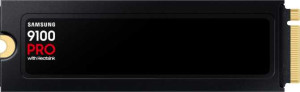
Samsung 9100 Pro 2TB
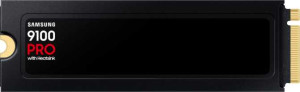
Samsung 9100 Pro 8TB

Samsung 9100 Pro 2TB Samsung 9100 Pro 8TB

Overview

Welcome to our in-depth specification comparison between the Samsung 9100 Pro 2TB and the Samsung 9100 Pro 8TB. Both drives share the same powerful foundation, yet key differences emerge when examining read performance and storage capacity. Whether you are upgrading a workstation or building a high-demand storage setup, understanding where these two drives diverge is essential to making the right choice.

Common Features

  • Sequential write speed is 13400 MB/s on both products.
  • Random write speed is 2600000 IOPS on both products.
  • Both products use the M.2 form factor.
  • Both products feature a DRAM cache.
  • Both products are NVMe SSDs.
  • Both products support NVMe version 2.
  • Both products are powered by the Samsung Presto (S4LY027) controller.
  • Both products use TLC NAND flash storage.
  • Both products use PCIe version 5.
  • Both products have 8 controller channels.

Main Differences

  • Sequential read speed is 14700 MB/s on Samsung 9100 Pro 2TB and 14800 MB/s on Samsung 9100 Pro 8TB.
  • Random read speed is 1850000 IOPS on Samsung 9100 Pro 2TB and 2200000 IOPS on Samsung 9100 Pro 8TB.
  • Internal storage capacity is 2000 GB on Samsung 9100 Pro 2TB and 8000 GB on Samsung 9100 Pro 8TB.
  • Terabytes Written (TBW) endurance rating is 1200 TBW on Samsung 9100 Pro 2TB and 4800 TBW on Samsung 9100 Pro 8TB.
Specs Comparison
Samsung 9100 Pro 2TB

Samsung 9100 Pro 2TB

Samsung 9100 Pro 8TB

Samsung 9100 Pro 8TB

Read speed:
sequential read speed 14700 MB/s 14800 MB/s
random read speed 1850000 IOPS 2200000 IOPS

Both drives deliver exceptional sequential read performance, with the 8TB model edging ahead at 14800 MB/s versus 14700 MB/s for the 2TB — a difference so slim (under 0.7%) that it is effectively imperceptible in real-world workloads like large file transfers or video editing timelines.

The more meaningful gap lies in random read performance. The 8TB variant reaches 2,200,000 IOPS compared to 1,850,000 IOPS on the 2TB — a roughly 19% advantage. Random IOPS directly impacts how fast a drive handles multitasking, database queries, OS responsiveness, and loading many small files simultaneously. For heavy workloads such as virtualization, enterprise applications, or game streaming from large libraries, that gap translates to tangibly smoother performance under load.

In summary, the 8TB model holds a clear edge in read speed, driven entirely by its random IOPS advantage. Sequential speeds are virtually tied. Users running demanding, concurrent workloads will benefit most from the 8TB′s higher IOPS ceiling, while the 2TB remains more than sufficient for mainstream or prosumer use cases.

Write speed:
sequential write speed 13400 MB/s 13400 MB/s
random write speed 2600000 IOPS 2600000 IOPS

Write speed is where these two drives reach a complete dead heat. Both the 2TB and 8TB models post identical figures across the board: 13400 MB/s sequential write and 2,600,000 IOPS random write — no rounding differences, no asterisks.

Those numbers carry real weight in practice. A sequential write rate of 13400 MB/s means ingesting massive files — think 4K RAW video capture, large backup jobs, or disk imaging — at speeds that will outpace virtually any other bottleneck in a modern system. Meanwhile, 2.6 million random write IOPS is a figure typically associated with enterprise-grade storage, ensuring that write-heavy multitasking, logging-intensive applications, and frequent small-file operations remain fluid regardless of capacity tier.

The verdict here is a clean tie. Choosing between the 2TB and 8TB purely on write performance is a non-decision — capacity, price, and use case should drive the choice instead.

General info:
type M2 M2
SSD cache DRAM cache DRAM cache
Is an NVMe SSD
NVMe version 2 2
internal storage 2000GB 8000GB
release date February 2025 February 2025
controller Samsung Presto (S4LY027) Samsung Presto (S4LY027)
SSD storage type TLC TLC
PCI Express (PCIe) version 5 5
Controller channels 8 8
Terabytes Written (TBW) 1200 4800
MTBF 1.5million hours 1.5million hours
warranty period 5 years 5 years
Has an integrated heatsink
bits of encryption supported 256 256
has RGB lighting

At their core, these two drives are architecturally identical — same M.2 form factor, same Samsung Presto controller, same PCIe 5.0 interface, NVMe 2.0, TLC NAND, and DRAM cache. That shared foundation means both deliver the same generational technology stack; the differences are purely about scale.

The most consequential divergence is endurance. The 8TB model is rated for 4,800 TBW versus 1,200 TBW on the 2TB — a 4x gap that mirrors the capacity ratio and matters enormously for write-intensive environments like NAS arrays, video production vaults, or servers with heavy logging. For a typical consumer or prosumer writing tens of gigabytes per day, both figures represent many years of rated lifespan. But for high-throughput professional workflows, the 8TB′s headroom is a genuine operational advantage. MTBF and warranty are identical at 1.5 million hours and 5 years, so reliability assurances are even across the board.

Neither drive holds a qualitative edge in this group — the platform, security (256-bit encryption), and reliability specs are mirror images. The 8TB model wins on endurance by sheer virtue of its capacity scaling, making it the more durable choice for sustained, write-heavy use cases, while the 2TB is the pragmatic pick for users who simply need less storage without compromising on technology generation.

Comparison Summary & Verdict

Both the Samsung 9100 Pro 2TB and the Samsung 9100 Pro 8TB are built on an identical platform, sharing the same Samsung Presto controller, PCIe 5.0 interface, TLC NAND, and an impressive sequential write speed of 13400 MB/s. The differences, however, are meaningful: the 8TB variant edges ahead with a higher random read speed of 2200000 IOPS versus 1850000 IOPS, and a significantly larger 4800 TBW endurance rating, making it the stronger choice for demanding professional workloads and long-term heavy use. The 2TB model, on the other hand, remains an excellent pick for users who need cutting-edge NVMe 2.0 performance in a more accessible capacity without compromise on core speed.

Samsung 9100 Pro 2TB
Buy Samsung 9100 Pro 2TB if...

Buy the Samsung 9100 Pro 2TB if you need blazing-fast PCIe 5.0 NVMe performance for everyday high-demand tasks and do not require massive storage capacity.

Samsung 9100 Pro 8TB
Buy Samsung 9100 Pro 8TB if...

Buy the Samsung 9100 Pro 8TB if you require significantly more storage space, higher random read performance, and a much greater endurance rating for intensive, long-term workloads.