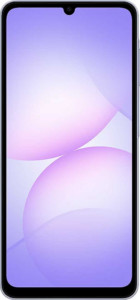
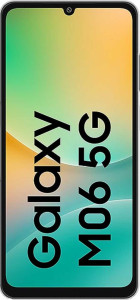
The headline differentiator here is impossible to overlook: the M06 5G supports 5G connectivity, while the A07 4G is limited to 4G LTE. This gap is reflected directly in their peak download speeds — 3300 Mbits/s on the M06 5G versus 650 Mbits/s on the A07 4G. In practice, whether that ceiling is reachable depends on local 5G network availability, but even in areas with solid 5G coverage, the M06 5G will deliver faster downloads, lower latency, and better network resilience in congested areas. For users in markets where 5G infrastructure is maturing, the M06 5G is also the more future-proof choice.
Beyond cellular, the M06 5G picks up two additional sensor advantages: a gyroscope and a compass, neither of which the A07 4G includes. The gyroscope matters for gaming (enabling motion-based controls), augmented reality applications, and more accurate screen rotation. The compass enhances navigation accuracy, allowing map apps to show directional heading without needing to move. These are modest but real omissions on the A07 4G for users who rely on navigation or play gyroscope-dependent games. Both phones otherwise share the same Wi-Fi generations, Bluetooth 5.3, USB-C 2.0, microSD expansion, dual SIM, and GPS with Galileo support — and notably, neither includes NFC, ruling out contactless payments on both.
The Galaxy M06 5G wins this group decisively. Its 5G support alone is a generational connectivity leap over the A07 4G, and the added gyroscope and compass sensors further extend its lead in functionality. For connectivity-conscious buyers, this is one of the most consequential differences in the entire comparison.