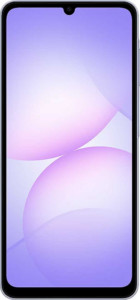
Samsung Galaxy A07 4G
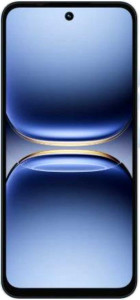
Tecno Spark 40C

Samsung Galaxy A07 4G Tecno Spark 40C

Overview

Welcome to our detailed spec comparison between the Samsung Galaxy A07 4G and the Tecno Spark 40C. Both phones occupy a similar price tier and share a surprising amount of common ground, yet they diverge in some meaningful areas. From chipset performance and display refresh rates to battery capacity and audio features, each device makes distinct trade-offs worth understanding before committing to a purchase. Read on to see how these two mid-range contenders truly stack up.

Common Features

  • Both phones are water resistant.
  • Neither phone has a rugged build.
  • Neither phone can be folded.
  • Both phones feature an LCD IPS display type.
  • Both phones share a resolution of 720 x 1600 px.
  • Neither phone has branded damage-resistant glass.
  • Neither phone supports HDR10.
  • Neither phone supports HDR10+.
  • Neither phone has an Always-On Display.
  • Neither phone supports Dolby Vision.
  • Neither phone has a secondary screen.
  • Both phones come with 256GB of internal storage.
  • Both phones have 8GB of RAM.
  • Both phones have integrated LTE.
  • Both phones support 64-bit processing.
  • Both phones use big.LITTLE CPU technology with 8 threads.
  • Both phones have an 8MP front camera.
  • Neither phone has built-in optical image stabilization.
  • Both phones have a CMOS sensor and support continuous autofocus when recording.
  • Both phones have phase-detection autofocus for photos.
  • Both phones run Android 15.
  • Both phones have clipboard warnings and location privacy options.
  • Both phones have camera and microphone privacy options.
  • Neither phone has Mail Privacy Protection.
  • Both phones support theme customization and can block app tracking.
  • Neither phone blocks cross-site tracking.
  • Neither phone supports wireless charging.
  • Both phones support fast charging.
  • Neither phone has reverse wireless charging.
  • Neither phone has a removable battery.
  • Both phones have a rechargeable battery with a battery level indicator.
  • Neither phone supports aptX, LDAC, aptX HD, aptX Adaptive, aptX Lossless.
  • Neither phone supports 5G.
  • Both phones support Wi-Fi 4 (802.11n) and Wi-Fi 5 (802.11ac).
  • Both phones have dual SIM card slots.
  • Both phones have a USB Type-C connector.
  • Neither phone has NFC.
  • Both phones have a fingerprint scanner.
  • Neither phone has emergency SOS via satellite.
  • Neither phone has crash detection.
  • Both phones have a video light.
  • Neither phone has a sapphire glass display.
  • Neither phone has a curved or e-paper display.

Main Differences

  • Thickness is 7.6 mm on Samsung Galaxy A07 4G and 8.4 mm on Tecno Spark 40C.
  • Width is 77.4 mm on Samsung Galaxy A07 4G and 77 mm on Tecno Spark 40C.
  • Height is 164.4 mm on Samsung Galaxy A07 4G and 165.6 mm on Tecno Spark 40C.
  • Volume is 96.71 cm³ on Samsung Galaxy A07 4G and 107.11 cm³ on Tecno Spark 40C.
  • Ingress Protection rating is IP54 on Samsung Galaxy A07 4G and IP64 on Tecno Spark 40C.
  • Screen size is 6.7″ on Samsung Galaxy A07 4G and 6.67″ on Tecno Spark 40C.
  • Pixel density is 262 ppi on Samsung Galaxy A07 4G and 263 ppi on Tecno Spark 40C.
  • Refresh rate is 90Hz on Samsung Galaxy A07 4G and 120Hz on Tecno Spark 40C.
  • The chipset is Mediatek Helio G99 on Samsung Galaxy A07 4G and MediaTek Helio G81 Ultra on Tecno Spark 40C.
  • The GPU is Mali G57 on Samsung Galaxy A07 4G and Mali G52 MP2 on Tecno Spark 40C.
  • CPU speed is 2 x 2.2 & 6 x 2 GHz on Samsung Galaxy A07 4G and 2 x 2 & 6 x 1.8 GHz on Tecno Spark 40C.
  • Geekbench 6 multi-core score is 1979 on Samsung Galaxy A07 4G and 1391 on Tecno Spark 40C.
  • Geekbench 6 single-core score is 729 on Samsung Galaxy A07 4G and 420 on Tecno Spark 40C.
  • RAM speed is 4266 MHz on Samsung Galaxy A07 4G and 1800 MHz on Tecno Spark 40C.
  • Semiconductor size is 6 nm on Samsung Galaxy A07 4G and 12 nm on Tecno Spark 40C.
  • DirectX version is DirectX 11 on Samsung Galaxy A07 4G and DirectX 12 on Tecno Spark 40C.
  • Maximum memory bandwidth is 17.1 GB/s on Samsung Galaxy A07 4G and 13.41 GB/s on Tecno Spark 40C.
  • eMMC version is 5.2 on Samsung Galaxy A07 4G and 5.1 on Tecno Spark 40C.
  • Maximum supported memory amount is 12GB on Samsung Galaxy A07 4G and 8GB on Tecno Spark 40C.
  • GPU turbo speed is 2133 MHz on Samsung Galaxy A07 4G and 950 MHz on Tecno Spark 40C.
  • Main camera resolution is 50 & 2 MP on Samsung Galaxy A07 4G and 13 MP on Tecno Spark 40C.
  • Main camera wide aperture is 2.4f & 1.8f on Samsung Galaxy A07 4G and 1.8f on Tecno Spark 40C.
  • A dual-lens main camera is present on Samsung Galaxy A07 4G but not on Tecno Spark 40C.
  • Video recording on the main camera supports 1080p at 60 fps on Samsung Galaxy A07 4G and 1080p at 30 fps on Tecno Spark 40C.
  • Battery capacity is 5000 mAh on Samsung Galaxy A07 4G and 6000 mAh on Tecno Spark 40C.
  • Charging speed is 25W on Samsung Galaxy A07 4G and 18W on Tecno Spark 40C.
  • A 3.5 mm audio jack is present on Samsung Galaxy A07 4G but not on Tecno Spark 40C.
  • Stereo speakers are available on Tecno Spark 40C but not on Samsung Galaxy A07 4G.
  • A radio tuner is present on Samsung Galaxy A07 4G but not on Tecno Spark 40C.
  • Download speed is 650 Mbit/s on Samsung Galaxy A07 4G and 300 Mbit/s on Tecno Spark 40C.
  • Upload speed is 150 Mbit/s on Samsung Galaxy A07 4G and 100 Mbit/s on Tecno Spark 40C.
Specs Comparison
Samsung Galaxy A07 4G

Samsung Galaxy A07 4G

Tecno Spark 40C

Tecno Spark 40C

Design:
water resistance Water resistant Water resistant
thickness 7.6 mm 8.4 mm
width 77.4 mm 77 mm
height 164.4 mm 165.6 mm
volume 96.706656 cm³ 107.11008 cm³
Ingress Protection (IP) rating IP54 IP64
has a rugged build
can be folded

Both the Samsung Galaxy A07 4G and the Tecno Spark 40C share the same broad form factor — tall, similarly wide slabs that are neither foldable nor ruggedized. In practice, the two phones will feel almost identical in the hand width-wise (77.4 mm vs 77 mm), and their height difference of just 1.2 mm is imperceptible. The more meaningful physical distinction is thickness: the A07 is noticeably slimmer at 7.6 mm versus the Spark 40C's 8.4 mm, which also translates into a significantly smaller overall volume (96.7 cm³ vs 107.1 cm³). That 0.8 mm gap may sound minor, but on a phone you pocket every day it contributes to a sleeker, less bulky feel.

On environmental protection, however, the Spark 40C pulls ahead. Its IP64 rating means it is fully dust-tight and splash-resistant, whereas the A07's IP54 rating only offers partial dust protection — meaning fine particles like sand or powder could still find their way in over time. Both handles incidental water splashes equally well, so the real-world advantage of IP64 shows up most in dusty or outdoor environments where the Spark 40C offers measurably greater peace of mind.

Overall, this group is closely contested. The Galaxy A07 4G has a clear edge in slimness and compactness, making it the more pocket-friendly option. The Spark 40C counters with superior dust ingress protection. Neither carries a rugged designation, so neither is built for extreme conditions — but buyers who prioritize a leaner profile should lean toward the A07, while those in dustier environments will benefit from the Spark 40C's stronger IP rating.

Display:
Display type LCD, IPS LCD, IPS
screen size 6.7" 6.67"
pixel density 262 ppi 263 ppi
resolution 720 x 1600 px 720 x 1600 px
refresh rate 90Hz 120Hz
has branded damage-resistant glass
supports HDR10
supports HDR10+
Always-On Display
supports Dolby Vision
Has a secondary screen
has a touch screen

Strip away the marginal differences in screen size — 6.7″ on the Galaxy A07 versus 6.67″ on the Spark 40C — and the two displays are virtually identical on paper: same 720 x 1600 px resolution, same LCD IPS panel technology, and a pixel density so close (262 ppi vs 263 ppi) that no human eye could tell them apart. Neither phone features branded damage-resistant glass or any HDR standard, so content from streaming platforms will look the same on both.

The one meaningful differentiator here is refresh rate. The Spark 40C runs at 120Hz compared to the A07's 90Hz, and this has a tangible real-world impact: scrolling through feeds, navigating menus, and playing games all feel visibly smoother at 120Hz. It is one of those specs that is hard to appreciate until you switch back to a slower display — at which point motion can look comparatively choppy. On a budget LCD panel, a higher refresh rate is often the upgrade that users notice most in daily use.

The Spark 40C holds a clear edge in this category, and solely because of that 120Hz advantage. Everything else — panel type, resolution, sharpness, size — is effectively a draw. For users who spend a lot of time scrolling or gaming, the Spark 40C's display will feel more responsive and polished day-to-day.

Performance:
internal storage 256GB 256GB
RAM 8GB 8GB
Chipset (SoC) name Mediatek Helio G99 MediaTek Helio G81 Ultra
GPU name Mali G57 Mali G52 MP2
CPU speed 2 x 2.2 & 6 x 2 GHz 2 x 2 & 6 x 1.8 GHz
Geekbench 6 result (multi) 1979 1391
Geekbench 6 result (single) 729 420
Has integrated LTE
RAM speed 4266 MHz 1800 MHz
semiconductor size 6 nm 12 nm
Supports 64-bit
DirectX version DirectX 11 DirectX 12
Has integrated graphics
OpenGL ES version 3.2 3.2
Uses big.LITTLE technology
CPU threads 8 threads 8 threads
Has TrustZone
maximum memory bandwidth 17.1 GB/s 13.41 GB/s
OpenCL version 2 2
memory channels 2 2
eMMC version 5.2 5.1
maximum memory amount 12GB 8GB
GPU turbo 2133 MHz 950 MHz
Thermal Design Power (TDP) 5W 5W
DDR memory version 4 4
shading units 32 32

Beneath matching configurations of 8GB RAM and 256GB storage, these two phones are powered by fundamentally different silicon. The Galaxy A07 4G carries the Mediatek Helio G99, built on a modern 6nm process, while the Spark 40C runs on the MediaTek Helio G81 Ultra, manufactured on an older 12nm node. That generational gap in fabrication technology has cascading effects: the G99 runs faster cores (2.2 GHz peaks vs 2.0 GHz), operates more efficiently, and generates the same 5W TDP while delivering substantially more output — meaning the A07 gets more performance per unit of heat and battery drain.

The Geekbench 6 scores make the real-world gap impossible to ignore. The A07 scores 729 single-core and 1979 multi-core, versus the Spark 40C's 420 single-core and 1391 multi-core. Single-core performance is especially telling for everyday responsiveness — app launches, UI snappiness, and web browsing — where the A07 is roughly 74% faster. The memory subsystem reinforces this: the A07's RAM runs at 4266 MHz with a maximum bandwidth of 17.1 GB/s, compared to the Spark 40C's 1800 MHz and 13.41 GB/s, which means data-hungry tasks like multitasking and loading large assets will feel noticeably more fluid on the A07.

The Galaxy A07 4G wins this category decisively and it is not particularly close. Across CPU speed, benchmark scores, memory throughput, and manufacturing efficiency, the A07 outperforms the Spark 40C at every measurable level. For users who care about sustained performance — gaming, multitasking, or simply a phone that stays responsive over time — the A07 is the significantly stronger choice.

Cameras:
megapixels (main camera) 50 & 2 MP 13 MP
wide aperture (main camera) 2.4 & 1.8f 1.8f
Has a dual-lens (or multi-lens) main camera
megapixels (front camera) 8MP 8MP
has built-in optical image stabilization
video recording (main camera) 1080 x 60 fps 1080 x 30 fps
Has a dual-tone LED flash
number of flash LEDs 1 1
has a BSI sensor
has a CMOS sensor
has continuous autofocus when recording movies
Has phase-detection autofocus for photos
supports slow-motion video recording
has a built-in HDR mode
has manual exposure
has a flash
optical zoom 0x 0x
has manual ISO
has a serial shot mode
has manual focus
has a front camera
Has laser autofocus
Shoots 360° panorama
has manual white balance
shoots raw
has touch autofocus
has manual shutter speed
can create panoramas in-camera
Has a front-facing LED flash
has a dual-lens (or multi-lens) front camera
supports HDR10 recording
supports Dolby Vision recording
has a front-facing camera under the display
Has a RGB LED flash
has 3D photo/video recording capabilities

The rear camera setup is where these two phones diverge most sharply. The Galaxy A07 4G fields a dual-lens system headlined by a 50MP main sensor, while the Tecno Spark 40C relies on a single 13MP shooter. That megapixel gap matters in practice: more pixels give the A07 more room to crop, more detail to recover in post, and more flexibility when shooting in good light. The secondary 2MP lens on the A07 also enables depth-sensing for portrait mode, a capability the Spark 40C simply lacks.

Video recording tells a similar story. The A07 captures footage at 1080p/60fps, producing smoother motion in action scenes and leaving room to extract sharper still frames, while the Spark 40C tops out at 1080p/30fps — the bare minimum for HD video. For anyone who shoots moving subjects, sports, or active moments, that 60fps ceiling makes a genuine difference. The front cameras are an exact draw at 8MP on both devices, and the full manual control feature set — ISO, white balance, exposure, focus — is identical across both phones.

The Galaxy A07 4G takes a clear and comfortable win in this category. Its higher-resolution main sensor, dual-lens versatility, and 60fps video capability collectively represent a meaningful step up over the Spark 40C's more modest single-camera system. For users who treat smartphone photography seriously, the A07 is the stronger tool.

Operating system:
Android version Android 15 Android 15
has clipboard warnings
has location privacy options
has camera/microphone privacy options
has Mail Privacy Protection
has theme customization
can block app tracking
blocks cross-site tracking
has on-device machine learning
has notification permissions
has media picker
Can play games while they download
has dark mode
has Wi-Fi password sharing
has battery health check
has an extra dim mode
has focus modes
has dynamic theming
can offload apps
Has customizable notifications
has Live Text
has full-page screenshots
supports split screen
gets direct OS updates
has PiP
Can be used as a PC
Has sharing intents
has a child lock
Supports widgets
Is free and open source
Has offline voice recognition
has voice commands
Tracks the current position of a mobile device
is a multi-user system
has Quick Start

Rarely does a spec group produce a result this definitive: the Samsung Galaxy A07 4G and the Tecno Spark 40C run identical operating system configurations across every single data point provided. Both ship with Android 15, and every feature — from privacy controls like camera/microphone permissions and app tracking blocks, to usability tools like split-screen, Picture-in-Picture, dynamic theming, and offline voice recognition — is present on both devices without exception.

The shared privacy suite deserves a mention as a collective strength of both phones. Location privacy options, clipboard warnings, and granular notification permissions are all included, giving users on either device a solid baseline of control over their data. Neither phone, however, offers cross-site tracking protection or Wi-Fi password sharing — gaps that apply equally to both and are worth noting for privacy-conscious buyers.

This category is an absolute tie. There is no differentiator to weigh, no advantage to assign — the software experience, as defined by these specs, is functionally identical on both devices. A buyer's decision in this group comes down entirely to factors outside the OS spec sheet, such as each manufacturer's skin, update cadence, and long-term software support commitments, none of which are reflected in the provided data.

Battery:
battery power 5000 mAh 6000 mAh
has wireless charging
Supports fast charging
charging speed 25W 18W
has reverse wireless charging
has a removable battery
has a battery level indicator
has a rechargeable battery

Battery is where the Tecno Spark 40C makes its most compelling argument. Its 6000 mAh cell is a full 20% larger than the Galaxy A07 4G's already respectable 5000 mAh pack. In practical terms, that gap translates to meaningfully more screen-on time between charges — a significant advantage for heavy users, travelers, or anyone who spends long stretches away from a power source. It is worth noting, however, that the Spark 40C's less efficient 12nm chipset (as seen in the Performance group) will draw more power under load, which narrows the real-world advantage somewhat compared to what the raw mAh difference might suggest.

Flip the equation to charging speed and the A07 reclaims ground. At 25W, it charges considerably faster than the Spark 40C's 18W, and that difference is compounded by the Spark 40C's larger battery — meaning the Tecno will take noticeably longer to go from empty to full. For users who are disciplined about plugging in overnight, this matters less; for those who rely on quick top-ups during the day, the A07's faster charging is a genuine convenience.

This category does not have a clean winner — it depends on usage priorities. The Spark 40C has the edge in raw endurance with its 6000 mAh capacity, making it the better pick for users who prioritize lasting through a long day without charging. The Galaxy A07 4G counters with faster 25W replenishment, suiting those who value speed of recovery over total reserves. Neither offers wireless or reverse wireless charging, so that consideration is off the table for both.

Audio:
has a socket for a 3.5 mm audio jack
has stereo speakers
has aptX
has LDAC
has aptX HD
has aptX Adaptive
has aptX Lossless
Has a radio

Audio is a tale of two trade-offs. The Galaxy A07 4G retains a 3.5mm headphone jack — an increasingly rare feature that lets users plug in any wired headphones or earbuds without an adapter, and one that audiophiles and casual listeners alike still value for its simplicity and zero-latency reliability. The Tecno Spark 40C drops the jack entirely but compensates with stereo speakers, producing left-right channel separation that makes media consumption — videos, music, gaming — noticeably more immersive than a single mono driver can achieve.

Neither phone supports advanced Bluetooth audio codecs like aptX or LDAC, so wireless listening quality is on equal footing for both. The A07 also includes an FM radio receiver, a feature the Spark 40C omits — a modest but real advantage for users in regions where FM radio is still a primary source of news or entertainment, and one that works without any data connection.

There is no outright winner here; the right choice depends entirely on listening habits. Users who rely on wired headphones or want offline FM radio access will find the Galaxy A07 4G more accommodating. Those who primarily consume media through the phone's own speakers — watching videos, playing games, or sharing audio in a group — will appreciate the Spark 40C's stereo speaker setup. It is a genuine lifestyle split rather than a clear technical victory for either side.

Connectivity & Features:
release date August 2025 July 2025
has 5G support
Wi-Fi version Wi-Fi 4 (802.11n), Wi-Fi 5 (802.11ac) Wi-Fi 4 (802.11n), Wi-Fi 5 (802.11ac)
SIM cards 2 SIM 2 SIM
Has USB Type-C
has NFC
download speed 650 MBits/s 300 MBits/s
upload speed 150 MBits/s 100 MBits/s
Has a fingerprint scanner
has emergency SOS via satellite
has crash detection
is DLNA-certified
supports ANT+
Has a heart rate monitor
has GPS
supports Wi-Fi
Has an infrared sensor
has an accelerometer
has a cellular module
Has a barometer
has an HDMI output
Uses 3D facial recognition
Has an iris scanner
Stylus included
supports Galileo
Has motion tracking
Has optical tracking
Has a built-in projector

At the infrastructure level, both phones share the same foundational connectivity blueprint: dual SIM slots, USB Type-C, Wi-Fi 4 and Wi-Fi 5 support, GPS with Galileo, a fingerprint scanner, and no 5G. Neither includes NFC, which rules out contactless payments and quick device pairing for both. For the vast majority of everyday connectivity needs, these two phones are functionally indistinguishable.

The one meaningful gap surfaces in cellular data speeds. The Galaxy A07 4G supports download speeds up to 650 Mbits/s and upload speeds up to 150 Mbits/s, compared to the Spark 40C's 300 Mbits/s down and 100 Mbits/s up. In practice, both phones will feel equally fast on typical mobile networks where real-world speeds rarely approach either ceiling — but in congested urban areas or on carriers that do deliver higher throughput, the A07 has more headroom to exploit that bandwidth for faster file downloads, smoother video streaming at higher quality, and quicker cloud uploads.

The Galaxy A07 4G takes a narrow edge in this category, carried entirely by its superior cellular throughput ceiling. It is not a dramatic advantage for most users in most conditions, but it is the only differentiator the data provides, and it points consistently in the A07's favor. Everything else — sensors, positioning, port selection, and wireless standards — is an exact match between the two devices.

Miscellaneous:
has a video light
Has sapphire glass display
Has a curved display
Has an e-paper display

The Miscellaneous group offers no differentiators whatsoever. Both the Samsung Galaxy A07 4G and the Tecno Spark 40C share an identical feature profile across every data point: both include a video light, and neither features a sapphire glass display, a curved screen, or an e-paper panel.

This is a complete tie with no edge to assign to either device. The specs provided in this group carry no weight in a buying decision between these two phones.

Comparison Summary & Verdict

After examining every specification, these two phones serve different buyer priorities. The Samsung Galaxy A07 4G stands out with its significantly faster Helio G99 chipset, superior Geekbench scores, quicker 25W charging, a versatile dual-lens 50MP camera capable of 1080p at 60fps, a 3.5mm headphone jack, and faster LTE download speeds — making it the stronger pick for performance-focused users. The Tecno Spark 40C, on the other hand, counters with a larger 6000 mAh battery, a smoother 120Hz display, a better IP64 dust and water resistance rating, stereo speakers, and a more compact build — appealing to users who prioritize endurance and multimedia experience. Both run Android 15 and offer 256GB storage with 8GB RAM, so the decision ultimately comes down to raw power versus battery life and display smoothness.

Samsung Galaxy A07 4G
Buy Samsung Galaxy A07 4G if...

Buy the Samsung Galaxy A07 4G if you want stronger CPU and GPU performance, faster 25W charging, a higher-resolution dual-lens camera with 60fps video, a headphone jack, and faster LTE speeds.

Tecno Spark 40C
Buy Tecno Spark 40C if...

Buy the Tecno Spark 40C if you prioritize a larger 6000 mAh battery for longer usage, a smoother 120Hz display, better IP64 dust and water resistance, and stereo speakers for richer audio.