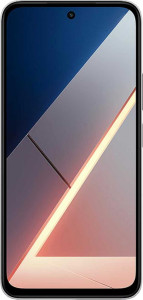
Samsung Galaxy A07 4G
Xiaomi Poco M7 4G

Samsung Galaxy A07 4G Xiaomi Poco M7 4G

Overview

Welcome to our in-depth comparison between the Samsung Galaxy A07 4G and the Xiaomi Poco M7 4G — two budget-friendly Android smartphones that share a surprising amount of common ground, yet diverge sharply in key areas. Both run Android 15 and offer 256GB of storage, but the real story lies in their contrasting approaches to display quality, battery capacity, and overall form factor. Read on to discover which device better fits your lifestyle and priorities.

Common Features

  • Both phones are water resistant.
  • Neither phone has a rugged build.
  • Neither phone can be folded.
  • Both phones feature an LCD IPS display type.
  • Neither phone has branded damage-resistant glass.
  • HDR10 support is not available on either product.
  • HDR10+ support is not available on either product.
  • Always-On Display is not available on either product.
  • Dolby Vision support is not available on either product.
  • Both phones have a touch screen.
  • Both phones come with 256GB of internal storage and 8GB of RAM.
  • Both phones have integrated LTE.
  • Both phones use a 6 nm semiconductor process.
  • Both phones use big.LITTLE CPU technology.
  • Both phones share the same main camera setup of 50 & 2 MP with f/2.4 & f/1.8 apertures.
  • Both phones have a dual-lens main camera.
  • Neither phone has built-in optical image stabilization.
  • Both phones have an 8 MP front camera.
  • Both phones run Android 15.
  • Both phones support fast charging but do not include a charger in the box.
  • Neither phone supports wireless charging.
  • Neither phone has a removable battery.
  • Neither phone has stereo speakers.
  • Neither phone supports aptX, LDAC, aptX HD, aptX Adaptive, aptX Lossless.
  • Both phones support Wi-Fi 4 (802.11n) and Wi-Fi 5 (802.11ac).
  • Both phones support dual SIM cards.
  • Both phones have an external memory slot.
  • Both phones feature a USB Type-C port with USB 2.0.
  • Both phones have a fingerprint scanner.
  • Neither phone supports 5G.

Main Differences

  • Weight is 184 g on Samsung Galaxy A07 4G and 224 g on Xiaomi Poco M7 4G.
  • Thickness is 7.6 mm on Samsung Galaxy A07 4G and 8.6 mm on Xiaomi Poco M7 4G.
  • Width is 77.4 mm on Samsung Galaxy A07 4G and 80.5 mm on Xiaomi Poco M7 4G.
  • Height is 164.4 mm on Samsung Galaxy A07 4G and 171.1 mm on Xiaomi Poco M7 4G.
  • Screen size is 6.7″ on Samsung Galaxy A07 4G and 6.9″ on Xiaomi Poco M7 4G.
  • Pixel density is 262 ppi on Samsung Galaxy A07 4G and 374 ppi on Xiaomi Poco M7 4G.
  • Resolution is 720 x 1600 px on Samsung Galaxy A07 4G and 1080 x 2340 px on Xiaomi Poco M7 4G.
  • Refresh rate is 90Hz on Samsung Galaxy A07 4G and 144Hz on Xiaomi Poco M7 4G.
  • The chipset is Mediatek Helio G99 on Samsung Galaxy A07 4G and Qualcomm Snapdragon 685 4G on Xiaomi Poco M7 4G.
  • The GPU is Mali G57 on Samsung Galaxy A07 4G and Adreno 610 on Xiaomi Poco M7 4G.
  • Geekbench 6 multi-core score is 1979 on Samsung Galaxy A07 4G and 1510 on Xiaomi Poco M7 4G.
  • Geekbench 6 single-core score is 729 on Samsung Galaxy A07 4G and 473 on Xiaomi Poco M7 4G.
  • RAM speed is 4266 MHz on Samsung Galaxy A07 4G and 2133 MHz on Xiaomi Poco M7 4G.
  • Video recording on the main camera supports 1080p at 60 fps on Samsung Galaxy A07 4G and 1080p at 30 fps on Xiaomi Poco M7 4G.
  • Battery capacity is 5000 mAh on Samsung Galaxy A07 4G and 7000 mAh on Xiaomi Poco M7 4G.
  • Charging speed is 25W on Samsung Galaxy A07 4G and 33W on Xiaomi Poco M7 4G.
  • A 3.5 mm audio jack is present on Samsung Galaxy A07 4G but not available on Xiaomi Poco M7 4G.
  • FM radio is present on Samsung Galaxy A07 4G but not available on Xiaomi Poco M7 4G.
  • Bluetooth version is 5.3 on Samsung Galaxy A07 4G and 5.0 on Xiaomi Poco M7 4G.
  • NFC is present on Xiaomi Poco M7 4G but not available on Samsung Galaxy A07 4G.
  • Download speed is 650 MBits/s on Samsung Galaxy A07 4G and 390 MBits/s on Xiaomi Poco M7 4G.
  • A compass is present on Xiaomi Poco M7 4G but not available on Samsung Galaxy A07 4G.
Specs Comparison
Samsung Galaxy A07 4G

Samsung Galaxy A07 4G

Xiaomi Poco M7 4G

Xiaomi Poco M7 4G

Design:
water resistance Water resistant Water resistant
weight 184 g 224 g
thickness 7.6 mm 8.6 mm
width 77.4 mm 80.5 mm
height 164.4 mm 171.1 mm
volume 96.706656 cm³ 118.45253 cm³
has a rugged build
can be folded

The most telling difference in this group comes down to size and weight. The Samsung Galaxy A07 4G weighs 184 g and measures 7.6 mm thick, while the Xiaomi Poco M7 4G comes in noticeably heavier at 224 g and thicker at 8.6 mm. That 40-gram gap is not trivial — it is the kind of difference you feel during prolonged one-handed use or when the phone sits in a shirt pocket. The A07's slimmer profile also contributes to a more comfortable in-hand feel for users who prioritize portability.

The overall volume tells the same story: the A07 occupies roughly 96.7 cm³ versus the Poco M7's 118.5 cm³ — nearly 23% more physical bulk. The Poco M7 is taller and wider as well, which may suit users with larger hands but will feel less pocketable for most. Importantly, neither phone offers a rugged build or a foldable form factor, so neither has a structural durability advantage over the other.

Both devices share basic water resistance, which is a meaningful shared baseline for everyday use in light rain or accidental splashes. Overall, the Galaxy A07 4G holds a clear design edge for users who value a lighter, slimmer, and more compact device, while the Poco M7's larger frame is simply a trade-off rather than an advantage from a pure design standpoint.

Display:
Display type LCD, IPS LCD, IPS
screen size 6.7" 6.9"
pixel density 262 ppi 374 ppi
resolution 720 x 1600 px 1080 x 2340 px
refresh rate 90Hz 144Hz
has branded damage-resistant glass
supports HDR10
supports HDR10+
Always-On Display
supports Dolby Vision
Has a secondary screen
has a touch screen

Both phones use an LCD IPS panel, so neither offers the deep blacks or vibrant contrast of an OLED display. Within that shared technology, however, the Xiaomi Poco M7 4G pulls significantly ahead on two fronts that matter most for daily use: sharpness and motion smoothness. Its 1080 x 2340 px resolution translates to a pixel density of 374 ppi, compared to the A07's 720 x 1600 px at just 262 ppi. That 112-ppi gap is clearly visible — text edges look crisper, fine details in photos are better defined, and web content feels noticeably cleaner on the Poco M7.

The refresh rate gap is equally impactful. The Poco M7's 144Hz panel versus the A07's 90Hz means scrolling, animations, and casual gaming all appear considerably smoother. While 90Hz is already a step above the traditional 60Hz baseline, 144Hz is a class typically reserved for mid-range and gaming-oriented phones, making it a genuine standout spec at this price tier.

Neither device supports HDR10, HDR10+, or Dolby Vision, and neither has always-on display functionality, so those shared omissions level the field on advanced display features. Still, with a sharper resolution and a faster refresh rate, the Poco M7 holds a clear and meaningful display advantage over the Galaxy A07 4G for virtually any use case.

Performance:
internal storage 256GB 256GB
RAM 8GB 8GB
Chipset (SoC) name Mediatek Helio G99 Qualcomm Snapdragon 685 4G
GPU name Mali G57 Adreno 610
CPU speed 2 x 2.2 & 6 x 2 GHz 4 x 2.8 & 4 x 1.9 GHz
Geekbench 6 result (multi) 1979 1510
Geekbench 6 result (single) 729 473
GPU clock speed 950 MHz 1260 MHz
Has integrated LTE
RAM speed 4266 MHz 2133 MHz
semiconductor size 6 nm 6 nm
Supports 64-bit
DirectX version DirectX 11 DirectX 12
Has integrated graphics
OpenGL ES version 3.2 3.2
Uses big.LITTLE technology
CPU threads 8 threads 8 threads
Has TrustZone
maximum memory bandwidth 17.1 GB/s 17 GB/s
OpenCL version 2 2
eMMC version 5.2 5.1
maximum memory amount 12GB 16GB
GPU turbo 2133 MHz 1260 MHz
DDR memory version 4 4

On paper, both phones share the same 8GB RAM, 256GB storage, and a 6nm chip — but the silicon underneath tells very different stories. The Samsung Galaxy A07 4G runs on the Mediatek Helio G99, which scores 1979 in Geekbench 6 multi-core and 729 single-core. The Xiaomi Poco M7 4G, powered by the Snapdragon 685, scores just 1510 multi-core and 473 single-core. That is a roughly 30% CPU performance gap — meaningful for multitasking, app loading, and anything that puts sustained load on the processor.

The GPU picture is more nuanced. The A07's Mali G57 runs at a base clock of 950 MHz, while the Poco M7's Adreno 610 reaches 1260 MHz and also supports DirectX 12 versus the A07's DirectX 11. However, raw GPU clock speed alone does not determine gaming performance — architecture efficiency matters greatly, and the benchmark gap strongly favors the A07 overall. The A07 also benefits from considerably faster RAM at 4266 MHz compared to the M7's 2133 MHz, which helps the CPU move data more quickly and contributes to its benchmark lead.

Considering the Geekbench results as the most direct real-world performance indicator available here, the Galaxy A07 4G holds a clear performance advantage in CPU-intensive workloads. The Poco M7's higher GPU clock and DirectX 12 support offer a marginal graphics edge on paper, but not enough to offset the A07's commanding lead in overall processing power.

Cameras:
megapixels (main camera) 50 & 2 MP 50 & 2 MP
wide aperture (main camera) 2.4 & 1.8f 2.4 & 1.8f
Has a dual-lens (or multi-lens) main camera
megapixels (front camera) 8MP 8MP
has built-in optical image stabilization
video recording (main camera) 1080 x 60 fps 1080 x 30 fps
Has a dual-tone LED flash
number of flash LEDs 1 1
has a BSI sensor
has a CMOS sensor
has continuous autofocus when recording movies
Has phase-detection autofocus for photos
supports slow-motion video recording
has a built-in HDR mode
has manual exposure
has a flash
optical zoom 0x 0x
has manual ISO
has a serial shot mode
has manual focus
has a front camera
Has laser autofocus
Shoots 360° panorama
has manual white balance
shoots raw
has touch autofocus
has manual shutter speed
can create panoramas in-camera
Has timelapse function
Has a front-facing LED flash
has a dual-lens (or multi-lens) front camera
supports HDR10 recording
supports Dolby Vision recording
has a front-facing camera under the display
Has a RGB LED flash
has 3D photo/video recording capabilities

Rarely in a comparison do two competing phones align so closely on camera hardware, but this is one of those cases. Both the Samsung Galaxy A07 4G and the Xiaomi Poco M7 4G feature an identical dual-lens rear setup at 50 & 2 MP with matching apertures, the same 8MP front camera, and a virtually identical feature set spanning phase-detection autofocus, continuous autofocus during video, HDR mode, slow-motion recording, and manual controls for ISO, exposure, focus, and white balance.

The one concrete differentiator buried in the specs is video recording capability. The A07 tops out at 1080p @ 60 fps, while the Poco M7 is limited to 1080p @ 30 fps. In practice, 60fps video produces noticeably smoother motion — particularly useful for recording fast-moving subjects, sports, or anything where fluid playback matters. At 30fps, footage can appear choppier in those same scenarios. It is a single but genuinely impactful difference for users who care about video quality.

Given that every other camera specification is a straight tie, the Galaxy A07 4G has a narrow but clear camera edge, earned entirely by its ability to shoot smoother 60fps video. For users whose priority is photography rather than video, this comparison is effectively a draw.

Operating system:
Android version Android 15 Android 15
has clipboard warnings
has location privacy options
has camera/microphone privacy options
has Mail Privacy Protection
has theme customization
can block app tracking
blocks cross-site tracking
has on-device machine learning
has notification permissions
has media picker
Can play games while they download
has dark mode
has Wi-Fi password sharing
has battery health check
has an extra dim mode
has focus modes
has dynamic theming
can offload apps
Has customizable notifications
has Live Text
has full-page screenshots
supports split screen
gets direct OS updates
has PiP
Can be used as a PC
Has sharing intents
has a child lock
Supports widgets
Is free and open source
Has offline voice recognition
has voice commands
Tracks the current position of a mobile device
is a multi-user system
has Quick Start

This is the most clear-cut tie in the comparison so far. Both the Samsung Galaxy A07 4G and the Xiaomi Poco M7 4G run Android 15 and share an identical feature set across every single operating system specification provided — from privacy controls like location and camera/microphone permissions, to productivity features like split-screen, Picture-in-Picture, and full-page screenshots.

Notable shared strengths include on-device machine learning, dynamic theming, offline voice recognition, and a battery health check — features that collectively reflect a modern, capable Android experience. Both phones also share the same omissions: no Wi-Fi password sharing, no cross-site tracking blocking, no focus modes, and neither receives direct OS updates, meaning both depend on their respective manufacturers for software patches and upgrades.

With zero differentiating data points across the entire spec list, this group is an absolute tie. A user choosing between these two phones will have an identical software experience out of the box, and the operating system category offers no basis for preferring one device over the other.

Battery:
battery power 5000 mAh 7000 mAh
has wireless charging
Supports fast charging
charging speed 25W 33W
comes with a charger
has a removable battery
has a battery level indicator
has a rechargeable battery

Battery capacity is where the Xiaomi Poco M7 4G makes its most emphatic statement in this entire comparison. Its 7000 mAh cell dwarfs the A07's 5000 mAh — a 40% larger reserve that, in practical terms, can translate to an additional full day of use for moderate users. For anyone who travels frequently, works long hours away from an outlet, or simply hates charging anxiety, that gap is hard to ignore.

Charging speed slightly favors the Poco M7 as well, at 33W versus the A07's 25W. Given the M7's larger battery, the faster wattage helps offset the longer absolute fill time a bigger cell naturally requires. Neither phone includes a charger in the box and neither supports wireless charging, so those considerations are a wash.

The Poco M7 4G wins this category decisively. The combination of a significantly larger battery and faster wired charging makes it the stronger choice for battery-conscious users — and notably, it is one of the few areas where the M7's larger, heavier chassis pays a tangible dividend.

Audio:
has a socket for a 3.5 mm audio jack
has stereo speakers
has aptX
has LDAC
has aptX HD
has aptX Adaptive
has aptX Lossless
Has a radio

Audio is a lean category for both phones, but the Samsung Galaxy A07 4G holds two meaningful advantages. It retains a 3.5mm headphone jack — a feature the Poco M7 omits entirely — and includes a built-in FM radio, which the M7 also lacks. Neither phone offers stereo speakers or any high-resolution Bluetooth audio codec such as aptX, LDAC, or their variants, so wired listening and broadcast radio are the only points of differentiation here.

The absence of a headphone jack on the Poco M7 is a genuine inconvenience for users who rely on wired headphones, whether for audio quality, latency during gaming, or simply avoiding the need to charge yet another device. It forces a dependency on Bluetooth audio or a USB-C adapter — neither of which is as seamless as a direct wired connection. The FM radio on the A07, while a niche feature, adds real value in areas with unreliable data connectivity or for users who prefer free over-the-air broadcasts.

With no offsetting audio advantages on the Poco M7's side, the Galaxy A07 4G wins this category clearly. It is the more practical choice for users who prioritize audio versatility, particularly those who prefer or depend on wired headphones.

Connectivity & Features:
release date August 2025 August 2025
has 5G support
Wi-Fi version Wi-Fi 4 (802.11n), Wi-Fi 5 (802.11ac) Wi-Fi 4 (802.11n), Wi-Fi 5 (802.11ac)
SIM cards 2 SIM 2 SIM
Bluetooth version 5.3 5
has an external memory slot
Has USB Type-C
USB version 2 2
has NFC
download speed 650 MBits/s 390 MBits/s
upload speed 150 MBits/s 150 MBits/s
Has a fingerprint scanner
has emergency SOS via satellite
has crash detection
is DLNA-certified
has a gyroscope
supports ANT+
Has a heart rate monitor
has GPS
has a compass
supports Wi-Fi
Has an infrared sensor
has an accelerometer
has a cellular module
Has a barometer
has an HDMI output
Uses 3D facial recognition
Has an iris scanner
Stylus included
supports Galileo
Has motion tracking
Has optical tracking
Has a built-in projector

Connectivity is where the two phones split their advantages most evenly. The Galaxy A07 4G leads on cellular throughput with a maximum download speed of 650 Mbits/s versus the Poco M7's 390 Mbits/s — a significant gap that translates to faster file downloads, smoother streaming on congested networks, and quicker cloud syncing when signal conditions allow. The A07 also carries a newer Bluetooth 5.3 versus the M7's Bluetooth 5.0, offering marginally better connection stability and efficiency with compatible peripherals.

The Poco M7 punches back with two features the A07 lacks entirely: NFC and a built-in compass. NFC is increasingly important for contactless payments, transit cards, and quick device pairing — its absence on the A07 is a genuine lifestyle limitation for users in markets where tap-to-pay is mainstream. The compass, while a quieter omission, affects navigation accuracy; without it, the A07 relies solely on GPS movement to determine direction, which can cause map orientation delays when standing still.

With meaningful advantages distributed across both devices, this category does not have a single clear winner. Users who prioritize mobile payments and navigation will find the Poco M7's NFC and compass more impactful day-to-day, while those who value faster data speeds and a more current Bluetooth standard will lean toward the Galaxy A07. On balance, it is a near tie with the deciding factor coming down to individual use habits.

Miscellaneous:
has a video light
Has sapphire glass display
Has a curved display
Has an e-paper display

The Miscellaneous category offers very little to analyze — and that is itself the finding. Every single spec in this group is identical between the Samsung Galaxy A07 4G and the Xiaomi Poco M7 4G. Both have a video light, and neither features sapphire glass, a curved display, or an e-paper display.

This is an absolute tie with no differentiating data points. Neither phone gains any advantage here, and the category has no bearing on the overall decision between these two devices.

Comparison Summary & Verdict

After examining both devices across every major category, it is clear that each phone targets a slightly different type of user. The Samsung Galaxy A07 4G stands out for its lighter, more compact build, stronger CPU benchmark scores, higher download speeds, and the inclusion of a 3.5mm audio jack and FM radio — making it a practical daily companion for users who value portability and wired audio. The Xiaomi Poco M7 4G, on the other hand, dominates in display sharpness with its 1080p 144Hz screen, offers a significantly larger 7000 mAh battery with faster 33W charging, and adds NFC and a compass for a more feature-rich experience. Gamers and media lovers will lean toward the Poco M7 4G, while those seeking a lighter, audio-friendly handset with solid core performance will find the Galaxy A07 4G more appealing.

Samsung Galaxy A07 4G
Buy Samsung Galaxy A07 4G if...

Buy the Samsung Galaxy A07 4G if you want a lighter, more compact phone with a headphone jack, FM radio, faster download speeds, and stronger CPU benchmark performance.

Xiaomi Poco M7 4G
Buy Xiaomi Poco M7 4G if...

Buy the Xiaomi Poco M7 4G if you prioritize a sharper 1080p 144Hz display, a larger 7000 mAh battery with faster 33W charging, and added features like NFC and a compass.