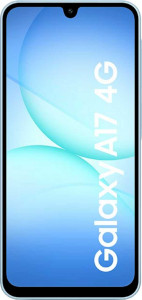
Samsung Galaxy A17 4G
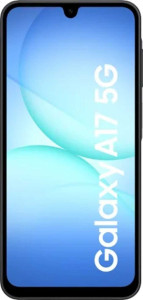
Samsung Galaxy A17 5G

Samsung Galaxy A17 4G Samsung Galaxy A17 5G

Overview

Welcome to our in-depth comparison of the Samsung Galaxy A17 4G and the Samsung Galaxy A17 5G. These two mid-range siblings share a striking amount of common ground, from their identical OLED displays and camera systems to their matched battery and software experience. Yet beneath the surface, key battlegrounds emerge around chipset performance, connectivity capabilities, and some nuanced trade-offs in GPU and memory specifications. Read on to see exactly how they stack up side by side.

Common Features

  • Both phones are water resistant with an IP54 ingress protection rating.
  • Both phones share the same dimensions: 7.5 mm thick, 77.9 mm wide, and 164.4 mm tall.
  • Neither phone has a rugged build, and neither can be folded.
  • Both phones feature a 6.7″ OLED/AMOLED display with a 90Hz refresh rate.
  • Both phones have a resolution of 1080 x 2340 px and a pixel density of 385 ppi.
  • Both phones offer 800 nits of typical brightness.
  • Both phones are protected by Gorilla Glass Victus.
  • Both phones come with 8GB of RAM and 256GB of internal storage.
  • Both phones use big.LITTLE technology with 8 CPU threads.
  • Both phones have integrated LTE, integrated graphics, and support 64-bit processing.
  • Both phones use an OpenGL ES version of 3.2.
  • Both phones feature a triple rear camera setup at 50, 5, and 2 MP with apertures of f/1.8, f/2.2, and f/2.4.
  • Both phones have a 13 MP front camera.
  • Optical image stabilization is available on both phones.
  • Both phones record video at 1080p at 30 fps.
  • Both phones run Android 15 and share the same privacy features including clipboard warnings, location privacy options, and camera/microphone privacy options.
  • Both phones have a 5000 mAh battery with 25W fast charging, and neither supports wireless or reverse wireless charging.
  • Neither phone has a 3.5 mm audio jack, stereo speakers, aptX, LDAC, or any aptX variant.
  • Both phones support Wi-Fi 4 and Wi-Fi 5, Bluetooth 5.3, NFC, dual SIM, USB Type-C with USB 2.0, and have an external memory slot and a fingerprint scanner.
  • Both phones have a video light, and neither has a sapphire glass, curved, or e-paper display.

Main Differences

  • Weight is 190 g on Samsung Galaxy A17 4G and 192 g on Samsung Galaxy A17 5G.
  • The chipset is Mediatek Helio G99 on Samsung Galaxy A17 4G and Samsung Exynos 1330 on Samsung Galaxy A17 5G.
  • The GPU is Mali G57 on Samsung Galaxy A17 4G and Mali G68 MP2 on Samsung Galaxy A17 5G.
  • CPU speed is 2 x 2.2 & 6 x 2 GHz on Samsung Galaxy A17 4G and 2 x 2.4 & 6 x 2 GHz on Samsung Galaxy A17 5G.
  • Geekbench 6 multi-core score is 1979 on Samsung Galaxy A17 4G and 2048 on Samsung Galaxy A17 5G.
  • Geekbench 6 single-core score is 729 on Samsung Galaxy A17 4G and 980 on Samsung Galaxy A17 5G.
  • GPU clock speed is 950 MHz on Samsung Galaxy A17 4G and 800 MHz on Samsung Galaxy A17 5G.
  • RAM speed is 4266 MHz on Samsung Galaxy A17 4G and 3200 MHz on Samsung Galaxy A17 5G.
  • Semiconductor size is 6 nm on Samsung Galaxy A17 4G and 5 nm on Samsung Galaxy A17 5G.
  • DirectX version is DirectX 11 on Samsung Galaxy A17 4G and DirectX 12 on Samsung Galaxy A17 5G.
  • Maximum memory bandwidth is 17.1 GB/s on Samsung Galaxy A17 4G and 51.2 GB/s on Samsung Galaxy A17 5G.
  • Maximum supported memory amount is 12GB on Samsung Galaxy A17 4G and 8GB on Samsung Galaxy A17 5G.
  • GPU turbo speed is 2133 MHz on Samsung Galaxy A17 4G and 950 MHz on Samsung Galaxy A17 5G.
  • FM radio support is available on Samsung Galaxy A17 4G but not on Samsung Galaxy A17 5G.
  • 5G support is present on Samsung Galaxy A17 5G but not available on Samsung Galaxy A17 4G.
  • Maximum download speed is 650 Mbit/s on Samsung Galaxy A17 4G and 2550 Mbit/s on Samsung Galaxy A17 5G.
  • Maximum upload speed is 150 Mbit/s on Samsung Galaxy A17 4G and 1280 Mbit/s on Samsung Galaxy A17 5G.
Specs Comparison
Samsung Galaxy A17 4G

Samsung Galaxy A17 4G

Samsung Galaxy A17 5G

Samsung Galaxy A17 5G

Design:
water resistance Water resistant Water resistant
weight 190 g 192 g
thickness 7.5 mm 7.5 mm
width 77.9 mm 77.9 mm
height 164.4 mm 164.4 mm
volume 96.0507 cm³ 96.0507 cm³
Ingress Protection (IP) rating IP54 IP54
has a rugged build
can be folded

In terms of design, the Samsung Galaxy A17 4G and Galaxy A17 5G are virtually identical twins. Both share the exact same physical footprint — 164.4 × 77.9 × 7.5 mm — and occupy the same volume of 96.05 cm³, meaning they will feel indistinguishable in the hand and fit the same cases and accessories interchangeably.

The only measurable difference is weight: the A17 4G comes in at 190 g versus 192 g for the A17 5G. A 2-gram gap is imperceptible in daily use and should not factor into any buying decision. On the durability front, both carry an IP54 rating, which means splash and dust resistance but not full submersion protection — suitable for rain or accidental splashes, but not underwater use. Neither model offers a rugged build or a foldable form factor.

This category is a near-perfect tie. Design offers no meaningful differentiator between these two phones; any choice between them should be driven entirely by other spec groups such as connectivity, performance, or price.

Display:
Display type OLED/AMOLED OLED/AMOLED
screen size 6.7" 6.7"
pixel density 385 ppi 385 ppi
resolution 1080 x 2340 px 1080 x 2340 px
refresh rate 90Hz 90Hz
brightness (typical) 800 nits 800 nits
has branded damage-resistant glass
Gorilla Glass version Gorilla Glass Victus Gorilla Glass Victus
supports HDR10
supports HDR10+
Always-On Display
supports Dolby Vision
Has a secondary screen
has a touch screen

Both the Samsung Galaxy A17 4G and Galaxy A17 5G share an absolutely identical display configuration. The 6.7-inch OLED/AMOLED panel delivers deep blacks and vivid colors inherent to the technology, while the 1080 × 2340 px resolution at 385 ppi ensures sharp, detailed visuals well suited for media consumption and everyday use at this screen size.

A 90Hz refresh rate provides noticeably smoother scrolling and animations compared to a standard 60Hz panel — a meaningful quality-of-life upgrade in daily interactions. Typical brightness of 800 nits offers adequate outdoor visibility in most conditions. Both phones also include Gorilla Glass Victus protection, one of the more durable scratch- and drop-resistant glass solutions available, adding real-world longevity to the screen. The Always-On Display feature on both models lets users check time and notifications without fully waking the screen, saving micro-interactions throughout the day.

This category is a complete tie — every single display specification is shared between the two models. Screen quality, durability, and features will be entirely indistinguishable in use, so the display should play no role in choosing between these two phones.

Performance:
internal storage 256GB 256GB
RAM 8GB 8GB
Chipset (SoC) name Mediatek Helio G99 Samsung Exynos 1330
GPU name Mali G57 Mali G68 MP2
CPU speed 2 x 2.2 & 6 x 2 GHz 2 x 2.4 & 6 x 2 GHz
Geekbench 6 result (multi) 1979 2048
Geekbench 6 result (single) 729 980
GPU clock speed 950 MHz 800 MHz
Has integrated LTE
RAM speed 4266 MHz 3200 MHz
semiconductor size 6 nm 5 nm
Supports 64-bit
DirectX version DirectX 11 DirectX 12
Has integrated graphics
OpenGL ES version 3.2 3.2
Uses big.LITTLE technology
CPU threads 8 threads 8 threads
maximum memory bandwidth 17.1 GB/s 51.2 GB/s
OpenCL version 2 2
maximum memory amount 12GB 8GB
GPU turbo 2133 MHz 950 MHz
Thermal Design Power (TDP) 5W 5W
DDR memory version 4 5

Under the hood, these two phones diverge more than their identical exteriors suggest. The Galaxy A17 5G runs on the Samsung Exynos 1330 built on a 5nm process, while the Galaxy A17 4G uses the Mediatek Helio G99 on a 6nm node. The smaller process node on the 5G chip generally translates to improved power efficiency and thermal headroom at the same TDP — both phones share a 5W TDP, but the Exynos 1330 extracts more performance within that envelope, as confirmed by benchmarks: the A17 5G scores 980 single-core versus 729 on the A17 4G in Geekbench 6, a 34% lead that directly impacts app launch speed, UI responsiveness, and any task dominated by a single thread.

Memory architecture is where another significant gap emerges. The A17 5G uses DDR5 RAM and achieves a maximum memory bandwidth of 51.2 GB/s — nearly three times the A17 4G's 17.1 GB/s. Higher bandwidth reduces bottlenecks when the CPU and GPU are pulling data simultaneously, benefiting gaming and multitasking. The A17 5G also supports DirectX 12 versus DirectX 11 on the 4G model, giving it more headroom for graphically demanding applications. The A17 4G counters with support for up to 12GB of RAM compared to the 5G's ceiling of 8GB, though both ship with 8GB — so this advantage is theoretical at current configurations.

The Galaxy A17 5G holds a clear performance edge: superior single-core speed, a more advanced GPU, dramatically higher memory bandwidth, and a newer memory standard collectively make it the stronger performer for everyday tasks and gaming. The A17 4G's higher maximum RAM ceiling does not offset these advantages at their shared 8GB / 256GB configuration.

Cameras:
megapixels (main camera) 50 & 5 & 2 MP 50 & 5 & 2 MP
wide aperture (main camera) 1.8 & 2.2 & 2.4f 1.8 & 2.2 & 2.4f
Has a dual-lens (or multi-lens) main camera
megapixels (front camera) 13MP 13MP
has built-in optical image stabilization
video recording (main camera) 1080 x 30 fps 1080 x 30 fps
Has a dual-tone LED flash
number of flash LEDs 1 1
has a BSI sensor
has a CMOS sensor
has continuous autofocus when recording movies
Has phase-detection autofocus for photos
supports slow-motion video recording
has a built-in HDR mode
has manual exposure
has a flash
optical zoom 0x 0x
has manual ISO
has a serial shot mode
has manual focus
has a front camera
Has laser autofocus
Shoots 360° panorama
has manual white balance
shoots raw
has touch autofocus
has manual shutter speed
can create panoramas in-camera
wide aperture (front camera) 2f 2f
Has timelapse function
Has a front-facing LED flash
has a dual-lens (or multi-lens) front camera
supports HDR10 recording
supports Dolby Vision recording
has a front-facing camera under the display
Has a RGB LED flash
has 3D photo/video recording capabilities

Camera hardware is another area where the Galaxy A17 4G and Galaxy A17 5G are carbon copies of each other. Both feature a triple rear camera setup headlined by a 50MP main sensor with an f/1.8 aperture, paired with a 5MP and 2MP lens. The wide f/1.8 aperture on the primary shooter allows more light in, which aids low-light performance — a meaningful spec at this price tier. Both also include optical image stabilization (OIS), which physically compensates for hand shake and is notably more effective than software-based stabilization for sharper photos and smoother video.

Autofocus capabilities are identical as well: both use phase-detection autofocus for fast, accurate subject locking in photos, complemented by continuous autofocus during video recording. Video is capped at 1080p at 30fps on both devices — functional for everyday recording but lacking 4K capability. Manual controls including ISO, exposure, focus, and white balance are available on both, giving users reasonable creative flexibility without needing a third-party app. The 13MP front camera at f/2.0 is shared as well.

This is a complete tie across every camera specification. Photo and video output will be indistinguishable between the two models, and the camera system should carry zero weight in the decision between them.

Operating system:
Android version Android 15 Android 15
has clipboard warnings
has location privacy options
has camera/microphone privacy options
has Mail Privacy Protection
has theme customization
can block app tracking
blocks cross-site tracking
has on-device machine learning
has notification permissions
has media picker
Can play games while they download
has dark mode
has Wi-Fi password sharing
has battery health check
has an extra dim mode
has focus modes
has dynamic theming
can offload apps
Has customizable notifications
has Live Text
has full-page screenshots
supports split screen
gets direct OS updates
has PiP
Can be used as a PC
Has sharing intents
has a child lock
Supports widgets
Is free and open source
Has offline voice recognition
has voice commands
Tracks the current position of a mobile device
is a multi-user system
has Quick Start

Running Android 15 on both models, the software experience is completely uniform across the Galaxy A17 4G and Galaxy A17 5G. Android 15 brings a mature privacy framework to both devices, including granular controls for location, camera, and microphone access, as well as app tracking restrictions and clipboard warnings — features that collectively give users meaningful oversight of how apps interact with their data.

Day-to-day usability features are equally matched: both support split-screen multitasking, Picture-in-Picture, dynamic theming, customizable notifications, and on-device machine learning. The inclusion of offline voice recognition is worth noting, as it means voice commands function without an internet connection — a practical convenience in low-connectivity situations. Neither model receives direct OS updates from Google, meaning updates are routed through Samsung first, which can introduce delays — a shared limitation rather than a differentiator.

As with cameras and display, this category is a complete tie. Every software feature, privacy control, and usability option is identical. The operating system experience will be entirely the same regardless of which variant a user chooses.

Battery:
battery power 5000 mAh 5000 mAh
has wireless charging
Supports fast charging
charging speed 25W 25W
has reverse wireless charging
has a removable battery
has a battery level indicator
has a rechargeable battery

Battery specs present yet another area of complete parity. Both the Galaxy A17 4G and Galaxy A17 5G pack a 5000 mAh cell, a capacity that sits comfortably in the upper range for mid-range smartphones and is generally sufficient for a full day of mixed usage — and often into a second day for lighter users.

Charging is equally matched at 25W wired fast charging on both models, which offers a reasonable top-up speed without being class-leading. Neither phone supports wireless charging or reverse wireless charging, which is a common omission at this price segment. The battery is non-removable on both, as is standard for modern smartphones of this form factor.

This is a complete tie with no distinction whatsoever between the two models. Battery life and charging behavior will be effectively identical in real-world use — though it is worth noting that the A17 5G's more efficient 5nm chip identified in the Performance group could translate to marginally better endurance in practice, that conclusion falls outside the data provided here.

Audio:
has a socket for a 3.5 mm audio jack
has stereo speakers
has aptX
has LDAC
has aptX HD
has aptX Adaptive
has aptX Lossless
Has a radio

Audio is a lean category for both phones, and largely a story of shared omissions. Neither the Galaxy A17 4G nor the Galaxy A17 5G includes a 3.5mm headphone jack, meaning wired audio requires a USB-C adapter. Stereo speakers are absent on both as well, so media playback through the built-in speaker will be mono — a noticeable limitation for anyone who frequently watches video or listens to music without headphones. No high-fidelity Bluetooth codecs such as aptX, LDAC, or their variants are supported on either model, which caps wireless audio quality at standard SBC/AAC levels.

The one meaningful difference in this group is the presence of a built-in FM radio on the A17 4G, which the A17 5G lacks entirely. FM radio allows users to tune into local broadcasts without consuming mobile data or relying on an internet connection — a feature with real utility in areas with limited connectivity, during emergencies, or for users who prefer traditional broadcast content.

The Galaxy A17 4G holds a narrow edge here solely due to its FM radio inclusion. For users who value that feature, it is a genuine differentiator. For those who do not use FM radio, this category is functionally a tie, with both phones offering equally modest audio credentials.

Connectivity & Features:
release date September 2025 August 2025
has 5G support
Wi-Fi version Wi-Fi 4 (802.11n), Wi-Fi 5 (802.11ac) Wi-Fi 4 (802.11n), Wi-Fi 5 (802.11ac)
SIM cards 2 SIM 2 SIM
Bluetooth version 5.3 5.3
has an external memory slot
Has USB Type-C
USB version 2 2
has NFC
download speed 650 MBits/s 2550 MBits/s
upload speed 150 MBits/s 1280 MBits/s
Has a fingerprint scanner
has emergency SOS via satellite
has crash detection
is DLNA-certified
has a gyroscope
supports ANT+
Has a heart rate monitor
has GPS
has a compass
supports Wi-Fi
Has an infrared sensor
has an accelerometer
has a cellular module
Has a barometer
has an HDMI output
Uses 3D facial recognition
Has an iris scanner
Stylus included
supports Galileo
Has motion tracking
Has optical tracking
Has a built-in projector

Connectivity is where the naming difference between these two phones becomes most consequential. The Galaxy A17 5G supports 5G, unlocking download speeds up to 2550 Mbits/s and upload speeds up to 1280 Mbits/s, compared to the A17 4G's ceiling of 650 Mbits/s down and 150 Mbits/s up on 4G LTE. In practical terms, this means dramatically faster large file downloads, smoother high-resolution video streaming on mobile data, and significantly more headroom as 5G networks continue to mature and expand. For users in well-covered 5G areas, this gap is tangible in daily use.

Beyond cellular, the two phones are essentially identical in connectivity. Both share Wi-Fi 5 (802.11ac), Bluetooth 5.3, NFC, USB Type-C 2.0, dual SIM support, and a microSD expansion slot. Bluetooth 5.3 provides stable, low-latency wireless connections for peripherals and audio devices. NFC enables contactless payments and data transfers. The shared sensor suite — gyroscope, accelerometer, GPS, and compass — covers all standard navigation and motion-tracking use cases on both models.

The Galaxy A17 5G holds a clear and meaningful advantage in this category. The 5G capability and its accompanying leap in cellular speeds represent a forward-looking investment in network compatibility, while everything else remains on equal footing. For users who rely heavily on mobile data or want their device to remain relevant as LTE networks are gradually phased down, the 5G model is the stronger choice.
Miscellaneous:
has a video light
Has sapphire glass display
Has a curved display
Has an e-paper display

The Miscellaneous category covers a small set of display and hardware characteristics, and both the Galaxy A17 4G and Galaxy A17 5G are identical across every point. Both include a video light — essentially using the rear flash as a continuous torch during video recording — a practical feature for dimly lit environments. Neither model features a curved display, sapphire glass, or an e-paper screen, all of which are either premium-tier or niche additions rarely found at this price segment.

This is a complete tie with no differentiating factors. The data here is too limited and too uniform to influence any purchasing decision between the two models.

Comparison Summary & Verdict

After a thorough side-by-side analysis, both phones deliver a near-identical experience in most everyday areas, sharing the same stunning 6.7″ OLED display, 50 MP triple-camera system, 5000 mAh battery with 25W fast charging, and Android 15 software. The Samsung Galaxy A17 5G pulls ahead with its more advanced Exynos 1330 chip, a notably stronger single-core Geekbench score of 980, superior memory bandwidth of 51.2 GB/s, DirectX 12 support, and significantly faster 5G download speeds up to 2550 Mbit/s. Meanwhile, the Samsung Galaxy A17 4G counters with a higher GPU turbo clock, greater maximum memory support up to 12GB, faster RAM speed, and the addition of FM radio. Choose the A17 5G for future-proof connectivity and processing, and the A17 4G if raw GPU headroom, FM radio, or broader memory configurations matter most to you.

Samsung Galaxy A17 4G
Buy Samsung Galaxy A17 4G if...

Buy the Samsung Galaxy A17 4G if you want FM radio support, a higher GPU turbo clock, or the option of up to 12GB of maximum memory, and you have no need for 5G connectivity.

Samsung Galaxy A17 5G
Buy Samsung Galaxy A17 5G if...

Buy the Samsung Galaxy A17 5G if you prioritize future-proof 5G connectivity, stronger single-core CPU performance, and significantly higher memory bandwidth for a smoother long-term experience.