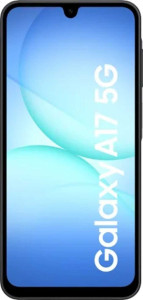
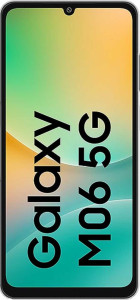
At first glance, both phones lead with a 50 MP main sensor at f/1.8 — but the A17 5G's camera system is considerably more versatile. It pairs that primary lens with a 5 MP ultrawide and a 2 MP depth sensor, giving users genuine compositional flexibility: wider environmental shots, portrait-mode depth control, and more creative framing options. The M06 5G's single rear camera offers none of that, making it a more limiting choice for anyone who shoots in varied scenarios.
Two further hardware advantages reinforce the A17 5G's lead. It includes optical image stabilization (OIS), which physically compensates for hand movement during shots and video — a meaningful upgrade over software stabilization alone, especially in low light or while recording on the move. The M06 5G has no OIS. On the front, the A17 5G's 13 MP selfie camera comfortably outresolves the M06 5G's 8 MP unit, a difference that shows up in detail retention when cropping or printing selfies. The A17 5G also supports a built-in HDR mode for photos, which the M06 5G lacks — useful for high-contrast scenes like bright skies above shaded subjects.
The shared feature list is long — both record at 1080p/30fps, support phase-detection autofocus, slow motion, timelapse, and a solid suite of manual controls — so neither holds an exclusive advantage in day-to-day shooting flexibility. But when it comes to the specs that most directly affect image quality and shooting versatility, the Galaxy A17 5G wins this category clearly, thanks to its multi-lens system, OIS, superior front camera resolution, and HDR photo support.