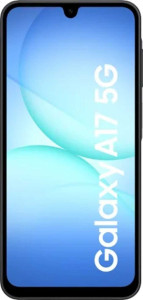
Samsung Galaxy A17 5G
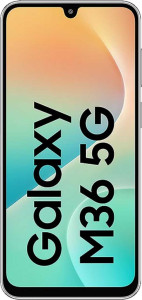
Samsung Galaxy M36 5G

Samsung Galaxy A17 5G Samsung Galaxy M36 5G

Overview

Welcome to our detailed spec comparison between the Samsung Galaxy A17 5G and the Samsung Galaxy M36 5G. Both phones share a lot of common ground — same screen size, same RAM, same battery capacity — but key battlegrounds emerge around display quality and refresh rate, processing performance, and camera capabilities. Whether you prioritize a sleeker build or a more powerful chip, this side-by-side breakdown will help you decide which Samsung fits your needs.

Common Features

  • Both phones share the same width of 77.9 mm and height of 164.4 mm.
  • Neither phone has a rugged build or can be folded.
  • Both feature a 6.7″ OLED/AMOLED display with a resolution of 1080 x 2340 px and a pixel density of 385 ppi.
  • Both displays are protected by Gorilla Glass Victus.
  • HDR10 and HDR10+ support is not available on either phone.
  • Both phones come with 8GB of RAM at 3200 MHz and 256GB of internal storage.
  • Both are powered by a 5 nm chipset and support 64-bit processing.
  • Both phones support integrated LTE and integrated graphics, with DirectX 12.
  • Both phones run Android 15 out of the box.
  • Both have the same battery capacity of 5000 mAh with 25W fast charging.
  • Wireless charging and reverse wireless charging are not available on either phone.
  • Neither phone has a removable battery.
  • Both phones have a 50 MP main camera sensor and a 13 MP front camera.
  • Both main cameras include optical image stabilization and a CMOS sensor.
  • Neither phone has a 3.5 mm audio jack or stereo speakers.
  • Both phones support 5G, NFC, Bluetooth 5.3, dual SIM, USB Type-C (USB 2.0), and have an external memory slot.
  • Both phones share an upload speed of 1280 MBits/s.
  • Both phones include location privacy options, camera and microphone privacy options, clipboard warnings, theme customization, and the ability to block app tracking.
  • Cross-site tracking blocking is not available on either phone.
  • Neither phone has a curved display, sapphire glass, or an e-paper display, but both have a video light.

Main Differences

  • Water resistance is present on the Samsung Galaxy A17 5G but not available on the Samsung Galaxy M36 5G.
  • Weight is 192 g on the Samsung Galaxy A17 5G and 197 g on the Samsung Galaxy M36 5G.
  • Thickness is 7.5 mm on the Samsung Galaxy A17 5G and 7.7 mm on the Samsung Galaxy M36 5G.
  • Volume is 96.05 cm³ on the Samsung Galaxy A17 5G and 98.61 cm³ on the Samsung Galaxy M36 5G.
  • Refresh rate is 90Hz on the Samsung Galaxy A17 5G and 120Hz on the Samsung Galaxy M36 5G.
  • Typical brightness is 800 nits on the Samsung Galaxy A17 5G and 1000 nits on the Samsung Galaxy M36 5G.
  • Always-On Display is available on the Samsung Galaxy A17 5G but not on the Samsung Galaxy M36 5G.
  • The chipset is the Samsung Exynos 1330 on the Samsung Galaxy A17 5G and the Samsung Exynos 1380 on the Samsung Galaxy M36 5G.
  • The GPU is the Mali G68 MP2 on the Samsung Galaxy A17 5G and the Mali G68 MP5 on the Samsung Galaxy M36 5G.
  • CPU speed is 2 x 2.4 & 6 x 2 GHz on the Samsung Galaxy A17 5G and 4 x 2.4 & 4 x 2 GHz on the Samsung Galaxy M36 5G.
  • Geekbench 6 multi-core score is 2048 on the Samsung Galaxy A17 5G and 2758 on the Samsung Galaxy M36 5G.
  • Geekbench 6 single-core score is 980 on the Samsung Galaxy A17 5G and 1007 on the Samsung Galaxy M36 5G.
  • GPU clock speed is 800 MHz on the Samsung Galaxy A17 5G and 950 MHz on the Samsung Galaxy M36 5G.
  • The secondary camera resolution is 5 MP on the Samsung Galaxy A17 5G and 8 MP on the Samsung Galaxy M36 5G.
  • Main camera video recording tops out at 1080p 30fps on the Samsung Galaxy A17 5G and 4K 30fps on the Samsung Galaxy M36 5G.
  • Front camera aperture is f/2.0 on the Samsung Galaxy A17 5G and f/2.2 on the Samsung Galaxy M36 5G.
  • Wi-Fi 6 (802.11ax) support is present on the Samsung Galaxy M36 5G but not available on the Samsung Galaxy A17 5G.
  • Download speed is 2550 MBits/s on the Samsung Galaxy A17 5G and 3790 MBits/s on the Samsung Galaxy M36 5G.
Specs Comparison
Samsung Galaxy A17 5G

Samsung Galaxy A17 5G

Samsung Galaxy M36 5G

Samsung Galaxy M36 5G

Design:
water resistance Water resistant None
weight 192 g 197 g
thickness 7.5 mm 7.7 mm
width 77.9 mm 77.9 mm
height 164.4 mm 164.4 mm
volume 96.0507 cm³ 98.612052 cm³
has a rugged build
can be folded

In terms of physical footprint, the Samsung Galaxy A17 5G and Galaxy M36 5G are virtually identical twins: both measure 164.4 mm tall and 77.9 mm wide, meaning they occupy the same hand real estate and will fit the same cases. The differences emerge only when you look at depth and mass — the A17 5G is marginally slimmer at 7.5 mm versus the M36 5G's 7.7 mm, and a touch lighter at 192 g compared to 197 g. In isolation, a 5 g and 0.2 mm gap is imperceptible in daily use, so neither phone wins meaningfully on form factor alone.

The decisive differentiator in this group is water resistance. The A17 5G carries a water-resistant rating, while the M36 5G offers none. Even a basic splash or rain resistance — without a formal IP rating — provides a meaningful real-world safety net: accidental spills, rain caught off-guard, or a wet countertop are far less likely to damage the A17 5G. The M36 5G has no such protection, making it more vulnerable in everyday scenarios where moisture is a risk.

Neither device features a rugged build or a foldable form factor, so those dimensions are a wash. Overall, the Galaxy A17 5G holds a clear design advantage in this group — not because of its marginally trimmer profile, but because its water resistance adds a layer of durability that the M36 5G simply cannot match.

Display:
Display type OLED/AMOLED OLED/AMOLED
screen size 6.7" 6.7"
pixel density 385 ppi 385 ppi
resolution 1080 x 2340 px 1080 x 2340 px
refresh rate 90Hz 120Hz
brightness (typical) 800 nits 1000 nits
has branded damage-resistant glass
Gorilla Glass version Gorilla Glass Victus Gorilla Glass Victus
supports HDR10
supports HDR10+
Always-On Display
supports Dolby Vision
Has a secondary screen
has a touch screen

At a foundational level, these two screens are remarkably alike: both are 6.7″ OLED/AMOLED panels running at 1080 x 2340 px with a pixel density of 385 ppi, and both are protected by Gorilla Glass Victus — a premium scratch-and-drop-resistance tier that is genuinely reassuring at this price segment. HDR10, HDR10+, and Dolby Vision are absent on both, so neither has an edge in HDR content playback.

Where the M36 5G pulls ahead is on the two specs that most visibly affect day-to-day experience. Its 120Hz refresh rate versus the A17 5G's 90Hz translates to noticeably smoother scrolling, more fluid animations, and a more responsive feel during gaming — differences that are easy to perceive side by side. Equally impactful is peak brightness: 1000 nits on the M36 5G against 800 nits on the A17 5G means the M36 5G will remain significantly more legible under direct sunlight, a practical win for outdoor use.

The A17 5G counters with one software-level perk: Always-On Display, which lets users glance at the time, notifications, or widgets without waking the screen — a convenience feature the M36 5G lacks entirely. It is a meaningful quality-of-life addition, but it does not outweigh the hardware advantages of a higher refresh rate and greater brightness. Overall, the Galaxy M36 5G holds a clear display edge, delivering a smoother and brighter panel where it counts most.

Performance:
internal storage 256GB 256GB
RAM 8GB 8GB
Chipset (SoC) name Samsung Exynos 1330 Samsung Exynos 1380
GPU name Mali G68 MP2 Mali G68 MP5
CPU speed 2 x 2.4 & 6 x 2 GHz 4 x 2.4 & 4 x 2 GHz
Geekbench 6 result (multi) 2048 2758
Geekbench 6 result (single) 980 1007
GPU clock speed 800 MHz 950 MHz
Has integrated LTE
RAM speed 3200 MHz 3200 MHz
semiconductor size 5 nm 5 nm
Supports 64-bit
DirectX version DirectX 12 DirectX 12
Has integrated graphics
Uses big.LITTLE technology
CPU threads 8 threads 8 threads
Has NX bit
maximum memory bandwidth 51.2 GB/s 51.2 GB/s
OpenCL version 2 2
maximum memory amount 8GB 8GB
Thermal Design Power (TDP) 5W 5W
DDR memory version 5 5

Both phones share the same 256GB storage, 8GB of DDR5 RAM at 3200 MHz, a 5 nm fabrication node, and a 5W TDP — meaning they operate within an identical thermal and memory envelope. The single-core Geekbench 6 scores are also nearly indistinguishable (980 vs 1007), confirming that for everyday tasks driven by a single thread — launching apps, typing, browsing — users will feel no practical difference between the two.

The gap opens up decisively once multiple cores and the GPU are involved. The M36 5G's Exynos 1380 reshuffles the CPU cluster to 4 high-performance cores at 2.4 GHz (versus the A17 5G's 2), which directly explains its multi-core Geekbench 6 score of 2758 — a substantial ~35% lead over the A17 5G's 2048. That margin is not just a benchmark curiosity; it translates to faster video exports, smoother multitasking under load, and better sustained performance in demanding apps. On the graphics side, the M36 5G's Mali G68 MP5 at 950 MHz carries more than double the shader cores of the A17 5G's Mali G68 MP2 at 800 MHz, giving it a commanding advantage in GPU-intensive workloads like gaming and image processing.

The Galaxy M36 5G holds a clear and meaningful performance advantage in this group. While light daily use will feel identical on either device, anyone who games, multitasks heavily, or runs compute-intensive applications will find the M36 5G's chipset noticeably more capable.

Cameras:
megapixels (main camera) 50 & 5 & 2 MP 50 & 8 & 2 MP
wide aperture (main camera) 1.8 & 2.2 & 2.4f 1.8 & 2.2 & 2.4f
Has a dual-lens (or multi-lens) main camera
megapixels (front camera) 13MP 13MP
has built-in optical image stabilization
video recording (main camera) 1080 x 30 fps 2160 x 30 fps
Has a dual-tone LED flash
number of flash LEDs 1 1
has a BSI sensor
has a CMOS sensor
has continuous autofocus when recording movies
Has phase-detection autofocus for photos
supports slow-motion video recording
has a built-in HDR mode
has manual exposure
has a flash
optical zoom 0x 0x
has manual ISO
has a serial shot mode
has manual focus
has a front camera
Has laser autofocus
Shoots 360° panorama
has manual white balance
shoots raw
has touch autofocus
has manual shutter speed
can create panoramas in-camera
wide aperture (front camera) 2f 2.2f
Has timelapse function
Has a front-facing LED flash
has a dual-lens (or multi-lens) front camera
supports HDR10 recording
supports Dolby Vision recording
has a front-facing camera under the display
Has a RGB LED flash
has 3D photo/video recording capabilities

The two phones share a strong photographic foundation: a 50 MP primary shooter with an f/1.8 aperture, OIS, phase-detection autofocus, and a 2 MP depth sensor — all identical. The front camera is also the same 13 MP unit on both. For typical daylight photography and portrait work, users will be working with essentially the same hardware on the main lens.

The differentiators emerge in the ultra-wide camera and, most critically, in video. The M36 5G upgrades the secondary wide lens to 8 MP versus the A17 5G's 5 MP, capturing more detail in landscape and group shots. Far more significant, though, is the M36 5G's ability to record video at 4K (2160p) at 30 fps, while the A17 5G is capped at 1080p at 30 fps. That is not a marginal gap — 4K offers four times the pixel count of 1080p, meaning the M36 5G's footage retains substantially more detail, holds up far better on large screens, and gives creators meaningful room to crop or reframe in post-production.

The A17 5G's only counterpoint is a marginally wider front aperture (f/2.0 vs f/2.2), which theoretically allows slightly more light in low-lit selfie conditions — a modest and situational advantage. The Galaxy M36 5G wins this group clearly, with its 4K video capability alone representing a generational leap in recording quality over the A17 5G's 1080p ceiling.

Operating system:
Android version Android 15 Android 15
has clipboard warnings
has location privacy options
has camera/microphone privacy options
has Mail Privacy Protection
has theme customization
can block app tracking
blocks cross-site tracking
has on-device machine learning
has notification permissions
has media picker
Can play games while they download
has dark mode
has Wi-Fi password sharing
has battery health check
has an extra dim mode
has focus modes
has dynamic theming
can offload apps
Has customizable notifications
has Live Text
has full-page screenshots
supports split screen
gets direct OS updates
has PiP
Can be used as a PC
Has sharing intents
has a child lock
Supports widgets
Is free and open source
Has offline voice recognition
has voice commands
Tracks the current position of a mobile device
is a multi-user system
has Quick Start

This is one of the rare spec groups where the data tells a straightforward story: the Samsung Galaxy A17 5G and Galaxy M36 5G are in complete lockstep. Both ship with Android 15 and share an identical feature set across every single tracked attribute — from privacy controls like location and camera/microphone permissions, to productivity staples like split-screen multitasking, picture-in-picture, and widget support.

Notable shared strengths worth highlighting include on-device machine learning, dynamic theming, Live Text, offline voice recognition, and a battery health check — a well-rounded software package that holds up well for a mid-range offering. Both devices also lack direct OS updates, meaning neither gets Samsung's fastest update pipeline, though this affects them equally.

Because no spec in this group differs between the two devices, the operating system category is a complete tie. A buyer's software experience will be functionally indistinguishable regardless of which model they choose, and this group should carry no weight in the final purchase decision.

Battery:
battery power 5000 mAh 5000 mAh
has wireless charging
Supports fast charging
charging speed 25W 25W
has reverse wireless charging
has a removable battery
has a battery level indicator
has a rechargeable battery

Samsung has equipped both the Galaxy A17 5G and the Galaxy M36 5G with an identical battery setup: a 5000 mAh cell paired with 25W wired fast charging. A 5000 mAh capacity is a solid mid-range standard that comfortably supports a full day of mixed use for most people, and 25W charging is reasonably swift without being class-leading — expect a full charge in roughly 70 to 90 minutes under typical conditions.

Neither device offers wireless charging or reverse wireless charging, and neither has a removable battery. These omissions are consistent with the mid-range segment both phones occupy and affect both equally, so they do not create any differentiation between the two.

Much like the operating system group, the battery category is a complete tie — every tracked spec is identical. Buyers should look to other groups, such as performance or display, to guide their decision, as battery life and charging speed will be effectively the same on either device.

Audio:
has a socket for a 3.5 mm audio jack
has stereo speakers
has aptX
has LDAC
has aptX HD
has aptX Adaptive
has aptX Lossless
Has a radio

Audio is a category where both phones make the same trade-offs — and neither comes out looking strong. The 3.5 mm headphone jack is absent on both the Galaxy A17 5G and the Galaxy M36 5G, meaning wired audio requires a USB-C adapter. More notably, neither device features stereo speakers, so media consumption through the built-in speaker produces mono sound only — a limitation that is increasingly noticeable when watching video content or playing games.

On the wireless audio side, the picture is equally sparse. Neither phone supports aptX, LDAC, aptX HD, aptX Adaptive, or aptX Lossless — the high-quality Bluetooth audio codecs that enable lossless or near-lossless audio over wireless headphones. Users who invest in premium Bluetooth headsets will be limited to standard SBC or AAC transmission, which compresses audio more aggressively and falls short of what those headphones are capable of delivering.

Since every tracked spec is identical — and uniformly limited — this group is a complete tie, though not a flattering one for either device. Audio quality considerations should be factored into the broader purchase decision, particularly for users who prioritize music or media, as neither phone offers a meaningful advantage here.

Connectivity & Features:
release date August 2025 June 2025
has 5G support
Wi-Fi version Wi-Fi 4 (802.11n), Wi-Fi 5 (802.11ac) Wi-Fi 4 (802.11n), Wi-Fi 6 (802.11ax), Wi-Fi 5 (802.11ac)
SIM cards 2 SIM 2 SIM
Bluetooth version 5.3 5.3
has an external memory slot
Has USB Type-C
USB version 2 2
has NFC
download speed 2550 MBits/s 3790 MBits/s
upload speed 1280 MBits/s 1280 MBits/s
Has a fingerprint scanner
has emergency SOS via satellite
has crash detection
is DLNA-certified
has a gyroscope
supports ANT+
Has a heart rate monitor
has GPS
has a compass
supports Wi-Fi
Has an infrared sensor
has an accelerometer
has a cellular module
Has a barometer
has an HDMI output
Uses 3D facial recognition
Has an iris scanner
Stylus included
supports Galileo
Has motion tracking
Has optical tracking
Has a built-in projector

Across the bulk of this category, the two phones are evenly matched: both support 5G, dual SIM, NFC, USB Type-C (USB 2.0), microSD expansion, Bluetooth 5.3, and the same sensor suite including GPS, gyroscope, accelerometer, and compass. For everyday connectivity tasks, users will experience no meaningful difference between the two.

The standout differentiator is Wi-Fi. The M36 5G adds support for Wi-Fi 6 (802.11ax) on top of the Wi-Fi 4 and Wi-Fi 5 that both phones share. Wi-Fi 6 brings lower latency, better performance in congested environments — such as homes with many connected devices — and more efficient power consumption during wireless activity. This advantage is reflected directly in the cellular download speeds as well: the M36 5G reaches a peak of 3790 Mbits/s versus the A17 5G's 2550 Mbits/s, a roughly 49% lead that matters in areas with strong 5G Sub-6 or mmWave coverage. Upload speeds are identical at 1280 Mbits/s.

The Galaxy M36 5G holds the edge in this group, primarily by virtue of its Wi-Fi 6 support and meaningfully higher peak download throughput. For users in modern homes with Wi-Fi 6 routers or in areas with dense 5G infrastructure, this translates into a real, tangible connectivity advantage that the A17 5G cannot match.

Miscellaneous:
has a video light
Has sapphire glass display
Has a curved display
Has an e-paper display

The Miscellaneous group covers a handful of niche hardware traits, and the verdict here is swift: the Samsung Galaxy A17 5G and Galaxy M36 5G are identical across every tracked attribute. Both have a video light, and neither features a sapphire glass display, a curved display, or an e-paper display — all of which are characteristics typically reserved for premium or highly specialized devices well above this price tier.

This is a complete tie with no differentiating data points. Buyers should disregard this group entirely when weighing one phone against the other, and focus their decision on the categories where meaningful differences do exist — namely performance, display, cameras, and connectivity.

Comparison Summary & Verdict

After examining all the evidence, both phones make a compelling case within the mid-range Samsung lineup. The Samsung Galaxy A17 5G stands out with its water resistance, slightly lighter build, and Always-On Display — practical perks for everyday durability and convenience. The Samsung Galaxy M36 5G, however, pulls ahead where it counts for power users: its 120Hz display with 1000 nits brightness, the more capable Exynos 1380 chipset with a significantly higher Geekbench multi-core score of 2758, 4K video recording, Wi-Fi 6 support, and faster download speeds all make it the stronger performer. If you want a dependable, water-resistant daily driver with a refined display feature set, the A17 5G delivers. If raw performance, a smoother screen, and better camera output are your priorities, the M36 5G is the clear step up.

Samsung Galaxy A17 5G
Buy Samsung Galaxy A17 5G if...

Buy the Samsung Galaxy A17 5G if water resistance and an Always-On Display are important to you, and you prefer a slightly lighter, slimmer phone for everyday use.

Samsung Galaxy M36 5G
Buy Samsung Galaxy M36 5G if...

Buy the Samsung Galaxy M36 5G if you want superior performance, a smoother 120Hz display with higher brightness, 4K video recording, and Wi-Fi 6 connectivity.