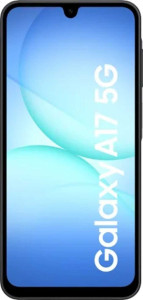
Samsung Galaxy A17 5G
Xiaomi Redmi Note 14 4G (Global)

Samsung Galaxy A17 5G Xiaomi Redmi Note 14 4G (Global)

Overview

Welcome to our in-depth comparison of the Samsung Galaxy A17 5G and the Xiaomi Redmi Note 14 4G (Global) — two compelling mid-range smartphones that share a surprising amount of common ground while diverging sharply in key areas. From display quality and camera resolution to connectivity standards and audio capabilities, this head-to-head breakdown will help you determine which device truly fits your lifestyle and priorities.

Common Features

  • Both phones are water resistant with an IP54 ingress protection rating.
  • Neither phone has a rugged build.
  • Neither phone can be folded.
  • Both phones feature an OLED/AMOLED display type.
  • Both phones have branded damage-resistant glass.
  • Always-On Display is available on both phones.
  • Dolby Vision support is not available on either phone.
  • Neither phone has a secondary screen.
  • Both phones have a touchscreen.
  • Both phones come with 256GB of internal storage and 8GB of RAM.
  • Both phones have integrated LTE and support 64-bit processing.
  • Both phones use big.LITTLE CPU technology with 8 threads.
  • Both phones support OpenGL ES version 3.2.
  • Both main cameras support optical image stabilization.
  • Both phones record main camera video at 1080p 30fps.
  • Neither phone has a BSI sensor, but both have a CMOS sensor.
  • Continuous autofocus during video recording is supported on both phones.
  • Both phones include clipboard warnings and location privacy options.
  • Both phones support camera and microphone privacy options and allow blocking app tracking.
  • Theme customization is available on both phones.
  • On-device machine learning is supported on both phones.
  • Neither phone supports wireless charging, but both support fast charging.
  • Neither phone has a removable battery, and both have a rechargeable battery with a battery level indicator.
  • Both phones support Wi-Fi 4 (802.11n) and Wi-Fi 5 (802.11ac).
  • Both phones have dual SIM support, Bluetooth 5.3, an external memory slot, USB Type-C (USB 2.0), NFC, and a fingerprint scanner.
  • Both phones have a video light but no sapphire glass, curved display, or e-paper display.

Main Differences

  • Weight is 192 g on Samsung Galaxy A17 5G and 196.5 g on Xiaomi Redmi Note 14 4G (Global).
  • Thickness is 7.5 mm on Samsung Galaxy A17 5G and 8.2 mm on Xiaomi Redmi Note 14 4G (Global).
  • Screen size is 6.7″ on Samsung Galaxy A17 5G and 6.67″ on Xiaomi Redmi Note 14 4G (Global).
  • Display refresh rate is 90Hz on Samsung Galaxy A17 5G and 120Hz on Xiaomi Redmi Note 14 4G (Global).
  • Typical brightness is 800 nits on Samsung Galaxy A17 5G and 1800 nits on Xiaomi Redmi Note 14 4G (Global).
  • Samsung Galaxy A17 5G uses Gorilla Glass Victus, while Xiaomi Redmi Note 14 4G (Global) uses Gorilla Glass 5.
  • HDR10 and HDR10+ support is present on Xiaomi Redmi Note 14 4G (Global) but not available on Samsung Galaxy A17 5G.
  • The chipset is Samsung Exynos 1330 on Samsung Galaxy A17 5G and Mediatek Helio G99 on Xiaomi Redmi Note 14 4G (Global).
  • AnTuTu benchmark score is 435,345 on Samsung Galaxy A17 5G and 470,000 on Xiaomi Redmi Note 14 4G (Global).
  • Geekbench 6 single-core score is 980 on Samsung Galaxy A17 5G and 729 on Xiaomi Redmi Note 14 4G (Global).
  • Maximum memory bandwidth is 51.2 GB/s on Samsung Galaxy A17 5G and 17.1 GB/s on Xiaomi Redmi Note 14 4G (Global).
  • Semiconductor size is 5 nm on Samsung Galaxy A17 5G and 6 nm on Xiaomi Redmi Note 14 4G (Global).
  • DirectX 12 is supported on Samsung Galaxy A17 5G, while Xiaomi Redmi Note 14 4G (Global) supports DirectX 11.
  • Main camera resolution is 50 & 5 & 2 MP on Samsung Galaxy A17 5G and 108 & 2 & 2 MP on Xiaomi Redmi Note 14 4G (Global).
  • Front camera resolution is 13MP on Samsung Galaxy A17 5G and 20MP on Xiaomi Redmi Note 14 4G (Global).
  • Samsung Galaxy A17 5G runs Android 15, while Xiaomi Redmi Note 14 4G (Global) runs Android 14.
  • App offloading is supported on Samsung Galaxy A17 5G but not available on Xiaomi Redmi Note 14 4G (Global).
  • Battery capacity is 5000 mAh on Samsung Galaxy A17 5G and 5500 mAh on Xiaomi Redmi Note 14 4G (Global).
  • Charging speed is 25W on Samsung Galaxy A17 5G and 33W on Xiaomi Redmi Note 14 4G (Global).
  • A 3.5mm audio jack, stereo speakers, LDAC support, and a radio are present on Xiaomi Redmi Note 14 4G (Global) but not available on Samsung Galaxy A17 5G.
  • 5G support is present on Samsung Galaxy A17 5G but not available on Xiaomi Redmi Note 14 4G (Global).
  • Download speed reaches 2550 Mbit/s on Samsung Galaxy A17 5G and 650 Mbit/s on Xiaomi Redmi Note 14 4G (Global).
  • An infrared sensor is present on Xiaomi Redmi Note 14 4G (Global) but not available on Samsung Galaxy A17 5G.
Specs Comparison
Samsung Galaxy A17 5G

Samsung Galaxy A17 5G

Xiaomi Redmi Note 14 4G (Global)

Xiaomi Redmi Note 14 4G (Global)

Design:
water resistance Water resistant Water resistant
weight 192 g 196.5 g
thickness 7.5 mm 8.2 mm
width 77.9 mm 76.6 mm
height 164.4 mm 163.3 mm
volume 96.0507 cm³ 102.571996 cm³
Ingress Protection (IP) rating IP54 IP54
has a rugged build
can be folded

Both phones share the same IP54 rating, meaning neither is fully waterproof but both offer meaningful splash and dust resistance for everyday use — enough to survive rain or an accidental sink splash, but not submersion. Neither has a rugged build or a foldable form factor, so they are conventional, flat-slab smartphones on equal footing in those respects.

Where they diverge is in physical footprint and feel-in-hand. The Samsung Galaxy A17 5G is notably thinner at 7.5 mm versus 8.2 mm for the Redmi Note 14 4G — a 0.7 mm difference that is genuinely perceptible when sliding the device in and out of a pocket. The A17 5G is also lighter at 192 g compared to 196.5 g, and its overall volume is smaller at 96.05 cm³ versus 102.57 cm³. This means the Samsung packs less bulk despite being marginally taller and wider, suggesting a more efficiently shaped chassis.

From a design standpoint, the Samsung Galaxy A17 5G holds a clear edge: it is slimmer, lighter, and more compact by volume, which translates to a more premium, pocketable feel in daily use. Users who prioritize a sleeker profile will prefer it, while those indifferent to a few extra grams and millimeters will find the Redmi Note 14 4G perfectly adequate.

Display:
Display type OLED/AMOLED OLED/AMOLED
screen size 6.7" 6.67"
pixel density 385 ppi 395 ppi
resolution 1080 x 2340 px 1080 x 2400 px
refresh rate 90Hz 120Hz
brightness (typical) 800 nits 1800 nits
has branded damage-resistant glass
Gorilla Glass version Gorilla Glass Victus Gorilla Glass 5
supports HDR10
supports HDR10+
Always-On Display
supports Dolby Vision
Has a secondary screen
has a touch screen

On the fundamentals, these two screens are closely matched: both use OLED/AMOLED panels at a 1080p resolution on near-identical screen sizes, and both support Always-On Display. The pixel density gap — 395 ppi on the Redmi Note 14 4G versus 385 ppi on the Galaxy A17 5G — is negligible in practice and indistinguishable to the naked eye.

The meaningful gaps open up in three areas. First, refresh rate: the Redmi Note 14 4G runs at 120Hz compared to 90Hz on the A17 5G, resulting in noticeably smoother scrolling, animations, and gaming. Second, and more dramatically, brightness: the Redmi's 1800 nits typical brightness towers over the Samsung's 800 nits, making the Redmi dramatically more legible under direct sunlight — a practical, everyday advantage. Third, the Redmi Note 14 4G supports HDR10 and HDR10+, enabling richer contrast and color depth when streaming compatible content, while the A17 5G supports neither.

The Samsung does counter with Gorilla Glass Victus — a newer and more scratch- and drop-resistant glass generation than the Redmi's Gorilla Glass 5 — which is a genuine long-term durability advantage. However, when weighed against the Redmi's superior brightness, higher refresh rate, and HDR support, the Xiaomi Redmi Note 14 4G holds a clear overall edge in display performance for most users.

Performance:
internal storage 256GB 256GB
RAM 8GB 8GB
AnTuTu benchmark score 435345 470000
Chipset (SoC) name Samsung Exynos 1330 Mediatek Helio G99
GPU name Mali G68 MP2 Mali G57
CPU speed 2 x 2.4 & 6 x 2 GHz 2 x 2.2 & 6 x 2 GHz
Geekbench 6 result (multi) 2048 1979
Geekbench 6 result (single) 980 729
GPU clock speed 800 MHz 950 MHz
Has integrated LTE
RAM speed 3200 MHz 4266 MHz
semiconductor size 5 nm 6 nm
Supports 64-bit
DirectX version DirectX 12 DirectX 11
Has integrated graphics
OpenGL ES version 3.2 3.2
Uses big.LITTLE technology
CPU threads 8 threads 8 threads
maximum memory bandwidth 51.2 GB/s 17.1 GB/s
OpenCL version 2 2
maximum memory amount 8GB 12GB
GPU turbo 950 MHz 2133 MHz
Thermal Design Power (TDP) 5W 5W
DDR memory version 5 4

The chipset contrast here is genuinely interesting. The Samsung Galaxy A17 5G runs on the Exynos 1330 built on a 5nm process, while the Redmi Note 14 4G uses the Helio G99 on a 6nm node. The smaller process node on the Samsung theoretically allows for better power efficiency at comparable performance levels. In CPU benchmarks, this shows clearly: the A17 5G scores 980 in Geekbench 6 single-core versus just 729 on the Redmi — a 34% advantage that translates to snappier app launches and more responsive UI interactions in everyday use.

The picture is more nuanced in other dimensions. The Redmi Note 14 4G edges ahead in overall AnTuTu score (470,000 vs 435,345), partly due to its higher RAM speed at 4266 MHz DDR4 versus 3200 MHz DDR5 on the Samsung — though the A17 5G's DDR5 architecture compensates with a vastly superior maximum memory bandwidth of 51.2 GB/s compared to a much lower 17.1 GB/s on the Redmi. High memory bandwidth matters for tasks that move large amounts of data quickly, such as image processing or sustained multitasking. The Samsung also supports DirectX 12 versus DirectX 11 on the Redmi, giving it a more future-proof graphics API foundation.

Taken together, the Samsung Galaxy A17 5G holds the stronger performance profile where it matters most for real-world use: single-core responsiveness, memory bandwidth, and process node efficiency. The Redmi's higher AnTuTu score is not enough to override these structural advantages, giving the A17 5G a clear edge in the performance category.

Cameras:
megapixels (main camera) 50 & 5 & 2 MP 108 & 2 & 2 MP
wide aperture (main camera) 1.8 & 2.2 & 2.4f 1.7 & 2.2 & 2.4f
Has a dual-lens (or multi-lens) main camera
megapixels (front camera) 13MP 20MP
has built-in optical image stabilization
video recording (main camera) 1080 x 30 fps 1080 x 30 fps
Has a dual-tone LED flash
number of flash LEDs 1 1
has a BSI sensor
has a CMOS sensor
has continuous autofocus when recording movies
Has phase-detection autofocus for photos
supports slow-motion video recording
has a built-in HDR mode
has manual exposure
has a flash
optical zoom 0x 0x
has manual ISO
has a serial shot mode
has manual focus
has a front camera
Has laser autofocus
Shoots 360° panorama
has manual white balance
shoots raw
has touch autofocus
has manual shutter speed
can create panoramas in-camera
wide aperture (front camera) 2f 2.2f
Has timelapse function
Has a front-facing LED flash
has a dual-lens (or multi-lens) front camera
supports HDR10 recording
supports Dolby Vision recording
has a front-facing camera under the display
Has a RGB LED flash
has 3D photo/video recording capabilities

The camera systems share a nearly identical feature set — both offer triple rear cameras, OIS, phase-detection autofocus, HDR mode, slow-motion, and the same maximum video resolution of 1080p at 30fps. The real story is in the headline numbers, and they diverge significantly. The Redmi Note 14 4G leads with a 108MP primary sensor compared to the Samsung's 50MP, and pairs it with a marginally wider aperture of f/1.7 versus f/1.8 on the A17 5G. More megapixels enable greater detail retention when cropping shots or printing large, while the slightly wider aperture admits a touch more light — both meaningful advantages for daylight and mixed-light photography.

The selfie camera gap is equally notable. The Redmi packs a 20MP front shooter against the Samsung's 13MP, which benefits users who frequently shoot portraits or video calls and want more detail to work with. The Samsung does recoup a small advantage here with a wider front aperture of f/2.0 versus f/2.2 on the Redmi, meaning slightly better light capture for selfies in dim conditions — but this is a narrow trade-off against the resolution deficit.

On specs alone, the Xiaomi Redmi Note 14 4G holds the clear edge in cameras: the combination of a much higher-resolution main sensor, wider primary aperture, and a more capable front camera outweighs the Samsung's minor front-aperture advantage. For users who prioritize camera hardware on paper, the Redmi is the stronger choice in this category.

Operating system:
Android version Android 15 Android 14
has clipboard warnings
has location privacy options
has camera/microphone privacy options
has Mail Privacy Protection
has theme customization
can block app tracking
blocks cross-site tracking
has on-device machine learning
has notification permissions
has media picker
Can play games while they download
has dark mode
has Wi-Fi password sharing
has battery health check
has an extra dim mode
has focus modes
has dynamic theming
can offload apps
Has customizable notifications
has Live Text
has full-page screenshots
supports split screen
gets direct OS updates
has PiP
Can be used as a PC
Has sharing intents
has a child lock
Supports widgets
Is free and open source
Has offline voice recognition
has voice commands
Tracks the current position of a mobile device
is a multi-user system
has Quick Start

Strip away the branding and these two phones run remarkably similar software experiences. The overwhelming majority of features — dark mode, dynamic theming, split-screen, Picture-in-Picture, on-device machine learning, privacy controls, and widget support — are present on both. That parity means day-to-day usability is not meaningfully differentiated by software alone for most users.

Two differences are worth flagging. The Samsung Galaxy A17 5G ships with Android 15 versus Android 14 on the Redmi Note 14 4G — a full version ahead, which typically brings refined privacy controls, performance improvements, and a longer window before the device falls behind on OS support. The Samsung also supports app offloading, a feature the Redmi lacks; this allows infrequently used apps to be temporarily removed while preserving their data, which is a practical storage management tool on devices without expandable memory options.

Neither phone receives direct OS updates — both depend on manufacturer-mediated rollouts, which is a shared limitation worth noting for users who prioritize software longevity. Overall, the Samsung Galaxy A17 5G holds a modest but clear software edge: the newer Android version and app offloading capability are tangible advantages, even if the broader feature parity keeps the gap from being dramatic.

Battery:
battery power 5000 mAh 5500 mAh
has wireless charging
Supports fast charging
charging speed 25W 33W
has a removable battery
has a battery level indicator
has a rechargeable battery

Battery is one of the cleaner wins in this comparison. The Xiaomi Redmi Note 14 4G carries a 5500 mAh cell against the Samsung's 5000 mAh — a 10% capacity advantage that, all else being equal, translates to a meaningfully longer time between charges. For heavy users who push their phone through a full day of streaming, navigation, or social media, that extra 500 mAh can be the difference between reaching a charger comfortably or not.

The charging speed gap reinforces the Redmi's advantage. At 33W, it charges noticeably faster than the A17 5G's 25W, meaning less time tethered to a wall even when starting from a larger capacity. The Redmi therefore wins on both ends of the battery equation — it lasts longer and recovers faster. Neither phone supports wireless charging, and both have non-removable batteries, so those factors are a wash.

For battery-conscious buyers, the Redmi Note 14 4G holds a clear and practical advantage here. The combination of a larger cell and faster wired charging makes it the stronger performer in this category without qualification.

Audio:
has a socket for a 3.5 mm audio jack
has stereo speakers
has aptX
has LDAC
has aptX HD
has aptX Adaptive
has aptX Lossless
Has a radio

Audio is one of the most lopsided categories in this comparison, and it goes decisively in the Redmi's favor. The Xiaomi Redmi Note 14 4G brings a 3.5mm headphone jack, stereo speakers, LDAC support, and a built-in FM radio — the Samsung Galaxy A17 5G has none of these. That is not a minor gap; it represents a fundamentally richer audio experience across every use case.

Each of these features carries real-world weight. Stereo speakers produce a wider, more immersive soundstage for media consumption compared to a mono setup. The headphone jack allows users to plug in any wired headphones without an adapter — a meaningful convenience that the A17 5G's omission forces workarounds for. LDAC is Sony's high-resolution Bluetooth codec, capable of transmitting audio at up to three times the bitrate of standard Bluetooth — making it a genuine upgrade for users pairing with compatible wireless headphones who want near-lossless audio quality. The FM radio is a niche but valued feature for users in markets where it remains relevant.

The Redmi Note 14 4G wins this category without contest. The Samsung offers no compensating audio advantage in the provided specs, making this one of the clearest edges in the entire comparison for users who care about sound quality and versatility.

Connectivity & Features:
release date August 2025 January 2025
has 5G support
Wi-Fi version Wi-Fi 4 (802.11n), Wi-Fi 5 (802.11ac) Wi-Fi 4 (802.11n), Wi-Fi 5 (802.11ac)
SIM cards 2 SIM 2 SIM
Bluetooth version 5.3 5.3
has an external memory slot
Has USB Type-C
USB version 2 2
has NFC
download speed 2550 MBits/s 650 MBits/s
upload speed 1280 MBits/s 150 MBits/s
Has a fingerprint scanner
has emergency SOS via satellite
has crash detection
is DLNA-certified
has a gyroscope
supports ANT+
Has a heart rate monitor
has GPS
has a compass
supports Wi-Fi
Has an infrared sensor
has an accelerometer
has a cellular module
Has a barometer
has an HDMI output
Uses 3D facial recognition
Has an iris scanner
Stylus included
supports Galileo
Has motion tracking
Has optical tracking
Has a built-in projector

The most consequential divide in this category is cellular: the Samsung Galaxy A17 5G supports 5G, while the Redmi Note 14 4G is limited to 4G LTE. This has immediate and long-term implications — 5G delivers dramatically higher peak speeds, with the A17 5G rated at 2550 Mbps download and 1280 Mbps upload versus just 650 Mbps and 150 Mbps on the Redmi. Even in areas where 5G coverage is still expanding, owning a 5G device is a form of future-proofing as networks continue to roll out.

Beyond cellular, the two phones are evenly matched on most fronts — identical Wi-Fi versions, Bluetooth 5.3, NFC, dual SIM, USB Type-C (USB 2.0), expandable storage, and the same sensor suite including GPS, gyroscope, accelerometer, and compass. The one hardware extra the Redmi brings is an infrared sensor, which allows the phone to function as a universal remote control for TVs and appliances — a niche but genuinely useful feature that the Samsung omits entirely.

Weighing the trade-offs, the Samsung Galaxy A17 5G holds the stronger overall connectivity profile. The 5G advantage and its associated speed ceiling are far more impactful for the majority of users than the Redmi's infrared blaster, making the Samsung the clear winner in this category for anyone operating in or moving toward 5G coverage areas.

Miscellaneous:
has a video light
Has sapphire glass display
Has a curved display
Has an e-paper display

The miscellaneous specs for these two phones are identical across every data point provided: both have a video light, neither features sapphire glass, a curved display, or an e-paper display. There is simply no differentiator to analyze here.

This is a clear tie. Neither the Samsung Galaxy A17 5G nor the Xiaomi Redmi Note 14 4G holds any advantage in this category based on the available data.

Comparison Summary & Verdict

Both phones deliver a solid mid-range experience with OLED displays, 256GB storage, and NFC, but their strengths point to very different users. The Samsung Galaxy A17 5G stands out with its 5G connectivity, slimmer and lighter build, newer Android 15 OS, superior single-core CPU performance, and a dramatically higher memory bandwidth of 51.2 GB/s — making it the better pick for future-proofing and snappy everyday performance. The Xiaomi Redmi Note 14 4G (Global), on the other hand, wins on display brightness (1800 nits), a smoother 120Hz refresh rate, a larger 5500 mAh battery with 33W fast charging, a 108MP main camera, stereo speakers, a 3.5mm headphone jack, LDAC audio, and an infrared sensor — offering a richer multimedia and all-around feature set at its price point.

Samsung Galaxy A17 5G
Buy Samsung Galaxy A17 5G if...

Buy the Samsung Galaxy A17 5G if you want 5G connectivity, a slimmer design, and a more modern chipset with stronger single-core performance and a newer Android 15 experience.

Xiaomi Redmi Note 14 4G (Global)
Buy Xiaomi Redmi Note 14 4G (Global) if...

Buy the Xiaomi Redmi Note 14 4G (Global) if you prioritize a brighter 120Hz display, a larger battery with faster 33W charging, a high-resolution 108MP camera, and richer audio features like stereo speakers and a headphone jack.