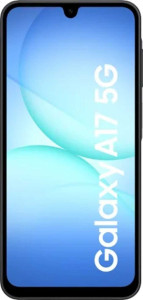
Connectivity parity between these two phones is striking. Both share identical Wi-Fi generations (Wi-Fi 5), Bluetooth 5.3, USB Type-C 2.0, dual SIM, NFC, expandable storage, and the same suite of sensors — gyroscope, accelerometer, compass, and GPS with Galileo support. For everyday connectivity needs, users of either phone will have the same experience across wireless, cellular, and peripheral interactions.
Two differences do emerge from the data. The Redmi Note 14 5G carries a marginally higher peak 5G download speed at 2,770 Mbit/s versus 2,550 Mbit/s — a gap that is largely theoretical in real-world network conditions but indicates slightly more headroom on the modem side. More practically, the Redmi also includes an infrared (IR) blaster, which the A17 5G lacks entirely. An IR blaster lets the phone act as a universal remote for TVs, air conditioners, and other IR-controlled appliances — a feature that sounds minor but proves genuinely useful and convenient for users who rely on it daily.
With virtually everything else matched, the Redmi Note 14 5G holds a slight edge in this category. The IR blaster is the only feature with tangible everyday impact, and while it won't sway every buyer, it represents a functional addition the Samsung simply does not offer. The marginally higher download ceiling is a secondary point that reinforces the Redmi's lead without significantly changing the overall picture.