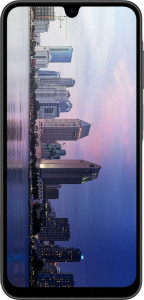
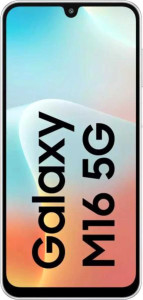
Across the broad sweep of connectivity features, these two phones are remarkably well-matched. Both support 5G, dual SIM, NFC, USB Type-C, expandable storage, Bluetooth 5.3, and an identical sensor suite covering GPS, Galileo, gyroscope, accelerometer, and compass. For the vast majority of users, day-to-day connectivity will feel indistinguishable between the two devices.
The one meaningful point of divergence is Wi-Fi. The Galaxy M16 5G adds support for Wi-Fi 6 (802.11ax) on top of the Wi-Fi 4 and Wi-Fi 5 standards both phones share. Wi-Fi 6 delivers higher throughput, lower latency, and better performance in congested environments — such as apartments or offices with many connected devices — compared to Wi-Fi 5. Interestingly, despite lacking Wi-Fi 6, the Galaxy A26 5G lists a higher peak download speed of 3790 Mbits/s versus the M16's 3300 Mbits/s, suggesting its cellular modem has a broader theoretical ceiling. In practice, real-world speeds are constrained by network conditions, so neither figure guarantees faster everyday performance.
This category produces a genuine split. The Galaxy M16 5G holds a tangible advantage for users on Wi-Fi 6 routers, where it can leverage faster and more efficient wireless connections. The Galaxy A26 5G counters with a higher peak cellular download speed. Overall, the M16's Wi-Fi 6 support is the more broadly useful differentiator for most home and office environments, giving it a narrow but real edge here.