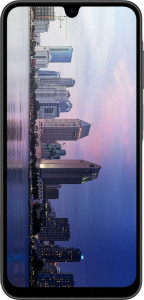
Samsung Galaxy A26 5G
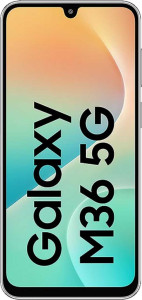
Samsung Galaxy M36 5G

Samsung Galaxy A26 5G Samsung Galaxy M36 5G

Overview

Welcome to our in-depth comparison of the Samsung Galaxy A26 5G and the Samsung Galaxy M36 5G. These two mid-range contenders from Samsung share a surprisingly close foundation, yet diverge in a handful of areas that could prove decisive for the right buyer. From water resistance and display features to Wi-Fi capabilities and what is actually inside the box, this head-to-head breaks down every key specification to help you make the most informed choice.

Common Features

  • Both phones share the same thickness of 7.7 mm.
  • Neither phone has a rugged build.
  • Neither phone can be folded.
  • Both phones feature a 6.7″ OLED/AMOLED display.
  • Both phones have a pixel density of 385 ppi.
  • Both phones share the same resolution of 1080 x 2340 px.
  • Both phones support a 120Hz refresh rate.
  • Both phones are protected by Gorilla Glass Victus.
  • HDR10 support is not available on either phone.
  • Both phones are powered by the Samsung Exynos 1380 chipset with a Mali G68 MP5 GPU.
  • Both phones have 8GB of RAM and 256GB of internal storage.
  • Both phones score 2758 on Geekbench 6 multi-core and 1007 on single-core.
  • Both phones feature a triple rear camera system with 50, 8, and 2 MP lenses.
  • Both phones have a 13 MP front camera.
  • Optical image stabilization is available on both phones.
  • Both phones support 4K video recording at 30 fps.
  • Both phones run Android 15.
  • Both phones have a 5000 mAh battery with 25W fast charging.
  • Wireless charging is not available on either phone.
  • Both phones support 5G, NFC, Bluetooth 5.3, USB Type-C (USB 2.0), dual SIM, and expandable storage.
  • Neither phone has a 3.5 mm audio jack or stereo speakers.
  • A 3.5 mm audio jack is not available on either phone.

Main Differences

  • Water resistance is present on the Samsung Galaxy A26 5G but not available on the Samsung Galaxy M36 5G.
  • The Samsung Galaxy A26 5G weighs 200 g while the Samsung Galaxy M36 5G weighs 197 g.
  • The Samsung Galaxy A26 5G is 77.5 mm wide while the Samsung Galaxy M36 5G is 77.9 mm wide.
  • The Samsung Galaxy A26 5G is 164 mm tall while the Samsung Galaxy M36 5G is 164.4 mm tall.
  • The volume of the Samsung Galaxy A26 5G is 97.867 cm³ compared to 98.612052 cm³ on the Samsung Galaxy M36 5G.
  • Always-On Display is available on the Samsung Galaxy A26 5G but not on the Samsung Galaxy M36 5G.
  • A charger is included in the box with the Samsung Galaxy M36 5G but not with the Samsung Galaxy A26 5G.
  • Wi-Fi support on the Samsung Galaxy A26 5G covers Wi-Fi 4 and Wi-Fi 5, while the Samsung Galaxy M36 5G additionally supports Wi-Fi 6.
Specs Comparison
Samsung Galaxy A26 5G

Samsung Galaxy A26 5G

Samsung Galaxy M36 5G

Samsung Galaxy M36 5G

Design:
water resistance Waterproof None
weight 200 g 197 g
thickness 7.7 mm 7.7 mm
width 77.5 mm 77.9 mm
height 164 mm 164.4 mm
volume 97.867 cm³ 98.612052 cm³
has a rugged build
can be folded

In terms of physical form, the Samsung Galaxy A26 5G and Galaxy M36 5G are virtually identical twins. Both measure 7.7 mm thick and sit at nearly the same height and width, resulting in volumes that differ by less than 1%. The weight gap — 200 g vs. 197 g — is three grams, which is imperceptible in daily use. For a buyer choosing between these two based on how they feel in the hand or fit in a pocket, the design is essentially a non-factor.

Where the comparison diverges meaningfully is protection. The A26 5G carries a waterproof rating, while the M36 5G offers no water resistance at all. This is a real-world differentiator: waterproofing means the A26 can survive rain, splashes, or accidental drops near water without damage, which is particularly valuable for users with active lifestyles or those prone to mishaps. The M36, lacking any such protection, is more vulnerable in the same scenarios.

Neither device features a rugged build or a foldable form factor, so both target the same mainstream, flat-slab audience. However, the A26 5G holds a clear design-category edge here solely due to its water resistance — a durable advantage that the near-identical dimensions and negligible weight difference cannot offset for the M36.

Display:
Display type OLED/AMOLED OLED/AMOLED
screen size 6.7" 6.7"
pixel density 385 ppi 385 ppi
resolution 1080 x 2340 px 1080 x 2340 px
refresh rate 120Hz 120Hz
has branded damage-resistant glass
Gorilla Glass version Gorilla Glass Victus Gorilla Glass Victus
supports HDR10
supports HDR10+
Always-On Display
supports Dolby Vision
Has a secondary screen
has a touch screen

On paper, the displays of the Samsung Galaxy A26 5G and Galaxy M36 5G are carbon copies: both deliver a 6.7″ OLED/AMOLED panel at 1080 x 2340 px, a sharp 385 ppi pixel density, a fluid 120Hz refresh rate, and Gorilla Glass Victus protection. For the vast majority of daily use — scrolling, streaming, gaming — users of either phone will experience the same vivid colors, deep blacks, and smooth motion that AMOLED at this resolution delivers.

The sole differentiator the data reveals is Always-On Display, which the A26 5G supports and the M36 5G does not. While subtle, this is a genuine usability advantage: glancing at the time, notifications, or a music widget without waking the screen is a small but daily convenience that many users come to rely on. It also speaks to slightly more refined software-hardware integration on the A26 side.

Overall, this category is nearly a dead heat, but the A26 5G edges ahead by virtue of Always-On Display support — the one feature that separates two otherwise identical screen experiences.

Performance:
internal storage 256GB 256GB
RAM 8GB 8GB
Chipset (SoC) name Samsung Exynos 1380 Samsung Exynos 1380
GPU name Mali G68 MP5 Mali G68 MP5
CPU speed 4 x 2.4 & 4 x 2 GHz 4 x 2.4 & 4 x 2 GHz
Geekbench 6 result (multi) 2758 2758
Geekbench 6 result (single) 1007 1007
Geekbench 5 result (multi) 2634 2634
Geekbench 5 result (single) 780 780
GPU clock speed 950 MHz 950 MHz
Has integrated LTE
RAM speed 3200 MHz 3200 MHz
semiconductor size 5 nm 5 nm
Supports 64-bit
DirectX version DirectX 12 DirectX 12
Has integrated graphics
Uses big.LITTLE technology
CPU threads 8 threads 8 threads
Has NX bit
Uses HMP
Has TrustZone
maximum memory bandwidth 51.2 GB/s 51.2 GB/s
OpenCL version 2 2
memory channels 4 4
maximum memory amount 8GB 8GB
uses multithreading
Thermal Design Power (TDP) 5W 5W
DDR memory version 5 5
L3 core 4 MB/core 4 MB/core
L3 cache 4 MB 4 MB

The performance category produces the most clear-cut outcome of the comparison so far: the Samsung Galaxy A26 5G and Galaxy M36 5G are powered by the exact same silicon. Both run the Samsung Exynos 1380 — a 5 nm chip — paired with a Mali G68 MP5 GPU, 8 GB of LPDDR5 RAM, and 256 GB of internal storage. Every benchmark number is identical, from the Geekbench 6 multi-core score of 2758 down to the GPU clock speed of 950 MHz and memory bandwidth of 51.2 GB/s.

What this means practically is that app launches, multitasking, gaming, and everyday responsiveness will feel indistinguishable between the two devices. The Exynos 1380 on a 5 nm process is a capable mid-range chip that handles typical workloads — social media, video streaming, casual gaming — without strain, and the 8 GB RAM headroom ensures smooth background app retention.

This group is an absolute tie. There is no basis in the provided data to favor either phone from a performance standpoint — a buyer cannot gain or lose anything here by choosing one over the other.

Cameras:
megapixels (main camera) 50 & 8 & 2 MP 50 & 8 & 2 MP
wide aperture (main camera) 1.8 & 2.2 & 2.4f 1.8 & 2.2 & 2.4f
Has a dual-lens (or multi-lens) main camera
megapixels (front camera) 13MP 13MP
has built-in optical image stabilization
video recording (main camera) 2160 x 30 fps 2160 x 30 fps
Has a dual-tone LED flash
number of flash LEDs 1 1
has a BSI sensor
has a CMOS sensor
has continuous autofocus when recording movies
Has phase-detection autofocus for photos
supports slow-motion video recording
has a built-in HDR mode
has manual exposure
has a flash
optical zoom 0x 0x
has manual ISO
has a serial shot mode
has manual focus
has a front camera
Has laser autofocus
Shoots 360° panorama
has manual white balance
shoots raw
has touch autofocus
has manual shutter speed
can create panoramas in-camera
wide aperture (front camera) 2.2f 2.2f
Has timelapse function
Has a front-facing LED flash
has a dual-lens (or multi-lens) front camera
supports HDR10 recording
supports Dolby Vision recording
has a front-facing camera under the display
Has a RGB LED flash
has 3D photo/video recording capabilities

Much like the performance category, the camera systems on the Samsung Galaxy A26 5G and Galaxy M36 5G are spec-for-spec identical. Both feature a triple rear camera setup led by a 50 MP main lens at f/1.8, complemented by an 8 MP ultrawide and a 2 MP depth sensor, plus a 13 MP front camera at f/2.2. Video capability tops out at 4K at 30 fps on both, and both include optical image stabilization — a meaningful inclusion at this price tier that helps reduce blur in handheld shots and smoother video footage.

The feature set is equally matched across the board: phase-detection autofocus, continuous autofocus during recording, slow-motion video, HDR mode, timelapse, and a range of manual controls including ISO and exposure are all present on both devices. Neither shoots in RAW format, and neither offers optical zoom, which are the more notable shared limitations to be aware of.

A complete tie — the provided data gives no grounds to distinguish one phone from the other in this category. A user who prioritizes the camera experience will find no advantage in choosing one model over the other based on these specs alone.

Operating system:
Android version Android 15 Android 15
has clipboard warnings
has location privacy options
has camera/microphone privacy options
has Mail Privacy Protection
has theme customization
can block app tracking
blocks cross-site tracking
has on-device machine learning
has notification permissions
has media picker
Can play games while they download
has dark mode
has Wi-Fi password sharing
has battery health check
has an extra dim mode
has focus modes
has dynamic theming
can offload apps
Has customizable notifications
has Live Text
has full-page screenshots
supports split screen
gets direct OS updates
has PiP
Can be used as a PC
Has sharing intents
has a child lock
Supports widgets
Is free and open source
Has offline voice recognition
has voice commands
Tracks the current position of a mobile device
is a multi-user system
has Quick Start

Running Android 15 on both devices, the software experience the Samsung Galaxy A26 5G and Galaxy M36 5G offer is completely identical according to the provided data. Both ship with a robust privacy toolkit — including camera and microphone controls, location permissions, and app tracking blocks — which reflects Android 15's stronger stance on user data protection compared to earlier versions.

The shared feature set is genuinely well-rounded for the mid-range tier: dynamic theming, split-screen multitasking, Picture-in-Picture, on-device machine learning, offline voice recognition, and battery health monitoring are all present on both. The inclusion of on-device machine learning is worth noting as it enables smarter features like Live Text without relying on cloud processing, preserving both speed and privacy.

Neither phone receives direct OS updates — meaning updates are routed through Samsung rather than pushed straight from Google — which is a shared limitation that affects how quickly security patches and new Android versions arrive. That said, this is a tie across every single data point in this group. No advantage exists for either device from a software standpoint based solely on the specs provided.

Battery:
battery power 5000 mAh 5000 mAh
has wireless charging
Supports fast charging
charging speed 25W 25W
comes with a charger
has a removable battery
has a battery level indicator
has a rechargeable battery

Battery capacity and charging speed are identical across both devices: a 5000 mAh cell with 25W fast charging. At this capacity, most users can expect a full day of use without needing to reach for a cable, and 25W wired charging is a reasonable mid-range speed that can top up the battery meaningfully in a short time. Neither phone supports wireless charging, which is a shared limitation worth noting for users who rely on charging pads.

The one differentiator in this category is straightforward but practically significant: the Samsung Galaxy M36 5G comes with a charger included in the box, while the A26 5G does not. Given that both phones charge at 25W — a speed that requires a compatible adapter to achieve — the A26 buyer who doesn't already own one will need to purchase a charger separately to get the full charging performance the phone is capable of.

The M36 5G holds a narrow but real-world edge here. The core battery hardware is a tie, but the included charger adds tangible out-of-box value and removes an extra purchase that A26 buyers may face.

Audio:
has a socket for a 3.5 mm audio jack
has stereo speakers
has aptX
has LDAC
has aptX HD
has aptX Adaptive
has aptX Lossless
Has a radio

Audio is the most clear-cut category in this entire comparison — and not for positive reasons. Both the Samsung Galaxy A26 5G and Galaxy M36 5G share the same set of absences: no 3.5 mm headphone jack, no stereo speakers, no high-resolution Bluetooth codecs such as LDAC or aptX, and no FM radio. Users of either phone are limited to a single mono speaker and Bluetooth audio without any lossless or high-fidelity wireless codec support.

The lack of stereo speakers is the most impactful limitation for everyday use — media consumption, gaming, and calls all benefit noticeably from stereo output, and its absence is felt on both devices equally. The missing headphone jack means wired listeners must rely on a USB-C adapter, which is an added inconvenience neither phone escapes. For audiophiles or users who prioritize wireless audio quality, the absence of LDAC in particular — the highest-quality Bluetooth audio codec widely supported on Android — means neither phone can fully leverage high-res audio from compatible headphones.

This category is a complete tie, though it is one defined entirely by shared limitations rather than shared strengths. Neither the A26 5G nor the M36 5G holds any audio advantage over the other based on the provided data.

Connectivity & Features:
release date March 2025 June 2025
has 5G support
Wi-Fi version Wi-Fi 4 (802.11n), Wi-Fi 5 (802.11ac) Wi-Fi 4 (802.11n), Wi-Fi 6 (802.11ax), Wi-Fi 5 (802.11ac)
SIM cards 2 SIM 2 SIM
Bluetooth version 5.3 5.3
has an external memory slot
Has USB Type-C
USB version 2 2
has NFC
download speed 3790 MBits/s 3790 MBits/s
upload speed 1280 MBits/s 1280 MBits/s
Has a fingerprint scanner
has emergency SOS via satellite
has crash detection
is DLNA-certified
has a gyroscope
supports ANT+
Has a heart rate monitor
has GPS
has a compass
supports Wi-Fi
Has an infrared sensor
has an accelerometer
has a cellular module
Has a barometer
has an HDMI output
Uses 3D facial recognition
Has an iris scanner
Stylus included
supports Galileo
Has motion tracking
Has optical tracking
Has a built-in projector

Across most of this category, the Samsung Galaxy A26 5G and Galaxy M36 5G are evenly matched: both support 5G, Bluetooth 5.3, NFC, dual SIM, expandable storage, USB Type-C, and an identical sensor suite including GPS, gyroscope, accelerometer, and compass. For the majority of users, this shared foundation covers every connectivity need from contactless payments to precise navigation.

The single differentiator is Wi-Fi 6 (802.11ax) support on the Galaxy M36 5G, which the A26 5G lacks — the A26 tops out at Wi-Fi 5 (802.11ac). Wi-Fi 6 delivers higher throughput, lower latency, and significantly better performance in congested environments with many connected devices, such as busy offices or households with numerous smart devices. For users with a Wi-Fi 6 router, the M36 can take full advantage of that infrastructure; the A26 cannot.

The M36 5G takes a clear edge in this category on the strength of its Wi-Fi 6 support alone. It is a forward-looking advantage that will grow more relevant as Wi-Fi 6 router adoption continues to expand, making the M36 the more future-proof choice for wireless connectivity.

Miscellaneous:
has a video light
Has sapphire glass display
Has a curved display
Has an e-paper display

The Miscellaneous category offers little to analyze beyond confirming what has become a familiar pattern in this comparison. Both the Samsung Galaxy A26 5G and Galaxy M36 5G share every data point here: both include a video light, and neither features a sapphire glass display, a curved screen, or an e-paper panel. These are mainstream, flat-display smartphones with no exotic form factor or display technology in play.

This is a complete tie with no differentiators of any kind present in the provided data. Neither device offers anything in this group that the other does not.

Comparison Summary & Verdict

After a thorough comparison, it is clear that the Samsung Galaxy A26 5G and the Samsung Galaxy M36 5G are near-identical phones at their core, sharing the same chipset, display size, camera setup, battery capacity, and software experience. However, the differences that do exist are meaningful. The Galaxy A26 5G stands out with its water resistance and Always-On Display, making it the stronger choice for users who want extra durability and convenience in daily use. On the other hand, the Galaxy M36 5G offers Wi-Fi 6 support for faster wireless connectivity and actually includes a charger in the box, which is a practical advantage right out of the gate. Choose the A26 5G if protection and display features matter most to you; go for the M36 5G if modern Wi-Fi standards and a complete unboxing experience are higher on your list.

Samsung Galaxy A26 5G
Buy Samsung Galaxy A26 5G if...

Buy the Samsung Galaxy A26 5G if you want a water-resistant phone with an Always-On Display for added daily convenience and peace of mind.

Samsung Galaxy M36 5G
Buy Samsung Galaxy M36 5G if...

Buy the Samsung Galaxy M36 5G if you value Wi-Fi 6 connectivity and prefer a phone that comes with a charger included in the box.