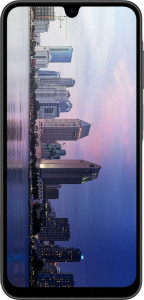
Samsung Galaxy A26 5G
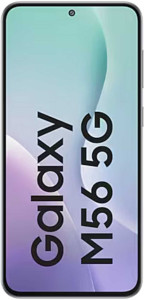
Samsung Galaxy M56 5G

Samsung Galaxy A26 5G Samsung Galaxy M56 5G

Overview

Welcome to our in-depth comparison of the Samsung Galaxy A26 5G and the Samsung Galaxy M56 5G. Both phones share a surprising amount of common ground — identical RAM, storage, display resolution, and battery capacity — yet they diverge in meaningful ways across performance, charging speed, and connectivity features. Whether you value everyday extras like NFC and Always-On Display or raw processing power and faster charging, this head-to-head breakdown will help you decide which Samsung mid-ranger is the right fit for you.

Common Features

  • Neither product has a rugged build.
  • Neither product can be folded.
  • Both products feature an OLED/AMOLED display type.
  • Both products share the same resolution of 1080 x 2340 px.
  • Both products have a 120Hz refresh rate.
  • Both products use Gorilla Glass Victus for damage-resistant glass protection.
  • HDR10 support is not available on either product.
  • HDR10+ support is not available on either product.
  • Dolby Vision support is not available on either product.
  • Both products come with 256GB of internal storage and 8GB of RAM.
  • Both products have integrated LTE and 5G support.
  • Both products support 64-bit processing and use big.LITTLE technology.
  • Both products run Android 15.
  • The main camera on both products offers 50, 8, and 2 MP with apertures of f/1.8, f/2.2, and f/2.4.
  • Both products support optical image stabilization.
  • Both products record video at up to 2160p at 30 fps.
  • Both products have a 5000 mAh battery.
  • Wireless charging is not available on either product.
  • Neither product comes with a charger in the box.
  • Both products support fast charging.
  • Neither product has a 3.5mm audio jack.
  • Stereo speakers are not available on either product.
  • Both products support Bluetooth 5.3 and USB Type-C (USB 2.0).
  • Both products support dual SIM and have a fingerprint scanner.
  • Both products have download speeds of 3790 MBits/s and upload speeds of 1280 MBits/s.
  • Both products have clipboard warnings and location privacy options.
  • Both products allow blocking of app tracking.
  • Cross-site tracking blocking is not available on either product.

Main Differences

  • Weight is 200 g on Samsung Galaxy A26 5G and 180 g on Samsung Galaxy M56 5G.
  • Thickness is 7.7 mm on Samsung Galaxy A26 5G and 7.2 mm on Samsung Galaxy M56 5G.
  • Height is 164 mm on Samsung Galaxy A26 5G and 162 mm on Samsung Galaxy M56 5G.
  • Volume is 97.867 cm³ on Samsung Galaxy A26 5G and 90.16272 cm³ on Samsung Galaxy M56 5G.
  • Screen size is 6.7″ on Samsung Galaxy A26 5G and 6.74″ on Samsung Galaxy M56 5G.
  • Pixel density is 385 ppi on Samsung Galaxy A26 5G and 382 ppi on Samsung Galaxy M56 5G.
  • Always-On Display is available on Samsung Galaxy A26 5G but not on Samsung Galaxy M56 5G.
  • The chipset is Samsung Exynos 1380 on Samsung Galaxy A26 5G and Samsung Exynos 1480 on Samsung Galaxy M56 5G.
  • The GPU is Mali G68 MP5 on Samsung Galaxy A26 5G and Xclipse 530 on Samsung Galaxy M56 5G.
  • CPU speed is 4 x 2.4 & 4 x 2 GHz on Samsung Galaxy A26 5G and 4 x 2.75 & 4 x 2.05 GHz on Samsung Galaxy M56 5G.
  • Geekbench 6 multi-core score is 2758 on Samsung Galaxy A26 5G and 3398 on Samsung Galaxy M56 5G.
  • Geekbench 6 single-core score is 1007 on Samsung Galaxy A26 5G and 1161 on Samsung Galaxy M56 5G.
  • GPU clock speed is 950 MHz on Samsung Galaxy A26 5G and 1300 MHz on Samsung Galaxy M56 5G.
  • Semiconductor size is 5 nm on Samsung Galaxy A26 5G and 4 nm on Samsung Galaxy M56 5G.
  • Maximum memory amount is 8GB on Samsung Galaxy A26 5G and 12GB on Samsung Galaxy M56 5G.
  • Front camera resolution is 13 MP on Samsung Galaxy A26 5G and 12 MP on Samsung Galaxy M56 5G.
  • Charging speed is 25W on Samsung Galaxy A26 5G and 45W on Samsung Galaxy M56 5G.
  • Wi-Fi support includes Wi-Fi 4 and Wi-Fi 5 on Samsung Galaxy A26 5G, while Samsung Galaxy M56 5G also adds Wi-Fi 6 (802.11ax).
  • NFC is available on Samsung Galaxy A26 5G but not on Samsung Galaxy M56 5G.
Specs Comparison
Samsung Galaxy A26 5G

Samsung Galaxy A26 5G

Samsung Galaxy M56 5G

Samsung Galaxy M56 5G

Design:
weight 200 g 180 g
thickness 7.7 mm 7.2 mm
width 77.5 mm 77.3 mm
height 164 mm 162 mm
volume 97.867 cm³ 90.16272 cm³
has a rugged build
can be folded

Both the Samsung Galaxy A26 5G and the Galaxy M56 5G share a very similar footprint in terms of width and height, making them nearly identical in hand feel from a lateral perspective. However, the differences become more meaningful when looking at thickness and weight: the M56 5G is noticeably slimmer at 7.2 mm versus 7.7 mm, and lighter at 180 g compared to 200 g. That 20 g difference is perceptible during extended one-handed use or when the phone is in a shirt pocket, giving the M56 5G a more premium, refined feel in daily carry.

The volume figures reinforce this gap — the A26 5G displaces about 97.9 cm³ while the M56 5G comes in at roughly 90.2 cm³, meaning it packs its internals into a measurably more compact shell despite similar screen-area dimensions. Neither device features a rugged build or foldable form factor, so both are standard candy-bar smartphones with no structural differentiators on those fronts.

In terms of design, the Galaxy M56 5G holds a clear edge: it is slimmer, lighter, and lower in total volume, which typically translates to a more comfortable long-term handling experience and a sleeker aesthetic profile. For users who prioritize ergonomics and portability, the M56 5G is the stronger choice based on these specs alone.

Display:
Display type OLED/AMOLED OLED/AMOLED
screen size 6.7" 6.74"
pixel density 385 ppi 382 ppi
resolution 1080 x 2340 px 1080 x 2340 px
refresh rate 120Hz 120Hz
has branded damage-resistant glass
Gorilla Glass version Gorilla Glass Victus Gorilla Glass Victus
supports HDR10
supports HDR10+
Always-On Display
supports Dolby Vision
Has a secondary screen
has a touch screen

At a glance, these two displays are remarkably close. Both use OLED/AMOLED panels, share an identical 1080 x 2340 px resolution, run at a smooth 120Hz refresh rate, and are protected by Gorilla Glass Victus — one of the toughest consumer glass solutions available. For the vast majority of users, the day-to-day viewing experience on both screens will feel virtually indistinguishable.

The marginal size and density differences — 6.7″ at 385 ppi for the A26 5G versus 6.74″ at 382 ppi for the M56 5G — are well below the threshold of human perception. Neither device supports HDR10, HDR10+, or Dolby Vision, meaning neither has an edge in high-dynamic-range content rendering.

The one meaningful differentiator here is Always-On Display: the Galaxy A26 5G supports it, while the M56 5G does not. For users who rely on glanceable notifications, time, or widgets without waking the full screen, this is a genuine quality-of-life advantage. It gives the A26 5G a narrow but practical edge in this category, despite the two displays being otherwise equivalent.

Performance:
internal storage 256GB 256GB
RAM 8GB 8GB
Chipset (SoC) name Samsung Exynos 1380 Samsung Exynos 1480
GPU name Mali G68 MP5 Xclipse 530
CPU speed 4 x 2.4 & 4 x 2 GHz 4 x 2.75 & 4 x 2.05 GHz
Geekbench 6 result (multi) 2758 3398
Geekbench 6 result (single) 1007 1161
GPU clock speed 950 MHz 1300 MHz
Has integrated LTE
RAM speed 3200 MHz 3200 MHz
semiconductor size 5 nm 4 nm
Supports 64-bit
DirectX version DirectX 12 DirectX 12
Has integrated graphics
Uses big.LITTLE technology
CPU threads 8 threads 8 threads
Uses HMP
maximum memory bandwidth 51.2 GB/s 51.2 GB/s
OpenCL version 2 2
memory channels 4 4
maximum memory amount 8GB 12GB
uses multithreading
DDR memory version 5 5
L3 cache 4 MB 4 MB

The performance gap between these two devices is real and measurable. The Galaxy M56 5G runs on the Exynos 1480, built on a 4 nm process, while the A26 5G uses the older Exynos 1380 on 5 nm. The smaller node matters in two ways: it allows for higher clock speeds — the M56 5G's performance cores reach 2.75 GHz versus 2.4 GHz on the A26 5G — and it generally improves power efficiency, meaning the M56 5G can sustain that extra performance without a proportionally larger battery cost.

Benchmark results confirm the advantage. The M56 5G scores 3398 in Geekbench 6 multi-core and 1161 single-core, compared to 2758 and 1007 respectively on the A26 5G — roughly a 23% lead in multi-core throughput. The GPU story is even more pronounced: the M56 5G's Xclipse 530 runs at 1300 MHz, versus the A26 5G's Mali G68 MP5 at 950 MHz, which translates to a noticeably smoother experience in graphically intensive games and GPU-accelerated tasks. Additionally, while both ship with 8 GB of RAM, the M56 5G supports a maximum of 12 GB, providing more headroom for multitasking-heavy configurations.

The Galaxy M56 5G holds a clear and substantial performance advantage in this category. Users who prioritize snappy app switching, gaming, or future-proofing will find the M56 5G's chipset a meaningfully stronger platform — not just on paper, but in sustained everyday use.

Cameras:
megapixels (main camera) 50 & 8 & 2 MP 50 & 8 & 2 MP
wide aperture (main camera) 1.8 & 2.2 & 2.4f 1.8 & 2.2 & 2.4f
Has a dual-lens (or multi-lens) main camera
megapixels (front camera) 13MP 12MP
has built-in optical image stabilization
video recording (main camera) 2160 x 30 fps 2160 x 30 fps
Has a dual-tone LED flash
number of flash LEDs 1 1
has a BSI sensor
has a CMOS sensor
has continuous autofocus when recording movies
Has phase-detection autofocus for photos
supports slow-motion video recording
has a built-in HDR mode
has manual exposure
has a flash
optical zoom 0x 0x
has manual ISO
has a serial shot mode
has manual focus
has a front camera
Has laser autofocus
Shoots 360° panorama
has manual white balance
has touch autofocus
has manual shutter speed
can create panoramas in-camera
wide aperture (front camera) 2.2f 2.2f
Has timelapse function
Has a front-facing LED flash
has a dual-lens (or multi-lens) front camera
supports HDR10 recording
supports Dolby Vision recording
has a front-facing camera under the display
Has a RGB LED flash
has 3D photo/video recording capabilities

The camera systems on these two devices are, for all practical purposes, identical. Both feature the same 50 MP + 8 MP + 2 MP triple rear camera setup with matching apertures across all three lenses, OIS, phase-detection autofocus, 4K 30fps video recording, and an equivalent suite of manual controls including ISO, exposure, focus, and white balance. Whatever shooting scenario you can construct — low light, wide angle, macro, slow motion, panorama — the spec sheet offers no basis for expecting a different outcome between the two.

The only numerical difference in the entire camera spec set is the front camera: 13 MP on the Galaxy A26 5G versus 12 MP on the M56 5G. In real-world terms, a single megapixel difference at this resolution range is functionally irrelevant — it does not translate to a perceptible change in selfie detail or quality under typical conditions. Both front cameras share the same f/2.2 aperture, further confirming parity in low-light selfie capability.

This category is effectively a tie. Neither device offers a camera feature or specification that gives it a meaningful advantage over the other. Users making a decision between these two phones should look to other spec groups — performance, design, or battery — rather than camera capability to differentiate their choice.

Operating system:
Android version Android 15 Android 15
has clipboard warnings
has location privacy options
has camera/microphone privacy options
has Mail Privacy Protection
has theme customization
can block app tracking
blocks cross-site tracking
has on-device machine learning
has notification permissions
has media picker
Can play games while they download
has dark mode
has Wi-Fi password sharing
has battery health check
has an extra dim mode
has focus modes
has dynamic theming
can offload apps
Has customizable notifications
has Live Text
has full-page screenshots
supports split screen
gets direct OS updates
has PiP
Can be used as a PC
Has sharing intents
has a child lock
Supports widgets
Is free and open source
Has offline voice recognition
has voice commands
Tracks the current position of a mobile device
is a multi-user system
has Quick Start

When it comes to software, these two devices are in complete lockstep. Both ship with Android 15 and share an identical feature set across every single tracked specification — from privacy controls like location and camera/microphone permissions, to productivity features like split-screen, Picture-in-Picture, and offline voice recognition, to personalization options like dynamic theming and dark mode.

Notably, both devices lack direct OS updates, meaning neither receives updates pushed straight from Google — updates are mediated through Samsung instead. This is a shared limitation rather than a differentiator. On the privacy front, both block app tracking and offer clipboard warnings, but neither supports cross-site tracking blocking or Mail Privacy Protection, again equally.

This category is an absolute tie — there is not a single software feature where one device has an advantage over the other. The operating system experience will be indistinguishable between the Galaxy A26 5G and the Galaxy M56 5G, and prospective buyers should focus entirely on hardware differences — performance, design, or battery — when making their decision.

Battery:
battery power 5000 mAh 5000 mAh
has wireless charging
Supports fast charging
charging speed 25W 45W
comes with a charger
has a removable battery
has a battery level indicator
has a rechargeable battery

Capacity-wise, these two phones are identical — both pack a 5000 mAh battery, which places them firmly in the all-day endurance tier for typical usage patterns. Neither supports wireless charging, and neither ships with a charger in the box, so both users will need to source their own adapter.

The one meaningful split is charging speed. The Galaxy M56 5G supports 45W fast charging, compared to 25W on the Galaxy A26 5G. That 20W difference is not trivial in practice — at 45W, a depleted 5000 mAh cell can typically reach a usable charge level significantly faster than at 25W, which matters considerably for users with demanding schedules or those who frequently top up on the go.

The Galaxy M56 5G holds a clear advantage here. Since battery capacity is equal, longevity between charges will be comparable on both devices, but the M56 5G's faster charging means less time tethered to a cable when it does need a refill — a practical, real-world benefit that adds up daily.

Audio:
has a socket for a 3.5 mm audio jack
has stereo speakers
has aptX
has LDAC
has aptX HD
has aptX Adaptive
has aptX Lossless
Has a radio

The audio specs for these two devices tell the same story — and it is a modest one. Neither the Galaxy A26 5G nor the Galaxy M56 5G includes a 3.5mm headphone jack, stereo speakers, or any high-resolution wireless audio codec such as LDAC, aptX, or aptX HD. For users who prioritize audio quality, both phones will rely on Bluetooth for wireless listening without any premium codec support, and wired listening will require a USB-C adapter.

The absence of stereo speakers on both devices is worth flagging specifically — it means media consumption like videos or gaming audio will be delivered through a single speaker, which limits soundstage width and overall loudness compared to dual-speaker setups increasingly common in this segment.

This category is a complete tie, though notably one where both devices share the same set of limitations rather than strengths. Neither phone has an audio advantage over the other, and users with serious audio expectations — whether wired or wireless — will find both equally constrained by these specs.

Connectivity & Features:
release date March 2025 April 2025
has 5G support
Wi-Fi version Wi-Fi 4 (802.11n), Wi-Fi 5 (802.11ac) Wi-Fi 4 (802.11n), Wi-Fi 5 (802.11ac), Wi-Fi 6 (802.11ax)
SIM cards 2 SIM 2 SIM
Bluetooth version 5.3 5.3
Has USB Type-C
USB version 2 2
has NFC
download speed 3790 MBits/s 3790 MBits/s
upload speed 1280 MBits/s 1280 MBits/s
Has a fingerprint scanner
has emergency SOS via satellite
has crash detection
is DLNA-certified
has a gyroscope
supports ANT+
Has a heart rate monitor
has GPS
has a compass
supports Wi-Fi
Has an infrared sensor
has an accelerometer
has a cellular module
Has a barometer
has an HDMI output
Uses 3D facial recognition
Has an iris scanner
Stylus included
supports Galileo
Has motion tracking
Has optical tracking
Has a built-in projector

These two devices share a solid connectivity foundation — both support 5G, Bluetooth 5.3, USB Type-C, dual SIM, and identical peak download and upload speeds. Sensors are equally matched as well, with gyroscope, accelerometer, compass, and GPS present on both. For most users, the day-to-day connectivity experience will feel equivalent across the board.

The two meaningful divergences cut in opposite directions, making this a genuine trade-off. The Galaxy M56 5G adds Wi-Fi 6 (802.11ax) to the standard Wi-Fi 4/5 stack, which brings higher throughput, better performance in congested network environments, and improved efficiency on compatible routers — a tangible upgrade for home or office users with modern networking hardware. The Galaxy A26 5G, however, includes NFC, which the M56 5G notably lacks. NFC enables contactless payments, quick pairing with accessories, and tap-to-share functionality — features that are deeply integrated into daily workflows for many users.

Neither device holds an outright overall edge here — it comes down to which feature matters more to the individual user. Those who rely on contactless payments or NFC-based workflows will find the A26 5G indispensable in this regard, while users on modern Wi-Fi 6 networks who can live without NFC will appreciate the M56 5G's superior wireless networking. Both represent meaningful real-world advantages, just in different contexts.

Miscellaneous:
has a video light
Has sapphire glass display
Has a curved display
Has an e-paper display

The miscellaneous spec set for these two devices is entirely identical — both include a video light, and neither features a curved display, sapphire glass, or e-paper screen. With only a handful of tracked attributes and no differences between them, there is very little analytical ground to cover here.

This category is an unambiguous tie. No feature in this group distinguishes the Galaxy A26 5G from the Galaxy M56 5G in any meaningful way, and neither device carries an advantage or disadvantage based on these specs alone. Buyers should continue to weigh the more substantive differences identified in other categories — performance, connectivity, and design — when making their final decision.

Comparison Summary & Verdict

After examining every spec, a clear picture emerges for each device. The Samsung Galaxy A26 5G stands out for users who want NFC payments, an Always-On Display, and a familiar mid-range chipset in a slightly more compact price-tier package. It suits buyers who depend on tap-to-pay and appreciate persistent glanceable notifications. The Samsung Galaxy M56 5G, on the other hand, is the stronger performer: its Exynos 1480 chipset delivers noticeably higher Geekbench scores, its 45W fast charging refills the shared 5000 mAh battery in considerably less time, and Wi-Fi 6 support adds future-proof connectivity. It also supports up to 12GB of RAM. If raw performance and speedy top-ups matter most to you, the M56 5G is the clear pick; if NFC and Always-On Display are daily essentials, the A26 5G earns its place.

Samsung Galaxy A26 5G
Buy Samsung Galaxy A26 5G if...

Buy the Samsung Galaxy A26 5G if NFC contactless payments and an Always-On Display are must-have features in your daily routine.

Samsung Galaxy M56 5G
Buy Samsung Galaxy M56 5G if...

Buy the Samsung Galaxy M56 5G if you want faster performance, quicker 45W charging, and Wi-Fi 6 connectivity in a lighter, slimmer body.