Samsung Galaxy A26 5G
TCL 60 5G

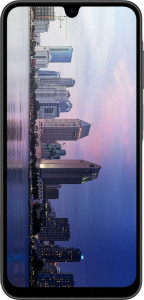
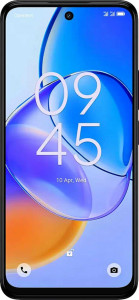
Samsung Galaxy A26 5G TCL 60 5G

Overview

Welcome to our in-depth spec comparison between the Samsung Galaxy A26 5G and the TCL 60 5G. Both phones share a 6.7-inch screen and 120Hz refresh rate, yet they take very different approaches when it comes to display technology and image quality, raw processing power, camera capabilities, and everyday usability features. Whether you prioritize a premium visual experience or a more versatile audio and battery setup, this comparison breaks down everything you need to know before making your decision.

Common Features

  • Neither product has a rugged build.
  • Neither product can be folded.
  • Both products have a 6.7″ screen size.
  • Both products support a 120Hz refresh rate.
  • HDR10 support is not available on either product.
  • HDR10+ support is not available on either product.
  • Dolby Vision support is not available on either product.
  • Neither product has a secondary screen.
  • Both products have a touch screen.
  • Both products come with 256GB of internal storage.
  • Both products have a GPU clock speed of 950 MHz.
  • Both products have integrated LTE.
  • Both products support 64-bit processing.
  • Both products support DirectX 12.
  • Both products have integrated graphics.
  • Both products use big.LITTLE technology.
  • Both products have 8 CPU threads.
  • Both products have a dual-lens or multi-lens main camera.
  • Neither product has a dual-tone LED flash.
  • Both products have a single LED flash.
  • Both products have a CMOS sensor.
  • Both products support continuous autofocus when recording movies.
  • Both products have phase-detection autofocus for photos.
  • Both products support slow-motion video recording.
  • Both products run Android 15.
  • Both products have clipboard warnings.
  • Both products have location privacy options.
  • Both products have camera and microphone privacy options.
  • Mail Privacy Protection is not available on either product.
  • Both products support theme customization.
  • Both products can block app tracking.
  • Cross-site tracking blocking is not available on either product.
  • Neither product supports wireless charging.
  • Both products support fast charging.
  • Neither product has a removable battery.
  • Both products have a battery level indicator.
  • Both products have a rechargeable battery.
  • Neither product supports aptX, LDAC, aptX HD, aptX Adaptive, aptX Lossless audio codecs.
  • Both products support 5G.
  • Both products support Wi-Fi 4 (802.11n) and Wi-Fi 5 (802.11ac).
  • Both products have an external memory slot.
  • Both products have a USB Type-C port with USB version 2.
  • Both products have NFC.
  • Both products have a fingerprint scanner.
  • Neither product supports emergency SOS via satellite.
  • Both products have a video light.
  • Neither product has a sapphire glass display.
  • Neither product has a curved display.
  • Neither product has an e-paper display.

Main Differences

  • Water resistance is rated as Waterproof on Samsung Galaxy A26 5G and Water resistant on TCL 60 5G.
  • Weight is 200 g on Samsung Galaxy A26 5G and 190 g on TCL 60 5G.
  • Thickness is 7.7 mm on Samsung Galaxy A26 5G and 8.2 mm on TCL 60 5G.
  • Width is 77.5 mm on Samsung Galaxy A26 5G and 76.2 mm on TCL 60 5G.
  • Height is 164 mm on Samsung Galaxy A26 5G and 165.6 mm on TCL 60 5G.
  • Volume is 97.867 cm³ on Samsung Galaxy A26 5G and 103.473504 cm³ on TCL 60 5G.
  • IP rating is IP67 on Samsung Galaxy A26 5G and IP54 on TCL 60 5G.
  • Display type is OLED/AMOLED on Samsung Galaxy A26 5G and LCD IPS on TCL 60 5G.
  • Pixel density is 385 ppi on Samsung Galaxy A26 5G and 262 ppi on TCL 60 5G.
  • Resolution is 1080 x 2340 px on Samsung Galaxy A26 5G and 720 x 1600 px on TCL 60 5G.
  • Damage-resistant glass is present on Samsung Galaxy A26 5G but not available on TCL 60 5G.
  • Always-On Display is available on Samsung Galaxy A26 5G but not on TCL 60 5G.
  • RAM is 8GB on Samsung Galaxy A26 5G and 6GB on TCL 60 5G.
  • The chipset is Samsung Exynos 1380 on Samsung Galaxy A26 5G and MediaTek Dimensity 6300 on TCL 60 5G.
  • The GPU is Mali G68 MP5 on Samsung Galaxy A26 5G and Arm Mali-G57 MC2 on TCL 60 5G.
  • CPU speed is 4 x 2.4 & 4 x 2 GHz on Samsung Galaxy A26 5G and 2 x 2.4 & 6 x 2 GHz on TCL 60 5G.
  • Geekbench 6 multi-core score is 2758 on Samsung Galaxy A26 5G and 2012 on TCL 60 5G.
  • Geekbench 6 single-core score is 1007 on Samsung Galaxy A26 5G and 782 on TCL 60 5G.
  • RAM speed is 3200 MHz on Samsung Galaxy A26 5G and 2133 MHz on TCL 60 5G.
  • Semiconductor size is 5 nm on Samsung Galaxy A26 5G and 6 nm on TCL 60 5G.
  • Maximum memory bandwidth is 51.2 GB/s on Samsung Galaxy A26 5G and 17.07 GB/s on TCL 60 5G.
  • Maximum memory amount is 8GB on Samsung Galaxy A26 5G and 12GB on TCL 60 5G.
  • DDR memory version is DDR5 on Samsung Galaxy A26 5G and DDR4 on TCL 60 5G.
  • L3 cache is 4 MB on Samsung Galaxy A26 5G and 2 MB on TCL 60 5G.
  • Main camera megapixels are 50, 8, and 2 MP on Samsung Galaxy A26 5G and 50 and 5 MP on TCL 60 5G.
  • Front camera megapixels are 13 MP on Samsung Galaxy A26 5G and 8 MP on TCL 60 5G.
  • Optical image stabilization is present on Samsung Galaxy A26 5G but not available on TCL 60 5G.
  • Main camera video recording goes up to 2160p at 30 fps on Samsung Galaxy A26 5G and 1080p at 30 fps on TCL 60 5G.
  • Front camera aperture is f/2.2 on Samsung Galaxy A26 5G and f/2 on TCL 60 5G.
  • Battery capacity is 5000 mAh on Samsung Galaxy A26 5G and 5200 mAh on TCL 60 5G.
  • Charging speed is 25W on Samsung Galaxy A26 5G and 18W on TCL 60 5G.
  • A charger is not included with Samsung Galaxy A26 5G but is included with TCL 60 5G.
  • A 3.5 mm audio jack is absent on Samsung Galaxy A26 5G but present on TCL 60 5G.
  • Stereo speakers are not present on Samsung Galaxy A26 5G but are available on TCL 60 5G.
  • SIM configuration is dual physical SIM on Samsung Galaxy A26 5G and one physical SIM plus one eSIM on TCL 60 5G.
  • Bluetooth version is 5.3 on Samsung Galaxy A26 5G and 5.4 on TCL 60 5G.
  • Download speed is 3790 MBits/s on Samsung Galaxy A26 5G and 3300 MBits/s on TCL 60 5G.
Specs Comparison
Samsung Galaxy A26 5G

Samsung Galaxy A26 5G

TCL 60 5G

TCL 60 5G

Design:
water resistance Waterproof Water resistant
weight 200 g 190 g
thickness 7.7 mm 8.2 mm
width 77.5 mm 76.2 mm
height 164 mm 165.6 mm
volume 97.867 cm³ 103.473504 cm³
Ingress Protection (IP) rating IP67 IP54
has a rugged build
can be folded

The most consequential design difference between these two phones is their water resistance rating. The Samsung Galaxy A26 5G carries an IP67 certification, meaning it can be fully submerged in up to 1 meter of water for 30 minutes — a genuine waterproofing standard. The TCL 60 5G, by contrast, is rated IP54, which only guarantees protection against splashes and light spray from any direction. In practice, this means the Galaxy A26 5G can survive an accidental drop in a sink or pool, while the TCL 60 5G can handle rain but not submersion — a meaningful real-world gap for users with active lifestyles.

In terms of form factor, the two phones are closely matched but not identical. The Galaxy A26 5G is slightly thinner at 7.7 mm versus the TCL's 8.2 mm, and despite being 10 grams heavier at 200 g, it occupies less total volume (97.9 cm³ vs. 103.5 cm³), making it the more compact and pocket-friendly of the two. The TCL 60 5G is lighter, which some users may prefer for extended one-handed use, but the difference is subtle enough that most people would not notice it day-to-day.

Overall, the Samsung Galaxy A26 5G holds a clear design advantage. Its superior IP67 water resistance is a tangible, practical benefit that the TCL 60 5G simply cannot match, and its slimmer, more compact chassis further reinforces its edge. Unless raw lightness is a top priority, the Galaxy A26 5G is the stronger choice in this category.

Display:
Display type OLED/AMOLED LCD, IPS
screen size 6.7" 6.7"
pixel density 385 ppi 262 ppi
resolution 1080 x 2340 px 720 x 1600 px
refresh rate 120Hz 120Hz
has branded damage-resistant glass
supports HDR10
supports HDR10+
Always-On Display
supports Dolby Vision
Has a secondary screen
has a touch screen

Display technology is where these two phones diverge most sharply. The Samsung Galaxy A26 5G uses an AMOLED panel, which produces deeper blacks, more vivid colors, and significantly better contrast than the IPS LCD found in the TCL 60 5G. This difference is immediately perceptible in everyday use — whether watching videos, scrolling social media, or viewing photos outdoors. AMOLED panels also consume less power when displaying dark content, which can translate to modest battery savings with dark mode enabled.

Resolution is another area where the gap is substantial. The Galaxy A26 5G renders at 1080 x 2340 px (385 ppi), while the TCL 60 5G tops out at 720 x 1600 px (262 ppi) — a full HD versus HD difference on the same 6.7″ screen size. At 262 ppi, individual pixels can become faintly visible on fine text or detailed graphics, whereas 385 ppi is sharp enough that the human eye cannot distinguish them under normal viewing conditions. Both phones share a smooth 120Hz refresh rate, so scrolling and animations feel equally fluid on either device.

Two exclusive Galaxy A26 5G features add further distance between these displays: branded damage-resistant glass offers meaningful drop and scratch protection that the TCL lacks entirely, and Always-On Display lets users glance at time and notifications without fully waking the screen — a convenience made power-efficient precisely because of the AMOLED technology underneath. Taken together, the Galaxy A26 5G holds a commanding display advantage across panel quality, sharpness, and practicality.

Performance:
internal storage 256GB 256GB
RAM 8GB 6GB
Chipset (SoC) name Samsung Exynos 1380 MediaTek Dimensity 6300
GPU name Mali G68 MP5 Arm Mali-G57 MC2
CPU speed 4 x 2.4 & 4 x 2 GHz 2 x 2.4 & 6 x 2 GHz
Geekbench 6 result (multi) 2758 2012
Geekbench 6 result (single) 1007 782
GPU clock speed 950 MHz 950 MHz
Has integrated LTE
RAM speed 3200 MHz 2133 MHz
semiconductor size 5 nm 6 nm
Supports 64-bit
DirectX version DirectX 12 DirectX 12
Has integrated graphics
Uses big.LITTLE technology
CPU threads 8 threads 8 threads
Uses HMP
maximum memory bandwidth 51.2 GB/s 17.07 GB/s
maximum memory amount 8GB 12GB
uses multithreading
DDR memory version 5 4
L3 cache 4 MB 2 MB

Raw processing power clearly favors the Samsung Galaxy A26 5G. Its Exynos 1380 chip, built on a 5 nm process, outscores the TCL 60 5G's Dimensity 6300 (6 nm) by a wide margin in Geekbench 6 — 1007 vs. 782 in single-core and 2758 vs. 2012 in multi-core. Single-core performance is particularly relevant to everyday responsiveness: app launches, UI animations, and web browsing all lean heavily on a single fast core. A ~29% single-core lead means the Galaxy A26 5G will feel noticeably snappier in day-to-day interactions, not just in synthetic benchmarks.

Memory architecture reinforces that gap. The Galaxy A26 5G pairs its chipset with 8 GB of LPDDR5 RAM running at 3200 MHz and a peak memory bandwidth of 51.2 GB/s — nearly three times the TCL's 17.07 GB/s. Higher bandwidth means data moves between the CPU, GPU, and RAM far more quickly, which matters most during demanding tasks like gaming, video editing, or keeping many apps alive in the background. The TCL 60 5G technically supports up to 12 GB of RAM in its maximum configuration, but its slower LPDDR4 memory at 2133 MHz limits how effectively that capacity can be utilized under load.

Both phones share the same 8-thread big.LITTLE architecture, 256 GB of internal storage, and identical GPU clock speeds, so the TCL 60 5G is not without a foundation. But the combination of a more advanced node, faster RAM, three times the memory bandwidth, and a larger 4 MB L3 cache gives the Galaxy A26 5G a clear and consistent performance advantage across virtually every use case.

Cameras:
megapixels (main camera) 50 & 8 & 2 MP 50 & 5 MP
Has a dual-lens (or multi-lens) main camera
megapixels (front camera) 13MP 8MP
has built-in optical image stabilization
video recording (main camera) 2160 x 30 fps 1080 x 30 fps
Has a dual-tone LED flash
number of flash LEDs 1 1
has a BSI sensor
has a CMOS sensor
has continuous autofocus when recording movies
Has phase-detection autofocus for photos
supports slow-motion video recording
has a built-in HDR mode
has manual exposure
has a flash
optical zoom 0x 0x
has manual ISO
has a serial shot mode
has manual focus
has a front camera
Has laser autofocus
Shoots 360° panorama
has manual white balance
shoots raw
has touch autofocus
has manual shutter speed
can create panoramas in-camera
wide aperture (front camera) 2.2f 2f
Has timelapse function
Has a front-facing LED flash
has a dual-lens (or multi-lens) front camera
supports HDR10 recording
supports Dolby Vision recording
has a front-facing camera under the display
Has a RGB LED flash
has 3D photo/video recording capabilities

Both phones open with the same 50 MP primary sensor, but the secondary lenses and overall camera capability diverge from there. The Samsung Galaxy A26 5G adds an 8 MP ultrawide lens to its array, while the TCL 60 5G pairs its main sensor with a 5 MP depth-only camera. In practice, an ultrawide lens is far more versatile — it unlocks a broader field of view for landscapes, group shots, and tight spaces — whereas a depth sensor contributes primarily to portrait-mode bokeh effects, a more limited use case.

Two differences stand out as particularly impactful for video and low-light photography. The Galaxy A26 5G includes optical image stabilization (OIS), which physically compensates for hand tremors during handheld shooting — a feature the TCL 60 5G completely lacks. Without OIS, video footage and low-light stills are inherently more susceptible to blur. Compounding this, the Galaxy A26 5G records video at up to 4K (2160p) at 30 fps, while the TCL 60 5G is capped at 1080p at 30 fps — a full resolution tier behind. For users who care about video quality, this is a meaningful gap.

On the front camera, the Galaxy A26 5G again leads with a 13 MP selfie shooter versus the TCL's 8 MP, though the TCL's front aperture of f/2.0 is slightly wider than the Galaxy's f/2.2, theoretically admitting marginally more light. The rest of the shooting feature set — HDR, phase-detection autofocus, slow motion, timelapse, and manual controls — is essentially identical. Still, the combination of OIS, 4K video, an ultrawide lens, and a higher-resolution front camera gives the Galaxy A26 5G a clear and well-rounded camera advantage.
Operating system:
Android version Android 15 Android 15
has clipboard warnings
has location privacy options
has camera/microphone privacy options
has Mail Privacy Protection
has theme customization
can block app tracking
blocks cross-site tracking
has on-device machine learning
has notification permissions
has media picker
Can play games while they download
has dark mode
has Wi-Fi password sharing
has battery health check
has an extra dim mode
has focus modes
has dynamic theming
can offload apps
Has customizable notifications
has Live Text
has full-page screenshots
supports split screen
gets direct OS updates
has PiP
Can be used as a PC
Has sharing intents
has a child lock
Supports widgets
Is free and open source
Has offline voice recognition
has voice commands
Tracks the current position of a mobile device
is a multi-user system
has Quick Start

For once, neither phone has an edge — the operating system specs for the Samsung Galaxy A26 5G and the TCL 60 5G are identical across every single data point provided. Both ship with Android 15, the same OS version, and share the exact same feature set without a single difference to report.

That shared foundation is nonetheless a capable one. Both devices include a robust privacy toolkit — camera and microphone access controls, location permissions, app tracking blockers, and clipboard warnings — reflecting the privacy improvements baked into modern Android. Productivity-oriented features like split-screen multitasking, Picture-in-Picture, widgets, and on-device machine learning are present on both, as are quality-of-life additions such as dynamic theming, an extra dim mode, battery health monitoring, and Live Text. Neither phone receives direct OS updates from Google, meaning both rely on their respective manufacturers for software delivery and timing.

With no differentiating data points in this category, the operating system comparison is a complete tie. A buyer's software experience will depend entirely on each manufacturer's Android skin and update cadence — factors that fall outside the scope of the provided specs.

Battery:
battery power 5000 mAh 5200 mAh
has wireless charging
Supports fast charging
charging speed 25W 18W
comes with a charger
has a removable battery
has a battery level indicator
has a rechargeable battery

Battery capacity is close but not identical: the TCL 60 5G packs a 5200 mAh cell versus the 5000 mAh in the Samsung Galaxy A26 5G. A 200 mAh difference is marginal — roughly 4% more capacity — and is unlikely to translate into a perceptible difference in daily endurance under typical usage conditions. Both phones sit comfortably in the large-battery tier, and either should handle a full day of use without issue.

Charging speed, however, tells a more useful story. The Galaxy A26 5G supports 25W fast charging, while the TCL 60 5G tops out at 18W. The real-world implication is meaningful: the Galaxy A26 5G will spend noticeably less time tethered to a cable during a top-up, which matters for users who charge on the go or rely on short charging windows. Neither phone supports wireless charging, so a cable is always required regardless of which device you choose.

One practical footnote worth noting: the TCL 60 5G includes a charger in the box, while the Galaxy A26 5G does not — meaning Galaxy buyers may need to purchase a compatible 25W adapter separately to take full advantage of its faster charging capability. Weighing all factors, the Galaxy A26 5G holds the edge here thanks to its faster charging speed, though the TCL's bundled charger partially offsets that advantage from a value standpoint.

Audio:
has a socket for a 3.5 mm audio jack
has stereo speakers
has aptX
has LDAC
has aptX HD
has aptX Adaptive
has aptX Lossless

Audio is one of the few categories where the TCL 60 5G takes a clear lead. It offers both a 3.5 mm headphone jack and stereo speakers — two features entirely absent from the Samsung Galaxy A26 5G. The headphone jack may feel like a legacy feature to some, but it remains genuinely important for users who own wired headphones, use earphones at the gym, or simply want to avoid the hassle of dongles and Bluetooth pairing. Its omission on the Galaxy A26 5G is a real-world inconvenience for that audience.

Stereo speakers are arguably the more broadly impactful differentiator. A second speaker — typically placed at the earpiece or top of the device — creates a wider, more immersive soundstage for media consumption, gaming, and video calls. The Galaxy A26 5G's single mono speaker will sound comparatively narrow and one-dimensional, particularly when watching content in landscape orientation. For anyone who regularly watches videos or plays games without headphones, this distinction is immediately noticeable.

Neither phone supports advanced wireless audio codecs such as aptX or LDAC, so Bluetooth audio quality is on equal footing. But that parity does nothing to close the gap in physical audio hardware. The TCL 60 5G holds an unambiguous advantage in this category, offering a more complete and flexible audio experience than the Galaxy A26 5G on both fronts.

Connectivity & Features:
release date March 2025 March 2025
has 5G support
Wi-Fi version Wi-Fi 4 (802.11n), Wi-Fi 5 (802.11ac) Wi-Fi 4 (802.11n), Wi-Fi 5 (802.11ac)
SIM cards 2 SIM 1 SIM, 1 eSIM
Bluetooth version 5.3 5.4
has an external memory slot
Has USB Type-C
USB version 2 2
has NFC
download speed 3790 MBits/s 3300 MBits/s
Has a fingerprint scanner
has emergency SOS via satellite
has crash detection
is DLNA-certified
has a gyroscope
supports ANT+
Has a heart rate monitor
has GPS
has a compass
supports Wi-Fi
Has an infrared sensor
has an accelerometer
has a cellular module
Has a barometer
has an HDMI output
Uses 3D facial recognition
Has an iris scanner
Stylus included
supports Galileo
Has motion tracking
Has optical tracking
Has a built-in projector

Connectivity is largely a wash between these two phones, but a few meaningful distinctions exist. The Samsung Galaxy A26 5G supports dual physical SIM cards, while the TCL 60 5G offers 1 physical SIM + 1 eSIM. The practical implications depend on the user: dual physical SIMs suit travelers who swap local SIM cards, while an eSIM setup is more convenient for users who want to manage two lines digitally without carrying a second card. Neither approach is objectively superior — it comes down to personal workflow. On cellular throughput, the Galaxy A26 5G edges ahead with a peak download speed of 3790 Mbps versus the TCL's 3300 Mbps, though both figures exceed what real-world 5G networks currently deliver, making this difference largely theoretical in daily use.

Bluetooth tells a similar story of near-parity. The TCL 60 5G carries Bluetooth 5.4 against the Galaxy A26 5G's 5.3 — a one-version gap that brings negligible real-world difference for the vast majority of users. Both share identical Wi-Fi support (Wi-Fi 5 maximum), USB 2.0 Type-C, NFC, expandable storage, and a matching sensor suite including GPS, gyroscope, accelerometer, and compass.

Given how closely matched the two phones are across this entire category, the verdict here is essentially a tie. The SIM configuration difference is the only choice that could genuinely sway a decision, and that comes down entirely to whether a buyer prefers physical dual-SIM flexibility or the convenience of eSIM — not a performance advantage for either side.

Miscellaneous:
has a video light
Has sapphire glass display
Has a curved display
Has an e-paper display

The miscellaneous specs for the Samsung Galaxy A26 5G and the TCL 60 5G are completely identical across every data point in this group. Both have a video light, and neither features sapphire glass, a curved display, or an e-paper display — premium or niche characteristics that neither device targets.

This is a complete tie with no differentiating factors to analyze. Buyers will find no advantage on either side based solely on the data provided here.

Comparison Summary & Verdict

After examining every specification, these two phones clearly target different kinds of users. The Samsung Galaxy A26 5G pulls ahead in display quality with its OLED screen at 385 ppi, stronger benchmark scores powered by the Exynos 1380, faster 25W charging, optical image stabilization, and a superior IP67 waterproof rating, making it the stronger pick for users who demand a polished, high-performance smartphone experience. The TCL 60 5G, on the other hand, counters with stereo speakers, a 3.5mm headphone jack, a slightly larger 5200 mAh battery, a bundled charger, and eSIM support, making it a compelling choice for media lovers and budget-conscious buyers who value audio versatility and out-of-the-box convenience. Neither phone is a clear-cut winner for everyone, but your priorities will make the right choice obvious.

Samsung Galaxy A26 5G
Buy Samsung Galaxy A26 5G if...

Buy the Samsung Galaxy A26 5G if you want a sharper OLED display, stronger overall performance, optical image stabilization, and a higher IP67 waterproof rating with faster 25W charging.

TCL 60 5G
Buy TCL 60 5G if...

Buy the TCL 60 5G if you value stereo speakers, a 3.5mm headphone jack, a slightly larger battery, a charger included in the box, and eSIM flexibility.