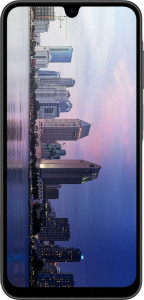
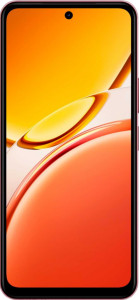
Wireless connectivity reveals a meaningful gap between these two phones. Both support 5G, dual SIM, Wi-Fi 5, and USB Type-C at USB 2.0 speeds — a solid shared baseline. However, the Samsung Galaxy A26 5G pulls ahead in two important areas. Its Bluetooth 5.3 is a generational step above the Vivo Y31 5G's Bluetooth 4.2, offering improved connection stability, lower power consumption, and better support for modern wireless audio and accessory pairing. The A26 also achieves significantly higher cellular speeds — up to 3790 Mbits/s download versus the Y31's 2500 Mbits/s — which, in real-world terms, means faster large file downloads and more headroom on congested 5G networks.
Perhaps the most practically impactful differentiator is NFC. The A26 has it; the Y31 does not. NFC enables contactless payments, quick Bluetooth pairing, and transit card functionality — features that are deeply embedded in daily routines for many users. Its absence on the Y31 is a notable omission at this price tier. The A26 also includes a gyroscope, which the Y31 lacks — a sensor relied upon by augmented reality apps, immersive gaming, and navigation applications for accurate rotational tracking.
Across this category, the Samsung Galaxy A26 5G holds a clear and multi-faceted advantage. The combination of a newer Bluetooth version, faster cellular throughput, NFC support, and a gyroscope sensor adds up to a considerably more capable and future-ready connectivity package than what the Vivo Y31 5G offers.