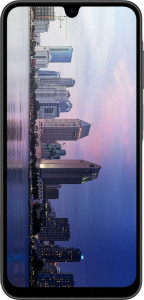
Samsung Galaxy A26 5G
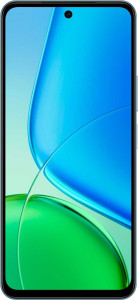
Vivo Y39 5G

Samsung Galaxy A26 5G Vivo Y39 5G

Overview

When choosing between the Samsung Galaxy A26 5G and the Vivo Y39 5G, buyers face a genuinely close mid-range contest with some sharp contrasts worth examining. From display technology and camera capabilities to battery endurance and water resistance, these two 5G smartphones take notably different approaches to hitting a similar price point. Read on as we break down every key specification to help you decide which device best fits your needs.

Common Features

  • Neither product has a rugged build.
  • Neither product can be folded.
  • Both products have a 120Hz refresh rate display.
  • HDR10 support is not available on either product.
  • HDR10+ support is not available on either product.
  • Dolby Vision support is not available on either product.
  • Neither product has a secondary screen.
  • Both products have a touch screen.
  • Both products come with 256GB of internal storage.
  • Both products have 8GB of RAM.
  • Both products have integrated LTE.
  • Both products have a RAM speed of 3200 MHz.
  • Both products support 64-bit processing.
  • Both products support DirectX 12.
  • Both products have integrated graphics.
  • Both products use big.LITTLE technology.
  • Both products have a multi-lens main camera.
  • A dual-tone LED flash is not present on either product.
  • Neither product has a BSI sensor.
  • Both products have a CMOS sensor.
  • Both products support continuous autofocus when recording movies.
  • Both products have phase-detection autofocus for photos.
  • Both products support slow-motion video recording.
  • Both products have a built-in HDR mode.
  • Both products run Android 15.
  • Both products have clipboard warnings.
  • Both products have location privacy options.
  • Both products have camera and microphone privacy options.
  • Mail Privacy Protection is not available on either product.
  • Both products support theme customization.
  • Both products can block app tracking.
  • Cross-site tracking blocking is not available on either product.
  • Neither product supports wireless charging.
  • Both products support fast charging.
  • Neither product has a removable battery.
  • Both products have a battery level indicator.
  • Both products have a rechargeable battery.
  • Neither product has stereo speakers.
  • aptX support is not available on either product.
  • LDAC support is not available on either product.
  • Neither product has a radio.
  • Both products support 5G.
  • Both products support Wi-Fi 4 (802.11n) and Wi-Fi 5 (802.11ac).
  • Both products have dual SIM card slots.
  • Both products have USB Type-C.
  • Both products use USB version 2.
  • Both products have NFC.
  • Both products have a fingerprint scanner.
  • Emergency SOS via satellite is not available on either product.
  • Both products have a video light.
  • Neither product has a sapphire glass display.
  • Neither product has a curved display.
  • Neither product has an e-paper display.

Main Differences

  • Water resistance is rated as Waterproof on Samsung Galaxy A26 5G and Water resistant on Vivo Y39 5G.
  • Weight is 200g on Samsung Galaxy A26 5G and 8.1g on Vivo Y39 5G.
  • Thickness is 7.7mm on Samsung Galaxy A26 5G and 8.1mm on Vivo Y39 5G.
  • Width is 77.5mm on Samsung Galaxy A26 5G and 76.3mm on Vivo Y39 5G.
  • Height is 164mm on Samsung Galaxy A26 5G and 165.7mm on Vivo Y39 5G.
  • Volume is 97.867 cm³ on Samsung Galaxy A26 5G and 102.407571 cm³ on Vivo Y39 5G.
  • The IP rating is IP67 on Samsung Galaxy A26 5G and IP64 on Vivo Y39 5G.
  • The display type is OLED/AMOLED on Samsung Galaxy A26 5G and LCD IPS on Vivo Y39 5G.
  • Screen size is 6.7″ on Samsung Galaxy A26 5G and 6.68″ on Vivo Y39 5G.
  • Pixel density is 385 ppi on Samsung Galaxy A26 5G and 264 ppi on Vivo Y39 5G.
  • Resolution is 1080 x 2340 px on Samsung Galaxy A26 5G and 720 x 1608 px on Vivo Y39 5G.
  • Damage-resistant glass is present on Samsung Galaxy A26 5G but not available on Vivo Y39 5G.
  • Always-On Display is available on Samsung Galaxy A26 5G but not on Vivo Y39 5G.
  • The chipset is Samsung Exynos 1380 on Samsung Galaxy A26 5G and Qualcomm Snapdragon 4 Gen 2 on Vivo Y39 5G.
  • The GPU is Mali G68 MP5 on Samsung Galaxy A26 5G and Adreno 613 on Vivo Y39 5G.
  • CPU speed is 4 x 2.4 & 4 x 2 GHz on Samsung Galaxy A26 5G and 2 x 2.3 & 6 x 2 GHz on Vivo Y39 5G.
  • GPU clock speed is 950 MHz on Samsung Galaxy A26 5G and 955 MHz on Vivo Y39 5G.
  • Semiconductor size is 5nm on Samsung Galaxy A26 5G and 4nm on Vivo Y39 5G.
  • Maximum memory amount is 8GB on Samsung Galaxy A26 5G and 16GB on Vivo Y39 5G.
  • Thermal Design Power (TDP) is 5W on Samsung Galaxy A26 5G and 4W on Vivo Y39 5G.
  • Main camera megapixels are 50, 8, and 2 MP on Samsung Galaxy A26 5G and 50 and 2 MP on Vivo Y39 5G.
  • Main camera wide aperture is f/1.8, f/2.2, and f/2.4 on Samsung Galaxy A26 5G and f/2.4 and f/1.8 on Vivo Y39 5G.
  • Front camera resolution is 13MP on Samsung Galaxy A26 5G and 8MP on Vivo Y39 5G.
  • Optical image stabilization is present on Samsung Galaxy A26 5G but not available on Vivo Y39 5G.
  • Main camera video recording is up to 2160p at 30fps on Samsung Galaxy A26 5G and 1080p at 30fps on Vivo Y39 5G.
  • The number of flash LEDs is 1 on Samsung Galaxy A26 5G and 2 on Vivo Y39 5G.
  • Front camera wide aperture is f/2.2 on Samsung Galaxy A26 5G and f/2.0 on Vivo Y39 5G.
  • Battery capacity is 5000 mAh on Samsung Galaxy A26 5G and 6500 mAh on Vivo Y39 5G.
  • Charging speed is 25W on Samsung Galaxy A26 5G and 44W on Vivo Y39 5G.
  • A charger is not included with Samsung Galaxy A26 5G but is included with Vivo Y39 5G.
  • A 3.5mm audio jack is not present on Samsung Galaxy A26 5G but is available on Vivo Y39 5G.
  • Bluetooth version is 5.3 on Samsung Galaxy A26 5G and 5.1 on Vivo Y39 5G.
  • An external memory slot is available on Samsung Galaxy A26 5G but not on Vivo Y39 5G.
  • Download speed is 3790 Mbits/s on Samsung Galaxy A26 5G and 2500 Mbits/s on Vivo Y39 5G.
  • Upload speed is 1280 Mbits/s on Samsung Galaxy A26 5G and 900 Mbits/s on Vivo Y39 5G.
Specs Comparison
Samsung Galaxy A26 5G

Samsung Galaxy A26 5G

Vivo Y39 5G

Vivo Y39 5G

Design:
water resistance Waterproof Water resistant
weight 200 g 8.1 g
thickness 7.7 mm 8.1 mm
width 77.5 mm 76.3 mm
height 164 mm 165.7 mm
volume 97.867 cm³ 102.407571 cm³
Ingress Protection (IP) rating IP67 IP64
has a rugged build
can be folded

The most significant differentiator in this group is water protection. The Samsung Galaxy A26 5G carries a full IP67 rating, meaning it is dust-tight and can withstand immersion in water — a meaningful real-world advantage for accidental drops in sinks, puddles, or rain. The Vivo Y39 5G, by contrast, holds an IP64 rating, which offers only partial dust resistance and protection against water splashing from any direction, but no immersion tolerance. For users who want peace of mind in wet conditions, the Galaxy A26 5G holds a clear edge here.

On physical dimensions, the two phones are closely matched in footprint. The Vivo Y39 5G is marginally taller (165.7 mm vs 164 mm) and slightly narrower (76.3 mm vs 77.5 mm), while the Galaxy A26 5G is thinner at 7.7 mm compared to 8.1 mm — a subtle but tactile difference in hand. The Galaxy A26 5G also has a notably smaller volume (97.87 cm³ vs 102.41 cm³), meaning it is a more compact package overall despite having similar screen real estate.

Neither device features a rugged build or foldable form factor, so both target the mainstream consumer segment. Overall, the Galaxy A26 5G has a clear design advantage: it is slimmer, more compact, and most importantly, offers meaningfully stronger water protection with its IP67 certification versus the Y39 5G's more limited IP64 splash resistance.

Display:
Display type OLED/AMOLED LCD, IPS
screen size 6.7" 6.68"
pixel density 385 ppi 264 ppi
resolution 1080 x 2340 px 720 x 1608 px
refresh rate 120Hz 120Hz
has branded damage-resistant glass
supports HDR10
supports HDR10+
Always-On Display
supports Dolby Vision
Has a secondary screen
has a touch screen

Panel technology is where these two phones diverge most sharply. The Samsung Galaxy A26 5G uses an AMOLED display, which delivers true blacks, richer contrast, and more vibrant colors by lighting pixels individually — ideal for media consumption and outdoor visibility. The Vivo Y39 5G relies on an IPS LCD panel, which is a competent but fundamentally different technology that cannot match AMOLED's contrast depth or power efficiency when displaying dark content.

Resolution tells a similarly one-sided story. The Galaxy A26 5G renders at 1080 x 2340 px with a pixel density of 385 ppi, resulting in sharp, detailed text and imagery. The Y39 5G operates at 720 x 1608 px and only 264 ppi — a noticeable step down that can manifest as softer edges and less crisp text, especially at close viewing distances. Both screens are near-identical in physical size (~6.7″), so the resolution gap is felt more acutely on the Y39 5G since the same area holds fewer pixels. The shared 120Hz refresh rate is one genuine point of parity, ensuring smooth scrolling and animations on both devices.

Two further advantages compound the Galaxy A26 5G's lead: it includes Always-On Display functionality for at-a-glance notifications without fully waking the screen, and it features branded damage-resistant glass which the Y39 5G lacks. Taken together, the Galaxy A26 5G holds a commanding advantage in this category across panel quality, sharpness, and durability.

Performance:
internal storage 256GB 256GB
RAM 8GB 8GB
Chipset (SoC) name Samsung Exynos 1380 Qualcomm Snapdragon 4 Gen 2
GPU name Mali G68 MP5 Adreno 613
CPU speed 4 x 2.4 & 4 x 2 GHz 2 x 2.3 & 6 x 2 GHz
GPU clock speed 950 MHz 955 MHz
Has integrated LTE
RAM speed 3200 MHz 3200 MHz
semiconductor size 5 nm 4 nm
Supports 64-bit
DirectX version DirectX 12 DirectX 12
Has integrated graphics
Uses big.LITTLE technology
CPU threads 8 threads 8 threads
Has TrustZone
OpenCL version 2 2
maximum memory amount 8GB 16GB
Thermal Design Power (TDP) 5W 4W
DDR memory version 5 5

Both phones ship with 8GB of RAM and 256GB of storage, and share the same DDR5 memory speed, thread count, and API support — so on paper, day-to-day multitasking starts from an equal footing. The real divergence lies in the silicon underneath. The Vivo Y39 5G runs on Qualcomm's Snapdragon 4 Gen 2 built on a 4nm process, while the Samsung Galaxy A26 5G uses the Exynos 1380 on a 5nm node. The smaller fabrication process on the Y39 5G translates directly to better power efficiency — and the TDP figures confirm this: 4W for the Y39 5G versus 5W for the Galaxy A26 5G, meaning the Vivo chip runs cooler and draws less power under load.

CPU configuration also differs in a meaningful way. The Exynos 1380 in the A26 5G offers 4 performance cores at 2.4 GHz alongside 4 efficiency cores, giving it more high-frequency cores for demanding tasks. The Snapdragon 4 Gen 2 counters with only 2 performance cores at 2.3 GHz but leans on 6 efficiency cores — a configuration tuned more for sustained, everyday workloads than peak bursts. GPU clock speeds are essentially identical at ~950 MHz, so graphics-intensive use cases are unlikely to feel dramatically different between the two.

One spec stands out exclusively for the Y39 5G: a maximum memory ceiling of 16GB versus 8GB on the A26 5G. If the Y39 5G supports virtual RAM expansion up to that ceiling, it gains a practical multitasking advantage over time. Overall, this group is competitive, but the Y39 5G holds a narrow edge through its more efficient 4nm chip, lower thermal output, and higher memory headroom.

Cameras:
megapixels (main camera) 50 & 8 & 2 MP 50 & 2 MP
wide aperture (main camera) 1.8 & 2.2 & 2.4f 2.4 & 1.8f
Has a dual-lens (or multi-lens) main camera
megapixels (front camera) 13MP 8MP
has built-in optical image stabilization
video recording (main camera) 2160 x 30 fps 1080 x 30 fps
Has a dual-tone LED flash
number of flash LEDs 1 2
has a BSI sensor
has a CMOS sensor
has continuous autofocus when recording movies
Has phase-detection autofocus for photos
supports slow-motion video recording
has a built-in HDR mode
has manual exposure
has a flash
optical zoom 0x 0x
has manual ISO
has a serial shot mode
has manual focus
has a front camera
Has laser autofocus
Shoots 360° panorama
has manual white balance
shoots raw
has touch autofocus
has manual shutter speed
can create panoramas in-camera
wide aperture (front camera) 2.2f 2f
Has timelapse function
Has a front-facing LED flash
has a dual-lens (or multi-lens) front camera
supports HDR10 recording
supports Dolby Vision recording
has a front-facing camera under the display
Has a RGB LED flash
has 3D photo/video recording capabilities

A few key differences separate these two camera systems, and they all favour the Samsung Galaxy A26 5G. Most critically, the A26 5G supports 4K (2160p) video recording at 30fps, while the Vivo Y39 5G tops out at 1080p — a meaningful gap for anyone who wants future-proof footage or simply more detail when cropping clips. Alongside this, the A26 5G includes optical image stabilization (OIS), which physically compensates for hand shake during both photos and video. The Y39 5G has no OIS, making it more susceptible to blur in low light or during handheld recording.

The rear camera array also differs in depth. The A26 5G fields a triple-camera setup — 50MP main, 8MP ultrawide, and a 2MP auxiliary lens — giving users genuine compositional versatility with a wide-angle option. The Y39 5G carries only a dual-camera system (50MP main and 2MP), with no ultrawide lens. For selfies, the A26 5G again leads with a 13MP front camera versus the Y39 5G's 8MP, which translates to more detail and greater cropping flexibility for portrait shots.

The Y39 5G's sole hardware edge in this group is its dual LED flash versus the A26 5G's single LED, which can produce slightly more even illumination in dark scenes — but this is a minor point against the broader camera gap. Across video capability, stabilization, lens count, and front camera resolution, the Galaxy A26 5G holds a clear and comprehensive advantage.

Operating system:
Android version Android 15 Android 15
has clipboard warnings
has location privacy options
has camera/microphone privacy options
has Mail Privacy Protection
has theme customization
can block app tracking
blocks cross-site tracking
has on-device machine learning
has notification permissions
has media picker
Can play games while they download
has dark mode
has Wi-Fi password sharing
has battery health check
has an extra dim mode
has focus modes
has dynamic theming
can offload apps
Has customizable notifications
has Live Text
has full-page screenshots
supports split screen
gets direct OS updates
has PiP
Can be used as a PC
Has sharing intents
has a child lock
Supports widgets
Is free and open source
Has offline voice recognition
has voice commands
Tracks the current position of a mobile device
is a multi-user system
has Quick Start

Rarely does a spec group produce a complete dead heat, but the operating system category is exactly that. Both the Samsung Galaxy A26 5G and the Vivo Y39 5G run Android 15 and share an identical feature set across every single tracked specification — privacy controls, productivity tools, and customization options included. Neither receives direct OS updates, and neither supports features like Wi-Fi password sharing, focus modes, or PC mode.

What they do share is a well-rounded Android experience: both offer dynamic theming, split-screen multitasking, picture-in-picture, on-device machine learning, and granular privacy controls covering location, camera, and microphone access. For everyday users, this means neither phone has a software-side disadvantage — the feature parity is absolute based on the provided data.

This group is a complete tie. Any difference in the actual software experience between these two devices — such as the look and feel of their respective Android skins — falls outside the scope of the provided specifications and cannot be assessed here.

Battery:
battery power 5000 mAh 6500 mAh
has wireless charging
Supports fast charging
charging speed 25W 44W
comes with a charger
has a removable battery
has a battery level indicator
has a rechargeable battery

Battery capacity is where the Vivo Y39 5G makes its most compelling argument of the entire comparison. Its 6500 mAh cell is a full 30% larger than the 5000 mAh unit in the Samsung Galaxy A26 5G — a gap substantial enough to translate into real, noticeable differences in screen-on time and days between charges. For heavy users or those who spend long days away from a power source, this extra headroom is a genuine practical advantage.

Charging speed reinforces the Y39 5G's edge. At 44W, it charges considerably faster than the A26 5G's 25W — meaning a larger battery that also replenishes more quickly. The Y39 5G additionally includes a charger in the box, while the A26 5G does not, adding an immediate out-of-pocket cost consideration for Galaxy buyers. Neither phone supports wireless charging, so that feature is off the table for both.

This category belongs clearly to the Vivo Y39 5G. It holds advantages on every meaningful spec here — bigger battery, faster wired charging, and a bundled charger — making it the stronger choice for users who prioritize endurance and charging convenience.

Audio:
has a socket for a 3.5 mm audio jack
has stereo speakers
has aptX
has LDAC
has aptX HD
has aptX Adaptive
has aptX Lossless
Has a radio

The audio category is lean on differentiators, but the one that exists is clear-cut. The Vivo Y39 5G retains a 3.5mm headphone jack, while the Samsung Galaxy A26 5G omits it entirely. For users who own wired headphones or earphones — or who want to listen without keeping a Bluetooth device charged — this is a meaningful practical distinction. It also eliminates the need for a USB-C dongle on the Y39 5G, reducing everyday friction.

Beyond that single difference, the two phones are evenly matched — and quite limited. Neither features stereo speakers, and neither supports any high-resolution Bluetooth audio codec such as aptX, aptX HD, LDAC, or their variants. This means wireless audio quality is capped at standard Bluetooth transmission for both devices, and spatial or immersive speaker sound is absent on each.

Given the shared limitations, the Vivo Y39 5G takes a narrow but unambiguous edge in this category solely by virtue of its headphone jack — a feature that remains relevant for a significant portion of users and one the Galaxy A26 5G simply cannot match.

Connectivity & Features:
release date March 2025 March 2025
has 5G support
Wi-Fi version Wi-Fi 4 (802.11n), Wi-Fi 5 (802.11ac) Wi-Fi 4 (802.11n), Wi-Fi 5 (802.11ac)
SIM cards 2 SIM 2 SIM
Bluetooth version 5.3 5.1
has an external memory slot
Has USB Type-C
USB version 2 2
has NFC
download speed 3790 MBits/s 2500 MBits/s
upload speed 1280 MBits/s 900 MBits/s
Has a fingerprint scanner
has emergency SOS via satellite
has crash detection
is DLNA-certified
has a gyroscope
supports ANT+
Has a heart rate monitor
has GPS
has a compass
supports Wi-Fi
Has an infrared sensor
has an accelerometer
has a cellular module
Has a barometer
has an HDMI output
Uses 3D facial recognition
Has an iris scanner
Stylus included
supports Galileo
Has motion tracking
Has optical tracking
Has a built-in projector

Much of the connectivity foundation is shared here — both phones support 5G, dual SIM, NFC, Wi-Fi 5, USB-C, and an identical sensor suite covering GPS, gyroscope, compass, and accelerometer. For most users, this common ground means neither phone feels limited in everyday wireless and location use. The differences, however, are worth noting. The Samsung Galaxy A26 5G runs Bluetooth 5.3 versus 5.1 on the Vivo Y39 5G — a newer version that offers incremental improvements in connection stability and energy efficiency, particularly relevant for users with multiple paired devices.

Cellular throughput also separates the two. The A26 5G supports download speeds up to 3790 Mbits/s and upload speeds of 1280 Mbits/s, compared to 2500 Mbits/s down and 900 Mbits/s up on the Y39 5G. While real-world 5G speeds are constrained by carrier networks rather than device ceilings in most markets, the A26 5G's higher modem ceiling leaves more headroom on advanced 5G infrastructure.

A final but practical differentiator: the A26 5G supports external memory expansion via a microSD slot, while the Y39 5G does not. Given both ship with 256GB of storage this may not be a daily concern, but the option to expand cheaply is a flexibility advantage the Y39 5G cannot offer. Across Bluetooth version, modem speed, and storage expandability, the Galaxy A26 5G holds a clear overall edge in this category.

Miscellaneous:
has a video light
Has sapphire glass display
Has a curved display
Has an e-paper display

The miscellaneous category offers no differentiation whatsoever between these two devices. Both the Samsung Galaxy A26 5G and the Vivo Y39 5G share identical results across every tracked spec: each has a video light, and neither features a sapphire glass display, a curved screen, or an e-paper panel.

This is a complete tie — there is no basis in the provided data to favour one device over the other in this group.

Comparison Summary & Verdict

After a thorough side-by-side look, each phone has a clear audience. The Samsung Galaxy A26 5G stands out for users who prioritize display quality, offering a vibrant OLED screen with a higher 385 ppi pixel density, a stronger IP67 waterproof rating, built-in optical image stabilization, and 4K video recording — all complemented by an Always-On Display and damage-resistant glass. The Vivo Y39 5G, on the other hand, appeals strongly to users who need longer battery life thanks to its larger 6500 mAh cell and faster 44W charging, plus a more generous maximum memory ceiling of 16GB, a 3.5mm headphone jack, and a bundled charger in the box. In short, choose the Samsung Galaxy A26 5G for a premium screen and camera experience, and opt for the Vivo Y39 5G if battery endurance and everyday practicality are your top priorities.

Samsung Galaxy A26 5G
Buy Samsung Galaxy A26 5G if...

Buy the Samsung Galaxy A26 5G if you want a sharper OLED display with Always-On support, stronger IP67 waterproofing, optical image stabilization, and 4K video recording capability.

Vivo Y39 5G
Buy Vivo Y39 5G if...

Buy the Vivo Y39 5G if you prioritize a larger 6500 mAh battery, faster 44W charging, a 3.5mm headphone jack, and getting a charger included in the box.