Samsung Galaxy A26 5G
Vivo Y400 4G

Samsung Galaxy A26 5G Vivo Y400 4G

Overview

Welcome to our in-depth spec comparison between the Samsung Galaxy A26 5G and the Vivo Y400 4G. Both phones share a solid foundation — OLED displays, 120Hz refresh rates, 256GB storage, and Android 15 — yet they diverge sharply in areas like chipset performance, battery capacity, camera capabilities, and network connectivity. Read on to discover which device better matches your priorities.

Common Features

  • Both phones are waterproof and share the same IP-rated water resistance category.
  • Neither phone has a rugged build.
  • Neither phone can be folded.
  • Both phones feature an OLED/AMOLED display.
  • Both phones have a 120Hz refresh rate.
  • HDR10+ support is not available on either phone.
  • Always-On Display is available on both phones.
  • Dolby Vision support is not available on either phone.
  • Neither phone has a secondary screen.
  • Both phones have a touchscreen.
  • Both phones come with 256GB of internal storage.
  • Both phones have 8GB of RAM.
  • Both phones support LTE connectivity.
  • Both phones support 64-bit processing.
  • Both phones use DirectX 12.
  • Both phones have integrated graphics.
  • Both phones use big.LITTLE CPU technology.
  • Both phones have 8 CPU threads.
  • Both phones run Android 15.
  • Both phones have a multi-lens main camera system.
  • Dual-tone LED flash is not available on either phone.
  • Both phones have a single LED flash.
  • Both phones have a CMOS sensor.
  • Optical image stabilization via BSI sensor is not present on either phone.
  • Both phones support continuous autofocus during video recording.
  • Both phones support phase-detection autofocus for photos.
  • Both phones support slow-motion video recording.
  • Clipboard warnings are present on both phones.
  • Location privacy options are available on both phones.
  • Camera and microphone privacy options are available on both phones.
  • Mail Privacy Protection is not available on either phone.
  • Theme customization is available on both phones.
  • App tracking can be blocked on both phones.
  • Cross-site tracking blocking is not available on either phone.
  • Wireless charging is not supported on either phone.
  • Both phones support fast charging.
  • Neither phone has a removable battery.
  • Both phones have a battery level indicator.
  • Both phones have a rechargeable battery.
  • A 3.5mm audio jack is not present on either phone.
  • aptX support is not available on either phone.
  • LDAC support is not available on either phone.
  • aptX HD support is not available on either phone.
  • aptX Adaptive support is not available on either phone.
  • aptX Lossless support is not available on either phone.
  • Neither phone has a built-in radio.
  • Both phones support Wi-Fi 4 (802.11n) and Wi-Fi 5 (802.11ac).
  • Both phones support dual SIM cards.
  • Both phones have a USB Type-C port.
  • Both phones use USB version 2.
  • NFC is available on both phones.
  • Both phones have a fingerprint scanner.
  • Emergency SOS via satellite is not available on either phone.
  • Crash detection is not available on either phone.
  • Both phones have a video light.
  • Neither phone has a sapphire glass display.
  • Neither phone has an e-paper display.

Main Differences

  • Weight is 200g on Samsung Galaxy A26 5G and 198g on Vivo Y400 4G.
  • Thickness is 7.7mm on Samsung Galaxy A26 5G and 7.9mm on Vivo Y400 4G.
  • Width is 77.5mm on Samsung Galaxy A26 5G and 75.3mm on Vivo Y400 4G.
  • Height is 164mm on Samsung Galaxy A26 5G and 162.3mm on Vivo Y400 4G.
  • Volume is 97.867 cm³ on Samsung Galaxy A26 5G and 96.547401 cm³ on Vivo Y400 4G.
  • IP rating is IP67 on Samsung Galaxy A26 5G and IP68 on Vivo Y400 4G.
  • Screen size is 6.7″ on Samsung Galaxy A26 5G and 6.67″ on Vivo Y400 4G.
  • Pixel density is 385 ppi on Samsung Galaxy A26 5G and 395 ppi on Vivo Y400 4G.
  • Resolution is 1080 x 2340 px on Samsung Galaxy A26 5G and 1080 x 2400 px on Vivo Y400 4G.
  • Damage-resistant glass is present on Samsung Galaxy A26 5G but not available on Vivo Y400 4G.
  • HDR10 support is present on Vivo Y400 4G but not available on Samsung Galaxy A26 5G.
  • The chipset is Samsung Exynos 1380 on Samsung Galaxy A26 5G and Qualcomm Snapdragon 685 4G on Vivo Y400 4G.
  • The GPU is Mali G68 MP5 on Samsung Galaxy A26 5G and Adreno 610 on Vivo Y400 4G.
  • CPU speed is 4 x 2.4 & 4 x 2 GHz on Samsung Galaxy A26 5G and 4 x 2.8 & 4 x 1.9 GHz on Vivo Y400 4G.
  • Geekbench 6 multi-core score is 2758 on Samsung Galaxy A26 5G and 1510 on Vivo Y400 4G.
  • Geekbench 6 single-core score is 1007 on Samsung Galaxy A26 5G and 473 on Vivo Y400 4G.
  • Geekbench 5 multi-core score is 2634 on Samsung Galaxy A26 5G and 1787 on Vivo Y400 4G.
  • Geekbench 5 single-core score is 780 on Samsung Galaxy A26 5G and 442 on Vivo Y400 4G.
  • GPU clock speed is 950 MHz on Samsung Galaxy A26 5G and 1260 MHz on Vivo Y400 4G.
  • RAM speed is 3200 MHz on Samsung Galaxy A26 5G and 2133 MHz on Vivo Y400 4G.
  • Semiconductor size is 5nm on Samsung Galaxy A26 5G and 6nm on Vivo Y400 4G.
  • Maximum memory bandwidth is 51.2 GB/s on Samsung Galaxy A26 5G and 17 GB/s on Vivo Y400 4G.
  • Maximum supported memory amount is 8GB on Samsung Galaxy A26 5G and 16GB on Vivo Y400 4G.
  • Main camera megapixels are 50 & 8 & 2 MP on Samsung Galaxy A26 5G and 50 & 2 MP on Vivo Y400 4G.
  • Main camera wide aperture is f/1.8, f/2.2, and f/2.4 on Samsung Galaxy A26 5G and f/2.4 and f/1.8 on Vivo Y400 4G.
  • Front camera resolution is 13MP on Samsung Galaxy A26 5G and 8MP on Vivo Y400 4G.
  • Built-in optical image stabilization is present on Samsung Galaxy A26 5G but not available on Vivo Y400 4G.
  • Main camera video recording capability is 2160p at 30fps on Samsung Galaxy A26 5G and 1080p at 30fps on Vivo Y400 4G.
  • Front camera aperture is f/2.2 on Samsung Galaxy A26 5G and f/2.1 on Vivo Y400 4G.
  • Battery capacity is 5000 mAh on Samsung Galaxy A26 5G and 6000 mAh on Vivo Y400 4G.
  • Charging speed is 25W on Samsung Galaxy A26 5G and 44W on Vivo Y400 4G.
  • Stereo speakers are present on Vivo Y400 4G but not available on Samsung Galaxy A26 5G.
  • 5G support is present on Samsung Galaxy A26 5G but not available on Vivo Y400 4G.
  • Bluetooth version is 5.3 on Samsung Galaxy A26 5G and 5.0 on Vivo Y400 4G.
  • External memory slot is present on Samsung Galaxy A26 5G but not available on Vivo Y400 4G.
  • Download speed is 3790 Mbit/s on Samsung Galaxy A26 5G and 390 Mbit/s on Vivo Y400 4G.
  • Upload speed is 1280 Mbit/s on Samsung Galaxy A26 5G and 150 Mbit/s on Vivo Y400 4G.
  • A curved display is present on Vivo Y400 4G but not available on Samsung Galaxy A26 5G.
Specs Comparison
Samsung Galaxy A26 5G

Samsung Galaxy A26 5G

Vivo Y400 4G

Vivo Y400 4G

Design:
water resistance Waterproof Waterproof
weight 200 g 198 g
thickness 7.7 mm 7.9 mm
width 77.5 mm 75.3 mm
height 164 mm 162.3 mm
volume 97.867 cm³ 96.547401 cm³
Ingress Protection (IP) rating IP67 IP68
has a rugged build
can be folded

Both the Samsung Galaxy A26 5G and the Vivo Y400 4G are waterproof and share a broadly similar physical profile, but a few meaningful differences emerge on closer inspection. The most significant is the water resistance rating: the Vivo carries an IP68 certification versus the Samsung's IP67. In practical terms, IP68 allows for submersion at greater depths and/or for longer durations than IP67, making the Vivo the more capable device in wet or aquatic environments — a genuine real-world advantage for users who frequently work or exercise near water.

In terms of physical dimensions, the two phones are closely matched but not identical. The Samsung is slightly thinner at 7.7 mm compared to the Vivo's 7.9 mm, which can marginally affect how the phone feels sliding in and out of a pocket. However, the Vivo is more compact overall — narrower at 75.3 mm versus 77.5 mm and shorter at 162.3 mm versus 164 mm — resulting in a slightly smaller total volume. For one-handed use or smaller hands, the Vivo's tighter footprint offers a subtle ergonomic benefit. The weight difference is negligible: 198 g for the Vivo versus 200 g for the Samsung.

Overall, the Vivo Y400 4G holds a clear edge in this category, primarily due to its superior IP68 water resistance rating and its more compact form factor. The Samsung counters with a marginally slimmer profile, but that advantage is minor compared to the Vivo's lead on durability and handling comfort.

Display:
Display type OLED/AMOLED OLED/AMOLED
screen size 6.7" 6.67"
pixel density 385 ppi 395 ppi
resolution 1080 x 2340 px 1080 x 2400 px
refresh rate 120Hz 120Hz
has branded damage-resistant glass
supports HDR10
supports HDR10+
Always-On Display
supports Dolby Vision
Has a secondary screen
has a touch screen

At a foundational level, these two displays are closely matched: both use OLED/AMOLED panels, both run at 120Hz, and both support Always-On Display. Screen sizes are virtually identical — 6.7″ on the Samsung versus 6.67″ on the Vivo — and neither difference in size nor the marginal pixel density gap (395 ppi vs 385 ppi) will be distinguishable to the human eye in everyday use. For most users, the day-to-day visual experience will feel essentially equivalent between the two.

Where the products diverge is on two opposing but meaningful fronts. The Samsung includes branded damage-resistant glass — a physical layer of protection against scratches and drops that the Vivo lacks entirely. This is a tangible, long-term durability advantage that reduces reliance on screen protectors. The Vivo, on the other hand, supports HDR10, which means compatible streaming content — Netflix, YouTube, and similar platforms — will be rendered with a wider dynamic range and more accurate highlights and shadows. The Samsung supports neither HDR10 nor HDR10+, so it misses out on this visual upgrade entirely when consuming HDR-graded media.

The result is a genuine trade-off rather than a clear-cut winner. Users who prioritize screen longevity and physical resilience will favor the Samsung Galaxy A26 5G. Those who consume a lot of streaming video and want the most cinematic picture quality from their content should lean toward the Vivo Y400 4G. Neither has an overall advantage — the decision hinges entirely on what matters more to the individual user.

Performance:
internal storage 256GB 256GB
RAM 8GB 8GB
Chipset (SoC) name Samsung Exynos 1380 Qualcomm Snapdragon 685 4G
GPU name Mali G68 MP5 Adreno 610
CPU speed 4 x 2.4 & 4 x 2 GHz 4 x 2.8 & 4 x 1.9 GHz
Geekbench 6 result (multi) 2758 1510
Geekbench 6 result (single) 1007 473
Geekbench 5 result (multi) 2634 1787
Geekbench 5 result (single) 780 442
GPU clock speed 950 MHz 1260 MHz
Has integrated LTE
RAM speed 3200 MHz 2133 MHz
semiconductor size 5 nm 6 nm
Supports 64-bit
DirectX version DirectX 12 DirectX 12
Has integrated graphics
Uses big.LITTLE technology
CPU threads 8 threads 8 threads
Has NX bit
Has TrustZone
maximum memory bandwidth 51.2 GB/s 17 GB/s
OpenCL version 2 2
maximum memory amount 8GB 16GB
DDR memory version 5 4

The performance gap between these two devices is substantial and clearly favors the Samsung Galaxy A26 5G. Its Exynos 1380 chip, built on a 5 nm process, outpaces the Vivo's Snapdragon 685 — a 6 nm chip — across every benchmark metric. In Geekbench 6, the Samsung scores 1007 single-core and 2758 multi-core, compared to the Vivo's 473 single-core and 1510 multi-core. Single-core performance is especially telling for real-world responsiveness — app launches, UI animations, and general snappiness — and the Samsung is more than twice as fast here. A smaller fabrication node also typically translates to better power efficiency, meaning the A26 achieves this performance advantage while generating less heat.

The memory subsystem reinforces this divide. The Samsung uses LPDDR5 RAM at 3200 MHz with a maximum bandwidth of 51.2 GB/s, versus the Vivo's LPDDR4 at 2133 MHz and a notably constrained 17 GB/s bandwidth ceiling. In practice, faster memory bandwidth reduces bottlenecks when multitasking, loading large assets, or running GPU-intensive workloads. The Vivo does list a higher maximum memory ceiling of 16 GB versus the Samsung's 8 GB, but at the current 8 GB configuration both ship with, this advantage is theoretical rather than tangible for users today. On the GPU side, the Samsung's Mali G68 MP5 lags the Vivo's Adreno 610 in raw clock speed, but the broader architectural and bandwidth advantages of the Exynos platform more than compensate in overall graphics workloads.

The Samsung Galaxy A26 5G holds a decisive performance advantage in this category. For users who care about long-term smoothness, demanding apps, or gaming, the A26's silicon is meaningfully more capable — and its efficiency edge suggests it will age better over time as software demands grow.

Cameras:
megapixels (main camera) 50 & 8 & 2 MP 50 & 2 MP
wide aperture (main camera) 1.8 & 2.2 & 2.4f 2.4 & 1.8f
Has a dual-lens (or multi-lens) main camera
megapixels (front camera) 13MP 8MP
has built-in optical image stabilization
video recording (main camera) 2160 x 30 fps 1080 x 30 fps
Has a dual-tone LED flash
number of flash LEDs 1 1
has a BSI sensor
has a CMOS sensor
has continuous autofocus when recording movies
Has phase-detection autofocus for photos
supports slow-motion video recording
has a built-in HDR mode
has manual exposure
has a flash
optical zoom 0x 0x
has manual ISO
has a serial shot mode
has manual focus
has a front camera
Has laser autofocus
Shoots 360° panorama
has manual white balance
shoots raw
has touch autofocus
has manual shutter speed
can create panoramas in-camera
wide aperture (front camera) 2.2f 2.1f
Has timelapse function
Has a front-facing LED flash
has a dual-lens (or multi-lens) front camera
supports HDR10 recording
supports Dolby Vision recording
has a front-facing camera under the display
Has a RGB LED flash
has 3D photo/video recording capabilities

Scratch the surface of the shared 50 MP primary sensor and the camera systems diverge quickly. The Samsung Galaxy A26 5G fields a triple-lens rear setup — 50 MP + 8 MP + 2 MP — while the Vivo Y400 4G carries only two lenses at 50 MP + 2 MP. That extra 8 MP sensor on the Samsung is almost certainly an ultrawide, which meaningfully expands compositional flexibility for landscapes, architecture, and group shots — a capability the Vivo simply cannot replicate. More critically, the Samsung includes optical image stabilization (OIS), which the Vivo lacks. OIS physically compensates for hand movement during capture, producing sharper low-light photos and notably smoother video footage — one of the most impactful real-world camera features at this price tier.

The video recording gap is equally hard to ignore. The Samsung shoots up to 4K at 30 fps, while the Vivo tops out at 1080p at 30 fps. For users who record video regularly — travel, events, social content — 4K provides significantly more detail and gives future-proofing headroom for cropping or reframing footage in post. On the front camera, the Samsung again pulls ahead with a 13 MP selfie shooter versus the Vivo's 8 MP, which will produce more detailed selfies and clearer video calls. The Vivo's front aperture of f/2.1 is marginally wider than the Samsung's f/2.2, offering a slight edge in low-light selfie scenarios, but this is a minor offset against the resolution disadvantage.

The Samsung Galaxy A26 5G is the clear winner here, and it isn't particularly close. OIS, a third rear lens, 4K video, and a higher-resolution front camera collectively represent a substantial imaging advantage across nearly every shooting scenario that matters to everyday users.

Operating system:
Android version Android 15 Android 15
has clipboard warnings
has location privacy options
has camera/microphone privacy options
has Mail Privacy Protection
has theme customization
can block app tracking
blocks cross-site tracking
has on-device machine learning
has notification permissions
has media picker
Can play games while they download
has dark mode
has Wi-Fi password sharing
has battery health check
has an extra dim mode
has focus modes
has dynamic theming
can offload apps
Has customizable notifications
has Live Text
has full-page screenshots
supports split screen
gets direct OS updates
has PiP
Can be used as a PC
Has sharing intents
has a child lock
Supports widgets
Is free and open source
Has offline voice recognition
has voice commands
Tracks the current position of a mobile device
is a multi-user system
has Quick Start

Rarely does a spec group produce such a definitive result: based on the provided data, the Samsung Galaxy A26 5G and the Vivo Y400 4G run identical operating system feature sets across every single listed attribute. Both ship with Android 15, and both support the same breadth of privacy controls, productivity tools, and system-level features — from location and camera/microphone privacy options to split-screen multitasking, Picture-in-Picture, dynamic theming, and on-device machine learning.

The shared feature set is notably well-rounded for this segment. Privacy-conscious users get granular controls including app tracking blocking and clipboard warnings on both devices. Power users benefit from multi-user support, offloadable apps, and customizable notifications. Neither device receives direct OS updates — meaning both rely on manufacturer-mediated update pipelines rather than getting patches straight from Google — and neither supports Wi-Fi password sharing or focus modes, which are minor but real omissions present equally on both sides.

This category is a complete tie. There is no differentiator — not even a single feature — that distinguishes one device from the other based on the provided specs. Buyers for whom software features are a deciding factor will need to look to other specification groups to make their choice.

Battery:
battery power 5000 mAh 6000 mAh
has wireless charging
Supports fast charging
charging speed 25W 44W
has a removable battery
has a battery level indicator
has a rechargeable battery

Battery is one of the most practically felt specs in daily smartphone use, and the Vivo Y400 4G holds a meaningful double advantage here. Its 6000 mAh cell is 20% larger than the Samsung Galaxy A26 5G's 5000 mAh — a gap that, in real-world terms, can translate to several additional hours of screen-on time or an extra day of light use between charges. For heavy users, travelers, or anyone who spends long stretches away from a charger, that headroom is genuinely valuable.

The charging speed gap is equally notable. The Vivo supports 44W fast charging versus the Samsung's 25W, which means the Vivo can replenish its larger battery significantly faster. A roughly 75% speed advantage in charging rate helps offset the larger capacity — topping up quickly during a short break becomes far more practical. The Samsung's 25W, while functional, is on the slower end of fast charging by current mid-range standards. Both devices lack wireless charging, so neither gains an edge there.

The Vivo Y400 4G wins this category outright — it offers more capacity and faster replenishment simultaneously. For users who rank endurance and charging convenience highly, this is one of the Vivo's strongest arguments over the Samsung in this comparison.

Audio:
has a socket for a 3.5 mm audio jack
has stereo speakers
has aptX
has LDAC
has aptX HD
has aptX Adaptive
has aptX Lossless
Has a radio

The audio spec sheet is lean for both devices, but one difference stands out immediately: the Vivo Y400 4G features stereo speakers, while the Samsung Galaxy A26 5G does not. Stereo speakers produce sound from two separate channels, creating a wider, more immersive soundstage for media consumption, gaming, and speakerphone calls. On a mono-speaker device like the Samsung, all audio is routed through a single driver — noticeably flatter and less spatial by comparison, particularly when the phone is held in landscape orientation for video or gaming.

Everything else in this category is identical — and notably limited. Neither phone includes a 3.5 mm headphone jack, so wired audio requires an adapter or USB-C headphones on both. Neither supports high-resolution Bluetooth codecs like aptX HD or LDAC, capping wireless audio quality at standard levels for both devices. There is no FM radio on either side.

Given how sparse this category is, the Vivo Y400 4G takes a clear win on the strength of that single but impactful differentiator. Stereo speakers are one of the most immediately perceptible quality-of-life upgrades in everyday phone use, and the Samsung's absence of them is a genuine shortcoming for anyone who frequently watches video or listens to audio without headphones.

Connectivity & Features:
release date March 2025 August 2025
has 5G support
Wi-Fi version Wi-Fi 4 (802.11n), Wi-Fi 5 (802.11ac) Wi-Fi 4 (802.11n), Wi-Fi 5 (802.11ac)
SIM cards 2 SIM 2 SIM
Bluetooth version 5.3 5
has an external memory slot
Has USB Type-C
USB version 2 2
has NFC
download speed 3790 MBits/s 390 MBits/s
upload speed 1280 MBits/s 150 MBits/s
Has a fingerprint scanner
has emergency SOS via satellite
has crash detection
is DLNA-certified
has a gyroscope
supports ANT+
Has a heart rate monitor
has GPS
has a compass
supports Wi-Fi
Has an infrared sensor
has an accelerometer
has a cellular module
Has a barometer
has an HDMI output
Uses 3D facial recognition
Has an iris scanner
Stylus included
supports Galileo
Has motion tracking
Has optical tracking
Has a built-in projector

The connectivity gap between these two devices is dominated by one fundamental divide: the Samsung Galaxy A26 5G supports 5G, while the Vivo Y400 4G is limited to 4G LTE. This difference is reflected directly in their cellular speeds — the Samsung's theoretical download reaches 3790 Mbits/s versus the Vivo's 390 Mbits/s, nearly a tenfold difference. For users in areas with 5G coverage, this translates to dramatically faster mobile data, lower latency for streaming and gaming, and better future-proofing as 4G networks gradually get deprioritized. The Samsung also edges ahead on Bluetooth 5.3 versus the Vivo's 5.0, a newer version that brings improvements to connection stability and coexistence with other wireless signals.

Storage flexibility is another area where the Samsung pulls ahead. It includes an external memory slot, allowing users to expand storage via a microSD card — a practical and cost-effective option for anyone who stores large media libraries locally. The Vivo offers no such expansion, leaving users locked to the base internal storage. Both phones otherwise share a nearly identical sensor and feature set: dual SIM, NFC, USB Type-C, GPS with Galileo support, gyroscope, accelerometer, and compass are all present on both sides.

The Samsung Galaxy A26 5G is the clear winner in this category. Its 5G capability, faster cellular speeds, newer Bluetooth version, and expandable storage represent a cluster of connectivity and flexibility advantages that the Vivo cannot match. For users who want a device built to stay relevant over the coming years, the Samsung's lead here is both broad and meaningful.
Miscellaneous:
has a video light
Has sapphire glass display
Has a curved display
Has an e-paper display

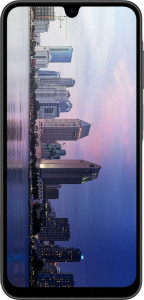
This is a sparse category with only one differentiating data point: the Vivo Y400 4G features a curved display, while the Samsung Galaxy A26 5G has a flat one. Curved screens wrap the panel gently at the edges, which many users find more premium-feeling in hand and visually sleek. The trade-off is practical — curved displays are generally more vulnerable to edge cracks when dropped and can make applying screen protectors more difficult. Whether this is an advantage or a drawback depends entirely on whether the user prioritizes aesthetics or durability.

Everything else listed here is shared equally. Both phones include a video light — a front-facing flash useful for video calls and selfies in low-light conditions — and neither carries a sapphire glass display or an e-paper screen, both of which remain niche features in this segment.

The Vivo Y400 4G technically holds the only differentiator in this group with its curved display, but whether that constitutes an advantage is subjective. Users who value the premium aesthetic of curved glass will favor the Vivo; those who prioritize repairability and screen protector compatibility will prefer the Samsung's flat panel. Based strictly on the provided data, this category is effectively a draw with a single stylistic distinction rather than a functional one.

Comparison Summary & Verdict

After examining every spec, these two phones clearly target different kinds of users. The Samsung Galaxy A26 5G stands out for its raw processing power, with dramatically higher Geekbench scores, a superior 5G-capable chipset, optical image stabilization, 4K video recording, and a broader LTE/5G download ceiling — making it the stronger choice for performance-focused buyers. The Vivo Y400 4G, on the other hand, counters with a larger 6000 mAh battery, faster 44W charging, stereo speakers, a higher IP68 water resistance rating, and a curved display — all appealing to users who prioritize endurance and media consumption. Both phones run Android 15 and offer comparable displays, but their strengths pull in clearly opposite directions.

Samsung Galaxy A26 5G
Buy Samsung Galaxy A26 5G if...

Buy the Samsung Galaxy A26 5G if you want significantly faster performance, 5G connectivity, optical image stabilization, and 4K video recording capability.

Vivo Y400 4G
Buy Vivo Y400 4G if...

Buy the Vivo Y400 4G if you prioritize a larger battery with faster 44W charging, stereo speakers, a curved display, and a higher IP68 water resistance rating.