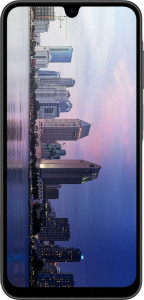
Samsung Galaxy A26 5G
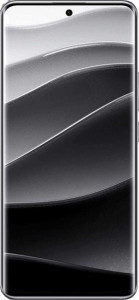
Xiaomi Redmi Note 14 Pro 4G (Global)

Samsung Galaxy A26 5G Xiaomi Redmi Note 14 Pro 4G (Global)

Overview

Welcome to our in-depth comparison of the Samsung Galaxy A26 5G and the Xiaomi Redmi Note 14 Pro 4G (Global) — two mid-range contenders that each make compelling cases for your attention. While both phones share a smooth 120Hz OLED display, dual-SIM support, and fast charging, they diverge sharply when it comes to raw performance, camera hardware, audio capabilities, and connectivity. Read on to see which device better matches your priorities.

Common Features

  • Neither product has a rugged build.
  • Neither product can be folded.
  • Both products feature an OLED/AMOLED display.
  • Both products have a 120Hz refresh rate.
  • Both products use branded damage-resistant glass.
  • Always-On Display is available on both products.
  • Neither product has a secondary screen.
  • Both products have a touchscreen.
  • Both products have integrated LTE.
  • Both products support 64-bit processing.
  • Both products use big.LITTLE technology with 8 CPU threads.
  • Both products support HMP and TrustZone.
  • Both products have OpenCL version 2.
  • Both products feature a multi-lens main camera capable of 4K video at 30fps.
  • Neither product has a dual-tone LED flash, each having a single LED flash.
  • Both products have a CMOS sensor with phase-detection autofocus and continuous autofocus during video recording.
  • Both products include clipboard warnings and location privacy options.
  • Both products support camera and microphone privacy options, theme customization, app tracking blocking, and on-device machine learning.
  • Neither product supports Mail Privacy Protection or cross-site tracking blocking.
  • Wireless charging is not available on either product, but both support fast charging.
  • Neither product has a removable battery, and both have a rechargeable battery with a battery level indicator.
  • Neither product has a radio.
  • Both products support dual SIM, Bluetooth 5.3, USB Type-C (USB 2.0), and NFC.
  • Both products have a fingerprint scanner.
  • Neither product has emergency SOS via satellite or crash detection.
  • Both products have a video light.
  • Neither product has a sapphire glass display or an e-paper display.

Main Differences

  • Water resistance is rated as Waterproof (IP67) on Samsung Galaxy A26 5G and Water resistant (IP64) on Xiaomi Redmi Note 14 Pro 4G (Global).
  • Weight is 200 g on Samsung Galaxy A26 5G and 180 g on Xiaomi Redmi Note 14 Pro 4G (Global).
  • Thickness is 7.7 mm on Samsung Galaxy A26 5G and 8.2 mm on Xiaomi Redmi Note 14 Pro 4G (Global).
  • Screen size is 6.7″ on Samsung Galaxy A26 5G and 6.67″ on Xiaomi Redmi Note 14 Pro 4G (Global).
  • Pixel density is 385 ppi on Samsung Galaxy A26 5G and 395 ppi on Xiaomi Redmi Note 14 Pro 4G (Global).
  • Gorilla Glass version is Victus on Samsung Galaxy A26 5G and Victus 2 on Xiaomi Redmi Note 14 Pro 4G (Global).
  • HDR10, HDR10+, and Dolby Vision support are present on Xiaomi Redmi Note 14 Pro 4G (Global) but not available on Samsung Galaxy A26 5G.
  • Internal storage is 256GB on Samsung Galaxy A26 5G and 512GB on Xiaomi Redmi Note 14 Pro 4G (Global).
  • RAM is 8GB on Samsung Galaxy A26 5G and 12GB on Xiaomi Redmi Note 14 Pro 4G (Global).
  • AnTuTu benchmark score is 594395 on Samsung Galaxy A26 5G and 420000 on Xiaomi Redmi Note 14 Pro 4G (Global).
  • The chipset is Samsung Exynos 1380 (5 nm) on Samsung Galaxy A26 5G and MediaTek Helio G100 (6 nm) on Xiaomi Redmi Note 14 Pro 4G (Global).
  • Maximum memory bandwidth is 51.2 GB/s on Samsung Galaxy A26 5G and 17.1 GB/s on Xiaomi Redmi Note 14 Pro 4G (Global).
  • DirectX version is 12 on Samsung Galaxy A26 5G and 11 on Xiaomi Redmi Note 14 Pro 4G (Global).
  • Main camera resolution is 50 & 8 & 2 MP on Samsung Galaxy A26 5G and 200 & 8 & 2 MP on Xiaomi Redmi Note 14 Pro 4G (Global).
  • Front camera resolution is 13MP on Samsung Galaxy A26 5G and 32MP on Xiaomi Redmi Note 14 Pro 4G (Global).
  • Optical image stabilization is present on Samsung Galaxy A26 5G but not available on Xiaomi Redmi Note 14 Pro 4G (Global).
  • Android version is 15 on Samsung Galaxy A26 5G and 14 on Xiaomi Redmi Note 14 Pro 4G (Global).
  • App offloading is supported on Samsung Galaxy A26 5G but not available on Xiaomi Redmi Note 14 Pro 4G (Global).
  • Battery capacity is 5000 mAh on Samsung Galaxy A26 5G and 5500 mAh on Xiaomi Redmi Note 14 Pro 4G (Global).
  • Charging speed is 25W on Samsung Galaxy A26 5G and 45W on Xiaomi Redmi Note 14 Pro 4G (Global).
  • A charger is included in the box with Xiaomi Redmi Note 14 Pro 4G (Global) but not with Samsung Galaxy A26 5G.
  • A 3.5mm audio jack is present on Xiaomi Redmi Note 14 Pro 4G (Global) but not available on Samsung Galaxy A26 5G.
  • Stereo speakers are present on Xiaomi Redmi Note 14 Pro 4G (Global) but not available on Samsung Galaxy A26 5G.
  • aptX and LDAC audio codec support are present on Xiaomi Redmi Note 14 Pro 4G (Global) but not available on Samsung Galaxy A26 5G.
  • 5G support is present on Samsung Galaxy A26 5G but not available on Xiaomi Redmi Note 14 Pro 4G (Global).
  • Wi-Fi version includes Wi-Fi 6 (802.11ax) on Xiaomi Redmi Note 14 Pro 4G (Global), while Samsung Galaxy A26 5G supports only Wi-Fi 4 and Wi-Fi 5.
  • Download speed is 3790 MBits/s on Samsung Galaxy A26 5G and 650 MBits/s on Xiaomi Redmi Note 14 Pro 4G (Global).
  • An external memory slot is available on Samsung Galaxy A26 5G but not on Xiaomi Redmi Note 14 Pro 4G (Global).
  • An infrared sensor is present on Xiaomi Redmi Note 14 Pro 4G (Global) but not available on Samsung Galaxy A26 5G.
  • A curved display is present on Xiaomi Redmi Note 14 Pro 4G (Global) but not on Samsung Galaxy A26 5G.
Specs Comparison
Samsung Galaxy A26 5G

Samsung Galaxy A26 5G

Xiaomi Redmi Note 14 Pro 4G (Global)

Xiaomi Redmi Note 14 Pro 4G (Global)

Design:
water resistance Waterproof Water resistant
weight 200 g 180 g
thickness 7.7 mm 8.2 mm
width 77.5 mm 74.9 mm
height 164 mm 162.2 mm
volume 97.867 cm³ 99.619996 cm³
Ingress Protection (IP) rating IP67 IP64
has a rugged build
can be folded

The most significant design differentiator between these two phones is their water resistance rating. The Samsung Galaxy A26 5G carries an IP67 certification, meaning it can withstand full submersion in up to 1 metre of fresh water for 30 minutes — a genuinely useful real-world safeguard for drops in sinks, puddles, or pools. The Redmi Note 14 Pro 4G, by contrast, is rated IP64, which protects against splashes and dust jets but offers no submersion protection whatsoever. For users who prioritize durability around water, this is a meaningful gap, not a cosmetic one.

On physical form factor, the trade-offs run in opposite directions. The Xiaomi is noticeably lighter at 180 g versus the Samsung's 200 g, and its narrower 74.9 mm width and shorter 162.2 mm height make it the more pocketable and one-hand-friendly device. The Samsung, however, compensates partly by being slimmer at 7.7 mm thick compared to the Xiaomi's 8.2 mm — so while it has a larger footprint, it feels less chunky in the hand. Neither device has a rugged build or foldable form factor.

Overall, the Samsung Galaxy A26 5G holds a clear edge in this group thanks to its superior IP67 waterproofing, which is the more consequential spec for longevity and everyday peace of mind. The Redmi Note 14 Pro 4G counters with a lighter, more compact body that many users will find easier to handle — but if water protection is a priority, the Samsung wins this category decisively.

Display:
Display type OLED/AMOLED OLED/AMOLED
screen size 6.7" 6.67"
pixel density 385 ppi 395 ppi
resolution 1080 x 2340 px 1080 x 2400 px
refresh rate 120Hz 120Hz
has branded damage-resistant glass
Gorilla Glass version Gorilla Glass Victus Gorilla Glass Victus 2
supports HDR10
supports HDR10+
Always-On Display
supports Dolby Vision
Has a secondary screen
has a touch screen

Both phones share a strong display foundation — OLED/AMOLED panels, a 120Hz refresh rate, and 1080p resolution — so neither has a raw advantage in the basics. The screens are also virtually identical in size, at 6.7″ and 6.67″ respectively, making that distinction imperceptible in daily use. Where things diverge meaningfully is in the details layered on top of that foundation.

The Redmi Note 14 Pro 4G pulls ahead in two notable areas. First, its pixel density of 395 ppi edges out the Samsung's 385 ppi — a difference that is marginal but slightly favors the Xiaomi for fine text rendering at close range. More impactful is its comprehensive HDR support: it covers HDR10, HDR10+, and Dolby Vision, meaning streaming content from platforms like Netflix or Amazon Prime will render with wider dynamic range and more accurate brightness gradations where supported. The Samsung supports none of these HDR standards, which is a genuine omission at this price tier. The Redmi also features Gorilla Glass Victus 2 on its display, a generation ahead of the Samsung's Gorilla Glass Victus, offering incrementally better drop and scratch resistance.

The Samsung is not without a point of parity — both phones offer an Always-On Display and touch screens, and the core OLED quality will be excellent on either device for everyday tasks. But for media consumption in particular, the Redmi Note 14 Pro 4G holds a clear advantage in this category, driven by its full HDR ecosystem support and slightly newer protective glass.

Performance:
internal storage 256GB 512GB
RAM 8GB 12GB
AnTuTu benchmark score 594395 420000
Chipset (SoC) name Samsung Exynos 1380 MediaTek Helio G100
GPU name Mali G68 MP5 Mali G57
CPU speed 4 x 2.4 & 4 x 2 GHz 2 x 2.2 & 6 x 2 GHz
GPU clock speed 950 MHz 1000 MHz
Has integrated LTE
RAM speed 3200 MHz 4266 MHz
semiconductor size 5 nm 6 nm
Supports 64-bit
DirectX version DirectX 12 DirectX 11
Has integrated graphics
Uses big.LITTLE technology
CPU threads 8 threads 8 threads
Uses HMP
Has TrustZone
maximum memory bandwidth 51.2 GB/s 17.1 GB/s
OpenCL version 2 2
maximum memory amount 8GB 12GB
Thermal Design Power (TDP) 5W 5W
DDR memory version 5 4

Raw processing power tells a clear story here. The Samsung Galaxy A26 5G, powered by the Exynos 1380 on a 5nm process node, scores approximately 594,000 on AnTuTu, versus roughly 420,000 for the Redmi Note 14 Pro 4G's MediaTek Helio G100 built on a less efficient 6nm node. That is not a marginal gap — it translates to noticeably snappier app launches, smoother multitasking under load, and more headroom for demanding games. The smaller process node also generally favors the Samsung in thermal efficiency, despite both phones sharing the same 5W TDP.

The Xiaomi fights back on memory configuration, offering 12GB of RAM and 512GB of storage compared to the Samsung's 8GB / 256GB. More RAM is genuinely useful for keeping more apps alive in the background simultaneously, and double the storage is a significant practical advantage for users who accumulate media or avoid cloud dependency. However, the Samsung's memory architecture is substantially more capable where it counts for throughput: its maximum memory bandwidth of 51.2 GB/s dwarfs the Xiaomi's 17.1 GB/s, meaning data moves between the processor and RAM far faster on the Samsung — a key factor in sustained performance during graphics-intensive or data-heavy workloads. The Samsung also supports DirectX 12 versus the Xiaomi's DirectX 11, giving it a forward compatibility edge for gaming.

The Redmi Note 14 Pro 4G is the better phone for passive storage capacity and multitasking headroom on paper, but the Samsung Galaxy A26 5G holds a decisive overall performance advantage — its benchmark lead, superior memory bandwidth, and more modern chipset process node make it the stronger performer for virtually any compute-intensive task.

Cameras:
megapixels (main camera) 50 & 8 & 2 MP 200 & 8 & 2 MP
wide aperture (main camera) 1.8 & 2.2 & 2.4f 1.7 & 2.2 & 2.4f
Has a dual-lens (or multi-lens) main camera
megapixels (front camera) 13MP 32MP
has built-in optical image stabilization
video recording (main camera) 2160 x 30 fps 2160 x 30 fps
Has a dual-tone LED flash
number of flash LEDs 1 1
has a BSI sensor
has a CMOS sensor
has continuous autofocus when recording movies
Has phase-detection autofocus for photos
supports slow-motion video recording
has a built-in HDR mode
has manual exposure
has a flash
optical zoom 0x 0x
has manual ISO
has a serial shot mode
has manual focus
has a front camera
Has laser autofocus
Shoots 360° panorama
has manual white balance
shoots raw
has touch autofocus
has manual shutter speed
can create panoramas in-camera
wide aperture (front camera) 2.2f 2.2f
Has timelapse function
Has a front-facing LED flash
has a dual-lens (or multi-lens) front camera
supports HDR10 recording
supports Dolby Vision recording
has a front-facing camera under the display
Has a RGB LED flash
has 3D photo/video recording capabilities

The headline difference in this category is impossible to ignore: the Redmi Note 14 Pro 4G sports a 200MP primary sensor versus the Samsung's 50MP — a fourfold gap in raw resolution. In practice, a 200MP sensor enables far more aggressive computational cropping, letting users extract highly detailed sub-sections of a shot without visible quality loss. It also captures more granular texture in well-lit environments. The Xiaomi's main lens also carries a marginally wider aperture of f/1.7 compared to the Samsung's f/1.8, giving it a slight edge in low-light photon gathering. For selfies, the Redmi again leads significantly with a 32MP front camera against the Samsung's 13MP.

Where the Samsung Galaxy A26 5G reclaims ground is with its built-in optical image stabilization (OIS) — a feature the Redmi Note 14 Pro 4G entirely lacks. OIS is not a cosmetic spec: it physically counteracts hand tremor during shooting, producing visibly sharper handheld photos in dim conditions and smoother video footage. Without OIS, the Xiaomi's higher-resolution sensor is more susceptible to motion blur, which can undercut the megapixel advantage in real-world, non-ideal shooting scenarios. Both phones top out at 4K 30fps video, with identical secondary lens configurations and a broadly matching feature set covering HDR mode, phase-detection autofocus, slow motion, and manual controls.

This is a genuine trade-off rather than a clean win. The Redmi Note 14 Pro 4G is the stronger choice for users who prioritize still image detail and selfie quality in good light, while the Samsung Galaxy A26 5G has a practical edge for video and low-light handheld shooting thanks to OIS. On balance, for pure camera versatility across conditions, the Samsung's stabilization gives it a slight overall edge — but committed photography enthusiasts drawn to high-resolution captures may weight the Xiaomi's 200MP sensor more heavily.

Operating system:
Android version Android 15 Android 14
has clipboard warnings
has location privacy options
has camera/microphone privacy options
has Mail Privacy Protection
has theme customization
can block app tracking
blocks cross-site tracking
has on-device machine learning
has notification permissions
has media picker
Can play games while they download
has dark mode
has Wi-Fi password sharing
has battery health check
has an extra dim mode
has focus modes
has dynamic theming
can offload apps
Has customizable notifications
has Live Text
has full-page screenshots
supports split screen
gets direct OS updates
has PiP
Can be used as a PC
Has sharing intents
has a child lock
Supports widgets
Is free and open source
Has offline voice recognition
has voice commands
Tracks the current position of a mobile device
is a multi-user system
has Quick Start

Across a long checklist of software features, these two phones are remarkably alike — both run stock-adjacent Android with dark mode, dynamic theming, split-screen multitasking, picture-in-picture, on-device machine learning, and a solid suite of privacy controls. The meaningful differences narrow down to just two points. The Samsung Galaxy A26 5G ships with Android 15, one full generation ahead of the Redmi Note 14 Pro 4G's Android 14. That gap matters less for features today than it does for longevity: starting on a newer OS version means the Samsung will receive security patches and potential major updates for longer before reaching end-of-support.

The other differentiator is app offloading, which the Samsung supports and the Xiaomi does not. Offloading allows the system to automatically remove an unused app's installation files while preserving its data, freeing up storage without losing progress or settings — a handy tool on a device where storage fills up over time. It is a quality-of-life feature rather than a critical one, but its absence on the Redmi is a minor practical shortcoming.

Neither phone gets direct OS updates — both rely on manufacturer-mediated rollouts — and their privacy feature sets are functionally identical. On the whole, the Samsung Galaxy A26 5G holds a modest but clear edge in this category: a newer Android version and app offloading support give it a slight advantage in both future-proofing and day-to-day storage management.

Battery:
battery power 5000 mAh 5500 mAh
has wireless charging
Supports fast charging
charging speed 25W 45W
comes with a charger
has a removable battery
has a battery level indicator
has a rechargeable battery

Every spec in this category favors the Redmi Note 14 Pro 4G, and the gaps are practical rather than theoretical. Its 5500 mAh battery outpaces the Samsung's 5000 mAh by 10% — enough to translate into a meaningful real-world difference in screen-on time, particularly for heavy users who push their phone through a full day and into the evening. Neither gap is enormous in isolation, but combined with the Xiaomi's charging advantage, the overall battery experience skews noticeably in its favor.

That charging gap is where the Redmi pulls furthest ahead. At 45W versus the Samsung's 25W, the Xiaomi charges significantly faster — a larger battery that still refills more quickly is a compelling combination for users who rely on short top-up windows during the day. Compounding this, the Redmi comes with a charger in the box, while the Samsung does not, meaning Galaxy A26 5G buyers will need to source a compatible fast charger separately to unlock even the 25W ceiling. Neither phone supports wireless charging.

This category has a clear and unambiguous winner: the Xiaomi Redmi Note 14 Pro 4G leads on battery capacity, charging speed, and out-of-box convenience. For users who prioritize battery endurance and fast top-ups, the Redmi's advantage here is one of the stronger arguments in its favor across the entire comparison.

Audio:
has a socket for a 3.5 mm audio jack
has stereo speakers
has aptX
has LDAC
has aptX HD
has aptX Adaptive
has aptX Lossless
Has a radio

The Samsung Galaxy A26 5G and Xiaomi Redmi Note 14 Pro 4G differ significantly in their audio capabilities. The Galaxy A26 5G lacks a 3.5 mm audio jack and does not have stereo speakers, while the Redmi Note 14 Pro 4G includes a 3.5 mm audio jack and features stereo speakers for enhanced sound quality.

In terms of wireless audio technologies, the Galaxy A26 5G does not support any high-quality Bluetooth codecs such as aptX, LDAC, aptX HD, aptX Adaptive, or aptX Lossless. The Redmi Note 14 Pro 4G, on the other hand, supports aptX, LDAC, but lacks support for aptX HD, aptX Adaptive, and aptX Lossless.

Neither phone includes an FM radio, but the Redmi Note 14 Pro 4G offers more versatile audio features with the inclusion of a 3.5 mm audio jack and stereo speakers, while the Galaxy A26 5G omits both of these features in favor of more modern Bluetooth audio solutions.

Connectivity & Features:
release date March 2025 January 2025
has 5G support
Wi-Fi version Wi-Fi 4 (802.11n), Wi-Fi 5 (802.11ac) Wi-Fi 4 (802.11n), Wi-Fi 6 (802.11ax), Wi-Fi 5 (802.11ac)
SIM cards 2 SIM 2 SIM
Bluetooth version 5.3 5.3
has an external memory slot
Has USB Type-C
USB version 2 2
has NFC
download speed 3790 MBits/s 650 MBits/s
upload speed 1280 MBits/s 150 MBits/s
Has a fingerprint scanner
has emergency SOS via satellite
has crash detection
is DLNA-certified
has a gyroscope
supports ANT+
Has a heart rate monitor
has GPS
has a compass
supports Wi-Fi
Has an infrared sensor
has an accelerometer
has a cellular module
Has a barometer
has an HDMI output
Uses 3D facial recognition
Has an iris scanner
Stylus included
supports Galileo
Has motion tracking
Has optical tracking
Has a built-in projector

The Samsung Galaxy A26 5G and Xiaomi Redmi Note 14 Pro 4G offer different connectivity features. The Galaxy A26 5G supports 5G connectivity, while the Redmi Note 14 Pro 4G is limited to 4G. Both phones use USB Type-C ports with USB version 2.0 and support NFC. The Galaxy A26 5G supports Wi-Fi 4 (802.11n), Wi-Fi 5 (802.11ac), while the Redmi Note 14 Pro 4G offers the additional Wi-Fi 6 (802.11ax) alongside Wi-Fi 4 (802.11n) and Wi-Fi 5 (802.11ac), providing more advanced Wi-Fi capabilities.

Both phones feature Bluetooth 5.3, support two SIM cards, and come with essential sensors like a gyroscope, GPS, and a compass. However, the Galaxy A26 5G supports higher download speeds (3790 MBits/s) and upload speeds (1280 MBits/s) compared to the Redmi Note 14 Pro 4G's lower download speed of 650 MBits/s and upload speed of 150 MBits/s.

Other features of the Galaxy A26 5G include an external memory slot, but the Redmi Note 14 Pro 4G does not offer this option. Both phones lack a removable battery, have accelerometers, and support Galileo for location tracking. The Redmi Note 14 Pro 4G includes an infrared sensor, which the Galaxy A26 5G does not. Neither device has a built-in projector, barometer, or 3D facial recognition, but both support cellular modules and have fingerprint scanners. Neither phone includes emergency SOS via satellite, crash detection, DLNA certification, or motion/optical tracking.

Miscellaneous:
has a video light
Has sapphire glass display
Has a curved display
Has an e-paper display

Both the Samsung Galaxy A26 5G and Xiaomi Redmi Note 14 Pro 4G come with a video light, which is useful for low-light video recording. However, the two devices differ in their display features. The Galaxy A26 5G does not have a curved display, while the Redmi Note 14 Pro 4G features a curved display. Neither device includes sapphire glass for the display, nor do they have an e-paper display.

Overall, the primary difference between these two phones in this category is the inclusion of the curved display on the Redmi Note 14 Pro 4G, while the Galaxy A26 5G opts for a standard flat display.

Comparison Summary & Verdict

After reviewing the full spec breakdown, both phones offer genuine strengths tailored to different users. The Samsung Galaxy A26 5G pulls ahead with a significantly higher AnTuTu benchmark score, a superior IP67 waterproof rating, 5G connectivity, faster download speeds, and a newer Android 15 out of the box — making it the stronger pick for users who value future-proof networking and raw processing power. The Xiaomi Redmi Note 14 Pro 4G (Global), on the other hand, wins on multimedia and everyday usability: its 200MP main camera, 32MP selfie shooter, stereo speakers, 3.5mm audio jack, LDAC support, larger 5500 mAh battery with 45W fast charging, and HDR10+ display make it ideal for media lovers and power users who prioritize camera versatility and audio richness over network speed.

Samsung Galaxy A26 5G
Buy Samsung Galaxy A26 5G if...

Buy the Samsung Galaxy A26 5G if you want 5G connectivity, a higher benchmark performance score, a stronger IP67 waterproof rating, and the latest Android 15 experience.

Xiaomi Redmi Note 14 Pro 4G (Global)
Buy Xiaomi Redmi Note 14 Pro 4G (Global) if...

Buy the Xiaomi Redmi Note 14 Pro 4G (Global) if you prioritize a versatile 200MP camera system, stereo speakers with a 3.5mm jack, a larger battery with faster 45W charging, and a richer HDR10+ display.