Samsung Galaxy A36 5G (256GB / 8GB RAM)
TCL 60 NxtPaper

Samsung Galaxy A36 5G (256GB / 8GB RAM) TCL 60 NxtPaper

Overview

Welcome to our in-depth spec comparison between the Samsung Galaxy A36 5G (256GB / 8GB RAM) and the TCL 60 NxtPaper. These two mid-range 5G smartphones share a 6.7-inch screen and 8GB of RAM, yet take very different paths when it comes to display technology, performance, and everyday usability. Read on as we break down every key specification to help you decide which device is the right fit for you.

Common Features

  • Both phones share the same 6.7″ screen size.
  • Both devices feature a 120Hz refresh rate.
  • Neither phone supports Dolby Vision.
  • Neither device has a secondary screen.
  • Both phones have a touch screen.
  • Both phones come with 256GB of internal storage.
  • Both devices include 8GB of RAM.
  • Both phones have integrated LTE.
  • Both support 64-bit processing.
  • Both use DirectX 12.
  • Both devices feature integrated graphics.
  • Both use big.LITTLE CPU technology.
  • Both phones have 8 CPU threads.
  • Neither phone has a dual-tone LED flash.
  • Both cameras use a CMOS sensor.
  • Both phones support continuous autofocus when recording movies.
  • Both phones have phase-detection autofocus for photos.
  • Both phones have a built-in HDR mode.
  • Both phones support manual exposure.
  • Both run Android 15.
  • Both phones provide clipboard warnings.
  • Both offer location privacy options.
  • Both provide camera and microphone privacy options.
  • Neither phone has Mail Privacy Protection.
  • Both support theme customization.
  • Both can block app tracking.
  • Neither phone blocks cross-site tracking.
  • Neither phone supports wireless charging.
  • Both phones support fast charging.
  • Neither phone has a removable battery.
  • Both phones have a battery level indicator.
  • Both phones have a rechargeable battery.
  • Neither phone supports LDAC.
  • Neither phone supports aptX Lossless.
  • Both phones support 5G.
  • Both phones have USB Type-C.
  • Both phones use USB version 2.
  • Both phones have NFC.
  • Both phones have a fingerprint scanner.
  • Neither phone has emergency SOS via satellite.
  • Neither phone has crash detection.
  • Neither phone is DLNA-certified.
  • Both phones have a video light.
  • Neither phone has a sapphire glass display.
  • Neither phone has a curved display.
  • Neither phone has a rugged build.
  • Neither phone can be folded.
  • Both phones have a multi-lens main camera.
  • Both phones include a 50MP main camera sensor.

Main Differences

  • Water resistance level is Waterproof (IP67) on Samsung Galaxy A36 5G (256GB / 8GB RAM) and Water resistant (IP54) on TCL 60 NxtPaper.
  • Weight is 195g on Samsung Galaxy A36 5G (256GB / 8GB RAM) and 190g on TCL 60 NxtPaper.
  • Thickness is 7.4mm on Samsung Galaxy A36 5G (256GB / 8GB RAM) and 7.85mm on TCL 60 NxtPaper.
  • Width is 78.2mm on Samsung Galaxy A36 5G (256GB / 8GB RAM) and 75.5mm on TCL 60 NxtPaper.
  • Height is 162.9mm on Samsung Galaxy A36 5G (256GB / 8GB RAM) and 167.3mm on TCL 60 NxtPaper.
  • Volume is 94.27 cm³ on Samsung Galaxy A36 5G (256GB / 8GB RAM) and 99.15 cm³ on TCL 60 NxtPaper.
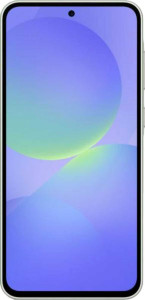
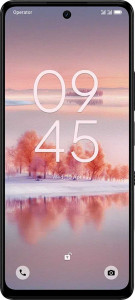
  • Display type is OLED/AMOLED on Samsung Galaxy A36 5G (256GB / 8GB RAM) and LCD IPS on TCL 60 NxtPaper.
  • Pixel density is 385 ppi on Samsung Galaxy A36 5G (256GB / 8GB RAM) and 262 ppi on TCL 60 NxtPaper.
  • Resolution is 1080 x 2340 px on Samsung Galaxy A36 5G (256GB / 8GB RAM) and 720 x 1600 px on TCL 60 NxtPaper.
  • Damage-resistant glass is present on Samsung Galaxy A36 5G (256GB / 8GB RAM) but not available on TCL 60 NxtPaper.
  • HDR10 support is present on Samsung Galaxy A36 5G (256GB / 8GB RAM) but not available on TCL 60 NxtPaper.
  • HDR10+ support is present on Samsung Galaxy A36 5G (256GB / 8GB RAM) but not available on TCL 60 NxtPaper.
  • Always-On Display is available on Samsung Galaxy A36 5G (256GB / 8GB RAM) but not on TCL 60 NxtPaper.
  • The chipset is Qualcomm Snapdragon 6 Gen 3 on Samsung Galaxy A36 5G (256GB / 8GB RAM) and MediaTek Dimensity 6300 on TCL 60 NxtPaper.
  • The GPU is Adreno 710 on Samsung Galaxy A36 5G (256GB / 8GB RAM) and Arm Mali-G57 MC2 on TCL 60 NxtPaper.
  • CPU speed is 4 x 2.4 & 4 x 1.8 GHz on Samsung Galaxy A36 5G (256GB / 8GB RAM) and 2 x 2.4 & 6 x 2 GHz on TCL 60 NxtPaper.
  • Geekbench 6 multi-core score is 2917 on Samsung Galaxy A36 5G (256GB / 8GB RAM) and 2012 on TCL 60 NxtPaper.
  • Geekbench 6 single-core score is 1007 on Samsung Galaxy A36 5G (256GB / 8GB RAM) and 782 on TCL 60 NxtPaper.
  • GPU clock speed is 800 MHz on Samsung Galaxy A36 5G (256GB / 8GB RAM) and 950 MHz on TCL 60 NxtPaper.
  • RAM speed is 2750 MHz on Samsung Galaxy A36 5G (256GB / 8GB RAM) and 2133 MHz on TCL 60 NxtPaper.
  • Semiconductor size is 4nm on Samsung Galaxy A36 5G (256GB / 8GB RAM) and 6nm on TCL 60 NxtPaper.
  • Maximum memory bandwidth is 25.6 GB/s on Samsung Galaxy A36 5G (256GB / 8GB RAM) and 17.07 GB/s on TCL 60 NxtPaper.
  • DDR memory version is DDR5 on Samsung Galaxy A36 5G (256GB / 8GB RAM) and DDR4 on TCL 60 NxtPaper.
  • Main camera configuration is 50, 8, and 5 MP on Samsung Galaxy A36 5G (256GB / 8GB RAM) and 50 and 5 MP on TCL 60 NxtPaper.
  • Front camera resolution is 12MP on Samsung Galaxy A36 5G (256GB / 8GB RAM) and 8MP on TCL 60 NxtPaper.
  • Optical image stabilization is present on Samsung Galaxy A36 5G (256GB / 8GB RAM) but not available on TCL 60 NxtPaper.
  • Main camera video recording goes up to 2160p at 30 fps on Samsung Galaxy A36 5G (256GB / 8GB RAM) and 1080p at 30 fps on TCL 60 NxtPaper.
  • Number of flash LEDs is 1 on Samsung Galaxy A36 5G (256GB / 8GB RAM) and 2 on TCL 60 NxtPaper.
  • Slow-motion video recording is supported on Samsung Galaxy A36 5G (256GB / 8GB RAM) but not on TCL 60 NxtPaper.
  • Front camera aperture is f/2.2 on Samsung Galaxy A36 5G (256GB / 8GB RAM) and f/2 on TCL 60 NxtPaper.
  • Timelapse function is available on Samsung Galaxy A36 5G (256GB / 8GB RAM) but not on TCL 60 NxtPaper.
  • Battery capacity is 5000 mAh on Samsung Galaxy A36 5G (256GB / 8GB RAM) and 5200 mAh on TCL 60 NxtPaper.
  • Charging speed is 45W on Samsung Galaxy A36 5G (256GB / 8GB RAM) and 18W on TCL 60 NxtPaper.
  • A charger is not included with Samsung Galaxy A36 5G (256GB / 8GB RAM) but is included with TCL 60 NxtPaper.
  • A 3.5mm audio jack is absent on Samsung Galaxy A36 5G (256GB / 8GB RAM) but present on TCL 60 NxtPaper.
  • Stereo speakers are present on Samsung Galaxy A36 5G (256GB / 8GB RAM) but not on TCL 60 NxtPaper.
  • A built-in radio is absent on Samsung Galaxy A36 5G (256GB / 8GB RAM) but present on TCL 60 NxtPaper.
  • Wi-Fi version support includes Wi-Fi 6 (802.11ax) on Samsung Galaxy A36 5G (256GB / 8GB RAM) but only goes up to Wi-Fi 5 (802.11ac) on TCL 60 NxtPaper.
  • SIM card options include 1 SIM, 1 eSIM, 2 SIM, or 2 eSIM on Samsung Galaxy A36 5G (256GB / 8GB RAM) and 2 SIM only on TCL 60 NxtPaper.
  • Bluetooth version is 5.3 on Samsung Galaxy A36 5G (256GB / 8GB RAM) and 5.4 on TCL 60 NxtPaper.
  • An external memory slot is absent on Samsung Galaxy A36 5G (256GB / 8GB RAM) but present on TCL 60 NxtPaper.
  • Download speed is 2900 Mbit/s on Samsung Galaxy A36 5G (256GB / 8GB RAM) and 3300 Mbit/s on TCL 60 NxtPaper.
  • A barometer is absent on Samsung Galaxy A36 5G (256GB / 8GB RAM) but present on TCL 60 NxtPaper.
  • An e-paper display is absent on Samsung Galaxy A36 5G (256GB / 8GB RAM) but present on TCL 60 NxtPaper.
Specs Comparison
Samsung Galaxy A36 5G (256GB / 8GB RAM)

Samsung Galaxy A36 5G (256GB / 8GB RAM)

TCL 60 NxtPaper

TCL 60 NxtPaper

Design:
water resistance Waterproof Water resistant
weight 195 g 190 g
thickness 7.4 mm 7.85 mm
width 78.2 mm 75.5 mm
height 162.9 mm 167.3 mm
volume 94.266972 cm³ 99.1545275 cm³
Ingress Protection (IP) rating IP67 IP54
has a rugged build
can be folded

The most significant differentiator in this group is water protection. The Samsung Galaxy A36 5G carries an IP67 rating, meaning it can withstand submersion in up to 1 meter of fresh water for 30 minutes — a genuine safety net for drops in sinks or puddles. The TCL 60 NxtPaper is rated IP54, which only guarantees protection against splashes and dust; it cannot survive submersion. For users who frequently use their phone near water or in unpredictable environments, this is a clear, practical advantage for the Samsung.

In terms of physical form, the two phones trade blows. The TCL is marginally lighter at 190 g versus 195 g and narrower at 75.5 mm wide, making it slightly easier to grip with one hand. The Samsung, however, is meaningfully thinner at 7.4 mm compared to 7.85 mm, giving it a sleeker profile that sits flatter in a pocket. The Samsung also occupies less total volume (94.27 cm³ vs 99.15 cm³), so despite being taller on paper the TCL is the bulkier device overall.

Neither phone has a rugged build or a foldable form factor, so those are non-factors here. On balance, the Samsung Galaxy A36 5G holds a clear edge in this group: its superior IP67 water resistance is a meaningful real-world advantage, and its more compact volume and slimmer profile make it the more refined design of the two.

Display:
Display type OLED/AMOLED LCD, IPS
screen size 6.7" 6.7"
pixel density 385 ppi 262 ppi
resolution 1080 x 2340 px 720 x 1600 px
refresh rate 120Hz 120Hz
has branded damage-resistant glass
supports HDR10
supports HDR10+
Always-On Display
supports Dolby Vision
Has a secondary screen
has a touch screen

Panel technology is where these two phones diverge most dramatically. The Samsung Galaxy A36 5G uses an AMOLED display, which produces true blacks by switching off individual pixels, resulting in higher contrast, more vivid colors, and better power efficiency when showing dark content. The TCL 60 NxtPaper relies on an IPS LCD panel — a fundamentally different technology that cannot match AMOLED for contrast depth or color punch, though it can offer consistent brightness across the screen.

Resolution compounds this gap. The Samsung resolves at 1080 x 2340 px across its 6.7″ screen, yielding a sharp 385 ppi — fine text and detailed images will appear crisp and clean. The TCL lands at just 720 x 1600 px and 262 ppi, a noticeably lower density that can make text edges appear soft and fine details less defined, particularly visible when reading or browsing. Both phones share a 120Hz refresh rate, so scrolling and animations feel equally fluid on either device. Beyond resolution, the Samsung also supports HDR10+ and features an Always-On Display, neither of which the TCL offers — HDR10+ enables richer highlight and shadow detail in compatible streaming content, while Always-On lets users glance at notifications without waking the screen.

The Samsung Galaxy A36 5G wins this category decisively. Its AMOLED panel, significantly higher pixel density, HDR10+ support, and branded damage-resistant glass represent advantages across virtually every display metric that matters to everyday users.

Performance:
internal storage 256GB 256GB
RAM 8GB 8GB
Chipset (SoC) name Qualcomm Snapdragon 6 Gen 3 MediaTek Dimensity 6300
GPU name Adreno 710 Arm Mali-G57 MC2
CPU speed 4 x 2.4 & 4 x 1.8 GHz 2 x 2.4 & 6 x 2 GHz
Geekbench 6 result (multi) 2917 2012
Geekbench 6 result (single) 1007 782
GPU clock speed 800 MHz 950 MHz
Has integrated LTE
RAM speed 2750 MHz 2133 MHz
semiconductor size 4 nm 6 nm
Supports 64-bit
DirectX version DirectX 12 DirectX 12
Has integrated graphics
Uses big.LITTLE technology
CPU threads 8 threads 8 threads
Uses HMP
maximum memory bandwidth 25.6 GB/s 17.07 GB/s
maximum memory amount 12GB 12GB
DDR memory version 5 4

At the heart of this comparison is a meaningful silicon gap. The Samsung Galaxy A36 5G runs on the Qualcomm Snapdragon 6 Gen 3, built on a 4 nm process node, while the TCL 60 NxtPaper uses the MediaTek Dimensity 6300, fabbed at 6 nm. A smaller process node generally translates to better energy efficiency and more transistors in the same space — the Samsung's chip is architecturally a generation ahead in manufacturing terms. This real-world advantage is confirmed by Geekbench 6 scores: the Samsung leads in both single-core (1007 vs 782) and multi-core (2917 vs 2012) results. The single-core gap matters most for everyday tasks like launching apps and web browsing, while the multi-core lead benefits heavier workloads like photo processing or gaming.

Memory performance tells a similar story. The Samsung's RAM runs at 2750 MHz with DDR5, versus the TCL's 2133 MHz DDR4 — a newer and faster standard that contributes to the Samsung's higher maximum memory bandwidth of 25.6 GB/s compared to 17.07 GB/s. In practice, faster memory bandwidth means the processor can feed data to the CPU and GPU more quickly, reducing bottlenecks during multitasking or graphically intensive use. Both phones ship with 8 GB of RAM and 256 GB of storage, so capacity is a non-issue on either side.

The Samsung Galaxy A36 5G holds a clear performance advantage across every meaningful metric in this group — newer process node, substantially higher benchmark scores, faster RAM, and greater memory bandwidth. For users who prioritize responsiveness and longevity under load, the Samsung is the stronger choice.

Cameras:
megapixels (main camera) 50 & 8 & 5 MP 50 & 5 MP
Has a dual-lens (or multi-lens) main camera
megapixels (front camera) 12MP 8MP
has built-in optical image stabilization
video recording (main camera) 2160 x 30 fps 1080 x 30 fps
Has a dual-tone LED flash
number of flash LEDs 1 2
has a BSI sensor
has a CMOS sensor
has continuous autofocus when recording movies
Has phase-detection autofocus for photos
supports slow-motion video recording
has a built-in HDR mode
has manual exposure
has a flash
optical zoom 0x 0x
has manual ISO
has a serial shot mode
has manual focus
has a front camera
Has laser autofocus
Shoots 360° panorama
has manual white balance
shoots raw
has touch autofocus
has manual shutter speed
can create panoramas in-camera
wide aperture (front camera) 2.2f 2f
Has timelapse function
Has a front-facing LED flash
has a dual-lens (or multi-lens) front camera
supports HDR10 recording
supports Dolby Vision recording
has a front-facing camera under the display
Has a RGB LED flash
has 3D photo/video recording capabilities

Both phones open with the same 50 MP primary sensor, but the Samsung Galaxy A36 5G quickly pulls ahead in almost every other camera dimension. It adds a third rear lens — an 8 MP shooter alongside the shared 5 MP — giving users more compositional flexibility. More critically, the Samsung includes optical image stabilization (OIS), a hardware mechanism that physically compensates for hand tremors during shooting. The TCL 60 NxtPaper lacks OIS entirely, meaning handheld shots in low light or video clips are more susceptible to blur and shake.

Video capability is another area of clear separation. The Samsung records at up to 4K (2160p) at 30 fps, while the TCL tops out at 1080p at 30 fps — a full resolution tier lower, which becomes apparent when footage is viewed on large screens or cropped in editing. The Samsung also supports slow-motion recording and timelapse, neither of which the TCL offers, adding meaningful creative options for users who want more than standard video. On the front, the Samsung's 12 MP selfie camera outresolves the TCL's 8 MP unit, though the TCL's slightly wider f/2.0 aperture versus f/2.2 could admit marginally more light in dim conditions.

The Samsung Galaxy A36 5G is the stronger camera system by a significant margin. Its third rear lens, OIS, 4K video, slow-motion, and higher-resolution front camera collectively represent advantages that span still photography, video, and creative versatility — the TCL simply cannot match that breadth based on the provided specs.
Operating system:
Android version Android 15 Android 15
has clipboard warnings
has location privacy options
has camera/microphone privacy options
has Mail Privacy Protection
has theme customization
can block app tracking
blocks cross-site tracking
has on-device machine learning
has notification permissions
has media picker
Can play games while they download
has dark mode
has Wi-Fi password sharing
has battery health check
has an extra dim mode
has focus modes
has dynamic theming
can offload apps
Has customizable notifications
has Live Text
has full-page screenshots
supports split screen
gets direct OS updates
has PiP
Can be used as a PC
Has sharing intents
has a child lock
Supports widgets
Is free and open source
Has offline voice recognition
has voice commands
Tracks the current position of a mobile device
is a multi-user system
has Quick Start

This is a rare outcome in a product comparison: every single operating system specification provided is identical between the Samsung Galaxy A36 5G and the TCL 60 NxtPaper. Both ship with Android 15 and share the same feature set across privacy controls, productivity tools, and system capabilities. That includes location and camera/microphone privacy options, app tracking blockers, on-device machine learning, and customizable notifications — a solid modern Android baseline that neither phone differentiates itself on.

Worth highlighting for any buyer is what both phones share in practical terms. Support for split-screen multitasking, Picture-in-Picture, widgets, and offline voice recognition makes either device capable of handling a productive daily workflow. On the privacy front, both offer granular app permission controls, though neither blocks cross-site tracking — a limitation common across Android at this tier. Neither phone receives direct OS updates from Google, meaning both depend on their respective manufacturers for software patches and upgrades.

Based strictly on the provided data, this category is an exact tie. A buyer's software experience will be shaped more by each manufacturer's custom Android skin and their update cadence — factors that fall outside the scope of the specs given here — than by any inherent difference in the OS feature sets of these two devices.

Battery:
battery power 5000 mAh 5200 mAh
has wireless charging
Supports fast charging
charging speed 45W 18W
comes with a charger
has a removable battery
has a battery level indicator
has a rechargeable battery

Capacity and charging speed pull in opposite directions here, making this a genuine trade-off rather than a clean win for either phone. The TCL 60 NxtPaper edges ahead on raw battery size with 5200 mAh versus the Samsung Galaxy A36 5G's 5000 mAh — a 200 mAh difference that is modest in practice and unlikely to translate into a dramatic gap in screen-on time for most users. Both are solidly large cells by mid-range standards.

Where the Samsung asserts a more meaningful advantage is charging speed. Its 45W fast charging is substantially quicker than the TCL's 18W — at 45W, a depleted battery can reach a usable charge in well under an hour, while 18W charging is considerably slower and more likely to require an overnight top-up to feel convenient. For users who frequently find themselves needing a quick power boost mid-day, this gap is tangible. One practical footnote: the TCL includes a charger in the box, while the Samsung does not — meaning A36 5G buyers may need to purchase a compatible 45W adapter separately to take full advantage of the faster charging.

On balance, this category is close but leans toward the Samsung Galaxy A36 5G for most users. The 45W charging speed advantage is a more impactful real-world differentiator than the TCL's marginal capacity lead, though buyers who prioritize out-of-box readiness and slower overnight charging may find the TCL's included charger a practical bonus.

Audio:
has a socket for a 3.5 mm audio jack
has stereo speakers
has LDAC
has aptX Lossless
Has a radio

Audio is another category where these two phones take genuinely different approaches, each catering to a distinct type of user. The Samsung Galaxy A36 5G opts for stereo speakers but drops the headphone jack entirely, while the TCL 60 NxtPaper goes the opposite route — retaining the 3.5 mm audio jack but offering only a mono speaker. Stereo speakers create a wider, more immersive soundstage for media consumption without headphones, which is a meaningful upgrade for watching videos or listening to music out loud. The TCL's single speaker, by contrast, will feel noticeably narrower and less enveloping in the same scenarios.

Flip the context to private listening, however, and the TCL gains an edge. A 3.5 mm jack means any wired headphones or earphones connect without an adapter — a convenience that matters for users with existing wired audio gear or those who prefer the reliability and zero-latency of a wired connection. The Samsung requires either wireless headphones or a USB-C adapter for wired listening. Additionally, the TCL includes an FM radio receiver — a niche but genuine utility for users who want access to local broadcasts without consuming mobile data, something the Samsung entirely lacks.

This category is a meaningful split depending on use case. The Samsung Galaxy A36 5G is the stronger pick for speaker-based media consumption, while the TCL 60 NxtPaper better serves users who rely on wired headphones or value FM radio. Neither holds an across-the-board advantage, making audio preference a deciding factor for individual buyers.

Connectivity & Features:
release date March 2025 March 2025
has 5G support
Wi-Fi version Wi-Fi 4 (802.11n), Wi-Fi 5 (802.11ac), Wi-Fi 6 (802.11ax) Wi-Fi 4 (802.11n), Wi-Fi 5 (802.11ac)
SIM cards 1 SIM, 1 eSIM, 2 SIM, 2 eSIM 2 SIM
Bluetooth version 5.3 5.4
has an external memory slot
Has USB Type-C
USB version 2 2
has NFC
download speed 2900 MBits/s 3300 MBits/s
Has a fingerprint scanner
has emergency SOS via satellite
has crash detection
is DLNA-certified
has a gyroscope
supports ANT+
Has a heart rate monitor
has GPS
has a compass
supports Wi-Fi
Has an infrared sensor
has an accelerometer
has a cellular module
Has a barometer
has an HDMI output
Uses 3D facial recognition
Has an iris scanner
Stylus included
supports Galileo
Has motion tracking
Has optical tracking
Has a built-in projector

Wireless connectivity is mostly well-matched, with a few notable splits. Both phones support 5G, NFC, and share the same USB Type-C 2.0 port, meaning day-to-day connectivity tasks like tap-to-pay and wired data transfer are equivalent. The Samsung Galaxy A36 5G adds Wi-Fi 6 (802.11ax) support on top of the older Wi-Fi 4 and 5 standards that both phones share. Wi-Fi 6 offers better throughput and reduced congestion in environments with many connected devices — a router-dependent advantage, but a forward-looking one. The TCL 60 NxtPaper caps out at Wi-Fi 5, which remains perfectly functional for most users today. On Bluetooth, the TCL holds a marginal edge with version 5.4 versus the Samsung's 5.3, though the practical difference in range or stability between these two adjacent versions is negligible for typical use.

Where each phone genuinely differentiates itself is in SIM flexibility and storage expandability. The Samsung supports up to two physical SIMs plus two eSIMs, offering uncommon flexibility for users who juggle multiple carriers or frequently travel internationally. The TCL is limited to two physical SIMs with no eSIM support. Storage-wise, the positions reverse: the TCL includes a microSD card slot for expandable storage, while the Samsung has no external memory option — a meaningful consideration for users who want to grow their storage cheaply over time. The TCL also features a barometer, a sensor absent on the Samsung that can be useful for weather tracking or altitude-aware fitness apps, though it is a niche addition.

This group is closely contested. The Samsung Galaxy A36 5G leads on Wi-Fi capability and SIM versatility, while the TCL 60 NxtPaper counters with expandable storage and a barometer. Users who prioritize carrier flexibility and future-proof wireless will prefer the Samsung; those who value storage expansion above all will lean toward the TCL. Taken together, the Samsung's advantages are likely to be relevant to a broader range of users.

Miscellaneous:
has a video light
Has sapphire glass display
Has a curved display
Has an e-paper display

This group is small in spec count but contains one genuinely distinctive feature. Both phones share a video light and neither has a curved or sapphire glass display — those data points are a wash. The sole differentiator, and a defining one for the TCL 60 NxtPaper, is its e-paper display mode. This is the feature the device is explicitly built around, allowing the screen to render in a low-power, paper-like format that reduces eye strain during prolonged reading sessions.

For users who consume a lot of long-form text — ebooks, articles, documents — an e-paper mode can meaningfully change how comfortable extended screen time feels, mimicking the matte, reflective quality of physical paper rather than emitting direct backlit light. It is a niche but deliberate design choice that sets the TCL apart from the vast majority of smartphones, including the Samsung Galaxy A36 5G, which operates solely as a conventional AMOLED display with no e-paper capability.

Based on the provided specs, the TCL 60 NxtPaper holds the only meaningful advantage in this category. The e-paper display is not a universal selling point, but for readers and users sensitive to screen fatigue it represents a unique feature the Samsung simply does not offer.

Comparison Summary & Verdict

After a thorough side-by-side review, these two phones clearly target different kinds of users. The Samsung Galaxy A36 5G pulls ahead where it counts for media and performance enthusiasts: its OLED display with 385 ppi, superior Geekbench scores, optical image stabilization, 4K video recording, and 45W fast charging make it the stronger all-around performer. Its IP67 waterproofing and stereo speakers further solidify its premium mid-range credentials. The TCL 60 NxtPaper, on the other hand, appeals to users who value flexibility and comfort: it includes a 3.5mm audio jack, a microSD card slot, a built-in FM radio, a bundled charger, and a unique e-paper display mode that reduces eye strain. If display quality and speed are your top priorities, choose the Samsung. If expandability, eye comfort, and a more complete out-of-the-box package matter more, the TCL is a compelling choice.

Samsung Galaxy A36 5G (256GB / 8GB RAM)
Buy Samsung Galaxy A36 5G (256GB / 8GB RAM) if...

Buy the Samsung Galaxy A36 5G (256GB / 8GB RAM) if you want a sharper OLED display, stronger overall performance, 4K video recording with optical image stabilization, and significantly faster 45W charging.

TCL 60 NxtPaper
Buy TCL 60 NxtPaper if...

Buy the TCL 60 NxtPaper if you prefer a phone with a 3.5mm headphone jack, expandable storage, an e-paper display mode for reduced eye strain, and a charger included in the box.