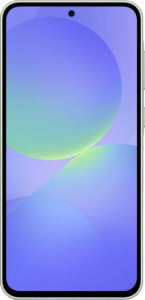
Samsung Galaxy A36 5G
Samsung Galaxy F56 5G

Samsung Galaxy A36 5G Samsung Galaxy F56 5G

Overview

Welcome to our in-depth comparison of the Samsung Galaxy A36 5G and the Samsung Galaxy F56 5G. Both phones share a surprising amount of common ground — from their OLED displays and 5000 mAh batteries to their 45W fast charging and Android 15 software. Yet under the hood, they take notably different paths when it comes to raw processing performance, connectivity features like NFC, and audio capabilities. Read on to discover which device truly suits your needs.

Common Features

  • Neither device has a rugged build or can be folded.
  • Both phones feature an OLED/AMOLED display with a resolution of 1080 x 2340 px and a 120Hz refresh rate.
  • Both displays are protected by Gorilla Glass Victus.
  • Dolby Vision is not supported on either device.
  • Neither phone has a secondary screen.
  • Both devices offer 256GB of internal storage.
  • Both are built on a 4 nm semiconductor process.
  • Both chipsets support 64-bit, DirectX 12, big.LITTLE technology, and have 8 CPU threads with integrated graphics.
  • Both phones have a multi-lens main camera with a 50MP main sensor and an 8MP secondary sensor, plus OIS.
  • The front camera is 12MP on both devices.
  • Main camera video recording reaches 2160p at 30 fps on both phones.
  • Both run Android 15 and share the same privacy features, including clipboard warnings, location privacy options, and camera/microphone privacy options.
  • Neither phone supports Mail Privacy Protection or blocks cross-site tracking, but both support theme customization and can block app tracking.
  • Both phones have a 5000 mAh battery with 45W fast charging, and neither supports wireless charging or has a removable battery.
  • Neither phone includes a charger in the box.
  • Neither device has a 3.5mm audio jack, LDAC, aptX Lossless, or a radio.
  • Both phones support 5G, Wi-Fi 6 (802.11ax), Bluetooth 5.3, USB Type-C (USB 2.0), and have a fingerprint scanner.
  • Neither phone has emergency SOS via satellite or crash detection.
  • Both devices have a video light, no sapphire glass display, no curved display, and no e-paper display.

Main Differences

  • Weight is 195 g on Samsung Galaxy A36 5G and 180 g on Samsung Galaxy F56 5G.
  • Thickness is 7.4 mm on Samsung Galaxy A36 5G and 7.2 mm on Samsung Galaxy F56 5G.
  • Screen size is 6.7″ on Samsung Galaxy A36 5G and 6.74″ on Samsung Galaxy F56 5G.
  • HDR10 and HDR10+ support is present on Samsung Galaxy A36 5G but not available on Samsung Galaxy F56 5G.
  • Always-On Display is available on Samsung Galaxy A36 5G but not on Samsung Galaxy F56 5G.
  • RAM is 12GB on Samsung Galaxy A36 5G and 8GB on Samsung Galaxy F56 5G.
  • The chipset is Qualcomm Snapdragon 6 Gen 3 on Samsung Galaxy A36 5G and Samsung Exynos 1480 on Samsung Galaxy F56 5G.
  • The GPU is Adreno 710 on Samsung Galaxy A36 5G and Xclipse 530 on Samsung Galaxy F56 5G.
  • CPU speed is 4 x 2.4 & 4 x 1.8 GHz on Samsung Galaxy A36 5G and 4 x 2.75 & 4 x 2.05 GHz on Samsung Galaxy F56 5G.
  • Geekbench 6 multi-core score is 2917 on Samsung Galaxy A36 5G and 3398 on Samsung Galaxy F56 5G.
  • Geekbench 6 single-core score is 1007 on Samsung Galaxy A36 5G and 1161 on Samsung Galaxy F56 5G.
  • GPU clock speed is 800 MHz on Samsung Galaxy A36 5G and 1300 MHz on Samsung Galaxy F56 5G.
  • Maximum memory bandwidth is 25.6 GB/s on Samsung Galaxy A36 5G and 51.2 GB/s on Samsung Galaxy F56 5G.
  • The third rear camera sensor is 5MP on Samsung Galaxy A36 5G and 2MP on Samsung Galaxy F56 5G.
  • HDR10 video recording is not supported on Samsung Galaxy A36 5G but is available on Samsung Galaxy F56 5G.
  • Stereo speakers are present on Samsung Galaxy A36 5G but not on Samsung Galaxy F56 5G.
  • NFC is available on Samsung Galaxy A36 5G but not on Samsung Galaxy F56 5G.
  • SIM support includes 1 SIM, 1 eSIM, 2 SIM, and 2 eSIM options on Samsung Galaxy A36 5G, while Samsung Galaxy F56 5G supports only 2 physical SIM cards.
  • Download speed reaches 2900 Mbits/s on Samsung Galaxy A36 5G and 3790 Mbits/s on Samsung Galaxy F56 5G.
  • Upload speed is 1600 Mbits/s on Samsung Galaxy A36 5G and 1280 Mbits/s on Samsung Galaxy F56 5G.
Specs Comparison
Samsung Galaxy A36 5G

Samsung Galaxy A36 5G

Samsung Galaxy F56 5G

Samsung Galaxy F56 5G

Design:
weight 195 g 180 g
thickness 7.4 mm 7.2 mm
width 78.2 mm 77.3 mm
height 162.9 mm 162 mm
volume 94.266972 cm³ 90.16272 cm³
has a rugged build
can be folded

Both the Samsung Galaxy A36 5G and the Galaxy F56 5G are slim, non-rugged slabs of similar height — 162.9 mm vs 162 mm — making them near-identical in terms of how tall they sit in the hand. The real differentiators emerge when you look at weight and overall bulk. The F56 5G comes in at 180 g versus the A36 5G's 195 g, a 15-gram gap that, while it may sound minor on paper, is genuinely noticeable during extended one-handed use or when the phone is in a shirt pocket. Similarly, the F56 is marginally narrower (77.3 mm vs 78.2 mm) and thinner (7.2 mm vs 7.4 mm), which compounds into a meaningfully smaller total volume: 90.16 cm³ against 94.27 cm³.

That roughly 4% reduction in volume on the F56 5G means it achieves a slightly more refined, pocketable form factor overall. For users who prioritize a phone that feels light and unobtrusive throughout the day, these differences collectively tip in the F56's favor. Neither device offers a rugged build or foldable form factor, so both are conventional glass-slab designs with equivalent fragility considerations.

In terms of design, the Galaxy F56 5G holds a clear edge — it is lighter, thinner, and more compact across every physical dimension. This advantage is modest but consistent, and it speaks directly to day-to-day ergonomics and portability.

Display:
Display type OLED/AMOLED OLED/AMOLED
screen size 6.7" 6.74"
pixel density 385 ppi 382 ppi
resolution 1080 x 2340 px 1080 x 2340 px
refresh rate 120Hz 120Hz
has branded damage-resistant glass
Gorilla Glass version Gorilla Glass Victus Gorilla Glass Victus
supports HDR10
supports HDR10+
Always-On Display
supports Dolby Vision
Has a secondary screen
has a touch screen

At the foundation, these two phones share the same display technology — OLED/AMOLED panels with identical 1080 x 2340 px resolution, a 120Hz refresh rate, and Gorilla Glass Victus protection. The screen sizes are virtually indistinguishable at 6.7″ and 6.74″, resulting in nearly identical pixel densities of 385 ppi and 382 ppi — a difference that is invisible to the naked eye. For everyday use, both panels will look sharp, fluid, and well-protected against scratches and drops.

Where the A36 5G pulls meaningfully ahead is in its HDR support. It is compatible with both HDR10 and HDR10+, meaning streaming content from platforms that support these standards will render with greater dynamic range — brighter highlights, deeper shadows, and more vivid colors. The F56 5G supports neither, so its AMOLED panel, while still capable, won't unlock that elevated visual experience for HDR content. Additionally, the A36 5G includes an Always-On Display, a practical convenience feature for checking time, notifications, or battery status at a glance without waking the phone — something the F56 5G omits entirely.

The Galaxy A36 5G has a clear display advantage. The shared fundamentals are strong on both devices, but the A36's HDR10/HDR10+ support and Always-On Display represent genuine, everyday-usable upgrades over the F56 5G, particularly for users who consume a lot of video content or value ambient glanceability.

Performance:
internal storage 256GB 256GB
RAM 12GB 8GB
Chipset (SoC) name Qualcomm Snapdragon 6 Gen 3 Samsung Exynos 1480
GPU name Adreno 710 Xclipse 530
CPU speed 4 x 2.4 & 4 x 1.8 GHz 4 x 2.75 & 4 x 2.05 GHz
Geekbench 6 result (multi) 2917 3398
Geekbench 6 result (single) 1007 1161
GPU clock speed 800 MHz 1300 MHz
Has integrated LTE
RAM speed 2750 MHz 3200 MHz
semiconductor size 4 nm 4 nm
Supports 64-bit
DirectX version DirectX 12 DirectX 12
Has integrated graphics
Uses big.LITTLE technology
CPU threads 8 threads 8 threads
Uses HMP
maximum memory bandwidth 25.6 GB/s 51.2 GB/s
OpenCL version 2 2
memory channels 2 4
maximum memory amount 12GB 12GB
DDR memory version 5 5

Under the hood, these two phones take notably different approaches. The A36 5G runs on the Qualcomm Snapdragon 6 Gen 3 while the F56 5G is powered by the Samsung Exynos 1480 — both etched on a 4 nm process. Despite sharing that manufacturing advantage, the Exynos 1480 pulls ahead decisively in raw CPU benchmarks: Geekbench 6 single-core scores of 1161 vs 1007 and multi-core scores of 3398 vs 2917 indicate that the F56 5G will feel noticeably snappier in demanding tasks, from app launches to complex processing workloads. The F56's CPU cores also run at higher clock speeds across both its performance and efficiency clusters.

The GPU story favors the F56 5G even more strongly. Its Xclipse 530 runs at 1300 MHz compared to the A36's Adreno 710 at 800 MHz, and this is compounded by a dramatic memory subsystem advantage: the F56 offers 51.2 GB/s of memory bandwidth across 4 memory channels, versus just 25.6 GB/s across 2 channels on the A36. That doubled bandwidth directly feeds the GPU, meaning graphics-intensive games and tasks will have far more headroom on the F56. The one area where the A36 5G holds an edge is RAM — it ships with 12 GB versus the F56's 8 GB, which benefits heavy multitaskers keeping many apps alive in the background.

On balance, the Galaxy F56 5G has a clear performance advantage. Its superior CPU scores, significantly faster GPU clock, and doubled memory bandwidth outweigh the A36 5G's RAM lead for most use cases — particularly gaming and sustained performance scenarios. The A36's extra RAM offers some multitasking resilience, but the F56's raw processing and graphics power make it the stronger performer in this category.

Cameras:
megapixels (main camera) 50 & 8 & 5 MP 50 & 8 & 2 MP
wide aperture (main camera) 1.8 & 2.2 & 2.4f 1.8 & 2.2 & 2.4f
Has a dual-lens (or multi-lens) main camera
megapixels (front camera) 12MP 12MP
has built-in optical image stabilization
video recording (main camera) 2160 x 30 fps 2160 x 30 fps
Has a dual-tone LED flash
number of flash LEDs 1 1
has a BSI sensor
has a CMOS sensor
has continuous autofocus when recording movies
Has phase-detection autofocus for photos
supports slow-motion video recording
has a built-in HDR mode
has manual exposure
has a flash
optical zoom 0x 0x
has manual ISO
has a serial shot mode
has manual focus
has a front camera
Has laser autofocus
Shoots 360° panorama
has manual white balance
has touch autofocus
has manual shutter speed
can create panoramas in-camera
wide aperture (front camera) 2.2f 2.2f
Has timelapse function
Has a front-facing LED flash
has a dual-lens (or multi-lens) front camera
supports HDR10 recording
supports Dolby Vision recording
has a front-facing camera under the display
Has a RGB LED flash
has 3D photo/video recording capabilities

The camera hardware on these two phones is strikingly similar. Both feature a triple-lens rear system anchored by a 50 MP main shooter and an 8 MP ultrawide, both offer OIS, phase-detection autofocus, and top out at 4K 30fps video. The front cameras match exactly at 12 MP with identical apertures. The only hardware difference in the rear array is the depth or macro tertiary lens: the A36 5G offers 5 MP while the F56 5G provides just 2 MP. In practice, neither ultra-low-resolution depth sensor dramatically changes portrait results — the primary computational work is done by software — but the A36's sensor does capture marginally more detail in that role.

The more meaningful divergence lies in video capability. The F56 5G supports HDR10 video recording, whereas the A36 5G does not. For users who shoot a lot of video and plan to watch or share it on HDR-capable screens, this means the F56 can capture footage with a wider dynamic range baked into the file — preserving detail in bright skies and shadowed faces simultaneously. It is a genuine advantage for videographers, even if it goes unnoticed by casual shooters.

This is a close category with a narrow split: the A36 5G has a slight edge in the tertiary lens, while the F56 5G counters with HDR10 video recording. For still photography, the two are functionally equivalent; for video enthusiasts, the F56 5G's HDR10 recording support tips the balance in its favor. Overall, this group is essentially evenly matched with each phone holding one minor advantage over the other.

Operating system:
Android version Android 15 Android 15
has clipboard warnings
has location privacy options
has camera/microphone privacy options
has Mail Privacy Protection
has theme customization
can block app tracking
blocks cross-site tracking
has on-device machine learning
has notification permissions
has media picker
Can play games while they download
has dark mode
has Wi-Fi password sharing
has battery health check
has an extra dim mode
has focus modes
has dynamic theming
can offload apps
Has customizable notifications
has Live Text
has full-page screenshots
supports split screen
gets direct OS updates
has PiP
Can be used as a PC
Has sharing intents
has a child lock
Supports widgets
Is free and open source
Has offline voice recognition
has voice commands
Tracks the current position of a mobile device
is a multi-user system
has Quick Start

When it comes to software, these two phones are carbon copies of each other. Both ship with Android 15 and carry an identical feature set across every single tracked specification — from privacy controls like location and camera/microphone permissions, to productivity features like split-screen, picture-in-picture, and dynamic theming. Neither receives direct OS updates, and neither supports features like Wi-Fi password sharing, focus modes, or PC mode.

This level of parity is not coincidental — both are Samsung devices running One UI on top of Android 15, so the software experience a user gets on one will be functionally indistinguishable from the other. Features like on-device machine learning, offline voice recognition, battery health check, and multi-user support are present on both, meaning there is no software-driven reason to choose one over the other.

This group is a complete tie. The operating system and software feature set are identical across every data point provided, and neither phone holds any advantage here. A buyer's decision in this category comes down entirely to other spec groups.

Battery:
battery power 5000 mAh 5000 mAh
has wireless charging
Supports fast charging
charging speed 45W 45W
comes with a charger
has a removable battery
has a battery level indicator
has a rechargeable battery

Battery specs tell the same story here as the operating system did — total parity. Both the Galaxy A36 5G and the Galaxy F56 5G pack a 5000 mAh cell, support 45W fast charging, and omit wireless charging entirely. Neither comes bundled with a charger in the box, and neither has a removable battery. There is simply no differentiator to analyze within the provided data.

A 5000 mAh capacity is a solid baseline for a modern Android phone at this screen size, and 45W wired charging is reasonably fast — capable of delivering a significant charge in under an hour in typical real-world conditions. The absence of wireless charging is a shared limitation worth noting for users who rely on charging pads, but again, it affects both devices equally.

This group is a complete tie. Every battery specification is identical across both phones, so this category offers no basis for preferring one over the other.

Audio:
has a socket for a 3.5 mm audio jack
has stereo speakers
has LDAC
has aptX Lossless
Has a radio

Audio is where a meaningful gap opens up despite an otherwise sparse spec set. Both phones drop the 3.5mm headphone jack and neither supports high-fidelity wireless codecs like LDAC or aptX Lossless — so wired analog audio and premium Bluetooth quality are off the table for both. However, the Galaxy A36 5G includes stereo speakers, while the F56 5G does not.

That distinction matters more than it might initially seem. Stereo speakers produce sound from two separate channels, creating width and spatial separation that makes media consumption — videos, music, gaming — noticeably more immersive when listening without headphones. A single mono speaker, by contrast, delivers a flatter, more directional sound. For anyone who regularly watches content or plays games at moderate to high volume through the phone's built-in speakers, the A36 5G will deliver a clearly more engaging experience.

The Galaxy A36 5G has a clear advantage in this category. The addition of stereo speakers is a practical, everyday-use upgrade that the F56 5G simply cannot match, making the A36 the stronger choice for users who prioritize built-in audio quality.

Connectivity & Features:
release date March 2025 May 2025
has 5G support
Wi-Fi version Wi-Fi 4 (802.11n), Wi-Fi 5 (802.11ac), Wi-Fi 6 (802.11ax) Wi-Fi 4 (802.11n), Wi-Fi 5 (802.11ac), Wi-Fi 6 (802.11ax)
SIM cards 1 SIM, 1 eSIM, 2 SIM, 2 eSIM 2 SIM
Bluetooth version 5.3 5.3
Has USB Type-C
USB version 2 2
has NFC
download speed 2900 MBits/s 3790 MBits/s
upload speed 1600 MBits/s 1280 MBits/s
Has a fingerprint scanner
has emergency SOS via satellite
has crash detection
is DLNA-certified
has a gyroscope
supports ANT+
Has a heart rate monitor
has GPS
has a compass
supports Wi-Fi
Has an infrared sensor
has an accelerometer
has a cellular module
Has a barometer
has an HDMI output
Uses 3D facial recognition
Has an iris scanner
Stylus included
supports Galileo
Has motion tracking
Has optical tracking
Has a built-in projector

Across most connectivity fundamentals, these two phones are well matched — both support 5G, Wi-Fi 6, Bluetooth 5.3, USB Type-C, and the same suite of sensors including GPS, Galileo, gyroscope, and accelerometer. The real divergence comes down to two specific areas: NFC support and SIM flexibility. The Galaxy A36 5G includes NFC, enabling contactless payments and quick device pairing, while the F56 5G omits it entirely — a tangible daily-use limitation for anyone who relies on mobile payments or transit cards.

SIM configuration is the other notable split. The A36 5G supports not only dual physical SIMs but also eSIM — allowing users to hold up to two physical SIMs and two eSIMs simultaneously. The F56 5G is limited to 2 physical SIMs only, with no eSIM support. For frequent travelers or users who want to maintain separate personal and work lines digitally, the A36's eSIM capability is a meaningful practical advantage. On the cellular speed side, the F56 5G posts a higher 5G download speed of 3790 Mbits/s versus the A36's 2900 Mbits/s, though the A36 edges ahead on upload at 1600 Mbits/s compared to 1280 Mbits/s. In real-world use, both are fast enough that this gap is rarely felt.

The Galaxy A36 5G holds a clear connectivity advantage. The inclusion of NFC and eSIM support are both practical, widely-used features that the F56 5G simply lacks, and together they represent a more versatile and future-ready connectivity package regardless of the F56's marginal lead in peak download speed.

Miscellaneous:
has a video light
Has sapphire glass display
Has a curved display
Has an e-paper display

The miscellaneous specs for these two phones offer nothing to separate them. Both have a video light, and neither features sapphire glass, a curved display, or an e-paper display — every data point is identical.

This group is a complete tie. With no differentiators present in the provided data, this category has no bearing on a purchasing decision between the two devices.

Comparison Summary & Verdict

After a thorough comparison, both phones prove to be capable mid-range contenders, but each shines in distinct areas. The Samsung Galaxy A36 5G stands out with its NFC support, stereo speakers, Always-On Display, HDR10 and HDR10+ compatibility, more versatile eSIM and dual-SIM options, and a higher-resolution depth sensor. It is the stronger all-rounder for users who value everyday convenience features and a richer media experience. The Samsung Galaxy F56 5G, on the other hand, pulls ahead in raw performance, delivering higher Geekbench scores, a faster GPU clock at 1300 MHz, double the memory bandwidth at 51.2 GB/s, and a higher download speed — all in a lighter and slimmer body. It also gains HDR10 video recording. If performance per gram is your priority, the F56 5G is the smarter pick; if you want a more feature-complete package for daily life, the A36 5G is the safer choice.

Samsung Galaxy A36 5G
Buy Samsung Galaxy A36 5G if...

Buy the Samsung Galaxy A36 5G if you want NFC for contactless payments, stereo speakers, Always-On Display, and broader SIM flexibility including eSIM support.

Samsung Galaxy F56 5G
Buy Samsung Galaxy F56 5G if...

Buy the Samsung Galaxy F56 5G if you prioritize faster raw CPU and GPU performance, greater memory bandwidth, and a lighter and slimmer design.