Samsung Galaxy A36 5G
Tecno Camon 40 Pro 4G

Samsung Galaxy A36 5G Tecno Camon 40 Pro 4G

Overview

Welcome to our in-depth comparison of the Samsung Galaxy A36 5G and the Tecno Camon 40 Pro 4G. These two mid-range smartphones take noticeably different approaches across key areas including performance and connectivity, camera hardware, display quality, and everyday usability. Whether you prioritize raw processing power and next-generation network support or a more selfie-focused camera setup and a refined display experience, this comparison will help you find the device that truly fits your needs.

Common Features

  • Both phones are waterproof and share the same water resistance rating category.
  • Neither phone has a rugged build.
  • Neither phone can be folded.
  • Both phones feature an OLED/AMOLED display type.
  • Both phones have branded damage-resistant glass on the display.
  • Both phones support Always-On Display.
  • Neither phone supports Dolby Vision.
  • Neither phone has a secondary screen.
  • Both phones have a touchscreen.
  • Both phones come with 256GB of internal storage and 12GB of RAM.
  • Both phones run Android 15.
  • Both phones support fast charging at 45W.
  • Neither phone supports wireless charging.
  • Neither phone has a removable battery.
  • Both phones have stereo speakers but no 3.5mm audio jack.
  • Neither phone supports LDAC or aptX Lossless audio.
  • Both phones have NFC and a fingerprint scanner.
  • Both phones use USB Type-C with USB version 2.
  • Both phones have a multi-lens main camera with optical image stabilization.
  • Both phones support 4K video recording, slow-motion, phase-detection autofocus, and built-in HDR mode.

Main Differences

  • Weight is 195g on Samsung Galaxy A36 5G and 178g on Tecno Camon 40 Pro 4G.
  • IP rating is IP67 on Samsung Galaxy A36 5G and IP68 on Tecno Camon 40 Pro 4G.
  • Display refresh rate is 120Hz on Samsung Galaxy A36 5G and 144Hz on Tecno Camon 40 Pro 4G.
  • Screen protection uses Gorilla Glass Victus on Samsung Galaxy A36 5G and Gorilla Glass 7i on Tecno Camon 40 Pro 4G.
  • HDR10 and HDR10+ support is present on Samsung Galaxy A36 5G but not available on Tecno Camon 40 Pro 4G.
  • The chipset is Qualcomm Snapdragon 6 Gen 3 on Samsung Galaxy A36 5G and MediaTek Helio G100 on Tecno Camon 40 Pro 4G.
  • AnTuTu benchmark score is 619,557 on Samsung Galaxy A36 5G and 415,000 on Tecno Camon 40 Pro 4G.
  • Semiconductor size is 4nm on Samsung Galaxy A36 5G and 6nm on Tecno Camon 40 Pro 4G.
  • Maximum memory bandwidth is 25.6 GB/s on Samsung Galaxy A36 5G and 17.1 GB/s on Tecno Camon 40 Pro 4G.
  • Main camera configuration is 50 & 8 & 5 MP (triple) on Samsung Galaxy A36 5G and 50 & 8 MP (dual) on Tecno Camon 40 Pro 4G.
  • Front camera is 12MP on Samsung Galaxy A36 5G and 50MP on Tecno Camon 40 Pro 4G.
  • Main camera video recording goes up to 2160p at 30fps on Samsung Galaxy A36 5G and 2160p at 60fps on Tecno Camon 40 Pro 4G.
  • A dual-tone LED flash with 2 LEDs is present on Tecno Camon 40 Pro 4G but not available on Samsung Galaxy A36 5G.
  • Battery capacity is 5000 mAh on Samsung Galaxy A36 5G and 5200 mAh on Tecno Camon 40 Pro 4G.
  • A charger is included in the box with Tecno Camon 40 Pro 4G but not with Samsung Galaxy A36 5G.
  • FM radio is available on Tecno Camon 40 Pro 4G but not on Samsung Galaxy A36 5G.
  • 5G support is available on Samsung Galaxy A36 5G but not on Tecno Camon 40 Pro 4G.
  • Wi-Fi 6 (802.11ax) support is present on Samsung Galaxy A36 5G but not on Tecno Camon 40 Pro 4G.
  • Download speed reaches 2900 Mbits/s on Samsung Galaxy A36 5G and 650 Mbits/s on Tecno Camon 40 Pro 4G.
  • An infrared sensor is present on Tecno Camon 40 Pro 4G but not on Samsung Galaxy A36 5G.
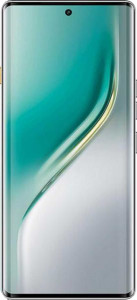
  • A curved display is featured on Tecno Camon 40 Pro 4G but not on Samsung Galaxy A36 5G.
Specs Comparison
Samsung Galaxy A36 5G

Samsung Galaxy A36 5G

Tecno Camon 40 Pro 4G

Tecno Camon 40 Pro 4G

Design:
water resistance Waterproof Waterproof
weight 195 g 178 g
thickness 7.4 mm 7.3 mm
width 78.2 mm 74.6 mm
height 162.9 mm 164.3 mm
volume 94.266972 cm³ 89.474494 cm³
Ingress Protection (IP) rating IP67 IP68
has a rugged build
can be folded

Both phones share a slim profile, with thickness virtually identical at 7.4 mm for the Samsung Galaxy A36 5G and 7.3 mm for the Tecno Camon 40 Pro 4G. Neither device is foldable or ruggedized, so they occupy the same mainstream-slab category. Where they diverge more meaningfully is in overall footprint: the A36 is noticeably wider at 78.2 mm versus the Camon's 74.6 mm, which in practice means one-handed reach is more comfortable on the Tecno. The A36 also displaces more volume (94.27 cm³ vs 89.47 cm³), reinforcing that it is the physically bulkier of the two despite being marginally shorter.

Weight is another point in the Camon 40 Pro's favor. At 178 g it is 17 g lighter than the A36's 195 g — a difference that sounds minor on paper but is perceptible during extended use, particularly for users who hold their phone for long reading or gaming sessions.

On water resistance the Camon 40 Pro edges ahead again: its IP68 rating certifies submersion beyond the 1-metre/30-minute threshold covered by the A36's IP67 certification. For most everyday scenarios — rain, splashes, an accidental drop in a sink — both ratings offer equivalent protection, but IP68 provides a meaningful extra margin if the device ends up submerged deeper or longer. Overall, the Tecno Camon 40 Pro 4G has a clear design advantage: it is lighter, narrower, more compact, and carries a superior ingress-protection rating.

Display:
Display type OLED/AMOLED OLED/AMOLED
screen size 6.7" 6.78"
pixel density 385 ppi 393 ppi
resolution 1080 x 2340 px 1080 x 2463 px
refresh rate 120Hz 144Hz
has branded damage-resistant glass
Gorilla Glass version Gorilla Glass Victus Gorilla Glass 7i
supports HDR10
supports HDR10+
Always-On Display
supports Dolby Vision
Has a secondary screen
has a touch screen

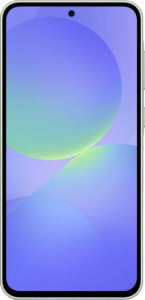
Both devices use OLED/AMOLED panels, so the baseline visual quality — deep blacks, vivid colors, high contrast — is shared. The screens are also nearly the same size, with the Tecno Camon 40 Pro's 6.78″ panel barely edging past the A36's 6.7″. Pixel density is similarly close (393 ppi vs 385 ppi), and at these figures both displays are effectively pixel-perfect to the human eye at normal viewing distances.

Where real differences emerge is in refresh rate and HDR support — and the two phones trade blows. The Camon 40 Pro's 144Hz refresh rate beats the A36's 120Hz, delivering marginally smoother scrolling and animation, which is most noticeable in gaming or fast-paced UI interactions. The A36, however, counters with HDR10 and HDR10+ support, which the Camon 40 Pro entirely lacks. This matters for streaming: on services like Netflix or Amazon Prime Video, HDR content will render with expanded brightness range and more nuanced color gradations on the A36, while the Camon simply cannot decode those signals.

On glass protection, the A36 carries Gorilla Glass Victus — Corning's more advanced tier — compared to the Camon's Gorilla Glass 7i, which is optimized for mid-range devices and offers somewhat less drop resilience. Both phones include an Always-On Display. On balance, the Samsung Galaxy A36 5G holds the display edge for most users: Gorilla Glass Victus and HDR10+ support represent more tangible, everyday advantages than the Camon's 24Hz refresh rate lead.
Performance:
internal storage 256GB 256GB
RAM 12GB 12GB
AnTuTu benchmark score 619557 415000
Chipset (SoC) name Qualcomm Snapdragon 6 Gen 3 MediaTek Helio G100
GPU name Adreno 710 Mali G57
CPU speed 4 x 2.4 & 4 x 1.8 GHz 2 x 2.2 & 6 x 2 GHz
GPU clock speed 800 MHz 1000 MHz
Has integrated LTE
RAM speed 2750 MHz 4266 MHz
semiconductor size 4 nm 6 nm
Supports 64-bit
DirectX version DirectX 12 DirectX 11
Has integrated graphics
OpenGL ES version 3.2 3.2
Uses big.LITTLE technology
CPU threads 8 threads 8 threads
Uses HMP
Has TrustZone
maximum memory bandwidth 25.6 GB/s 17.1 GB/s
OpenCL version 2 2
maximum memory amount 12GB 12GB
Thermal Design Power (TDP) 7W 5W
DDR memory version 5 4

The chipset gap here is substantial. The A36 runs on the Qualcomm Snapdragon 6 Gen 3, built on a 4 nm process, while the Camon 40 Pro relies on the MediaTek Helio G100 at 6 nm. The smaller node translates directly into greater transistor efficiency — the A36 can deliver more computational work per watt. This is reflected starkly in the AnTuTu scores: 619,557 for the A36 versus 415,000 for the Camon, a roughly 50% lead that places the two phones in meaningfully different performance tiers for demanding tasks like gaming, video editing, or running multiple apps simultaneously.

Memory architecture reinforces the A36's advantage. Its DDR5 RAM with 25.6 GB/s maximum memory bandwidth outpaces the Camon's DDR4 at 17.1 GB/s — faster data throughput means the processor spends less time waiting on memory, which matters most under sustained workloads. On the GPU side, the Adreno 710 in the A36 also supports DirectX 12, compared to DirectX 11 on the Camon's Mali G57, giving the A36 access to more modern graphics APIs for mobile gaming. The Camon's GPU does clock higher at 1000 MHz versus 800 MHz, but that advantage is largely neutralized by the architectural gap between the two GPU families.

The Camon's 5W TDP versus the A36's 7W hints that the Helio G100 runs cooler under load — but that is a byproduct of lower peak performance rather than superior efficiency. Storage capacity and RAM are identical at 256 GB / 12 GB on both devices. Overall, the Samsung Galaxy A36 5G holds a clear and decisive performance advantage, driven by a more modern chipset, faster memory architecture, and a significantly higher benchmark score.

Cameras:
megapixels (main camera) 50 & 8 & 5 MP 50 & 8 MP
wide aperture (main camera) 1.8 & 2.2 & 2.4f 1.9f
Has a dual-lens (or multi-lens) main camera
megapixels (front camera) 12MP 50MP
has built-in optical image stabilization
video recording (main camera) 2160 x 30 fps 2160 x 60 fps
Has a dual-tone LED flash
number of flash LEDs 1 2
has a BSI sensor
has a CMOS sensor
has continuous autofocus when recording movies
Has phase-detection autofocus for photos
supports slow-motion video recording
has a built-in HDR mode
has manual exposure
has a flash
optical zoom 0x 0x
has manual ISO
has a serial shot mode
has manual focus
has a front camera
Has laser autofocus
Shoots 360° panorama
has manual white balance
has touch autofocus
has manual shutter speed
can create panoramas in-camera
wide aperture (front camera) 2.2f 2.5f
Has timelapse function
Has a front-facing LED flash
has a dual-lens (or multi-lens) front camera
supports HDR10 recording
supports Dolby Vision recording
has a front-facing camera under the display
Has a RGB LED flash
has 3D photo/video recording capabilities

The rear camera systems are close on paper but differ in meaningful ways. The A36 fields a triple-lens setup — 50 + 8 + 5 MP — while the Camon 40 Pro stops at two lenses (50 + 8 MP), omitting the tertiary sensor. The A36's main lens also opens to f/1.8 versus the Camon's f/1.9, a small but real advantage in low-light capture since a wider aperture admits more light. Both include OIS and phase-detection autofocus, so stabilized, sharp shots are available on either device.

Video recording is where the Camon 40 Pro pulls ahead on the rear side: it captures 4K at 60 fps compared to the A36's 30 fps ceiling at the same resolution. For anyone shooting action footage or content intended for smooth slow-motion downsampling, that doubled frame rate is a tangible advantage. The Camon also carries a dual-tone LED flash with two LEDs versus the A36's single LED, which helps produce more natural-looking skin tones in flash-lit photos.

The sharpest differentiator, however, is the front camera. The Camon 40 Pro packs a 50 MP selfie sensor — more than four times the A36's 12 MP — making it a standout choice for selfie-focused users or video callers who want high-detail captures. The A36 counters with a wider front aperture (f/2.2 vs f/2.5), meaning its selfie lens gathers more light, which can help in dim conditions. Still, for users who prioritize the front camera, the Camon's resolution advantage is hard to overlook. Overall this group is split by use case: the A36 edges ahead for rear photography versatility and low-light stills, while the Camon 40 Pro is the stronger pick for selfies and video recording.

Operating system:
Android version Android 15 Android 15
has clipboard warnings
has location privacy options
has camera/microphone privacy options
has Mail Privacy Protection
has theme customization
can block app tracking
blocks cross-site tracking
has on-device machine learning
has notification permissions
has media picker
Can play games while they download
has dark mode
has Wi-Fi password sharing
has battery health check
has an extra dim mode
has focus modes
has dynamic theming
can offload apps
Has customizable notifications
has Live Text
has full-page screenshots
supports split screen
gets direct OS updates
has PiP
Can be used as a PC
Has sharing intents
has a child lock
Supports widgets
Is free and open source
Has offline voice recognition
has voice commands
Tracks the current position of a mobile device
is a multi-user system
has Quick Start

Across every single spec in this group, the Samsung Galaxy A36 5G and the Tecno Camon 40 Pro 4G are identical. Both ship with Android 15 and share the same full feature set — from privacy controls like camera/microphone permissions and app tracking blocks, to usability features like split-screen, Picture-in-Picture, dynamic theming, on-device machine learning, and offline voice recognition. Neither device gets direct OS updates, and neither supports Quick Start or cross-site tracking protection.

The breadth of shared features is genuinely strong for the mid-range segment. Highlights worth noting include on-device machine learning, which enables smarter camera processing and voice features without sending data to the cloud; dynamic theming, which adapts the system UI palette to wallpaper colors; and battery health check, a useful tool for monitoring long-term battery degradation. These are features that used to be flagship-exclusive and their presence on both devices speaks to how capable Android 15 is out of the box.

Because the spec data is completely uniform across both products, this group is an exact tie. Neither phone holds any OS-level advantage over the other based on the provided data, and the operating system should not be a deciding factor when choosing between these two devices.

Battery:
battery power 5000 mAh 5200 mAh
has wireless charging
Supports fast charging
charging speed 45W 45W
comes with a charger
has a removable battery
has a battery level indicator
has a rechargeable battery

Charging architecture is identical: both phones support 45W fast charging and neither offers wireless charging. At 45W, a full charge typically takes under an hour, so the experience at the cable is effectively the same on both devices. The capacity difference — 5200 mAh on the Camon 40 Pro versus 5000 mAh on the A36 — is real but modest, amounting to a 4% edge that would translate to perhaps 15–20 extra minutes of screen-on time under typical use rather than a full additional hour.

The more practically significant difference is in the box contents. The Camon 40 Pro includes a charger in the box, while the A36 does not. For buyers who do not already own a compatible 45W USB adapter, this is a non-trivial cost saving and convenience advantage — particularly relevant in markets where fast chargers are sold separately at a premium.

On balance, the Tecno Camon 40 Pro 4G takes a narrow but clear edge in this category. The slightly larger battery offers marginally better endurance, and the bundled charger adds tangible out-of-box value. Neither advantage is dramatic, but together they tip the scales in the Camon's favor for battery-conscious buyers.

Audio:
has a socket for a 3.5 mm audio jack
has stereo speakers
has LDAC
has aptX Lossless
Has a radio

The audio specs here are sparse, and for most of the feature set the two phones are identical. Neither includes a 3.5 mm headphone jack, so wired listening requires a USB-C adapter on both devices. Both offer stereo speakers, which is a meaningful baseline for media consumption, and neither supports high-fidelity Bluetooth codecs like LDAC or aptX Lossless, capping wireless audio quality at the same ceiling.

The sole differentiator is the Camon 40 Pro's built-in FM radio, which the A36 lacks entirely. This is a feature that has largely disappeared from flagship devices but retains genuine utility in markets or scenarios where data connectivity is limited or unreliable — it allows the user to receive local broadcast audio without any internet connection or data cost.

For the majority of users who rely on streaming services, this distinction will be irrelevant. But for those in areas with strong local radio culture or patchy mobile data, the Camon's radio adds a meaningful layer of offline functionality. Based strictly on the provided data, the Tecno Camon 40 Pro 4G holds a narrow edge by virtue of that single exclusive feature, while both devices are otherwise evenly matched across all other audio specifications.

Connectivity & Features:
release date March 2025 March 2025
has 5G support
Wi-Fi version Wi-Fi 4 (802.11n), Wi-Fi 5 (802.11ac), Wi-Fi 6 (802.11ax) Wi-Fi 4 (802.11n), Wi-Fi 5 (802.11ac)
SIM cards 1 SIM, 1 eSIM, 2 SIM, 2 eSIM 2 SIM
has an external memory slot
Has USB Type-C
USB version 2 2
has NFC
download speed 2900 MBits/s 650 MBits/s
upload speed 1600 MBits/s 150 MBits/s
Has a fingerprint scanner
has emergency SOS via satellite
has crash detection
is DLNA-certified
has a gyroscope
supports ANT+
Has a heart rate monitor
has GPS
has a compass
supports Wi-Fi
Has an infrared sensor
has an accelerometer
has a cellular module
Has a barometer
has an HDMI output
Uses 3D facial recognition
Has an iris scanner
Stylus included
supports Galileo
Has motion tracking
Has optical tracking
Has a built-in projector

The most consequential divide in this group is cellular technology. The A36 supports 5G with download speeds up to 2900 Mbits/s, while the Camon 40 Pro is a 4G-only device capped at 650 Mbits/s down and just 150 Mbits/s up. In practical terms, on a 5G network the A36 can download a 4K film in seconds and sustain low-latency connections for cloud gaming or video calls — the Camon simply cannot access those speeds regardless of network availability. The A36 also supports Wi-Fi 6 (802.11ax), adding faster and more efficient wireless connectivity in congested environments, whereas the Camon tops out at Wi-Fi 5. For future-proofing alone, the A36's connectivity stack is a generation ahead.

SIM flexibility is another area where the A36 pulls away: it supports dual physical SIM plus dual eSIM, offering up to four simultaneous profiles — useful for separating work and personal lines or managing international roaming without swapping cards. The Camon is limited to two physical SIMs with no eSIM support, which is a notable omission as eSIM adoption continues to grow globally.

The Camon does claim one exclusive: a built-in infrared sensor, which lets the phone function as a universal remote for TVs and home appliances — a niche but genuinely handy feature the A36 lacks. Everything else, from NFC and GPS to the sensor suite, is shared between the two. That one perk aside, the Samsung Galaxy A36 5G holds a commanding advantage in this group, driven by 5G connectivity, superior download throughput, Wi-Fi 6 support, and significantly more flexible SIM management.

Miscellaneous:
has a video light
Has sapphire glass display
Has a curved display
Has an e-paper display

This is a lean spec group with only one meaningful differentiator: the Camon 40 Pro features a curved display, while the A36 uses a flat panel. Both share a video light and neither employs sapphire glass or an e-paper display, so those points are a wash.

The curved screen on the Camon 40 Pro is primarily an aesthetic and ergonomic choice — the edges of the display gently wrap around the frame, which can make the phone feel sleeker in hand and give content a more immersive appearance. The trade-off is that curved displays can be slightly more prone to accidental edge touches and are generally harder to protect with standard flat-cut screen protectors. The A36's flat display, by contrast, is more practical for case compatibility and screen protection, even if it looks less premium by comparison.

Based solely on the data provided, neither approach is objectively superior — it comes down to personal preference. Users who value aesthetics and a premium in-hand feel may lean toward the Camon 40 Pro, while those who prioritize practicality and ease of screen protection will find the A36's flat panel more accommodating. This group is effectively a tie in functional terms, with the curved display being the only distinguishing factor.

Comparison Summary & Verdict

After reviewing all the evidence, both phones serve distinct types of users. The Samsung Galaxy A36 5G stands out with its superior Snapdragon 6 Gen 3 chipset, significantly higher AnTuTu benchmark score, 5G connectivity, Wi-Fi 6 support, and blazing-fast download speeds, making it the stronger pick for performance-oriented users and those who want future-proof network capabilities. It also offers HDR10 and HDR10+ display support and a versatile triple-camera system. The Tecno Camon 40 Pro 4G, on the other hand, appeals to users who value a higher IP68 water resistance rating, a smoother 144Hz curved display, a remarkable 50MP front camera, 4K 60fps video recording, a larger 5200 mAh battery with an included charger, and added extras like an infrared sensor and FM radio. Neither phone is a clear-cut winner; your ideal choice depends entirely on what you value most.

Samsung Galaxy A36 5G
Buy Samsung Galaxy A36 5G if...

Buy the Samsung Galaxy A36 5G if you want stronger overall performance, 5G connectivity, Wi-Fi 6 support, and HDR10+ display quality for a future-ready experience.

Tecno Camon 40 Pro 4G
Buy Tecno Camon 40 Pro 4G if...

Buy the Tecno Camon 40 Pro 4G if you prioritize a 50MP front camera, a 144Hz curved display, IP68 water resistance, and a larger battery that comes with a charger included.