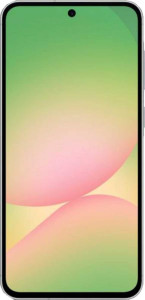
Samsung Galaxy A56 5G
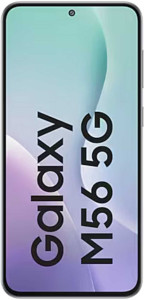
Samsung Galaxy M56 5G

Samsung Galaxy A56 5G Samsung Galaxy M56 5G

Overview

Choosing between the Samsung Galaxy A56 5G and the Samsung Galaxy M56 5G is no simple task — both are mid-range contenders from Samsung sharing the same Android 15 foundation, identical battery capacity, and a familiar design language. Yet beneath the surface, meaningful differences emerge across performance, display features, and everyday usability. In this comparison, we put both phones side by side to help you determine which one truly fits your needs.

Common Features

  • Neither device has a rugged build or can be folded.
  • Both devices feature an OLED/AMOLED display with a 1080 x 2340 px resolution and a 120Hz refresh rate.
  • Both devices use Gorilla Glass Victus for damage-resistant screen protection.
  • Dolby Vision is not supported on either device.
  • Neither device has a secondary screen.
  • Both devices have a touchscreen.
  • Both devices offer 256GB of internal storage.
  • Both devices use the Xclipse 530 GPU running at 1300 MHz.
  • Both devices are built on a 4 nm semiconductor and support 64-bit processing.
  • Both devices have a RAM speed of 3200 MHz and support DirectX 12.
  • Both devices include integrated LTE.
  • Both main cameras share a wide aperture of 1.8 & 2.2 & 2.4f and feature a multi-lens setup.
  • Both front cameras are 12MP.
  • Both devices support optical image stabilization and record main camera video at 2160 x 30 fps.
  • Both devices run Android 15 with theme customization, clipboard warnings, location privacy options, and camera/microphone privacy options.
  • Neither device supports Mail Privacy Protection or blocks cross-site tracking, but both can block app tracking.
  • Both devices have a 5000 mAh battery with 45W fast charging, no wireless charging, and no removable battery.
  • Neither device includes a charger in the box.
  • Neither device has a 3.5 mm audio jack, LDAC, aptX Lossless, or a radio.
  • Both devices support 5G, Wi-Fi 6 (802.11ax), Bluetooth 5.3, USB Type-C (USB 2.0), and have a fingerprint scanner.
  • Both devices have an upload speed of 1280 MBits/s and do not support emergency SOS via satellite.

Main Differences

  • Weight is 198 g on Samsung Galaxy A56 5G and 180 g on Samsung Galaxy M56 5G.
  • Thickness is 7.4 mm on Samsung Galaxy A56 5G and 7.2 mm on Samsung Galaxy M56 5G.
  • Screen size is 6.7″ on Samsung Galaxy A56 5G and 6.74″ on Samsung Galaxy M56 5G.
  • Pixel density is 385 ppi on Samsung Galaxy A56 5G and 382 ppi on Samsung Galaxy M56 5G.
  • HDR10 support is present on Samsung Galaxy A56 5G but not available on Samsung Galaxy M56 5G.
  • HDR10+ support is present on Samsung Galaxy A56 5G but not available on Samsung Galaxy M56 5G.
  • Always-On Display is available on Samsung Galaxy A56 5G but not on Samsung Galaxy M56 5G.
  • RAM is 12GB on Samsung Galaxy A56 5G and 8GB on Samsung Galaxy M56 5G.
  • The chipset is Samsung Exynos 1580 on Samsung Galaxy A56 5G and Samsung Exynos 1480 on Samsung Galaxy M56 5G.
  • CPU speed is 1 x 2.9 & 3 x 2.6 & 4 x 1.95 GHz on Samsung Galaxy A56 5G and 4 x 2.75 & 4 x 2.05 GHz on Samsung Galaxy M56 5G.
  • Geekbench 6 multi-core score is 3893 on Samsung Galaxy A56 5G and 3398 on Samsung Galaxy M56 5G.
  • Geekbench 6 single-core score is 1360 on Samsung Galaxy A56 5G and 1161 on Samsung Galaxy M56 5G.
  • Secondary and tertiary camera resolution is 12MP & 5MP on Samsung Galaxy A56 5G and 8MP & 2MP on Samsung Galaxy M56 5G.
  • Stereo speakers are present on Samsung Galaxy A56 5G but not on Samsung Galaxy M56 5G.
  • Samsung Galaxy A56 5G supports 2 physical SIMs and 2 eSIMs, while Samsung Galaxy M56 5G supports only 2 physical SIMs.
  • NFC is available on Samsung Galaxy A56 5G but not on Samsung Galaxy M56 5G.
  • Download speed is 5100 MBits/s on Samsung Galaxy A56 5G and 3790 MBits/s on Samsung Galaxy M56 5G.
Specs Comparison
Samsung Galaxy A56 5G

Samsung Galaxy A56 5G

Samsung Galaxy M56 5G

Samsung Galaxy M56 5G

Design:
weight 198 g 180 g
thickness 7.4 mm 7.2 mm
width 77.5 mm 77.3 mm
height 162.2 mm 162 mm
volume 93.0217 cm³ 90.16272 cm³
has a rugged build
can be folded

In terms of overall footprint, the two phones are nearly identical twins. Their height (162.2 mm vs 162 mm) and width (77.5 mm vs 77.3 mm) differ by less than half a millimeter — a gap that is completely imperceptible when holding either device. Both are non-folding, standard-slab designs with no rugged reinforcement, so they occupy the same everyday-smartphone category without any meaningful structural distinction.

Where a real difference does emerge is in weight and thickness. The Galaxy M56 5G comes in at 180 g and 7.2 mm, while the A56 5G is noticeably heavier at 198 g and marginally thicker at 7.4 mm. An 18-gram gap may look small on paper, but over the course of a full day of use — one-handed scrolling, extended calls, or prolonged gaming sessions — the lighter M56 translates into measurably less hand and wrist fatigue. The slimmer profile reinforces this, making the M56 feel slightly more refined in-pocket as well.

Based strictly on these design specs, the Galaxy M56 5G holds a clear edge: it achieves a virtually identical form factor while being lighter and marginally slimmer. For users who prioritize comfort during long usage periods, the M56 is the more ergonomically favorable choice of the two.

Display:
Display type OLED/AMOLED OLED/AMOLED
screen size 6.7" 6.74"
pixel density 385 ppi 382 ppi
resolution 1080 x 2340 px 1080 x 2340 px
refresh rate 120Hz 120Hz
has branded damage-resistant glass
Gorilla Glass version Gorilla Glass Victus Gorilla Glass Victus
supports HDR10
supports HDR10+
Always-On Display
supports Dolby Vision
Has a secondary screen
has a touch screen

Both phones share a strong display foundation: OLED/AMOLED panels, a 1080 x 2340 px resolution, a smooth 120Hz refresh rate, and Gorilla Glass Victus protection. Screen sizes are essentially the same — 6.7″ on the A56 vs 6.74″ on the M56 — and the pixel density gap (385 ppi vs 382 ppi) is completely invisible to the human eye. For the vast majority of daily use cases, these two displays will look and feel indistinguishable.

The meaningful split comes down to HDR support and the Always-On Display feature. The Galaxy A56 5G supports both HDR10 and HDR10+, meaning streaming content from compatible platforms will render with a wider dynamic range, richer contrast, and more accurate highlights — a tangible upgrade for media consumption. The M56 5G supports neither standard, so HDR content is effectively downgraded to standard dynamic range on that panel. Additionally, the A56 offers an Always-On Display, which lets users check the time, notifications, and other glanceable info without fully waking the screen — a convenience the M56 lacks entirely.

The Galaxy A56 5G wins this category clearly. While the raw panel specs are near-identical, the A56's HDR10/HDR10+ support and Always-On Display represent genuine, everyday advantages — particularly for users who stream video or want a more feature-rich lock screen experience.

Performance:
internal storage 256GB 256GB
RAM 12GB 8GB
Chipset (SoC) name Samsung Exynos 1580 Samsung Exynos 1480
GPU name Xclipse 530 Xclipse 530
CPU speed 1 x 2.9 & 3 x 2.6 & 4 x 1.95 GHz 4 x 2.75 & 4 x 2.05 GHz
Geekbench 6 result (multi) 3893 3398
Geekbench 6 result (single) 1360 1161
GPU clock speed 1300 MHz 1300 MHz
Has integrated LTE
RAM speed 3200 MHz 3200 MHz
semiconductor size 4 nm 4 nm
Supports 64-bit
DirectX version DirectX 12 DirectX 12
Has integrated graphics
Uses big.LITTLE technology
CPU threads 8 threads 8 threads
Uses HMP
maximum memory bandwidth 51.2 GB/s 51.2 GB/s
OpenCL version 2 2
memory channels 4 4
maximum memory amount 12GB 12GB
uses multithreading
DDR memory version 5 5
L3 cache 4 MB 4 MB

Under the hood, these two phones diverge more than their similar exteriors suggest. The A56 5G runs on the Exynos 1580, a more advanced tri-cluster CPU configuration with a peak core speed of 2.9 GHz, while the M56 5G uses the older Exynos 1480, topping out at 2.75 GHz in a conventional big.LITTLE dual-cluster arrangement. Both are fabricated on a 4 nm process and share the same Xclipse 530 GPU at identical clock speeds, so graphics-intensive tasks like gaming will perform comparably on either device.

The CPU gap is confirmed by benchmarks: the A56 scores 1360 single-core and 3893 multi-core on Geekbench 6, versus 1161 and 3398 respectively on the M56. That roughly 15–17% single-core advantage translates to snappier app launches, smoother UI interactions, and faster processing of everyday tasks. On top of that, the A56 ships with 12 GB of RAM compared to the M56's 8 GB — a difference that matters most during heavy multitasking, keeping more apps resident in memory and reducing reload times when switching between them.

The Galaxy A56 5G holds a clear performance edge in this category. The combination of a faster, more capable chipset and 50% more RAM means it is meaningfully better equipped for demanding workloads and sustained multitasking — not just on paper, but in day-to-day use.

Cameras:
megapixels (main camera) 50 & 12 & 5 MP 50 & 8 & 2 MP
wide aperture (main camera) 1.8 & 2.2 & 2.4f 1.8 & 2.2 & 2.4f
Has a dual-lens (or multi-lens) main camera
megapixels (front camera) 12MP 12MP
has built-in optical image stabilization
video recording (main camera) 2160 x 30 fps 2160 x 30 fps
Has a dual-tone LED flash
number of flash LEDs 1 1
has a BSI sensor
has a CMOS sensor
has continuous autofocus when recording movies
Has phase-detection autofocus for photos
supports slow-motion video recording
has a built-in HDR mode
has manual exposure
has a flash
optical zoom 0x 0x
has manual ISO
has a serial shot mode
has manual focus
has a front camera
Has laser autofocus
Shoots 360° panorama
has manual white balance
has touch autofocus
has manual shutter speed
can create panoramas in-camera
wide aperture (front camera) 2.2f 2.2f
Has timelapse function
Has a front-facing LED flash
has a dual-lens (or multi-lens) front camera
supports HDR10 recording
supports Dolby Vision recording
has a front-facing camera under the display
Has a RGB LED flash
has 3D photo/video recording capabilities

Strip away the model names and these two camera systems are remarkably similar. Both lead with a 50 MP primary sensor at f/1.8, pair it with OIS, shoot 4K at 30fps, offer phase-detection autofocus, and front a 12 MP selfie camera — the shooting experience and feature set are essentially identical at a high level.

The only tangible difference lies in the secondary and tertiary lenses. The A56 5G backs its main sensor with a 12 MP ultrawide and a 5 MP depth/macro lens, whereas the M56 5G offers an 8 MP ultrawide and a notably modest 2 MP auxiliary lens. In practical terms, the A56's ultrawide captures significantly more detail — a 12 MP ultrawide shot holds up far better when cropped or viewed on a large screen compared to an 8 MP one. The gap in the third lens is even starker: a 5 MP sensor provides meaningfully more usable resolution for close-up or depth-assisted shots than a 2 MP sensor, which is generally considered a token inclusion in modern smartphones.

The Galaxy A56 5G has a clear edge in cameras. While the primary shooting experience is effectively equal, the A56's stronger ultrawide and auxiliary lenses make it the more capable multi-lens system — an advantage that will be felt any time users reach beyond the main camera.

Operating system:
Android version Android 15 Android 15
has clipboard warnings
has location privacy options
has camera/microphone privacy options
has Mail Privacy Protection
has theme customization
can block app tracking
blocks cross-site tracking
has on-device machine learning
has notification permissions
has media picker
Can play games while they download
has dark mode
has Wi-Fi password sharing
has battery health check
has an extra dim mode
has focus modes
has dynamic theming
can offload apps
Has customizable notifications
has Live Text
has full-page screenshots
supports split screen
gets direct OS updates
has PiP
Can be used as a PC
Has sharing intents
has a child lock
Supports widgets
Is free and open source
Has offline voice recognition
has voice commands
Tracks the current position of a mobile device
is a multi-user system
has Quick Start

Rarely does a spec group produce a result this definitive: every single data point provided for the operating system is identical across both phones. Both run Android 15, both support the same privacy controls, productivity features, and customization options — dark mode, dynamic theming, split-screen multitasking, Picture-in-Picture, offline voice recognition, on-device machine learning, and more. Neither receives direct OS updates, and neither supports Wi-Fi password sharing or focus modes.

This is a true dead heat, not a case of one phone pulling slightly ahead on a handful of metrics. From a software standpoint, a user picking up the A56 5G versus the M56 5G will encounter an experience that is, based strictly on these specs, completely indistinguishable — the same feature set, the same privacy toolbox, and the same limitations.

This category is a tie. The operating system offers no basis for choosing one device over the other, and buyers should look entirely to other specification groups — performance, cameras, or display — to inform their decision here.

Battery:
battery power 5000 mAh 5000 mAh
has wireless charging
Supports fast charging
charging speed 45W 45W
comes with a charger
has a removable battery
has a battery level indicator
has a rechargeable battery

Much like the operating system comparison, the battery category produces no differentiator whatsoever. Both the A56 5G and the M56 5G carry a 5000 mAh cell, support 45W fast charging, lack wireless charging, and ship without a charger in the box. Every spec listed is a mirror image of the other.

The shared specifications are worth contextualizing: a 5000 mAh capacity sits comfortably in the upper tier for mid-range smartphones, generally supporting a full day of moderate-to-heavy use. At 45W, fast charging is competitive for this segment — capable of topping up a depleted battery in roughly an hour to an hour and a half, depending on conditions. The absence of wireless charging is a shared limitation, but not unusual at this price tier.

This is another complete tie. Battery life potential, charging speed, and every other power-related attribute are identical between the two devices. As with the OS, buyers should weigh other categories — particularly performance and display — when making their final decision.

Audio:
has a socket for a 3.5 mm audio jack
has stereo speakers
has LDAC
has aptX Lossless
Has a radio

Audio is a short but pointed category. Both phones drop the 3.5mm headphone jack and offer no radio or high-resolution Bluetooth codecs like LDAC or aptX Lossless — shared omissions that push users toward standard Bluetooth or USB-C audio for wired listening. On those fronts, neither has an advantage.

The single differentiator is speaker configuration, and it matters. The A56 5G features stereo speakers, while the M56 5G is limited to a mono speaker. In practice, stereo output creates a genuine sense of width and spatial separation — noticeably better for media consumption, gaming, and video calls without headphones. A mono speaker, by contrast, delivers sound from a single point with no stereo staging, which feels comparatively flat when watching content or playing games at any length.

The Galaxy A56 5G wins this category. Stereo speakers versus mono is one of the more impactful audio distinctions a spec sheet can show, and it translates directly into a richer out-of-the-box listening experience for any user who regularly uses their phone's speakers.

Connectivity & Features:
release date March 2025 April 2025
has 5G support
Wi-Fi version Wi-Fi 4 (802.11n), Wi-Fi 5 (802.11ac), Wi-Fi 6 (802.11ax) Wi-Fi 4 (802.11n), Wi-Fi 5 (802.11ac), Wi-Fi 6 (802.11ax)
SIM cards 2 SIM, 2 eSIM 2 SIM
Bluetooth version 5.3 5.3
Has USB Type-C
USB version 2 2
has NFC
download speed 5100 MBits/s 3790 MBits/s
upload speed 1280 MBits/s 1280 MBits/s
Has a fingerprint scanner
has emergency SOS via satellite
has crash detection
is DLNA-certified
has a gyroscope
supports ANT+
Has a heart rate monitor
has GPS
has a compass
supports Wi-Fi
Has an infrared sensor
has an accelerometer
has a cellular module
Has a barometer
has an HDMI output
Uses 3D facial recognition
Has an iris scanner
Stylus included
supports Galileo
Has motion tracking
Has optical tracking
Has a built-in projector

The connectivity baseline is well-matched: both phones support 5G, Wi-Fi 6, Bluetooth 5.3, USB Type-C, GPS, and the same suite of motion sensors. For everyday wireless tasks — streaming, browsing, and peripheral pairing — either device holds its own comfortably.

Three distinctions break the symmetry, and all three favor the A56 5G. First, it supports NFC, enabling contactless payments and quick device pairing — a feature entirely absent on the M56. Second, the A56 offers 2 physical SIMs plus 2 eSIMs, versus the M56's 2 physical SIMs and no eSIM support; eSIM flexibility is increasingly relevant for travelers and users who want to switch carriers without swapping physical cards. Third, the A56's peak download speed of 5100 Mbps substantially outpaces the M56's 3790 Mbps ceiling — a gap that reflects differences in modem capability and matters most in congested networks or when transferring large files over cellular.

The Galaxy A56 5G wins this category decisively. NFC alone is a practical daily-use differentiator for anyone who relies on mobile payments, and the added eSIM support and higher peak download speeds reinforce its lead across nearly every connectivity dimension that counts.

Miscellaneous:
has a video light
Has sapphire glass display
Has a curved display
Has an e-paper display

The miscellaneous category is the briefest of this comparison, and it yields no differentiation at all. Both the A56 5G and the M56 5G share every attribute listed: a video light is present on each, and neither features a sapphire glass display, curved screen, or e-paper display — all of which are niche premium or specialty characteristics rarely found at this market segment anyway.

This is a complete tie. With no diverging data points across any of the four specs provided, this category contributes nothing to the decision between the two devices. Buyers should rely entirely on the more substantive differences identified in other groups — performance, display, cameras, audio, and connectivity — to make their final call.

Comparison Summary & Verdict

After a thorough comparison, both phones serve distinct audiences. The Samsung Galaxy A56 5G pulls ahead for users who demand more from their device: its Exynos 1580 chipset with 12GB RAM, higher Geekbench scores, HDR10 and HDR10+ display support, Always-On Display, stereo speakers, NFC, and faster 5100 MBits/s download speeds make it a well-rounded powerhouse for media consumption and multitasking. The Samsung Galaxy M56 5G, on the other hand, wins on lighter weight at 180 g and a slightly slimmer profile, making it more comfortable for extended use — though it trades off several premium features. If you want a feature-rich experience with stronger performance, the A56 5G is the clear choice; if portability and simplicity are your priorities, the M56 5G holds its own.

Samsung Galaxy A56 5G
Buy Samsung Galaxy A56 5G if...

Buy the Samsung Galaxy A56 5G if you want stronger performance with more RAM, a richer display with HDR10+ and Always-On Display, stereo speakers, NFC, and faster download speeds.

Samsung Galaxy M56 5G
Buy Samsung Galaxy M56 5G if...

Buy the Samsung Galaxy M56 5G if you prefer a lighter, slimmer phone and do not need premium extras like NFC, HDR10+, or stereo speakers.