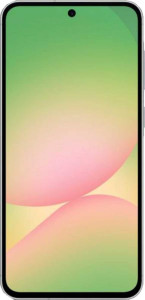
Samsung Galaxy A56 5G
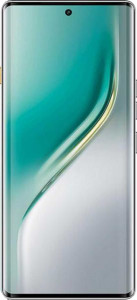
Tecno Camon 40 Pro 4G

Samsung Galaxy A56 5G Tecno Camon 40 Pro 4G

Overview

Welcome to our in-depth spec comparison between the Samsung Galaxy A56 5G and the Tecno Camon 40 Pro 4G. These two mid-range smartphones take notably different approaches across key areas including performance and chipset power, camera versatility, display quality, and connectivity. Whether you prioritize raw processing speed, selfie capabilities, or network future-proofing, this breakdown will help you understand exactly where each device stands before making your decision.

Common Features

  • Both phones are waterproof and share the same water resistance capability.
  • Neither phone has a rugged build.
  • Neither phone can be folded.
  • Both phones feature an OLED/AMOLED display type.
  • Both phones have branded damage-resistant glass on their displays.
  • Both phones support Always-On Display.
  • Neither phone supports Dolby Vision.
  • Neither phone has a secondary screen.
  • Both phones have a touchscreen.
  • Both phones come with 256GB of internal storage and 12GB of RAM.
  • Both phones support 64-bit processing and use big.LITTLE CPU technology with 8 threads.
  • Both phones have integrated LTE and integrated graphics.
  • Both phones support OpenGL ES version 3.2.
  • Both phones run Android 15.
  • Both phones have clipboard warnings and location privacy options.
  • Both phones offer camera and microphone privacy options and the ability to block app tracking.
  • Neither phone supports wireless charging, but both support 45W fast charging.
  • Neither phone has a removable battery.
  • Both phones have stereo speakers but lack a 3.5mm audio jack.
  • Neither phone supports LDAC or aptX Lossless audio.
  • Both phones have USB Type-C with USB version 2 and support NFC.
  • Both phones have a fingerprint scanner.
  • Neither phone has an external memory slot.
  • Both phones have a multi-lens main camera with optical image stabilization.
  • Both phones have a CMOS sensor, continuous autofocus during video recording, phase-detection autofocus for photos, slow-motion video recording, and a built-in HDR mode.
  • Both phones have a video light but lack a sapphire glass or e-paper display.

Main Differences

  • Weight is 198g on Samsung Galaxy A56 5G and 178g on Tecno Camon 40 Pro 4G.
  • Thickness is 7.4mm on Samsung Galaxy A56 5G and 7.3mm on Tecno Camon 40 Pro 4G.
  • Width is 77.5mm on Samsung Galaxy A56 5G and 74.6mm on Tecno Camon 40 Pro 4G.
  • Height is 162.2mm on Samsung Galaxy A56 5G and 164.3mm on Tecno Camon 40 Pro 4G.
  • IP rating is IP67 on Samsung Galaxy A56 5G and IP68 on Tecno Camon 40 Pro 4G.
  • Screen size is 6.7″ on Samsung Galaxy A56 5G and 6.78″ on Tecno Camon 40 Pro 4G.
  • Display refresh rate is 120Hz on Samsung Galaxy A56 5G and 144Hz on Tecno Camon 40 Pro 4G.
  • Pixel density is 385 ppi on Samsung Galaxy A56 5G and 393 ppi on Tecno Camon 40 Pro 4G.
  • The Samsung Galaxy A56 5G uses Gorilla Glass Victus while the Tecno Camon 40 Pro 4G uses Gorilla Glass 7i.
  • HDR10 and HDR10+ support is present on Samsung Galaxy A56 5G but not available on Tecno Camon 40 Pro 4G.
  • The Samsung Galaxy A56 5G is powered by the Samsung Exynos 1580 chipset, while the Tecno Camon 40 Pro 4G uses the MediaTek Helio G100.
  • AnTuTu benchmark score is 932578 on Samsung Galaxy A56 5G and 415000 on Tecno Camon 40 Pro 4G.
  • Semiconductor size is 4nm on Samsung Galaxy A56 5G and 6nm on Tecno Camon 40 Pro 4G.
  • Maximum memory bandwidth is 51.2 GB/s on Samsung Galaxy A56 5G and 17.1 GB/s on Tecno Camon 40 Pro 4G.
  • Main camera megapixels are 50, 12, and 5 MP on Samsung Galaxy A56 5G and 50 and 8 MP on Tecno Camon 40 Pro 4G.
  • Front camera resolution is 12MP on Samsung Galaxy A56 5G and 50MP on Tecno Camon 40 Pro 4G.
  • Main camera video recording supports 2160p at 30fps on Samsung Galaxy A56 5G and 2160p at 60fps on Tecno Camon 40 Pro 4G.
  • A dual-tone LED flash with 2 LEDs is present on Tecno Camon 40 Pro 4G but not available on Samsung Galaxy A56 5G.
  • Battery capacity is 5000 mAh on Samsung Galaxy A56 5G and 5200 mAh on Tecno Camon 40 Pro 4G.
  • A charger is included in the box with Tecno Camon 40 Pro 4G but not with Samsung Galaxy A56 5G.
  • FM radio is present on Tecno Camon 40 Pro 4G but not available on Samsung Galaxy A56 5G.
  • 5G support is present on Samsung Galaxy A56 5G but not available on Tecno Camon 40 Pro 4G.
  • Wi-Fi 6 (802.11ax) support is present on Samsung Galaxy A56 5G but not available on Tecno Camon 40 Pro 4G.
  • Download speed reaches 5100 Mbit/s on Samsung Galaxy A56 5G and 650 Mbit/s on Tecno Camon 40 Pro 4G.
  • SIM support includes 2 SIM and 2 eSIM on Samsung Galaxy A56 5G, while Tecno Camon 40 Pro 4G supports 2 SIM only.
  • An infrared sensor is present on Tecno Camon 40 Pro 4G but not available on Samsung Galaxy A56 5G.
  • A curved display is present on Tecno Camon 40 Pro 4G but not on Samsung Galaxy A56 5G.
Specs Comparison
Samsung Galaxy A56 5G

Samsung Galaxy A56 5G

Tecno Camon 40 Pro 4G

Tecno Camon 40 Pro 4G

Design:
water resistance Waterproof Waterproof
weight 198 g 178 g
thickness 7.4 mm 7.3 mm
width 77.5 mm 74.6 mm
height 162.2 mm 164.3 mm
volume 93.0217 cm³ 89.474494 cm³
Ingress Protection (IP) rating IP67 IP68
has a rugged build
can be folded

Both phones share a waterproof build and a slim profile, but the differences in their physical design are more meaningful than the raw numbers suggest at first glance. The Tecno Camon 40 Pro carries a clear advantage in water resistance, rated at IP68 versus the Samsung's IP67. In practice, IP68 allows for submersion at greater depths and for longer durations, making it the more confident choice around water — pools, rain, or accidental drops in sinks included.

In hand feel, the Camon 40 Pro also has a noticeable edge. At 178 g, it is a full 20 grams lighter than the Galaxy A56's 198 g, and its 74.6 mm width is meaningfully narrower compared to 77.5 mm. That combination of reduced weight and a slimmer frame translates directly to more comfortable one-handed use and less fatigue during long sessions. The Camon is slightly taller (164.3 mm vs 162.2 mm), but that is a minor trade-off for the grip and weight benefits it offers. Both phones are nearly identical in thickness (~7.3–7.4 mm), so neither stands out as particularly slim or chunky.

Overall, the Tecno Camon 40 Pro holds a clear design advantage in this group: it is lighter, narrower, and better rated for water resistance. The Galaxy A56 is still a well-built, waterproof device, but it is bulkier and stops one tier short on the IP scale — factors that matter for everyday comfort and peace of mind in wet conditions.

Display:
Display type OLED/AMOLED OLED/AMOLED
screen size 6.7" 6.78"
pixel density 385 ppi 393 ppi
resolution 1080 x 2340 px 1080 x 2463 px
refresh rate 120Hz 144Hz
has branded damage-resistant glass
Gorilla Glass version Gorilla Glass Victus Gorilla Glass 7i
supports HDR10
supports HDR10+
Always-On Display
supports Dolby Vision
Has a secondary screen
has a touch screen

On the surface, these two displays look nearly identical — both are OLED/AMOLED panels at around 6.7 inches with 1080p resolution and 120Hz+ refresh rates. Dig deeper, though, and the trade-offs become clear. The Camon 40 Pro pulls ahead on motion fluidity with a 144Hz refresh rate versus the Galaxy A56's 120Hz, a difference that is most noticeable when scrolling quickly or gaming, where animations feel perceptibly smoother. Its pixel density is also marginally higher (393 ppi vs 385 ppi), though in practice that gap is imperceptible to the naked eye at typical viewing distances.

Where the Galaxy A56 reclaims ground is in content quality and screen protection. It supports both HDR10 and HDR10+, meaning compatible streaming content — movies, shows, YouTube — renders with a wider dynamic range and more nuanced highlights and shadows. The Camon 40 Pro lacks HDR support entirely, so users who regularly consume premium streaming content will notice a real difference. On durability, the A56's Gorilla Glass Victus is a generation ahead of the Camon's Gorilla Glass 7i, offering meaningfully better resistance to drops and scratches.

This group ends in a split verdict that depends heavily on use case. For gamers and scroll-heavy users, the Camon 40 Pro's 144Hz display is a tangible win. But for multimedia consumers and those prioritizing screen longevity, the Galaxy A56's HDR support and superior glass protection give it a more well-rounded display package — making it the stronger pick for the broader audience.

Performance:
internal storage 256GB 256GB
RAM 12GB 12GB
AnTuTu benchmark score 932578 415000
Chipset (SoC) name Samsung Exynos 1580 MediaTek Helio G100
GPU name Xclipse 530 Mali G57
CPU speed 1 x 2.9 & 3 x 2.6 & 4 x 1.95 GHz 2 x 2.2 & 6 x 2 GHz
GPU clock speed 1300 MHz 1000 MHz
Has integrated LTE
RAM speed 3200 MHz 4266 MHz
semiconductor size 4 nm 6 nm
Supports 64-bit
DirectX version DirectX 12 DirectX 11
Has integrated graphics
OpenGL ES version 3.2 3.2
Uses big.LITTLE technology
CPU threads 8 threads 8 threads
Uses HMP
Has TrustZone
maximum memory bandwidth 51.2 GB/s 17.1 GB/s
OpenCL version 2 2
maximum memory amount 12GB 12GB
DDR memory version 5 4

The performance gap between these two phones is substantial and unambiguous. The Samsung Galaxy A56's Exynos 1580 chip, built on a 4 nm process, scores 932,578 on AnTuTu — more than double the Tecno Camon 40 Pro's 415,000, which runs on the older MediaTek Helio G100 at 6 nm. A smaller semiconductor node generally means better power efficiency and higher performance headroom, and the benchmark scores confirm exactly that. In everyday terms, the A56 will handle demanding apps, heavy multitasking, and graphically intensive games with noticeably greater ease and consistency.

The architectural advantages extend beyond the CPU. The Galaxy A56's GPU clocks in at 1300 MHz with DirectX 12 support, compared to the Camon 40 Pro's 1000 MHz GPU and DirectX 11 — a meaningful difference for gaming and GPU-accelerated tasks. Memory bandwidth tells a similarly lopsided story: the A56 delivers 51.2 GB/s versus just 17.1 GB/s on the Camon, meaning data moves between the processor and RAM nearly three times faster. This directly impacts how quickly large files load, how smoothly high-resolution content is processed, and how the phone holds up under sustained workloads. The Camon's DDR4 RAM versus the A56's DDR5 reflects the same generational gap.

The verdict here is clear-cut: the Samsung Galaxy A56 holds a commanding performance advantage across every meaningful metric in this group. Both phones ship with 256GB of storage and 12GB of RAM on paper, but the underlying silicon differences make them perform in entirely different leagues — the A56 is a significantly more capable device for anyone who pushes their phone hard.

Cameras:
megapixels (main camera) 50 & 12 & 5 MP 50 & 8 MP
wide aperture (main camera) 1.8 & 2.2 & 2.4f 1.9f
Has a dual-lens (or multi-lens) main camera
megapixels (front camera) 12MP 50MP
has built-in optical image stabilization
video recording (main camera) 2160 x 30 fps 2160 x 60 fps
Has a dual-tone LED flash
number of flash LEDs 1 2
has a BSI sensor
has a CMOS sensor
has continuous autofocus when recording movies
Has phase-detection autofocus for photos
supports slow-motion video recording
has a built-in HDR mode
has manual exposure
has a flash
optical zoom 0x 0x
has manual ISO
has a serial shot mode
has manual focus
has a front camera
Has laser autofocus
Shoots 360° panorama
has manual white balance
has touch autofocus
has manual shutter speed
can create panoramas in-camera
wide aperture (front camera) 2.2f 2.5f
Has timelapse function
Has a front-facing LED flash
has a dual-lens (or multi-lens) front camera
supports HDR10 recording
supports Dolby Vision recording
has a front-facing camera under the display
Has a RGB LED flash
has 3D photo/video recording capabilities

The rear camera systems take different approaches. The Galaxy A56 fields a triple-camera setup (50MP + 12MP + 5MP), giving it genuine versatility — the 12MP lens almost certainly serves as an ultrawide, adding compositional flexibility the Camon 40 Pro's dual-camera (50MP + 8MP) arrangement cannot match. The A56 also has a slightly wider main aperture at f/1.8 versus the Camon's f/1.9, a small but real advantage for low-light photography. Where the Camon fights back on video: it shoots 4K at 60 fps compared to the A56's 30 fps cap, which is a meaningful upgrade for anyone recording motion-heavy content like sports or events where smoother footage matters.

The selfie camera is where the Camon 40 Pro makes its boldest statement. Its 50MP front sensor dwarfs the A56's 12MP, offering dramatically more detail and cropping flexibility for portrait shots and video calls. The trade-off is aperture — the A56's front camera at f/2.2 lets in more light than the Camon's f/2.5, which could slightly affect selfie quality in dim conditions. Still, the raw resolution gap is hard to overlook for selfie-focused users. The Camon also carries a dual-tone LED flash on the rear versus the A56's single LED, which produces more natural-looking flash illumination.

This group is a genuine split depending on shooting priorities. The Galaxy A56 is the stronger all-around rear camera package thanks to its third lens and wider aperture, while the Tecno Camon 40 Pro wins decisively on selfie resolution and 4K video frame rate. Users who prioritize self-portraits and smooth video will lean toward the Camon; those who value rear camera versatility will prefer the A56.

Operating system:
Android version Android 15 Android 15
has clipboard warnings
has location privacy options
has camera/microphone privacy options
has Mail Privacy Protection
has theme customization
can block app tracking
blocks cross-site tracking
has on-device machine learning
has notification permissions
has media picker
Can play games while they download
has dark mode
has Wi-Fi password sharing
has battery health check
has an extra dim mode
has focus modes
has dynamic theming
can offload apps
Has customizable notifications
has Live Text
has full-page screenshots
supports split screen
gets direct OS updates
has PiP
Can be used as a PC
Has sharing intents
has a child lock
Supports widgets
Is free and open source
Has offline voice recognition
has voice commands
Tracks the current position of a mobile device
is a multi-user system
has Quick Start

Rarely does a spec group produce such a definitive result: across every single data point provided, the Samsung Galaxy A56 5G and the Tecno Camon 40 Pro 4G are an exact match. Both run Android 15, support the same privacy controls, offer dynamic theming, split-screen multitasking, Picture-in-Picture, on-device machine learning, and offline voice recognition — the list of shared capabilities is exhaustive and without exception.

The features they share are worth noting for what they collectively represent. Both phones offer a well-rounded, modern Android experience: granular app-level privacy tools including camera and microphone controls, customizable notifications, and battery health monitoring are all present. For users who care about day-to-day privacy management or software flexibility, neither phone is at a disadvantage relative to the other on any of these fronts.

The verdict is a complete tie. The operating system group provides zero basis for differentiation between these two devices — any choice between them must rest entirely on the advantages identified in other specification groups such as performance, display, or cameras.

Battery:
battery power 5000 mAh 5200 mAh
has wireless charging
Supports fast charging
charging speed 45W 45W
comes with a charger
has a removable battery
has a battery level indicator
has a rechargeable battery

Charging speed and wireless charging capability are identical here — both phones support 45W fast charging and neither offers wireless charging — so the differentiation comes down to two smaller but still practical points. The Tecno Camon 40 Pro edges ahead in raw capacity with a 5200 mAh battery versus the Galaxy A56's 5000 mAh. A 200 mAh difference is modest and unlikely to translate into a dramatically longer day, but it does represent a slight buffer that could matter at the margins for heavy users pushing toward the end of a long day.

The more tangible advantage the Camon holds is that it comes with a charger included in the box, while the Galaxy A56 does not. This is an increasingly common cost-cutting measure among flagship-adjacent phones, but it carries a real financial sting — a 45W-compatible charger purchased separately adds to the total cost of ownership of the A56, something buyers should factor into their decision.

The Camon 40 Pro takes this group by a narrow but meaningful margin. The battery capacity difference alone would be negligible, but the inclusion of a 45W charger in the box is a concrete, day-one advantage that makes the Camon the more complete package from a battery and charging standpoint.

Audio:
has a socket for a 3.5 mm audio jack
has stereo speakers
has LDAC
has aptX Lossless
Has a radio

The audio specs for these two phones are largely aligned. Both drop the 3.5mm headphone jack — pushing users toward Bluetooth or USB-C audio — and both feature stereo speakers for media playback. Neither supports high-fidelity wireless codecs like LDAC or aptX Lossless, so Bluetooth audio quality is on equal footing between them.

The only point of separation in this group is the Tecno Camon 40 Pro's inclusion of a built-in FM radio. While streaming has made radio feel like a legacy feature for many users, it remains genuinely useful in contexts where data connectivity is limited or costly — rural areas, travel, or regions where FM broadcasting is still culturally prominent. It also works without consuming mobile data, which is a quiet but practical advantage for budget-conscious users.

The Camon 40 Pro takes this group on the strength of that single differentiator. For most users the margin is slim, but the FM radio is a tangible functional addition the Galaxy A56 simply does not offer — making the Camon the modest winner here by default.

Connectivity & Features:
release date March 2025 March 2025
has 5G support
Wi-Fi version Wi-Fi 4 (802.11n), Wi-Fi 5 (802.11ac), Wi-Fi 6 (802.11ax) Wi-Fi 4 (802.11n), Wi-Fi 5 (802.11ac)
SIM cards 2 SIM, 2 eSIM 2 SIM
has an external memory slot
Has USB Type-C
USB version 2 2
has NFC
download speed 5100 MBits/s 650 MBits/s
upload speed 1280 MBits/s 150 MBits/s
Has a fingerprint scanner
has emergency SOS via satellite
has crash detection
is DLNA-certified
has a gyroscope
supports ANT+
Has a heart rate monitor
has GPS
has a compass
supports Wi-Fi
Has an infrared sensor
has an accelerometer
has a cellular module
Has a barometer
has an HDMI output
Uses 3D facial recognition
Has an iris scanner
Stylus included
supports Galileo
Has motion tracking
Has optical tracking
Has a built-in projector

The connectivity gap between these two phones is significant, and it starts with the cellular standard. The Samsung Galaxy A56 supports 5G with download speeds up to 5100 Mbits/s, while the Tecno Camon 40 Pro is a 4G-only device capped at 650 Mbits/s down. That is nearly an eight-fold difference in peak download throughput — meaningful for anyone in a 5G-covered area who streams high-resolution content, downloads large files, or relies on low-latency mobile data. The A56 also supports Wi-Fi 6 (802.11ax) on top of Wi-Fi 5 and 4, whereas the Camon tops out at Wi-Fi 5, missing out on the improved congestion handling and efficiency that Wi-Fi 6 brings in busy network environments. The A56 additionally supports 2 eSIMs alongside its two physical SIM slots, adding flexibility for travelers or dual-line users that the Camon — limited to two physical SIMs only — cannot match.

The Camon 40 Pro does carve out one exclusive advantage: an infrared sensor. This allows the phone to function as a universal remote for TVs, air conditioners, and other IR-controlled appliances — a niche but genuinely useful feature the Galaxy A56 lacks entirely. Beyond that, the two phones share a comparable sensor suite, including GPS, gyroscope, accelerometer, compass, NFC, and USB Type-C.

The Samsung Galaxy A56 wins this group decisively. Its 5G support, Wi-Fi 6 compatibility, and vastly superior data speeds represent forward-looking connectivity advantages that affect daily usability. The Camon's infrared sensor is a welcome bonus for some users, but it does not come close to offsetting the A56's comprehensive edge across cellular and wireless networking capabilities.
Miscellaneous:
has a video light
Has sapphire glass display
Has a curved display
Has an e-paper display

This is a short spec group with limited data points, and three of the four are identical: both phones have a video light, neither uses sapphire glass, and neither has an e-paper display. The sole differentiator is that the Tecno Camon 40 Pro features a curved display, while the Galaxy A56 has a flat one.

Curved screens are largely a matter of personal preference and design philosophy. They lend a phone a more premium, sculpted aesthetic and can make edge-to-edge content feel more immersive. The practical trade-offs — slightly more susceptibility to edge glare and marginally harder screen protector fitment — are real but minor for most users. The Galaxy A56's flat display, by contrast, is simpler to protect and arguably more practical for everyday use.

The Tecno Camon 40 Pro edges this group purely by differentiation — its curved display is the only distinguishing feature present. Whether that constitutes an advantage depends entirely on user taste, making this the closest possible verdict: a nominal win for the Camon for those who prefer the curved aesthetic, and effectively a tie for everyone else.

Comparison Summary & Verdict

After a thorough side-by-side comparison, both phones share a solid foundation — Android 15, OLED displays, 12GB RAM, 256GB storage, and 45W fast charging — but they diverge sharply in areas that matter. The Samsung Galaxy A56 5G pulls ahead decisively in raw performance, with its Exynos 1580 chipset scoring more than double on AnTuTu benchmarks, and offers 5G connectivity, Wi-Fi 6, HDR10+ display support, and significantly faster download speeds, making it the stronger choice for power users and those future-proofing their purchase. The Tecno Camon 40 Pro 4G counters with a higher IP68 water resistance rating, a smoother 144Hz display, an impressive 50MP front camera, 4K 60fps video recording, a larger 5200 mAh battery with a charger included, plus thoughtful extras like an infrared sensor, FM radio, and a curved display — making it ideal for content creators and everyday users who want a feature-rich experience at a competitive price point.

Samsung Galaxy A56 5G
Buy Samsung Galaxy A56 5G if...

Buy the Samsung Galaxy A56 5G if you want significantly faster performance, 5G connectivity, Wi-Fi 6 support, and a superior HDR10+ display experience for future-proofing your smartphone investment.

Tecno Camon 40 Pro 4G
Buy Tecno Camon 40 Pro 4G if...

Buy the Tecno Camon 40 Pro 4G if you prioritize a high-resolution 50MP front camera, a smoother 144Hz curved display, IP68 water resistance, 4K 60fps video, and a larger battery that comes with a charger included.