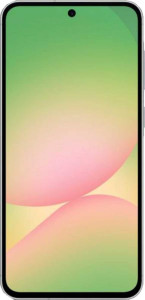
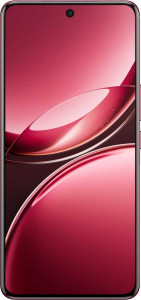
Both the Samsung Galaxy A56 5G and the Vivo V50 are waterproof and non-foldable devices with no rugged build designation, so their baseline durability profiles are similar. However, the single most important differentiator in this group is their water resistance rating: the A56 carries an IP67 certification, while the V50 steps up to IP69. IP67 means the device can survive submersion in up to 1 meter of water for 30 minutes — solid everyday protection against rain, splashes, and accidental drops in water. IP69, on the other hand, additionally certifies protection against high-pressure, high-temperature water jets, a meaningfully higher bar. In practical terms, this gives the Vivo V50 a clear edge for users who want more robust water resistance beyond casual exposure.
On physical dimensions, the two phones are closely matched but show minor trade-offs. The A56 is slightly thinner at 7.4 mm versus the V50's 7.6 mm, and has a marginally smaller overall volume (93.02 cm³ vs 95.19 cm³), making it fractionally more compact in hand. The V50 is slightly lighter at 194 g compared to the A56's 198 g — a 4-gram difference that is unlikely to be perceptible in daily use. The V50 is also a touch narrower (76.7 mm vs 77.5 mm), which can subtly improve one-handed reach, though it is marginally taller.
Overall, the Vivo V50 holds the edge in this group, primarily due to its superior IP69 water resistance rating — a tangible, real-world advantage over the A56's IP67. The dimensional differences are negligible and unlikely to influence a buying decision on their own. If water protection is a priority, the V50 offers noticeably stronger coverage.