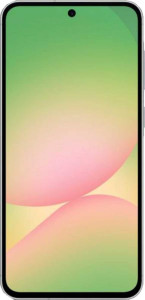
Samsung Galaxy A56 5G
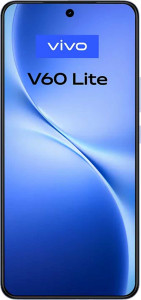
Vivo V60 Lite 5G

Samsung Galaxy A56 5G Vivo V60 Lite 5G

Overview

When choosing between the Samsung Galaxy A56 5G and the Vivo V60 Lite 5G, shoppers face a genuinely close mid-range contest. Both phones share an AMOLED display, 12GB of RAM, 256GB of storage, and Android 15, yet they diverge meaningfully on battery capacity and charging speed, camera versatility, and raw processor performance. This detailed spec comparison will help you decide which device best fits your priorities.

Common Features

  • Neither phone has a rugged build.
  • Neither phone can be folded.
  • Both phones feature an OLED/AMOLED display.
  • Both phones have a 120Hz refresh rate.
  • HDR10 support is available on both phones.
  • HDR10+ support is available on both phones.
  • Dolby Vision support is not available on either phone.
  • Neither phone has a secondary screen.
  • Both phones have a touchscreen.
  • Both phones come with 256GB of internal storage.
  • Both phones have 12GB of RAM.
  • Both phones have integrated LTE.
  • Both phones use a 4 nm semiconductor.
  • Both phones support 64-bit processing.
  • Both phones use DirectX 12.
  • Both phones have integrated graphics.
  • Both phones use big.LITTLE technology.
  • Both phones have a multi-lens main camera.
  • A dual-tone LED flash is not present on either phone.
  • Neither phone has a BSI sensor.
  • Both phones have a CMOS sensor.
  • Both phones support continuous autofocus when recording video.
  • Both phones have phase-detection autofocus for photos.
  • Both phones have a built-in HDR mode.
  • Both phones run Android 15.
  • Both phones have clipboard warnings.
  • Both phones have location privacy options.
  • Both phones have camera and microphone privacy options.
  • Mail Privacy Protection is not available on either phone.
  • Both phones support theme customization.
  • Both phones can block app tracking.
  • Cross-site tracking blocking is not available on either phone.
  • Wireless charging is not supported on either phone.
  • Both phones support fast charging.
  • Neither phone has a removable battery.
  • Both phones have a battery level indicator.
  • Both phones have a rechargeable battery.
  • Neither phone has a 3.5mm audio jack.
  • Both phones have stereo speakers.
  • LDAC support is not available on either phone.
  • aptX Lossless support is not available on either phone.
  • Neither phone has a radio.
  • Both phones support 5G.
  • Neither phone has an external memory slot.
  • Both phones have USB Type-C.
  • Both phones use USB version 2.
  • Both phones have NFC.
  • Both phones have a fingerprint scanner.
  • Emergency SOS via satellite is not available on either phone.
  • Crash detection is not available on either phone.
  • Both phones have a video light.
  • Neither phone has a sapphire glass display.
  • Neither phone has a curved display.
  • Neither phone has an e-paper display.

Main Differences

  • Water resistance is rated as waterproof on the Samsung Galaxy A56 5G and water resistant on the Vivo V60 Lite 5G.
  • Weight is 198 g on the Samsung Galaxy A56 5G and 194 g on the Vivo V60 Lite 5G.
  • Thickness is 7.4 mm on the Samsung Galaxy A56 5G and 7.6 mm on the Vivo V60 Lite 5G.
  • Width is 77.5 mm on the Samsung Galaxy A56 5G and 76.3 mm on the Vivo V60 Lite 5G.
  • Height is 162.2 mm on the Samsung Galaxy A56 5G and 163.8 mm on the Vivo V60 Lite 5G.
  • Volume is 93.02 cm³ on the Samsung Galaxy A56 5G and 94.98 cm³ on the Vivo V60 Lite 5G.
  • IP rating is IP67 on the Samsung Galaxy A56 5G and IP65 on the Vivo V60 Lite 5G.
  • Screen size is 6.7″ on the Samsung Galaxy A56 5G and 6.77″ on the Vivo V60 Lite 5G.
  • Pixel density is 385 ppi on the Samsung Galaxy A56 5G and 388 ppi on the Vivo V60 Lite 5G.
  • Resolution is 1080 x 2340 px on the Samsung Galaxy A56 5G and 1080 x 2392 px on the Vivo V60 Lite 5G.
  • Damage-resistant branded glass is present on the Samsung Galaxy A56 5G but not on the Vivo V60 Lite 5G.
  • Always-On Display is available on the Samsung Galaxy A56 5G but not on the Vivo V60 Lite 5G.
  • The chipset is Samsung Exynos 1580 on the Samsung Galaxy A56 5G and MediaTek Dimensity 7300 on the Vivo V60 Lite 5G.
  • The GPU is Xclipse 530 on the Samsung Galaxy A56 5G and Mali G615 MC2 on the Vivo V60 Lite 5G.
  • CPU speed is 1 x 2.9 & 3 x 2.6 & 4 x 1.95 GHz on the Samsung Galaxy A56 5G and 4 x 2.5 & 4 x 2 GHz on the Vivo V60 Lite 5G.
  • Geekbench 6 multi-core score is 3893 on the Samsung Galaxy A56 5G and 2932 on the Vivo V60 Lite 5G.
  • Geekbench 6 single-core score is 1360 on the Samsung Galaxy A56 5G and 1026 on the Vivo V60 Lite 5G.
  • GPU clock speed is 1300 MHz on the Samsung Galaxy A56 5G and 1047 MHz on the Vivo V60 Lite 5G.
  • RAM speed is 3200 MHz on the Samsung Galaxy A56 5G and 6400 MHz on the Vivo V60 Lite 5G.
  • Maximum memory amount is 12GB on the Samsung Galaxy A56 5G and 16GB on the Vivo V60 Lite 5G.
  • Main camera megapixels are 50 & 12 & 5 MP on the Samsung Galaxy A56 5G and 50 & 8 MP on the Vivo V60 Lite 5G.
  • Main camera wide aperture is f/1.8, f/2.2, and f/2.4 on the Samsung Galaxy A56 5G and f/2.2 and f/1.8 on the Vivo V60 Lite 5G.
  • Front camera megapixels are 12 MP on the Samsung Galaxy A56 5G and 32 MP on the Vivo V60 Lite 5G.
  • Optical image stabilization is present on the Samsung Galaxy A56 5G but not on the Vivo V60 Lite 5G.
  • Main camera video recording is up to 2160p at 30 fps on the Samsung Galaxy A56 5G and up to 1080p at 30 fps on the Vivo V60 Lite 5G.
  • Slow-motion video recording is supported on the Samsung Galaxy A56 5G but not on the Vivo V60 Lite 5G.
  • Front camera wide aperture is f/2.2 on the Samsung Galaxy A56 5G and f/2.5 on the Vivo V60 Lite 5G.
  • Timelapse function is available on the Samsung Galaxy A56 5G but not on the Vivo V60 Lite 5G.
  • Battery capacity is 5000 mAh on the Samsung Galaxy A56 5G and 6500 mAh on the Vivo V60 Lite 5G.
  • Charging speed is 45W on the Samsung Galaxy A56 5G and 90W on the Vivo V60 Lite 5G.
  • A charger is not included with the Samsung Galaxy A56 5G but is included with the Vivo V60 Lite 5G.
  • Wi-Fi support includes Wi-Fi 6 (802.11ax) on the Samsung Galaxy A56 5G, while the Vivo V60 Lite 5G tops out at Wi-Fi 5 (802.11ac).
  • SIM support is 2 SIM and 2 eSIM on the Samsung Galaxy A56 5G and 2 SIM only on the Vivo V60 Lite 5G.
  • Bluetooth version is 5.3 on the Samsung Galaxy A56 5G and 5.4 on the Vivo V60 Lite 5G.
  • Download speed is 5100 Mbit/s on the Samsung Galaxy A56 5G and 3270 Mbit/s on the Vivo V60 Lite 5G.
  • Upload speed is 1280 Mbit/s on the Samsung Galaxy A56 5G and 3270 Mbit/s on the Vivo V60 Lite 5G.
Specs Comparison
Samsung Galaxy A56 5G

Samsung Galaxy A56 5G

Vivo V60 Lite 5G

Vivo V60 Lite 5G

Design:
water resistance Waterproof Water resistant
weight 198 g 194 g
thickness 7.4 mm 7.6 mm
width 77.5 mm 76.3 mm
height 162.2 mm 163.8 mm
volume 93.0217 cm³ 94.984344 cm³
Ingress Protection (IP) rating IP67 IP65
has a rugged build
can be folded

Both the Samsung Galaxy A56 5G and the Vivo V60 Lite 5G share a remarkably similar physical profile. The Samsung is marginally thinner at 7.4 mm versus 7.6 mm, and slightly heavier at 198 g compared to 194 g. In practice, neither difference is perceptible in daily use — a 4-gram weight gap and a 0.2 mm thickness gap fall well within the threshold of human tactile sensitivity, so both phones will feel equally slim and comparable in the hand.

Where the two phones diverge meaningfully is in water protection. The Galaxy A56 5G carries an IP67 rating, which means it is fully sealed against dust and can survive submersion in up to 1 metre of fresh water for 30 minutes — this is what ″waterproof″ practically means for a smartphone. The V60 Lite 5G holds an IP65 rating, which guarantees dust-tightness and resistance to sustained water jets, but offers no protection against submersion. For most everyday scenarios — rain, splashes, or accidental spills — IP65 is perfectly adequate. However, if you ever drop your phone in a sink, toilet, or shallow pool, the IP67 advantage of the Samsung becomes very real and very relevant.

Neither device has a rugged build or a foldable form factor, so both target the same mainstream flat-slab segment. Overall, the Samsung Galaxy A56 5G holds a clear edge in this category solely due to its superior IP67 certification — the physical dimensions are too close to matter, and the higher ingress protection rating directly translates to greater peace of mind and durability in wet conditions.

Display:
Display type OLED/AMOLED OLED/AMOLED
screen size 6.7" 6.77"
pixel density 385 ppi 388 ppi
resolution 1080 x 2340 px 1080 x 2392 px
refresh rate 120Hz 120Hz
has branded damage-resistant glass
supports HDR10
supports HDR10+
Always-On Display
supports Dolby Vision
Has a secondary screen
has a touch screen

At the panel level, these two phones are nearly indistinguishable. Both use OLED/AMOLED technology with a 120Hz refresh rate, 1080p resolution, and support for both HDR10 and HDR10+ — meaning colors, contrast, and motion smoothness will feel essentially identical in everyday use. The Vivo V60 Lite's screen is fractionally larger (6.77″ vs 6.7″) with a marginally higher pixel density (388 ppi vs 385 ppi), but these differences are invisible to the naked eye and carry no real-world significance.

The meaningful differentiators lie in the extras. The Galaxy A56 5G ships with branded damage-resistant glass — almost certainly Corning Gorilla Glass — which provides measurable protection against everyday scratches and accidental drops onto hard surfaces. The V60 Lite makes no such claim, leaving its screen more vulnerable to surface damage over time. The Samsung also supports an Always-On Display, letting users glance at the time, notifications, or widgets without fully waking the screen — a genuinely useful quality-of-life feature the Vivo omits entirely.

Taken together, the raw display quality is a dead heat, but the Samsung Galaxy A56 5G has a clear practical edge in this category. Damage-resistant glass adds long-term durability that affects the phone throughout its entire lifespan, and Always-On Display is a daily convenience feature that many users come to rely on. The Vivo offers nothing in this group to counterbalance those two omissions.

Performance:
internal storage 256GB 256GB
RAM 12GB 12GB
Chipset (SoC) name Samsung Exynos 1580 MediaTek Dimensity 7300
GPU name Xclipse 530 Mali G615 MC2
CPU speed 1 x 2.9 & 3 x 2.6 & 4 x 1.95 GHz 4 x 2.5 & 4 x 2 GHz
Geekbench 6 result (multi) 3893 2932
Geekbench 6 result (single) 1360 1026
GPU clock speed 1300 MHz 1047 MHz
Has integrated LTE
RAM speed 3200 MHz 6400 MHz
semiconductor size 4 nm 4 nm
Supports 64-bit
DirectX version DirectX 12 DirectX 12
Has integrated graphics
Uses big.LITTLE technology
CPU threads 8 threads 8 threads
Uses HMP
maximum memory amount 12GB 16GB
DDR memory version 5 5

The chipset gap here is substantial and measurable. The Samsung Exynos 1580 in the Galaxy A56 5G outpaces the MediaTek Dimensity 7300 in the Vivo V60 Lite by a considerable margin across both Geekbench 6 metrics — 3893 vs 2932 in multi-core and 1360 vs 1026 in single-core. That is roughly a 33% multi-core advantage and a 32% single-core advantage for the Samsung. Single-core performance in particular governs how snappy the UI feels, how fast apps launch, and how responsive the phone is during everyday tasks — so this gap translates directly into a noticeably smoother day-to-day experience under load.

The GPU story follows the same trend. The Exynos 1580's Xclipse 530 running at 1300 MHz significantly outclocks the V60 Lite's Mali G615 MC2 at 1047 MHz, pointing to a meaningful advantage in graphics-intensive workloads like gaming or video editing. The Vivo does counter with faster RAM at 6400 MHz versus 3200 MHz on the Samsung, and its platform supports a higher maximum memory ceiling. However, faster RAM speed is a secondary factor that primarily benefits sustained multitasking at scale — it does not offset the raw compute deficit against a substantially faster processor.

This category belongs decisively to the Samsung Galaxy A56 5G. The Exynos 1580's CPU and GPU leads over the Dimensity 7300 are too wide to be neutralized by the Vivo's RAM speed advantage. For users who care about sustained performance, gaming, or simply a phone that stays responsive over its lifespan, the Samsung is the stronger choice based on these specs alone.

Cameras:
megapixels (main camera) 50 & 12 & 5 MP 50 & 8 MP
wide aperture (main camera) 1.8 & 2.2 & 2.4f 2.2 & 1.8f
Has a dual-lens (or multi-lens) main camera
megapixels (front camera) 12MP 32MP
has built-in optical image stabilization
video recording (main camera) 2160 x 30 fps 1080 x 30 fps
Has a dual-tone LED flash
number of flash LEDs 1 1
has a BSI sensor
has a CMOS sensor
has continuous autofocus when recording movies
Has phase-detection autofocus for photos
supports slow-motion video recording
has a built-in HDR mode
has manual exposure
has a flash
optical zoom 0x 0x
has manual ISO
has a serial shot mode
has manual focus
has a front camera
Has laser autofocus
Shoots 360° panorama
has manual white balance
shoots raw
has touch autofocus
has manual shutter speed
can create panoramas in-camera
wide aperture (front camera) 2.2f 2.5f
Has timelapse function
Has a front-facing LED flash
has a dual-lens (or multi-lens) front camera
supports HDR10 recording
supports Dolby Vision recording
has a front-facing camera under the display
Has a RGB LED flash
has 3D photo/video recording capabilities

The rear camera systems tell a one-sided story. The Galaxy A56 5G fields a triple-camera setup (50 + 12 + 5 MP) against the V60 Lite's dual-camera array (50 + 8 MP), giving the Samsung both an extra lens and higher resolution on its secondary shooter. More critically, the A56 includes optical image stabilization (OIS) — a hardware mechanism that physically compensates for hand tremor during photos and video. The V60 Lite lacks OIS entirely, which means handheld shots in low light or while moving will be more prone to blur.

The video gap is even starker. The Samsung captures footage at 4K (2160p) at 30 fps, while the Vivo tops out at 1080p at 30 fps — a full resolution tier behind. For anyone who shoots video for social media, travel, or even just memories, this is a significant practical difference. The A56 also supports slow-motion recording and a timelapse function, neither of which the V60 Lite offers, further widening the versatility gap.

The one area where the Vivo pushes back is the front camera: its 32 MP selfie shooter substantially outresolves the Samsung's 12 MP unit, which will appeal to users who prioritize selfie detail. However, the Samsung's front aperture of f/2.2 is wider than the Vivo's f/2.5, suggesting better low-light selfie performance despite the lower megapixel count. On balance, the Samsung Galaxy A56 5G holds a clear overall advantage in this category — OIS, 4K video, a third rear lens, and slow-motion recording collectively represent a more capable and versatile camera system than what the V60 Lite provides.

Operating system:
Android version Android 15 Android 15
has clipboard warnings
has location privacy options
has camera/microphone privacy options
has Mail Privacy Protection
has theme customization
can block app tracking
blocks cross-site tracking
has on-device machine learning
has notification permissions
has media picker
Can play games while they download
has dark mode
has Wi-Fi password sharing
has battery health check
has an extra dim mode
has focus modes
has dynamic theming
can offload apps
Has customizable notifications
has Live Text
has full-page screenshots
supports split screen
gets direct OS updates
has PiP
Can be used as a PC
Has sharing intents
has a child lock
Supports widgets
Is free and open source
Has offline voice recognition
has voice commands
Tracks the current position of a mobile device
is a multi-user system
has Quick Start

This is a rare case of a perfect specification tie. Both the Samsung Galaxy A56 5G and the Vivo V60 Lite 5G launch on Android 15 and share an identical feature set across every single data point in this group — from privacy controls like location and camera/microphone permissions, to productivity features like split-screen multitasking, Picture-in-Picture, and widget support.

Notably, both phones also include on-device machine learning, offline voice recognition, dynamic theming, and a battery health check — a set of capabilities that collectively represent a well-rounded and modern Android experience. Neither device receives direct OS updates from Google, meaning both will depend on their respective manufacturers for future Android upgrades, which is a consideration worth keeping in mind for long-term software support.

With zero divergence across all provided specs, this category is an unambiguous tie. A user's real-world software experience will be shaped far more by each manufacturer's custom Android skin and their update track record than by anything the data here can distinguish.

Battery:
battery power 5000 mAh 6500 mAh
has wireless charging
Supports fast charging
charging speed 45W 90W
comes with a charger
has a removable battery
has a battery level indicator
has a rechargeable battery

Battery is where the Vivo V60 Lite 5G makes its strongest case in this entire comparison. Its 6500 mAh cell is a full 30% larger than the Samsung Galaxy A56 5G's 5000 mAh pack — a gap that is meaningful in practice. Assuming broadly similar software efficiency, the V60 Lite can be expected to last considerably longer between charges, making it a compelling option for heavy users, travelers, or anyone who regularly struggles to reach the end of the day on a single charge.

The charging speed advantage compounds the lead. The V60 Lite supports 90W fast charging versus the A56's 45W — meaning the Vivo not only holds more energy but replenishes it roughly twice as fast. Charging a larger battery at double the wattage translates to wall-to-full times that can rival or undercut the Samsung despite the bigger cell. The V60 Lite also ships with a charger in the box, while the Samsung does not — a small but tangible out-of-the-box convenience advantage, particularly at a mid-range price point where buyers may not already own a compatible fast charger.

Neither phone offers wireless charging or a removable battery, so those are non-factors. The Vivo V60 Lite 5G wins this category decisively — a larger battery, significantly faster wired charging, and an included charger together represent a genuinely superior power package that is difficult for the Samsung to answer.

Audio:
has a socket for a 3.5 mm audio jack
has stereo speakers
has LDAC
has aptX Lossless
Has a radio

The audio specifications for these two phones are identical across every provided data point. Both the Samsung Galaxy A56 5G and the Vivo V60 Lite 5G feature stereo speakers — a welcome baseline for media consumption — and both drop the 3.5mm headphone jack, pushing users toward Bluetooth or USB-C audio for wired listening. Neither supports high-fidelity wireless codecs like LDAC or aptX Lossless, which means audiophiles seeking lossless Bluetooth audio will find neither phone satisfactory. There is no FM radio on either device.

This category is a clear tie. With no differentiating spec to separate them, the audio experience on paper is functionally equivalent, and neither phone holds any advantage over the other based on the available data.

Connectivity & Features:
release date March 2025 September 2025
has 5G support
Wi-Fi version Wi-Fi 4 (802.11n), Wi-Fi 5 (802.11ac), Wi-Fi 6 (802.11ax) Wi-Fi 4 (802.11n), Wi-Fi 5 (802.11ac)
SIM cards 2 SIM, 2 eSIM 2 SIM
Bluetooth version 5.3 5.4
has an external memory slot
Has USB Type-C
USB version 2 2
has NFC
download speed 5100 MBits/s 3270 MBits/s
upload speed 1280 MBits/s 3270 MBits/s
Has a fingerprint scanner
has emergency SOS via satellite
has crash detection
is DLNA-certified
has a gyroscope
supports ANT+
Has a heart rate monitor
has GPS
has a compass
supports Wi-Fi
Has an infrared sensor
has an accelerometer
has a cellular module
Has a barometer
has an HDMI output
Uses 3D facial recognition
Has an iris scanner
Stylus included
supports Galileo
Has motion tracking
Has optical tracking
Has a built-in projector

Shared ground is extensive here — both phones support 5G, NFC, USB Type-C, fingerprint scanning, and an identical sensor suite including GPS, gyroscope, and compass. The divergences, while fewer, are worth unpacking carefully. The Galaxy A56 5G steps up to Wi-Fi 6 (802.11ax), while the V60 Lite tops out at Wi-Fi 5 (802.11ac). Wi-Fi 6 delivers better throughput and significantly improved efficiency in congested environments — such as busy offices, apartments, or public venues with many connected devices — so the Samsung will perform more reliably on modern routers in dense network conditions.

The cellular flexibility gap is equally notable. The A56 supports 2 physical SIMs plus 2 eSIMs, whereas the V60 Lite offers only 2 physical SIM slots with no eSIM capability. For frequent travelers or users who want to maintain separate personal and work lines without carrying a physical SIM for each, the Samsung's dual-eSIM support is a meaningful practical advantage. On the other hand, the V60 Lite posts a much higher upload speed of 3270 Mbits/s against the Samsung's 1280 Mbits/s, which benefits users who regularly push large files to the cloud or stream live video — though the Samsung counters with a superior download speed of 5100 Mbits/s versus 3270 Mbits/s. The Vivo holds a marginal edge in Bluetooth 5.4 versus 5.3, but the real-world difference between these two versions is negligible for most users.

Weighing all differentiators, the Samsung Galaxy A56 5G has the edge in this category. Wi-Fi 6 support and dual-eSIM flexibility are features with broad, everyday relevance that the V60 Lite simply cannot match, and the Samsung's download speed lead reinforces that advantage for data-heavy usage patterns.
Miscellaneous:
has a video light
Has sapphire glass display
Has a curved display
Has an e-paper display

The miscellaneous specifications for these two phones offer nothing to separate them. Both the Samsung Galaxy A56 5G and the Vivo V60 Lite 5G include a video light, and neither features a sapphire glass display, a curved screen, or an e-paper display — a clean sweep of identical answers across every data point in this group.

This category is a complete tie. With no differentiating feature present on either side, the provided specs here carry no weight in the overall buying decision between these two devices.

Comparison Summary & Verdict

After examining every specification, both phones serve distinct audiences. The Samsung Galaxy A56 5G stands out with its superior IP67 waterproofing, a more powerful Exynos 1580 chipset backed by higher Geekbench scores, optical image stabilization, 4K video recording, Wi-Fi 6 support, and eSIM compatibility — making it the stronger pick for users who value versatility, camera quality, and future-proof connectivity. The Vivo V60 Lite 5G, on the other hand, counters with a much larger 6500 mAh battery, blazing 90W fast charging, a higher-resolution 32 MP front camera, and an included charger in the box, making it the better companion for heavy users who demand all-day endurance and faster top-ups without extra accessories.

Samsung Galaxy A56 5G
Buy Samsung Galaxy A56 5G if...

Buy the Samsung Galaxy A56 5G if you prioritize stronger waterproofing, superior chipset performance, 4K video recording with optical image stabilization, and Wi-Fi 6 with eSIM support.

Vivo V60 Lite 5G
Buy Vivo V60 Lite 5G if...

Buy the Vivo V60 Lite 5G if you need a larger battery with much faster 90W charging, a higher-resolution selfie camera, and appreciate getting a charger included in the box.